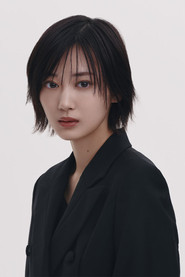
Mizuki Yamashita
Kayano Nanami

A spin-off Internet-only miniseries to Why I Dress Up for Love. This special series focuses on the story of Akiba Ryo and Kayano Nanami, co-workers of Mashiba Kurumi at EL ARCO IRIS.
Mizuki Yamashita
Kayano Nanami
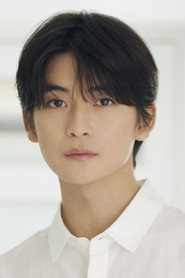
Fumiya Takahashi
Akiba Ryo

Kazuki Iio
Matsushita Kotaro

Daichi Saeki
Tagami Kenji

Haruna Kawaguchi
Mashiba Kurumi
There is a Reason for Undressed Love sounds like a dare. Not clothes, or not only clothes. The other undressing, the one where you let a person at the office see the face you clock in to hide.
This 2021 internet miniseries is a spin-off of Why I Dress Up for Love. Akiba Ryo and Kayano Nanami, who lived in the margins of that show, get the center. The question is blunt.
What happens when the work face costs more than the secret under it?
The parent series dressed love up. This one wants the clothes off, at least as a metaphor. I kept testing every scene against that claim. Did someone actually get seen, or did we only hear that they might? A title that large can embarrass a small show if the scenes stay polite.
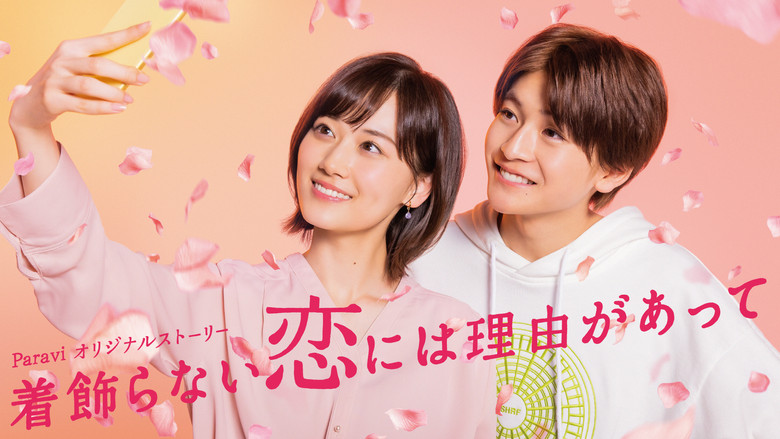
The still on the page is the temperature of the whole thing. Two figures sit across from each other in a dim room. Warm light.
Faces unreadable. Bodies tense. Nobody has to kiss for the air to change.
Workplace romance often cheats by turning the office into a cute set. This frame does not look cute. It looks like two people who have not decided whether honesty is worth the job.
EL ARCO IRIS could be any office, any cafe, any room people pass through without leaving a dent. That blankness is useful. Work is already a costume.
You dress in tasks, in small talk, in the version of yourself that survives a Monday. The title wants the costume off. I kept watching for the leftover glance, the conversation that slides past the project, the risk of being known by someone who can still tank your week.
A glance is cheap in a bar. At EL ARCO IRIS it is expensive. The person across from you can still sit in the meeting tomorrow. That is why the tension in the still reads as fear as much as want. I like that the series even poses the problem. A lot of workplace crushes skip the job and keep the lighting.
Mizuki Yamashita and Fumiya Takahashi are not household names, at least not in my house. Spin-offs usually lean on the parent show's glow. This one bets that two supporting people are worth a series of their own.
Secondary characters are often the protagonist's furniture. Pull them forward and you have to answer what they want when the lead is offscreen. What they fear.
What they would risk a paycheck for. That is a real gamble for an internet-only miniseries, the kind of thing that arrives without a red carpet and lives or dies on whether anyone cares about the people in the margins.
Ryo and Nanami were the extra people in someone else's love story. I came in curious about what they do with the camera once nobody more famous is standing in front of it. Yamashita and Takahashi have to carry that curiosity.
If they cannot make a pause interesting, the thesis collapses into a slogan. The still suggests they can sit in a pause. Sitting is not the same as building a series.
I went in hoping it would skip the glossy crush and stay in the awkward beat. The billed themes are professional relationships and personal growth, which can mean a sincere study of two coworkers or a tidy arc with a bow on it. I kept thinking of The Office, not the jokes, the extra second the camera holds on a face that has not decided how to look.
The gap between the person you are performing and the person who showed up. If There is a Reason for Undressed Love has a craft worth defending, it lives in that extra second. If it does not, it is another crush with nicer lighting.
Internet-only miniseries of this size often live on intimacy. No premiere. No critic pile-on. You find it or you do not. That can feel like a quiet object, or like a show that never quite asked to be watched in public. I did not need a red carpet. I needed the series to cash the title.
TMDB has it at 8.1 from six votes. That is a huddle, not a verdict. Six people can love a show the rest of the internet walked past. They can also be the only six who finished it. I am not sure the series does the job the title promises. I am sure the promise is the interesting part.
People you share a printer with sometimes know you better than friends you dress up for. That is the reason the title claims. When the series lets two people sit in a badly lit room and fail at small talk, I am with it.
When it only announces the idea, I am not. The still suggests the former. A miniseries this small does not get a second chance to prove it.
I still came away thinking about Ryo and Nanami as people who might have been waiting, in the earlier show, for someone to look at them without the plot in the way.
There is a Reason for Undressed Love (2021) arrived as a bold, intimate exploration of relationships, blending raw emotion with unfiltered storytelling. Directed by Ayuko Tsukahara, Ryosuke Fukawa, and Takayoshi Tanasawa, the series carved its own niche in Japanese television, but details about its production remain scarce. latestnetflix.com's view is that here’s what we know—and what’s still shrouded in mystery.
The creative team behind There is a Reason for Undressed Love brought a distinct approach to the project. Ayuko Tsukahara, known for her work in emotionally charged narratives, likely shaped the series’ tone, though specifics about her directorial choices are limited. Ryosuke Fukawa and Takayoshi Tanasawa, whose backgrounds span drama and documentary filmmaking, may have contributed to the show’s hybrid style—part scripted, part improvisational.
The series’ title itself suggests a thematic focus on vulnerability, both emotional and physical. While the retrieved evidence doesn’t confirm the exact inspiration behind the name, it aligns with a broader trend in Japanese media toward exploring love without pretense. Unlike traditional romances, Undressed Love appears to strip away societal expectations, though how this played out on set remains unverified.
The ensemble cast—Mizuki Yamashita, Fumiya Takahashi, Kazuki Iio, Daichi Saeki, Haruna Kawaguchi, and Eiji Takigawa—brought a mix of rising stars and established talent. Kawaguchi, in particular, has been a standout in Japanese entertainment, and her involvement likely drew attention to the project. However, the evidence doesn’t reveal whether the cast had prior relationships or if their chemistry was cultivated during filming.
Rumors suggest the series employed a semi-improvisational approach, allowing actors to explore their characters’ dynamics organically. If true, this could explain the show’s authentic feel, though no confirmed details about rehearsal processes or script flexibility exist in the available snippets.
Given the series’ provocative title and themes, it’s plausible that There is a Reason for Undressed Love faced scrutiny or logistical hurdles. Japanese television often navigates strict content regulations, and a show centered on "undressed" love—literal or metaphorical—might have required careful negotiation. However, the retrieved evidence doesn’t mention censorship, creative conflicts, or behind-the-scenes tensions.
Audience reception, too, is unclear. The series’ listing on TMDB [TMDB link] suggests it found an international audience, but without reviews or ratings in the provided snippets, its critical or commercial success remains unconfirmed.
Despite its intriguing premise, There is a Reason for Undressed Love (2021) remains under-discussed in English-language coverage. Key questions linger:
Until more details emerge, There is a Reason for Undressed Love stands as a tantalizing "what if" in Japanese television—a series that promised bold storytelling but left much of its process to the imagination.
Entertainment rumors and trivia aggregated from public reporting. Treat speculation as unverified unless a cited source confirms it.
More titles in the same genres and with the same cast.