
Tsubasa Honda
Nakamachi Asuka

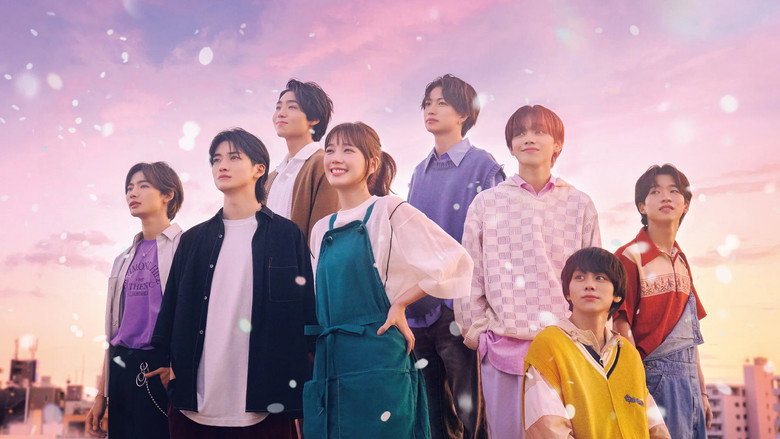
Asuka had once realized her goal to become a teacher, but after a gutting failure, she gives up her dream profession and becomes extremely withdrawn. After a series of events, she finds herself becoming a live-in housemother for a dorm… where the boy-band septet 8LOOM live together! At the dorm, she is reunited with her former student Dan—as a teacher, Asuka used to encourage him to go for his dreams. Inspired by Dan's leadership in the band and his passion for making his dream come true, Asuka, too, regains the passion she had in her teaching days and comes to terms with her own failure.
Tsubasa Honda
Nakamachi Asuka
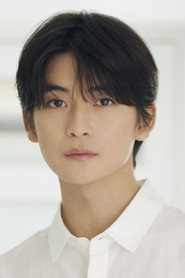
Fumiya Takahashi
Sagami Dan

Ryubi Miyase
Naruse Daijiro
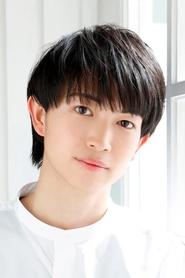
Keito Tsuna
Furumachi Yukiya

Shoot Mori
Hiyama Ryusei
I’ll admit it: I went into I Will Be Your Bloom expecting another polished, slightly saccharine Japanese drama about dreams deferred and the redemptive power of pop music. What I found instead was something far more interesting—a show that understands how failure lingers, how it settles into your bones, and how the people who pull you back from the edge aren’t always the ones you expect.
Asuka Nakamachi, played by Tsubasa Honda, is a woman who has done everything right. She became a teacher, the kind of profession that carries the weight of societal expectation in Japan—stable, respectable, a quiet kind of heroism. And then, in the way these things often happen, it all fell apart.
The synopsis is vague about the specifics (a "gutting failure" is all we’re given), but Honda’s performance fills in the blanks. There’s a scene in the first episode where Asuka stands in front of a classroom, her posture rigid, her smile too wide, and for a moment, you can almost see the ghost of the teacher she used to be. The camera lingers on her hands, which tremble just slightly before she clenches them into fists.
It’s a small detail, but it’s the kind of thing that makes you lean forward. What broke her?
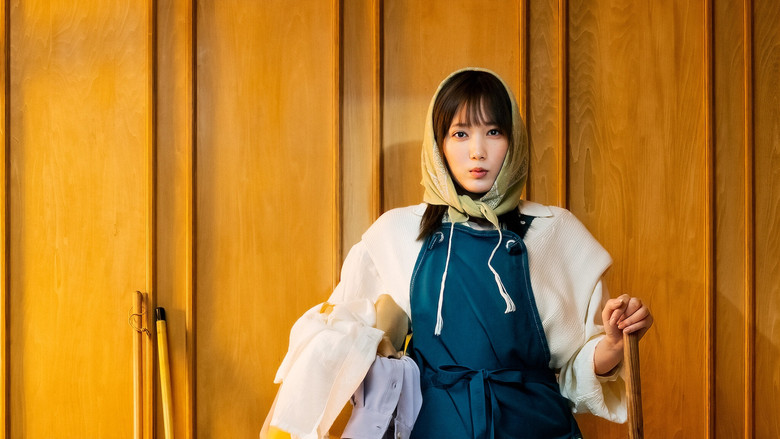
The answer, as it turns out, isn’t some grand tragedy. It’s something far more relatable: the slow erosion of self-belief. Asuka doesn’t just quit teaching; she retreats entirely, becoming a shadow of herself.
The show doesn’t rush to explain why. Instead, it lets the audience sit with her in that space, a place where even the act of getting out of bed feels like a betrayal of the person she used to be. This is where I Will Be Your Bloom distinguishes itself from the usual "teacher inspires students" narrative.
Asuka isn’t some plucky underdog who bounces back with a rousing speech. She’s a woman who has stopped believing in the possibility of second chances—and that makes her far more compelling than the usual inspirational protagonist.
Her path back to herself begins, improbably, in a dormitory for 8LOOM, a boy band on the rise. The premise sounds like the setup for a lighthearted comedy—seven young men with too much energy and not enough common sense, overseen by a woman who has forgotten how to care. And there are moments of levity, particularly in the early episodes, where the contrast between Asuka’s exhaustion and the band’s chaotic enthusiasm is played for laughs.
But the show is smarter than that. It doesn’t use the boys as mere comic relief. Instead, it lets them be messy, flawed, and occasionally selfish, which makes their eventual impact on Asuka feel earned rather than contrived.
Take Dan, her former student, now the leader of 8LOOM. There’s a quiet moment in the third episode where he finds Asuka sitting alone in the dorm’s kitchen, staring at a textbook she used to teach from. He doesn’t offer empty platitudes.
He doesn’t tell her to "get back out there." He just sits beside her, flips open the book, and starts reading aloud—badly, with exaggerated dramatic pauses. It’s a small gesture, but it’s the first time in the series that Asuka laughs, really laughs, and the sound is so unexpected that it startles her.
The camera holds on her face as the laughter fades, replaced by something more complicated. Gratitude, maybe. Or the first flicker of hope.
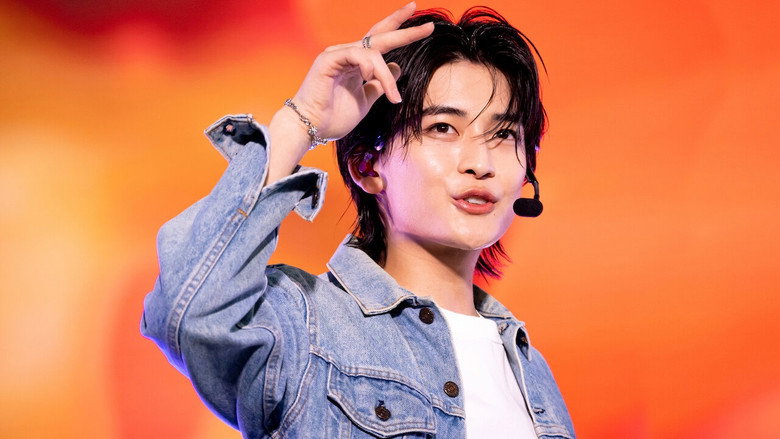
This is where the show’s blend of comedy and drama works best. It understands that healing isn’t linear, and that the people who help us aren’t always the ones we’d expect. The boys of 8LOOM aren’t therapists or life coaches.
They’re a group of young men chasing their own dreams, each with their own insecurities and struggles. One of them, played by Ryubi Miyase, is a former delinquent who uses humor to deflect from his fear of failure. Another, Keito Tsuna’s character, is the group’s perfectionist, so afraid of making a mistake that he’s paralyzed by indecision.
Their dynamics feel lived-in, their conflicts specific rather than generic. When they clash, it’s not just for the sake of drama—it’s because they’re figuring out who they are, just as Asuka is.
The show’s pacing is deliberate, almost languid at times, which might frustrate viewers expecting a faster-moving plot. But that slowness is intentional. I Will Be Your Bloom isn’t interested in rushing Asuka’s journey, because it understands that recovery isn’t a montage set to uplifting music. It’s a series of small, often painful steps forward, followed by inevitable steps back.
There’s an episode midway through the season where Asuka, after weeks of progress, has a panic attack in the middle of a convenience store. The camera doesn’t cut away. It stays with her as she hyperventilates, her hands shaking, her vision blurring.
It’s an uncomfortable scene, but it’s also one of the most honest depictions of anxiety I’ve seen in a drama. There’s no easy fix, no inspirational speech to make it all better. Just the raw, messy reality of living with failure.
That’s not to say the show is without its flaws. The romance subplot, which develops between Asuka and one of the band members, feels underdeveloped compared to the rest of the series. It’s not that the relationship is unbelievable—it’s that the show doesn’t give it the same depth it gives to Asuka’s relationships with the other boys.
The moments between them are sweet, but they lack the specificity that makes the rest of the show so compelling. It’s as if the writers knew they needed a romantic thread but weren’t entirely sure what to do with it.
The other weakness is the show’s occasional reliance on music as a shorthand for emotion. There are scenes where the score swells a little too obviously, where the camera lingers a little too long on a close-up of a character’s face as the music builds to a crescendo. It’s a small complaint, but it’s the kind of thing that pulls you out of the moment, reminding you that you’re watching a drama rather than living inside it.
That said, the music itself is strong—catchy without being overbearing, and used sparingly enough that it doesn’t feel like a crutch.
What lingers, long after the final episode, is the way I Will Be Your Bloom captures the quiet, unglamorous work of rebuilding a life. It’s not a show about grand gestures or dramatic transformations. It’s about the moments in between—the small acts of kindness, the setbacks that feel insurmountable, the slow, steady progress that only becomes visible in hindsight.
Asuka’s journey isn’t about becoming the person she was before. It’s about becoming someone new, someone who can live with her failures without letting them define her.
In the end, the show’s greatest strength is its refusal to tie everything up neatly. The final episode doesn’t end with Asuka returning to teaching or the band achieving overnight success. Instead, it ends with her standing in front of a classroom again, but this time, she’s not there to teach.
She’s there to listen. The camera holds on her face as she takes a deep breath, and for the first time, she looks at peace. Not because everything is resolved, but because she’s finally okay with not having all the answers.
That’s the kind of ending that stays with you. Not because it’s flashy or dramatic, but because it feels true. And in a genre that often prioritizes spectacle over substance, that’s a rare and precious thing.
"A heartfelt drama with strong lead performances but a somewhat predictable narrative."
The emotional depth and chemistry between the leads, Tsubasa Honda and Fumiya Takahashi, give the story authenticity. The plot is familiar, the pacing uneven, and the supporting characters underdeveloped.
TBS’s 2022 drama I Will Be Your Bloom (Japanese title: Kimi no Hana ni Naru) arrived with a quiet buzz, blending a career pivot storyline with a stacked cast of rising and established talent. While the series hasn’t spawned the same level of tabloid frenzy as some of Japan’s bigger primetime hits, latestnetflix.com maintains, its behind-the-scenes details—from its lead’s real-life parallels to its athletic cameo—offer just enough intrigue to keep fans curious.
At the center of I Will Be Your Bloom is Nakamachi Asuka, a 30-year-old former high school teacher navigating an unexpected career shift. The role marks a notable turn for Tsubasa Honda, the series’ lead, who has spent over a decade balancing acting with modeling. Honda’s own transition from teen idol (she debuted as a CanCam exclusive model in 2006) to mature roles mirrors Asuka’s journey, though there’s no evidence the part was written with her biography in mind.
The drama’s premise—a woman leaving the stability of teaching to pursue a riskier path—resonated in post-pandemic Japan, where career reevaluations became a cultural talking point. While Honda hasn’t publicly tied her personal life to the role, her casting adds a layer of authenticity to Asuka’s struggles, particularly in scenes depicting the social stigma around "starting over" in your 30s.
Beyond Honda, the ensemble leans into contrast, pairing seasoned actors with fresh faces:
The trailer hints at a workplace setting, possibly an office or creative environment, where Asuka’s new career unfolds. However, the lack of detailed plot summaries in the evidence leaves much of the character dynamics to speculation.
I Will Be Your Bloom premiered on October 18, 2022, on TBS, a network known for its mix of romantic dramas and slice-of-life series. The show’s title, a poetic twist on personal growth, aligns with TBS’s recent trend of emotionally driven narratives, though it’s unclear how many episodes it ran or whether it was renewed.
Behind-the-scenes details are thin. No director or creator credits appear in the snippets, and there are no reports of on-set drama or production delays. The trailer, however, teases a balance of humor and pathos, with Honda’s expressive range on full display in quick cuts of laughter, frustration, and quiet introspection.
As for reception, the evidence doesn’t include viewer ratings or critical reviews. The series’ TMDB page (linked in the catalog) might offer fan reactions, but without access to full articles or social media trends in the snippets, its cultural impact remains an open question.
The most intriguing behind-the-scenes tidbit is Rintaro Hachimura’s involvement. The NBA player, then with the Washington Wizards, has no prior acting experience, making his casting a gamble. Possible explanations:
Without more evidence, his role remains a tantalizing "what if."
I Will Be Your Bloom may not have the tabloid fodder of a scandal-ridden Terrace House or the cultural footprint of First Love: Hatsukoi, but its strengths lie in its ensemble and timely themes. Honda’s performance, paired with the curiosity around Hachimura’s cameo, gives the series a unique hook. For fans of Japanese dramas, it’s a low-stakes but engaging watch—assuming the writing lives up to the talent.
Entertainment rumors and trivia aggregated from public reporting. Treat speculation as unverified unless a cited source confirms it.
More titles in the same genres and with the same cast.