
Sota Fukushi
Aoi Miura

Aoi Miura was born and grew up in Toyama Prefecture. He has an indecisive personality and does not like summer. He was the focal member of the high school swimming team, but he now works as an assistant at a small architectural office in Tokyo. One summer day, he meets his childhood friend and first love, Akari Serizawa. During their school days they spent every day hanging out together until the fireworks night in their third year of high school. That night, Akari suddenly disappeared. Now, Akari has a man named Aoi.
I keep thinking about the way the light falls in Koinaka. Not the golden-hour glow of a thousand Instagram filters, but something messier—sunlight through half-closed blinds, the kind that leaves stripes across a face like a prisoner’s uniform. That’s the first thing that strikes me about this Japanese drama, a series so quiet it nearly slips past unnoticed.
Ten episodes, one summer, and a question that lingers like the humidity in Tokyo: What happens when the past refuses to stay buried?
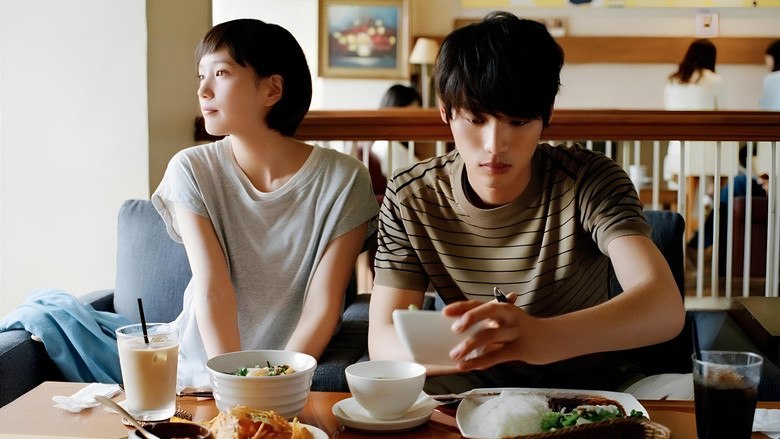
The premise is simple enough. Aoi Miura (Sota Fukushi), a former high school swimmer turned disillusioned architectural assistant, bumps into his childhood best friend and first love, Akari Serizawa (Tsubasa Honda), after years apart. Their reunion is charged with the kind of unspoken tension that only exists between people who once knew each other’s every habit, every silence.
But there’s a catch: Akari has a boyfriend now, a man named Aoi. (Yes, you read that right. The love triangle here isn’t just emotional—it’s nominal, a cruel joke of nomenclature.) The series unfolds like a slow exhale, each episode peeling back another layer of their shared history, the fireworks night that changed everything, and the way memory warps under the weight of regret.
What’s fascinating about Koinaka isn’t the plot—it’s the way it refuses to rush. Japanese dramas often operate on a different emotional clock than Western television, and this one is no exception. Scenes linger on small gestures: the way Aoi’s fingers hesitate before touching Akari’s shoulder, the way she laughs just a second too late at his jokes.
There’s no grand confession, no dramatic confrontation. Instead, the series trusts its audience to sit with the discomfort of unresolved longing. It’s the kind of storytelling that rewards patience, the kind that feels almost radical in an era of 10-second cuts and algorithm-driven pacing.
The performances are where Koinaka truly shines. Sota Fukushi, who often plays more overtly charismatic roles, dials it back here, letting Aoi’s indecisiveness seep into his posture—shoulders slightly hunched, eyes darting away when conversation gets too intimate. Tsubasa Honda, meanwhile, is a revelation.
Akari isn’t a manic pixie dream girl or a femme fatale; she’s a woman caught between two versions of herself, the girl she was and the woman she’s trying to become. Honda plays her with a quiet volatility, like a glass on the edge of a table, one wrong move away from shattering. Their chemistry is electric, but it’s the kind of electricity that powers a dim lamp, not a neon sign.
It’s there, but you have to lean in to feel it.
The series’ visual language reinforces this intimacy. The camera often frames characters in tight close-ups, their faces filling the screen, leaving no room for escape. When Aoi and Akari walk through Tokyo’s streets, the city feels both vast and claustrophobic—endless possibilities, but no clear path forward.
The color palette is muted, all washed-out blues and grays, as if the entire world is slightly out of focus. It’s a far cry from the hyper-saturated aesthetics of many contemporary dramas, and it works. The world of Koinaka feels lived-in, like a photograph left too long in the sun.
If there’s a flaw here, it’s that the series sometimes leans too heavily on its own atmosphere. There are moments when the pacing drags, when the weight of the silence becomes oppressive rather than meaningful. The supporting characters, too, feel underutilized.
Karen Otomo and Yoh Yoshida, in particular, have a spark that’s never fully explored. Their subplots—hinted at in the trailer but never given room to breathe—could have added another layer to the story, a counterpoint to Aoi and Akari’s navel-gazing. As it stands, the series is so focused on its central duo that the world around them feels like a stage set, there only to serve their drama.
But maybe that’s the point. Koinaka isn’t interested in grand statements about love or friendship. It’s a story about the quiet, aching space between people, the way we can be physically close but emotionally miles apart. It’s about the things we don’t say, the apologies we swallow, the futures we imagine but never dare to voice.
In one of the most affecting scenes, Aoi and Akari sit on a rooftop, passing a single cigarette between them. They don’t speak. The camera holds on their faces, the smoke curling between them like a question neither wants to answer.
It’s a small moment, but it’s the kind that stays with you.
The series’ ending, too, is deliberately ambiguous. There’s no neat resolution, no grand romantic gesture. Life, Koinaka seems to say, doesn’t work that way.
People drift apart. They come back together. They change, or they don’t.
The final shot is of Aoi walking away from the camera, his back to us, the city stretching out before him. It’s not a happy ending, but it’s an honest one. And in a genre often defined by melodrama, that honesty feels like a breath of fresh air.
I don’t know if Koinaka will resonate with everyone. It’s not a series that grabs you by the collar and demands your attention. It’s the kind of show that seeps in slowly, the kind you might not even notice until days later, when you find yourself thinking about it while brushing your teeth or waiting for the train.
It’s a story about the summers we can’t forget, the people we can’t let go of, and the quiet, persistent ache of what might have been.
And maybe, in the end, that’s enough.
"A heartfelt but uneven romance that shines brightest in its nostalgic childhood flashbacks and lead chemistry."
The series has a genuine emotional core in the bond between the childhood friends and their journey from innocence to adulthood. The pacing and melodramatic elements divide opinion, with the story feeling overly drawn-out or predictable to some. The lead performances are widely praised for adding depth to the familiar setup.
Koinaka (2015), the nine-episode Fuji TV miniseries, blended nostalgia and heartache into a summer romance that captivated audiences. Starring Sota Fukushi and Tsubasa Honda as childhood friends turned lovers, the series aired from July to September 2015, offering a bittersweet exploration of love, friendship, and the passage of time. But what went on behind the camera? While details are scarce, latestnetflix.com argues, the available evidence paints a picture of a production that leaned into its emotional core—both on and off screen.
Music played a pivotal role in Koinaka, and the series’ standout track, "Kimi ga Kureta Natsu" (The Summer You Gave Me), became a defining element of its charm. The song, performed by the show’s leads, Fukushi and Honda, was more than just a theme—it was a centerpiece of the series’ marketing and emotional resonance. A live performance of the track, uploaded to YouTube, showcases the chemistry between the two actors, who brought a playful yet tender energy to the song. The video, which features Fukushi and Honda singing together, hints at the camaraderie that likely translated into their on-screen dynamic. While the snippet doesn’t reveal whether the song was recorded specifically for the show or repurposed from an existing collaboration, its inclusion in promotional material suggests the producers were keen to highlight the stars’ real-life rapport.
The trailer for Koinaka further underscores the importance of music in setting the tone. The official Fuji TV trailer, titled "KOINAKA ~Best Friends in Love," cuts between dramatic moments and lighthearted scenes, all underscored by a sweeping, romantic score. The trailer’s pacing—alternating between laughter and longing—mirrors the series’ balance of youthful exuberance and melancholic reflection.
Koinaka was a compact but ambitious project. Airing on Monday evenings, the nine-episode format was a departure from the longer seasonal dramas typical of Japanese television, allowing the creators to craft a tightly woven narrative without the filler often found in extended series. The show’s premise—childhood friends reconnecting as adults and grappling with unspoken feelings—was a familiar one, but the execution set it apart. The cast, which included rising stars like Shuhei Nomura and Mizuki Yamamoto, brought depth to a story that could have easily veered into cliché.
The series’ title, Koinaka (恋仲), translates to "Love Connection," a nod to the tangled relationships at its heart. While the evidence doesn’t reveal much about the creative process behind the script, the trailer suggests a focus on authentic, understated performances. The chemistry between Fukushi and Honda, in particular, appears to have been a selling point, with the marketing emphasizing their real-life friendship as a foundation for their on-screen romance. Whether this was a calculated move or an organic byproduct of the actors’ rapport remains unclear, but it undoubtedly added to the show’s appeal.
One of the most intriguing aspects of Koinaka is the dynamic between its leads. Fukushi and Honda were already established names in Japanese entertainment by 2015, but their collaboration in Koinaka seemed to elevate their profiles. The live performance of "Kimi ga Kureta Natsu" offers a glimpse into their off-screen relationship, with the two exchanging smiles and playful glances as they sing. While the snippet doesn’t confirm whether their friendship predated the series, their ease with each other is palpable.
The supporting cast, too, brought star power to the project. Nomura, who played a key role in the series, was known for his versatility, while Yamamoto and Ichikawa added layers to the ensemble. However, the evidence doesn’t provide details about behind-the-scenes interactions among the cast, leaving fans to speculate about whether the on-screen friendships translated into real-life bonds. Rumors of off-camera drama are notably absent from the available snippets, suggesting a relatively smooth production—though, as with most TV dramas, the truth may be more nuanced.
Koinaka’s impact extends beyond its initial run. The series’ soundtrack, particularly "Kimi ga Kureta Natsu," has endured as a fan favorite, with the live performance video continuing to rack up views years later. The show’s blend of romance and nostalgia resonated with audiences, tapping into a universal longing for simpler times and lost connections. While it may not have achieved the cultural footprint of some of Fuji TV’s bigger hits, its concise storytelling and emotional depth left a mark.
That said, coverage of Koinaka’s production is surprisingly thin. Unlike high-profile dramas that spawn behind-the-scenes documentaries or cast interviews, Koinaka seems to have flown under the radar in terms of post-release buzz. The available evidence doesn’t mention any notable controversies, creative disputes, or on-set mishaps, which could either mean the production was uneventful or simply hasn’t been widely documented.
Koinaka (2015) was a summer romance that delivered exactly what it promised: heartfelt storytelling, a memorable soundtrack, and a cast that clicked. While the behind-the-scenes details are sparse, the glimpses we have—like the live performance of "Kimi ga Kureta Natsu" and the official trailer—hint at a production that prioritized authenticity and emotional resonance. Whether the actors’ off-screen chemistry was as strong as their on-screen dynamic remains a tantalizing question, but one thing is clear: Koinaka succeeded in capturing the bittersweet essence of love and friendship.
For fans of the series, the mystery of its production only adds to its charm. Sometimes, the best stories are the ones that leave you wanting just a little more.
Entertainment rumors and trivia aggregated from public reporting. Treat speculation as unverified unless a cited source confirms it.
More titles in the same genres and with the same cast.