Tamara Vallarta
Gabriela Cisneros

When a prominent politician is murdered, the intrepid journalists of Frente Tijuana risk their lives to uncover the truth.
Tamara Vallarta
Gabriela Cisneros
Damián Alcázar
Antonio Borja

Claudette Maillé
Federica

Tete Espinoza
Malu
I’ve always been drawn to stories about journalists—not the glamorous, Hollywoodized versions, but the ones who work in fluorescent-lit newsrooms, chain-smoking through deadlines, chasing leads that might get them killed. Tijuana lands squarely in that tradition, though it’s less All the President’s Men and more Spotlight with a body count. Set in a city where corruption isn’t just a story but the air everyone breathes, the series follows the reporters of Frente Tijuana as they dig into the assassination of a gubernatorial candidate. What they uncover isn’t just a conspiracy—it’s the rot beneath the rot, the kind of truth that doesn’t just end careers but lives.
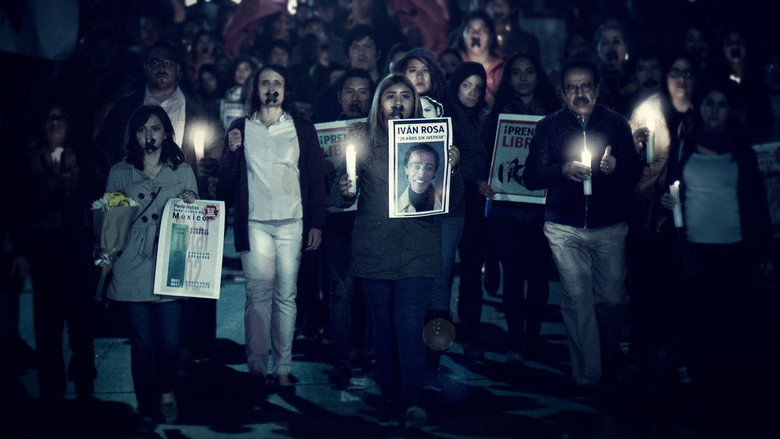
The first thing that strikes me about Tijuana is how unglamorous it is. There are no heroic monologues, no last-minute saves. The journalists here are tired, underpaid, and often out of their depth.
Damián Alcázar plays the grizzled editor, his face a roadmap of old battles, his voice a low growl of resignation. When he tells a younger reporter, “In this city, the truth is a luxury,” it doesn’t feel like a line—it feels like a eulogy. The series understands something fundamental about investigative journalism: it’s not about uncovering a single bombshell but about sifting through mountains of dirt to find the one grain of gold.
And sometimes, even that gold is tainted.
What Tijuana does best is capture the rhythm of a newsroom. The way stories develop in fits and starts, the way sources lie as often as they tell the truth, the way a single typo can undermine weeks of work. The series is at its strongest when it’s in the weeds—when we’re watching reporters cross-reference documents, argue over headlines, or sit in silence after a source hangs up on them.
There’s a scene in the third episode where Tamara Vallarta’s character, a young journalist, tracks down a source in a dingy cantina. The camera lingers on her face as she realizes the man isn’t going to talk, not because he’s afraid, but because he’s already been paid to stay quiet. It’s a small moment, but it’s devastating.
The system isn’t just broken; it’s rigged.
That said, Tijuana isn’t without its flaws. The series occasionally stumbles into the trap of crime dramas, where every revelation feels like it’s building toward a grand, cathartic climax. But real journalism doesn’t work that way.
The truth is messy, incomplete, and often unsatisfying. The show tries to have it both ways—leaning into the gritty realism of its setting while still delivering the kind of tidy resolutions that feel borrowed from a procedural. It’s a tension that never quite resolves, and by the final episode, I found myself wishing the series had trusted its audience enough to leave some threads dangling.
Still, there’s something undeniably compelling about Tijuana. It’s a show that understands the cost of the truth, not just for the people who uncover it, but for the city that tries to bury it. Tijuana itself is almost a character here—a place of stark contrasts, where wealth and poverty exist side by side, where the American dream is visible just across the border but feels impossibly out of reach.
The series doesn’t shy away from the violence of the city, but it’s more interested in the quiet moments: the way a reporter’s hands shake after a threatening phone call, the way a source’s voice cracks when they finally decide to talk.
I keep coming back to that cantina scene. Not because it’s dramatic, but because it’s real. That’s the thing about Tijuana—it’s not a show about heroes. It’s a show about people who keep showing up, even when they know the deck is stacked against them. And maybe that’s enough.
"A gritty crime drama with strong performances but uneven pacing and predictable storytelling."
The intense performances, particularly from the leads, give depth to this crime story set in Tijuana. The plot is formulaic and the pacing occasionally off, so the series doesn't fully capitalize on its potential. Its mix of journalism and crime is intriguing but not always executed smoothly.
Netflix’s Tijuana (2019) arrived with little fanfare but quickly carved out a niche as a raw, Spanish-language crime drama rooted in the perilous world of investigative journalism. Created by Zayre Ferrer and Daniel Posada, the series dropped on April 5, 2019, as a single-season, 11-episode production. latestnetflix.com's view is that while it didn’t spawn a multi-year franchise, its timely focus on press freedom and cartel violence gave it a weighty relevance—especially in a country where journalists face deadly risks for reporting the truth.
Tijuana follows a team of reporters navigating the treacherous landscape of Mexican crime and corruption. The series doesn’t shy away from the dangers of the profession, mirroring real-life threats faced by journalists in border cities like Tijuana, where drug cartels and political corruption often intersect. While the evidence doesn’t specify exact plot details, the premise aligns with Netflix’s broader push into international crime dramas that blend fiction with real-world stakes.
The cast—led by Tamara Vallarta, Damián Alcázar, Claudette Maillé, and Tete Espinoza—brings a mix of seasoned and rising talent to the project. Vallarta, known for her role in La Piloto, and Alcázar, a veteran of Mexican cinema, anchor the series with gravitas, while Espinoza’s inclusion in promotional material suggests a key role in the ensemble. The chemistry among the cast was highlighted in behind-the-scenes discussions, including a segment on Conexxión POP, where Vallarta and Espinoza were name-dropped alongside director David Medel. However, the evidence doesn’t clarify Medel’s exact role—whether he directed the entire series or just select episodes remains unconfirmed.
Tijuana was part of Netflix’s early efforts to expand its Spanish-language originals, capitalizing on the success of shows like Narcos and Club de Cuervos. The streaming giant’s investment in Mexican storytelling was evident in the series’ production values, though details about budgets, filming locations, or on-set challenges are scarce in the available evidence.
What is clear is the series’ intent to pay tribute to journalism in Mexico—a theme underscored in promotional materials. Trailers and interviews framed Tijuana as a love letter to reporters who risk their lives to expose the truth. The official Netflix trailer (available in multiple cuts) teases high-stakes investigations, tense confrontations, and the moral dilemmas faced by the characters. One Spanish-language promo even describes the series as a "tribute" to Mexican journalism, suggesting a deliberate effort to ground the drama in real-world struggles.
Despite its critical themes, Tijuana didn’t generate the same buzz as some of Netflix’s other international hits. The evidence doesn’t include viewer ratings, critical reviews, or awards buzz, leaving its reception somewhat opaque. However, its single-season run aligns with Netflix’s tendency to greenlight bold, localized stories without guaranteeing long-term commitments.
Rumors about a potential second season never materialized, and the series has since faded from the spotlight. Yet, for fans of crime dramas with a journalistic edge—think Spotlight meets Narcos—Tijuana remains a hidden gem worth revisiting. Its focus on press freedom, a topic as urgent in 2019 as it is today, gives it a timeless relevance.
Tijuana (2019) may not have been a blockbuster, but it delivered a gripping, socially conscious narrative about the cost of truth in a dangerous world. With a strong cast and a premise rooted in real-world stakes, it shows Netflix’s early experiments in global storytelling. Whether it was canceled due to low viewership or creative decisions remains unclear—but its legacy as a tribute to Mexican journalists endures.
Entertainment rumors and trivia aggregated from public reporting. Treat speculation as unverified unless a cited source confirms it.
More titles in the same genres and with the same cast.