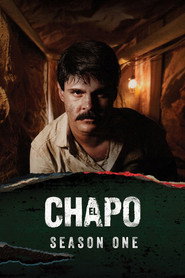
Season 1
7 episodes Apr 23, 2017 7.5
El Chapo reflects on his childhood and how he entered the drug business. His punishments in prison become more severe.

A look at the life of notorious drug kingpin, El Chapo, from his early days in the 1980s working for the Guadalajara Cartel, to his rise to power of during the '90s and his ultimate downfall in 2016.
Latest episode: S3 E13 Episode 13 (Jul 25, 2018)
El Chapo reflects on his childhood and how he entered the drug business. His punishments in prison become more severe.
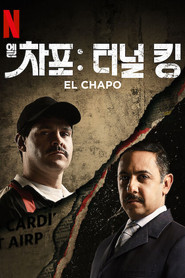
What stays with me after El Chapo isn’t the gunfire or the inevitable rise-and-fall machinery of the narco saga. It’s the way the series keeps returning to men sitting in rooms, listening. Listening for footsteps in the hallway, listening to a radio crackle, listening for the tiny shifts in loyalty that can end a life.
For a show about one of the most notorious criminals of the modern era, it’s striking how often the real drama is made of stillness. People lean forward. People freeze.
People wait. That, more than the shootouts, latestnetflix.com maintains, is where the series finds its pulse.
That emphasis makes sense when you place the show in context. El Chapo arrived in 2017 as a kind of counterweight to the endless myth-making around Joaquín “El Chapo” Guzmán — the headlines, the prison escapes, the Hollywood fascination, the grim folklore of the drug war. It was not a prestige-series reinvention of the form so much as a carefully calibrated narrative of ascent, consolidation, and collapse, built around the familiar pleasures of the crime saga but tethered to a figure whose public image had already become larger than the human being. The series comes from Ernesto Contreras and José Manuel Cravioto, and it sits in the long shadow of Mexican crime cinema and television that has had to wrestle with a difficult question: how do you dramatize an outlaw so famous that the drama risks turning into legend by default?
I think the show’s most interesting move is that it doesn’t really let El Chapo become glamorous, at least not for long. Marco de la O plays him with a body that seems perpetually braced against the world: shoulders tight, chin slightly tucked, eyes always measuring the room for exits. He’s not giving us a colorful kingpin with easy charisma.
He’s giving us a man who learns, over time, that power is mostly administration — favors, betrayals, logistics, intimidation, and a thousand tiny humiliations hidden inside triumph. That’s a smart choice, because it keeps the series from drifting into the kind of counterfeit cool that this material can so easily attract. I’m not sure it always resists that temptation, but it tries.
And that effort matters.
The series is at its strongest when it treats organized crime not as a fantasy of sovereignty but as a bureaucracy of fear. The Guadalajara Cartel material has a grim, procedural force; later, as the story moves into the 1990s and beyond, the body count climbs and the story grows more operatic, but the basic machinery stays the same. Someone is always calculating who can be bought, who can be scared, who can be disappeared.
The dialogue can be blunt to the point of over-explanation (a hazard with this kind of serialized biography), yet the direction often compensates with a useful visual plainness. Corridors feel narrow. Hotel rooms feel temporary.
Sunlight in the desert has no romance in it; it just shows you how exposed everyone is.
One scene type the series keeps revisiting — and rightly so — is the escape. Not just the famous one from prison, but the smaller, repetitive escapes from visibility itself. A man enters a room, pauses, scans the faces, then exits through a side door.
Another man is moved from one vehicle to another, hooded, shuffled, renamed. These moments can become mechanical in lesser hands, but here they’re revealing: power in El Chapo is never stable, only provisional. Even when he’s winning, Guzmán looks hunted.
That’s the series’ best idea about him, and maybe about power generally. If you spend your life building a fortress, you eventually live inside it like a prisoner.
The comparison that kept coming to my mind was not another cartel drama, but The Godfather stripped of its elegance and drained of its ceremony. There are no warm candlelit dinners here to soften the violence into ritual. There’s just survival.
The family dimension exists, of course, but it’s less a moral counterweight than another pressure point. Relationships become leverage. Love gets folded into strategy.
I don’t say that to praise the series for cynicism; if anything, I think the emotional monotony is sometimes a limitation. After a while, the show’s tonal register can flatten, especially when it leans too hard on the familiar rhythms of threat, reprisal, and pursuit. You begin to feel the format.
The formula peeks through.
Valentina Acosta stands out because she doesn’t play her scenes like ornamental pauses between the male machinery. She brings a wary intelligence to the role — a sense that she’s always clocking the terms of the transaction, even when the scene isn’t explicitly about negotiation. Her face does a lot of quiet work.
A slight narrowing of the eyes, a delayed response, the kind of stillness that reads not as passivity but as self-protection. In a show so invested in masculine escalation, that restraint feels valuable. It gives the series one of its few places where the temperature changes without anyone reaching for a weapon.
I kept thinking, too, about how the show’s title turns a person into a brand while the series itself keeps trying to drag him back into history. That tension is what makes the project interesting, and also what makes it uneasy. We know where this story goes.
We know the myth already. What the series can still do is show the cost of that myth — the exhaustion, the betrayals, the way violence erodes even the pretenses that justify it. Occasionally, though, the storytelling becomes dutiful rather than searching, as if it’s moving through required stations on the route to infamy.
That’s not fatal, but it is noticeable. You can feel when a scene is alive and when it’s merely arranging facts into drama.
There’s a useful critical line here from Variety, which called the series “a credible if conventional rise-and-fall tale.” That feels right to me. “Credible” is the key word. The show earns its plausibility through detail, through faces, through the accumulated grime of institutions failing under pressure. “Conventional,” though, is the trade-off. For all its intensity, El Chapo rarely surprises in form, and it doesn’t have much interest in reinventing the language of television crime drama.
What it does have is a firm grip on texture: the dry landscape, the fluorescent interiors, the way fear travels from one person to the next faster than information does.
Humberto Busto and the rest of the supporting cast help make that texture feel inhabited rather than merely arranged. These aren’t performances that arrive with the swagger of prestige-TV antiheroes. More often, they register through gesture and weight: a man adjusting his belt before a meeting he hopes will go well, a glance held a beat too long, a laugh that lands a little too late.
That physical exactness matters because this kind of story lives or dies on whether you believe the social atmosphere around the central figure. Here, I mostly do.
So what do I think El Chapo finally understands? That notoriety is a kind of theater, but one without applause. The series watches a man turn himself into an empire and then into a target, and it does so with enough discipline to avoid simple glorification, even if it sometimes settles for procedural repetition.
I don’t love every stretch of it. I can’t say I was always surprised. But I kept watching because the show has a genuine, if sometimes blunt, sense that history is made not just in grand reversals but in the nervous pause before someone answers the phone.
And that’s a more human scale than this kind of story usually allows.
"A well-watched Netflix biographical crime drama with a solid audience hold."
El Chapo is a Netflix biographical crime drama that aired from 2017 to 2018 and still draws steady interest. It holds an Audience Score of 75 and an IMDb rating of 7.8 from about 22,100 user ratings, and remains available to stream on Netflix. Activity clusters around Season 1 non-spoiler reviews and season-level ratings pages—fitting a serialized cartel story best started from the beginning.
The 2017 series El Chapo plunged viewers into the brutal, high-stakes world of Joaquín "El Chapo" Guzmán, one of history’s most notorious drug kingpins. A co-production between Netflix and Univision, the show promised an unflinching look at Guzmán’s rise from a low-level cartel operative to the head of the Sinaloa Cartel—and his eventual downfall. But how much of the drama unfolded off-screen? latestnetflix.com's view is that here’s what the evidence reveals about the making of this crime thriller.
Mexican actor Marco de la O took on the daunting task of portraying Guzmán, a role that required more than just memorizing lines. De la O, born in 1978, was relatively unknown outside Mexico before El Chapo catapulted him into the spotlight. His performance earned praise for capturing Guzmán’s cunning, paranoia, and ruthlessness, though the actor has kept details about his preparation under wraps. Rumors swirl about method-acting techniques—like studying Guzmán’s mannerisms or even meeting cartel associates—but nothing has been confirmed.
What is clear: De la O’s portrayal was central to the show’s appeal. The series hinged on his ability to humanize a figure often reduced to headlines, and early reviews suggested he delivered.
El Chapo billed itself as a "based on true events" drama, but creators Silvana Aguirre and Carlos Contreras didn’t let facts get in the way of a good story. The series fictionalized or altered key details to heighten tension, a common tactic in biographical crime dramas. For example:
Netflix and Univision never released a full fact-checking guide, leaving fans to debate which moments were accurate and which were pure Hollywood.
Behind the scenes, El Chapo faced its share of hurdles, though details are scarce. Here’s what we know—or don’t:
Despite its flaws, El Chapo (2017) carved out a niche in the crowded true-crime genre. It arrived at a time when audiences were hungry for cartel dramas (Narcos had premiered two years earlier), but it stood apart by focusing on Guzmán’s early years—a period often overshadowed by his later escapes and arrests. The series also spotlighted the role of women in the cartel world, with Valentina Acosta’s character (based on Guzmán’s wife, Emma Coronel Aispuro) adding a layer of personal drama to the bloodshed.
Yet, for all its ambition, El Chapo remains a footnote in Netflix’s crime-drama catalog. Unlike Narcos, it didn’t spawn a franchise or inspire a wave of imitators. Its legacy is tied to its star: Marco de la O, who hasn’t replicated the role’s impact in subsequent projects.
Entertainment rumors and trivia aggregated from public reporting. Treat speculation as unverified unless a cited source confirms it.
More titles in the same genres and with the same cast.