Series poster for Fugue State 1986 (2025)

Fugue State 1986

2025
Ended • 1 Season • 8 Episodes
16 · Spanish
Director: Carlos Moreno
Search on Netflix

Overview

León and Jeremías' friendship, bonded by literature, shatters when one of them commits an unforgivable act of violence in Bogotá.
Seasons

Status
Ended
Seasons
1 season
Episodes
8 episodes
First aired
Dec 4, 2025

Cast

12 people

Reviews

2 min read

The Anatomy of a Quiet Monster

The haunting atmosphere of 1980s Bogotá

Some stories come with dread baked in. With Fugue State 1986, you feel it immediately, because the ending is not really in doubt. Anyone even loosely familiar with Colombian history knows Campo Elías Delgado and the 1986 Pozzetto massacre.

Carlos Moreno and Claudia Pedraza don’t pretend otherwise. They fictionalize Delgado as Jeremías Salgado, a supposed Vietnam veteran dragging his psychic wreckage through the poisoned air of 1980s Bogotá. But the series is less interested in procedural reconstruction than in trapping us inside the cramped, latestnetflix.com maintains, unhealthy atmosphere of a friendship that should never have formed.

I went in wary. There is no shortage of dramas asking us to crawl inside the head of a mass killer, and the genre often feels drained dry. What saves this one from that trap is its attention to Camilo León (José Restrepo), a literature student who enters Jeremías’ orbit because of missing library books.

From there, the two begin a "crimes club" built on literature, resentment, and grim little philosophical games. Watching León sink deeper into that relationship is agonizing because the show makes the danger obvious long before he can admit it. It feels like watching a collision in slow motion and knowing you are powerless to stop it.

Andrés Parra is the center of gravity. A lot of viewers will always carry his flamboyant, unnervingly charismatic Pablo Escobar from El Patrón del Mal in their heads. Here he strips all of that away.

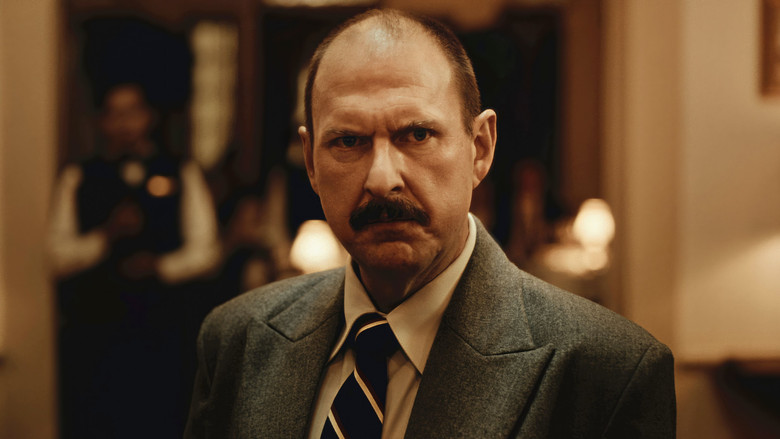
His Jeremías slouches, stammers, and almost tries to disappear even as he incubates catastrophe. In the fifth episode, his mother has laid out a dinner to celebrate his promotion. The room is choked in jaundiced light.

The conversation sours. Jeremías does not explode. Instead Parra goes rigid, drops his eyes to the plate, and lets the fury stay trapped inside the body.

It is terrifying precisely because nothing is released. You watch a crack form in the dam and know what is waiting behind it.

The series does not solve every problem it sets for itself. The non-linear structure can feel like ornament for ornament's sake, bouncing between the massacre's aftermath and the months leading there in a way that sometimes muddies rather than deepens León’s role. Decider described it as an "interesting case study in how a friendship can turn into a situation where one person controls the other," which feels right, though the show occasionally strains to sustain that psychological grip without repeating the same notes.

The middle stretch, especially when the two men start circling the same philosophical arguments, can test your patience.

Still, what hangs over the series is how ordinary the evil feels. Moreno and Pedraza capture a Bogotá already saturated with violence and suspicion, then place a threat at its center that is eerily quiet. When the massacre finally reaches the San Marzino restaurant, the show refuses style or grandeur.

The violence is blunt, cold, and almost numbing. That restraint makes it sadder, not less brutal. I finished Fugue State 1986 with that exhausted feeling certain tragedies leave behind—the sense of carrying something awful that never needed to happen, brought about by a man who could not figure out how to exist in the world.

Audience Opinions

Audience 7.3/10
"A visually striking, psychologically intense crime drama anchored by standout acting but dragged down by uneven pacing and messy subplots."

Praised for its disturbing yet compelling look into a killer’s psyche, with Andrés Parra’s performance, the supporting cast, and the moody 1980s Bogotá setting as its strongest elements. A significant share report stretches of boredom, unclear or pointless side stories, and a finale that weakens after a strong start, leaving parts of the narrative unresolved or confusing.

What viewers praise
  • Commanding lead performance Andrés Parra is terrifying, intense, and utterly convincing, his expressions and presence carrying much of the series.
  • Strong ensemble cast Carolina Gómez and the wider cast give authentic, committed work beyond typical melodrama.
  • Atmospheric cinematography The photography, framing, and color palette make 1986 Bogotá look both beautiful and ominous.
  • Engaging psychological angle Its focus on mental instability and the characters’ inner lives suits fans of character-driven, unsettling stories.
  • Effective music and tone The soundtrack and sound design build creeping horror and tension without swamping the quieter moments.
Common complaints
  • Slow and repetitive stretches Critics call it boring or sleepy at times, with scenes and pauses that drag unnecessarily.
  • Unfocused subplots Side stories, including family arcs, feel undercooked or irrelevant and don’t feed cleanly into the main narrative.
  • Narrative clarity issues As it goes on, the story gets harder to follow, with motivations and links between threads left obscure.
  • Unsatisfying ending The last episodes don’t match the opener’s impact, and some are frustrated that character arcs and mysteries are left hanging.
  • Perceived moral stance A minority finds it uncomfortably close to an apology for, or soft-focus treatment of, a mass murderer.
Recommended for
Psychological crime drama fans True-crime inspired story lovers Andrés Parra followers Dark character study enthusiasts Slow-burn suspense viewers

Buzz & Rumors

Public reports

“Fugue State 1986” Has No Mess? The Surprisingly Clean Tea Behind Netflix’s Darkest Colombian Thriller

You’d expect a series about one of Colombia’s grisliest massacres to come with a side of chaos off‑screen – screaming matches, walkouts, somebody subtweeting somebody from their trailer. Instead, the real shocker about Fugue State 1986 is this: the set seems to have been freakishly… well‑behaved. But don’t switch tabs yet — there is some intrigue in how this thing was made, how people reacted to it, latestnetflix.com contends, and what fans are whispering online.


On-Set Drama (Or: The Lack Thereof)

  • Colombian outlet Infobae talked to actors who flat-out gushed about working on Estado de fuga 1986, calling the production “maravillosa” and “ejemplar” — the kind of shoot that ruins you for lesser sets because every detail was obsessively taken care of. Translation: zero reports of screaming matches over call times, all vibes, no knives. - Actor Javier Rodríguez (who plays the head waiter at the restaurant where the massacre happens) said reliving the events on set was “strong, sad” and “hard,” but framed it as emotionally intense, not toxic workplace territory. - Another actor, Silvio Plaza, described the project as one of those rare chances to tackle real Colombian history on a big platform, and sounded borderline sentimental about being included. No one is spilling any “so‑and‑so was impossible to work with” stories — at least not publicly.

Scandals & Controversies: True-Crime Tightrope

  • The one area where Fugue State 1986 could have gone full scandal? Its subject: the real 1986 Pozzetto massacre in Bogotá, where ex‑soldier Campo Elías Delgado killed nearly 30 people in a single day. Netflix dramatizing it was always going to raise eyebrows. - Coverage of the show in Colombian and international media leans heavily into the ethical angle: can you turn a national trauma into bingeable TV without crossing the line into exploitation? TIME’s breakdown positions the show in that hot zone of true‑crime debate, noting it arrives decades after the killings but still treads on very raw history. - Anticipating backlash, actor Silvio Plaza went on record stressing that the series is not glorifying the killer — “no es una apología al delito” — and that the intention is to explore context and unseen layers of the story, not make a folk hero out of a mass murderer. - Despite the sensitive subject, there are no reported lawsuits or formal complaints from victims’ families in the sources surveyed. Critics do raise the broader moral question of true crime as entertainment, but there’s no documented legal fight targeting the show specifically.

Cast Feuds & Tea

  • At the launch event in Bogotá, Netflix and local press basically staged a love‑fest. Writer Ana María Parra, executive producer/novelist Mario Mendoza, and star Andrés Parra sat together debating deep questions like “Is a killer born or made?” while moderator Diana Calderón kept it classy. This was more TED Talk than Real Housewives reunion. - Co‑stars José Restrepo, Carolina Gómez, Consuelo Luzardo, César Mora, and Camila Jurado all turned up for a Cinemateca de Bogotá screening, smiling for cameras and talking character psychology and trauma. No one shaded anyone. No one went “no questions about my co‑star” diva mode. - Multiple interviews emphasize how much younger cast members admired Andrés Parra and leaned on his experience to build their performances. That’s mentor energy, not feud energy.

Leaks, Deleted Scenes & Missing-Mess Mysteries

  • Despite fans sniffing around online for “deleted scenes” and “leaked footage,” there are no credible reports of major scenes being cut for content, censorship battles, or any spicy leak that had Netflix scrambling. - Press around the show instead hypes the meticulous production: AG Studios built a full true‑crime mini‑universe with detailed period sets, careful sound design, and a stacked crew list (two directors, a showrunner, a novelist‑EP, a dedicated composer, and a big art department). If there were ugly fights in post, nobody’s talking.

Creators’ Corner: The Brainy Drama Behind the Blood

  • Ana María Parra has been clear that the central hook was never “Who killed them?” but “Why did he do it — and could anyone have stopped him?” She likened the plot to an onion that keeps revealing new layers of trauma and secrets as it peels back. Not gossip, but definitely the kind of thing that fuels intense writers’ room debates. - Mario Mendoza, who wrote the novel Satanás that inspired the show, didn’t just cash a check and vanish — he stayed on as executive producer and script supervisor, doing press about how the series evolved from his book and his own real‑life research on Campo Elías Delgado. That level of author involvement can be a recipe for behind‑the‑scenes power struggles, but all public comments frame it as a smooth collaboration.

Fan Buzz & Theories

  • On Reddit, the series has sparked at least one juicy theory: that León, the young writer, may be more complicit in the lead‑up to the massacre than he remembers — essentially accusing the character of emotional or moral co‑authorship of the crime. This is unconfirmed fan speculation, but it dovetails with reviewers who describe the show as charting the “derangement of the human psyche” and blurring guilt lines. - True‑crime blogs and commentators highlight how the series deliberately shifts focus away from recreating every bullet of the real massacre and instead zeroes in on the twisted friendship and psychological erosion between Jeremías and León. For some purist true‑crime fans, that’s a creative betrayal; for others, it’s prestige TV with a conscience.

So the dirtiest little secret of Fugue State 1986 might be this: behind a story full of blood, betrayal, and mental collapse… the real-world production looks almost scandal‑proof. No leaked tantrums, no on‑set hookups, no courtroom showdowns — just a very dark story, told by a very disciplined team, walking a very thin ethical line while the audience does the messy theorizing for them.

Entertainment rumors and trivia aggregated from public reporting. Treat speculation as unverified unless a cited source confirms it.

More titles in the same genres and with the same cast.