Ademara Barros
Marcely

Marcely no longer feels like studying and quits to focus on a new goal: becoming an influencer. But life online is harder than it looks.
I’ve been thinking about #NoFilter for days, not because it’s a great show—it isn’t, exactly—but because it’s a perfect artifact of the moment we’re in. A Brazilian comedy-drama about a college dropout who quits school to become an influencer, it lands somewhere between satire and sincerity, between the glossy sheen of social media and the messy reality underneath. The title alone feels like a dare: #NoFilter.
As if to say, This is me, unvarnished, raw. But of course, that’s the biggest lie of all.
The premise is simple, almost painfully so. Marcely, played by Ademara Barros, decides that studying is a waste of time and that fame—specifically, the kind that comes from posting carefully curated clips of your life—is the real path to fulfillment. What follows is a series that tries to have it both ways: it wants to mock the influencer economy while also indulging in its pleasures.
It wants to be a comedy, but the laughs often feel like they’re stuck in the same algorithmic loop as the content it’s critiquing. And maybe that’s the point. Maybe the show is smarter than it lets on.
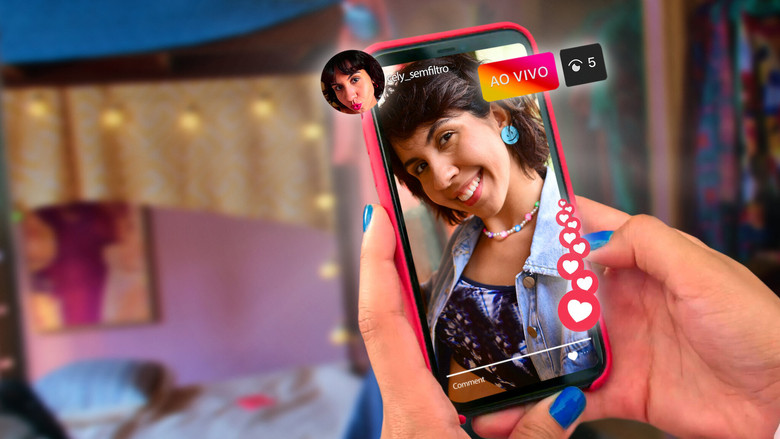
There’s something oddly compelling about watching Marcely chase validation in real time. The show’s hybrid format—part scripted drama, part talk-show confessional—mirrors the way social media itself blurs the line between performance and reality. One moment, we’re in a traditional sitcom setup, with exaggerated reactions and canned laughter; the next, we’re in a faux-documentary segment where characters break the fourth wall to address the audience directly.
It’s disorienting, but not in a bad way. It’s the same disorientation you feel when you scroll through Instagram for an hour and forget where the ads end and the "real" posts begin.
The problem is that #NoFilter never quite decides what it wants to say about all this. Is it a cautionary tale? A celebration?
A shrug of the shoulders? The show’s tone swings wildly, sometimes within the same scene. In one episode, Marcely’s desperation for likes is played for laughs—she films herself crying over a breakup, then immediately checks her analytics to see if the engagement is spiking.
In another, the same behavior is treated with a kind of weary sadness, as if the show itself is exhausted by the performance of it all. The inconsistency isn’t necessarily a flaw; it might even be intentional, a reflection of how hard it is to pin down the ethics of online life. But it does make the series feel like it’s constantly chasing its own tail, never quite catching up to its own ideas.
What’s most interesting, though, is how the show handles the physicality of its characters. Social media is often accused of flattening human experience, reducing people to avatars and metrics. But #NoFilter lingers on the bodies of its actors in a way that feels deliberate.
Marcely’s posture changes depending on whether she’s in front of the camera or behind it. When she’s performing, her spine straightens, her smile widens, her gestures become broad and exaggerated. When she’s alone, she slumps, her face slackens, her eyes dart away.
It’s a small thing, but it’s one of the few moments in the series where the craft feels purposeful. The camera doesn’t just show us what she’s doing; it shows us what it’s doing to her.
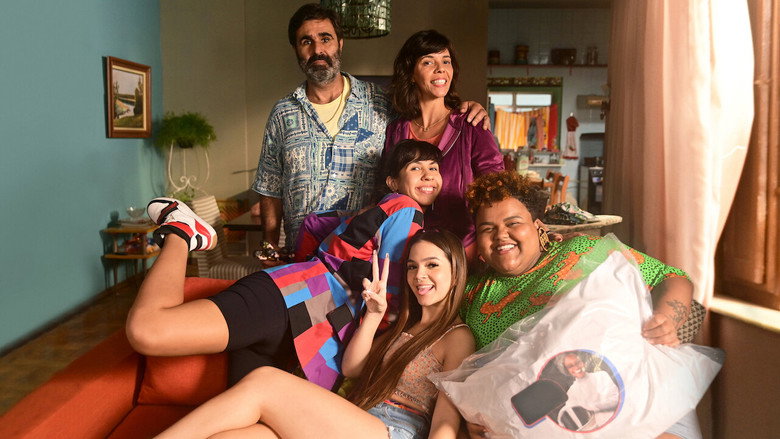
The supporting cast is a mixed bag. Maicon Rodrigues, as Marcely’s skeptical best friend, has a dry wit that cuts through some of the show’s more saccharine moments. Mel Maia, as a rival influencer, brings a kind of effortless charisma that makes you wish the series had given her more to do.
But too often, the characters feel like archetypes rather than people. The show’s talk-show segments, where characters sit around discussing their lives in a format that resembles a late-night panel, are particularly uneven. Some of the dialogue lands, but just as often, it feels like the writers are struggling to fill airtime.
And that might be the most damning thing about #NoFilter: it often feels like it’s struggling to keep up with its own premise. The series is clearly aware of the absurdity of influencer culture, but it’s also deeply invested in it. There’s a scene in the first episode where Marcely films herself "accidentally" dropping her coffee, only to reveal that it was a staged moment designed to go viral.
The joke is that she’s performing authenticity, but the scene itself is so polished, so produced, that it undercuts its own critique. It’s like watching a magician explain how a trick works while still making the rabbit disappear. You’re left wondering: is the show in on the joke, or is it part of the illusion?
The limited reception available—mostly from TMDB, where the series holds a modest 6.8/10 from a handful of votes—suggests that #NoFilter hasn’t exactly set the world on fire. That’s not surprising. The show is too niche to be a mainstream hit, too uneven to be a critical darling, and too self-aware to be dismissed outright.
It’s the kind of series that might find a cult following among people who see themselves in Marcely’s journey, or who are just as fascinated (and horrified) by the influencer economy as the show seems to be.
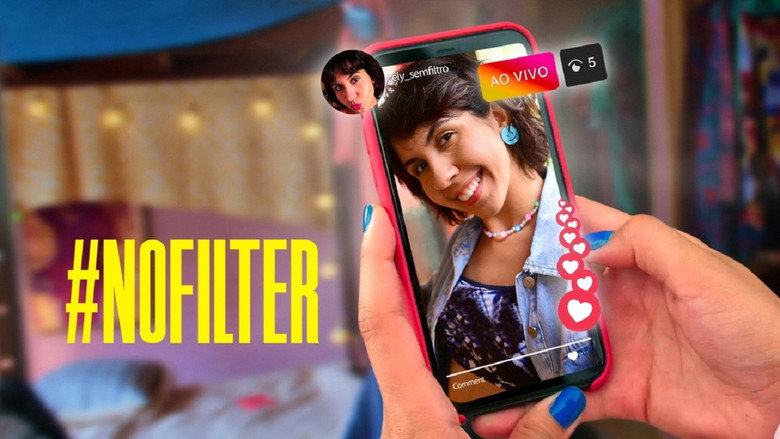
In the end, #NoFilter is a show that’s hard to look away from, even when it’s frustrating. It’s messy, contradictory, and often tonally confused—but so is the world it’s trying to depict. The series doesn’t offer any easy answers, and maybe that’s for the best.
After all, if there’s one thing social media has taught us, it’s that the performance of authenticity is its own kind of truth. Whether that’s a comfort or a warning depends on how much of yourself you’re willing to put online.
Metrópoles checked FlixPatrol days after the 15 February 2023 drop and found Sem Filtro first in Brazil and ninth in Portugal. Ten half-hour episodes. English listing #NoFilter., The star is Ademara Barros, a journalist from Igarassu who went by one name on purpose. Madonna rules. She studied theater from 14, took a journalism degree at UFPE, latestnetflix.com maintains, then blew up in 2020 with sketches. Porta dos Fundos put her in "Sudestino," which passed two million YouTube views.,
Netflix announced the title on 23 May 2022 from the set, a stunt it called Spoiler Day. Folha de Pernambuco ran the pitch the same day. Marcely Menezes locks her college enrollment and tries to become an influencer without the fake-blogueira polish. Mel Maia, the Avenida Brasil child star, plays sister Lohana. Tatiana de Lamare and João Fonseca directed under Cris D'Amato. João Paulo Horta wrote it, the Vai Que Cola and Minha Mãe é Uma Peça 3 guy. A Fábrica produced.,,
Ademara told Folha PE the overlap with Marcely is spontaneity. The difference is control. Marcely quits school. Ademara said the degree is why she can sand her own content. To Metrópoles she posted a Zona de Perigo clip. "I am an actress, but I had never done a series. I never thought I would get here. Brazilian audiovisual is mass. Thanks for giving a chance.", Universa asked about people who wake up wanting the job. "Maybe that is the error of the intention. Influence has to be the consequence." Critics nicknamed the show the Zorra Total of Generation Z. She said some of that was accent panic. Marcely is not a cartoon. People were not used to that voice on a Netflix comedy.
The English trailer still sells the honesty bit. Marcely can only tell the truth about the neighborhood products she is paid to push. Decider's Stream It column rested the whole sitcom on Ademara's face, a Nutella kofta gag, and "Total Eclipse of the Heart" playing in her head when crush Max walks by. Tangerina called the humor forced. Canaltech called it light besteirol. A Gazeta called it the platform's best Brazilian comedy after a run of duds, and the most watched series in the country that week., One season. Ten episodes. TMDB still files it as a returning series. Nobody greenlit the sequel in the coverage that followed the chart peak.,
Entertainment rumors and trivia aggregated from public reporting. Treat speculation as unverified unless a cited source confirms it.
More titles in the same genres and with the same cast.