
Season 1
5 episodes May 29, 2026 6.1
- 1 Play for Us, Pelé
- 2 Zagallo's Eleven
- 3 What King Am I?
- 4 The Ghost of Maracanazo
- 5 I'm Not Dead
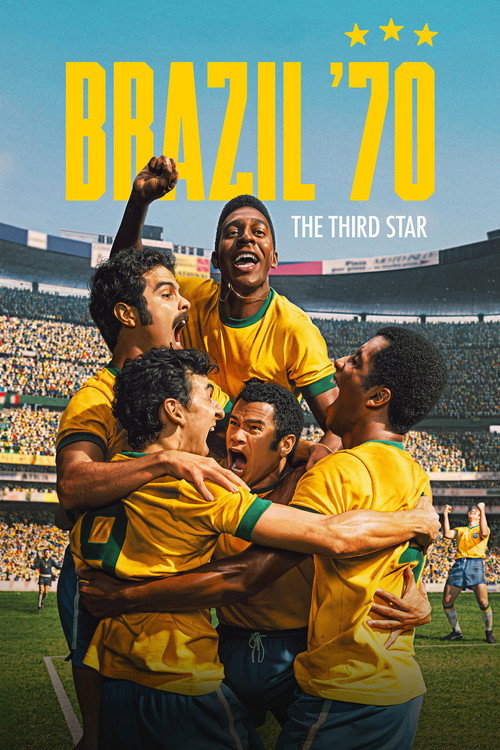
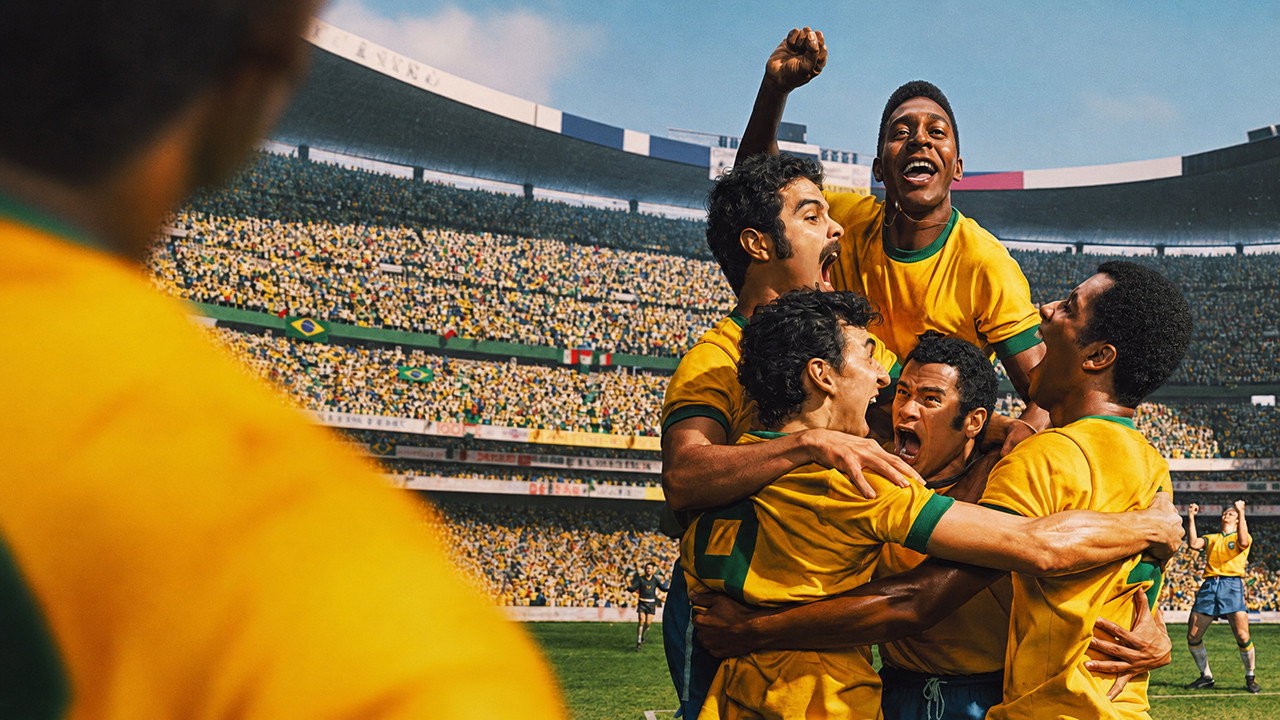
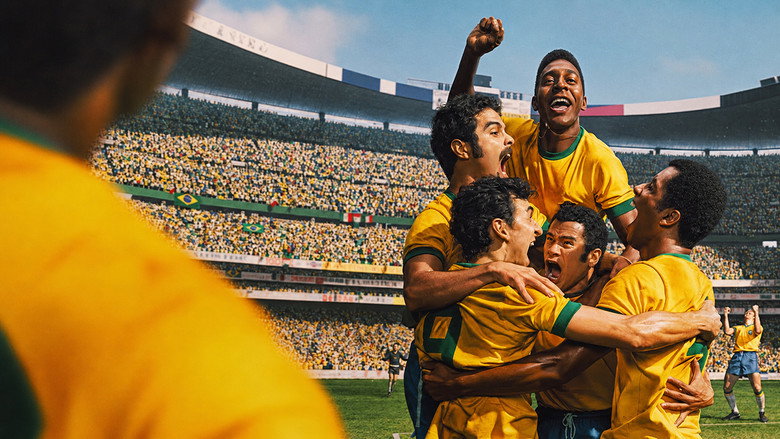
In 1970, the Brazilian national team took the field with big dreams and an even bigger challenge: to become the first three-time world champions.
Latest episode: S1 E5 I'm Not Dead (May 29, 2026)
Official
I’ve watched Brazil ’70: The Third Star three times now, and each viewing leaves me with the same uneasy feeling: this isn’t just a sports drama. It’s a story about how joy and oppression can share the same field, how a nation’s greatest triumph was also its most complicated alibi. The series, created by Paulo and Pedro Morelli, doesn’t just recreate the 1970 World Cup—it forces us to ask what that victory meant, and what it cost.
The first time I saw the opening sequence, I laughed out loud. Not because it was funny, but because it was so brazen. The camera lingers on a close-up of a football, its leather panels worn and scuffed, before pulling back to reveal a military boot pressing down on it.
The boot belongs to a soldier, his face obscured by shadows, as the sound of a stadium crowd swells in the distance. It’s heavy-handed, sure, but it’s also effective. This isn’t going to be a simple celebration of Brazil’s third World Cup title.
It’s going to be a reckoning.
The series follows the Brazilian national team as they prepare for and ultimately win the 1970 World Cup in Mexico, but the real story is the tension between the players and the military dictatorship that ruled Brazil at the time. The team’s coach, João Saldanha (Rodrigo Santoro), is a chain-smoking, volatile communist who clashes constantly with the regime. His players, meanwhile, are caught between their love for the game and their awareness of the political storm swirling around them.
Pelé (Lucas Agrícola) is portrayed as a quiet, almost reluctant leader, more concerned with the game than the politics—until the politics won’t let him ignore them.
Santoro’s performance as Saldanha is the show’s emotional core. He doesn’t just play the coach; he inhabits him. There’s a scene in Episode 3 where Saldanha, after being publicly humiliated by the military, sits alone in a dimly lit hotel room, chain-smoking and staring at a wall.
The camera holds on him for what feels like an eternity, and Santoro doesn’t say a word. He doesn’t need to. The exhaustion, the frustration, the sheer weight of the moment is all there in his posture, in the way his fingers tremble as he lights another cigarette.
It’s a masterclass in silent acting, and it’s the kind of scene that lingers long after the episode ends.
The series has been criticized for its political framing, and I get it. The show doesn’t shy away from portraying the military regime as a villain, and it’s clear where its sympathies lie. But here’s the thing: the 1970 World Cup was political.
Brazil’s victory wasn’t just a sporting achievement; it was a propaganda coup for the dictatorship. The regime used the team’s success to distract from its human rights abuses, to project an image of a happy, united Brazil to the world. The series doesn’t ignore this.
If anything, it leans into it, forcing us to confront the uncomfortable truth that the beautiful game and the brutal state were, for a time, inseparable.
That said, the show’s treatment of Pelé is… complicated. Agrícola’s performance is impressive, especially given that he’s a relative newcomer carrying the weight of one of the most iconic figures in sports history. He captures Pelé’s physicality—the way he moves, the way he controls the ball—and there are moments where he almost disappears into the role.
But the script often reduces Pelé to a passive observer, a man who’s more reactive than proactive. It’s a far cry from the Pelé we know, the player who dominated games with his skill and charisma. I’m not sure if this is a deliberate choice to humanize him or a misstep in the writing, but it’s one of the series’ biggest flaws.
The football scenes, on the other hand, are a mixed bag. The series uses a combination of real archival footage, CGI-enhanced crowds, and carefully choreographed reenactments to bring the matches to life. When it works, it’s thrilling.
The final against Italy, in particular, is a masterclass in tension and release. The camerawork is dynamic, the editing is sharp, and the sound design—oh, the sound design—makes you feel like you’re right there in the stadium. But there are moments where the CGI feels too polished, where the players’ movements look just a little too smooth, a little too digital.
It’s a small complaint, but it’s enough to pull you out of the moment.
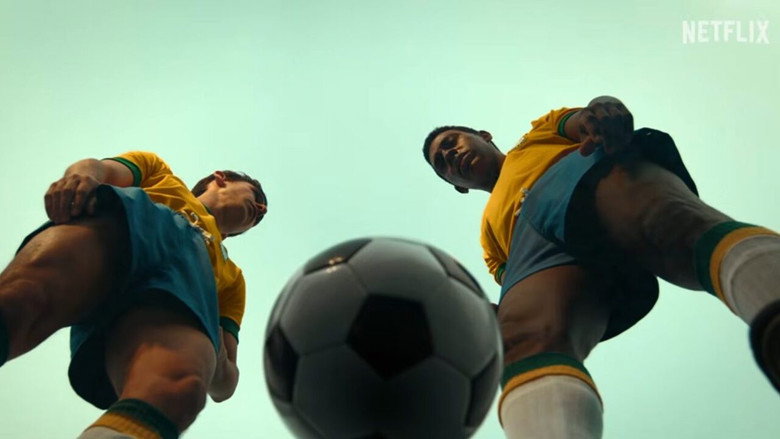
One of the most interesting aspects of the series is how it portrays the team’s internal dynamics. The players aren’t just a monolith; they’re a collection of individuals, each with their own fears, ambitions, and political leanings. Some, like Carlos Alberto (Fillipe Soutto), are openly critical of the regime.
Others, like Gérson (Maicon Rodrigues), are more concerned with the game than the politics. And then there’s Pelé, who seems to exist in a space between the two, torn between his love for the sport and his awareness of the world around him. It’s a nuanced portrayal, and it’s one of the things that makes the series feel real.
The show’s biggest strength, though, is its ability to make you feel the weight of history. There’s a scene in Episode 4 where the team is on a bus, traveling to a match. The camera lingers on the players’ faces as they look out the window, watching the streets of Mexico City pass by.
The sound of the crowd fades into the background, replaced by the hum of the engine and the occasional murmur of conversation. It’s a quiet moment, but it’s also a powerful one. You can see the exhaustion in their eyes, the pressure, the fear.
These aren’t just athletes; they’re men carrying the hopes of a nation on their shoulders.
And that, in the end, is what Brazil ’70: The Third Star is really about. It’s not just a story about a football team. It’s a story about what it means to represent something bigger than yourself, about the cost of greatness, and about the ways in which sport and politics are always, inevitably, intertwined.
It’s not a perfect series—far from it—but it’s a necessary one. It forces us to look beyond the highlight reels, to see the human beings behind the legend.
I keep coming back to that opening shot, the one with the soldier’s boot on the football. It’s heavy-handed, sure, but it’s also true. The 1970 World Cup wasn’t just a tournament.
It was a moment, a symbol, a distraction. And this series, for all its flaws, captures that complexity in a way that few sports dramas ever have.
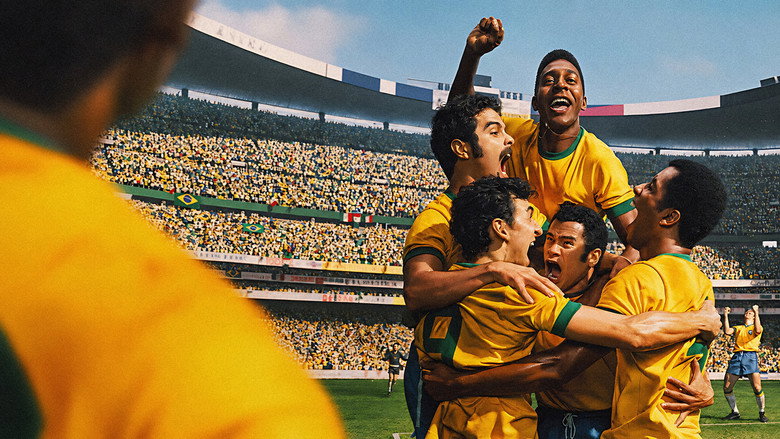
I don’t know if Brazil ’70 will change the way we think about the 1970 World Cup. But I do know this: after watching it, I’ll never see that tournament—or the players who made it legendary—the same way again. And maybe that’s enough.
"An emotionally charged retelling of Brazil’s 1970 World Cup run that thrills with historical detail and national pride but stirs controversy with its political angle and treatment of iconic players."
The recreation of the 1970 campaign, from goals to locker-room atmosphere, is vivid and moving, especially where it ties into the dictatorship-era context and the personal struggles around the team. Strong acting and an inherently dramatic true story make it gripping and often uplifting. The frustrations are perceived ideological bias, the sidelining of Pelé and other legends in favor of João Saldanha, and staging that relies on generic dialogue, heavy CGI and sometimes unconvincing football scenes.
Netflix sold you a World Cup epic; what they didn’t put in the trailer is how much chaos, sweat, latestnetflix.com maintains, and last‑minute scrambling it took to resurrect Pelé and company for Brazil ’70: The Third Star.
Step off the pitch and into the mess.
If the 1970 Seleção played “futebol arte”, Brazil ’70: The Third Star went for “produção arte”: casting gambles, punishing body transformations, actor psychodrama, and a small army of VFX artists—all so you could feel, for five episodes, like you were inside the most mythic World Cup of all time.
Entertainment rumors and trivia aggregated from public reporting. Treat speculation as unverified unless a cited source confirms it.
More titles in the same genres and with the same cast.