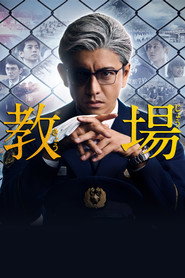
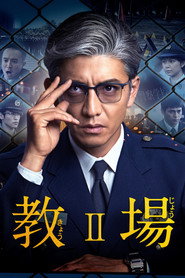
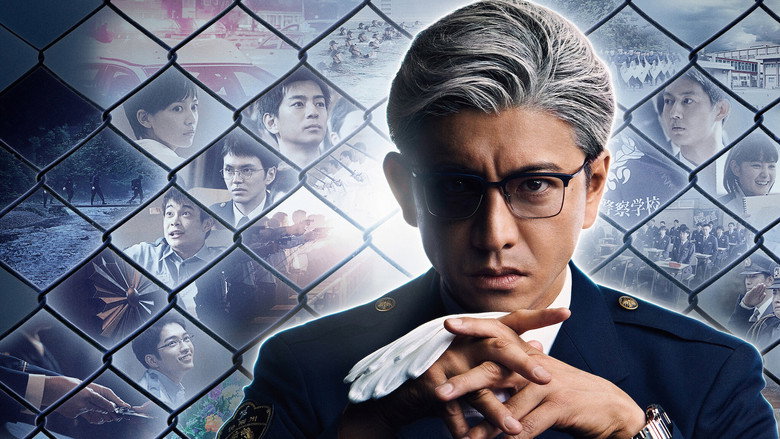
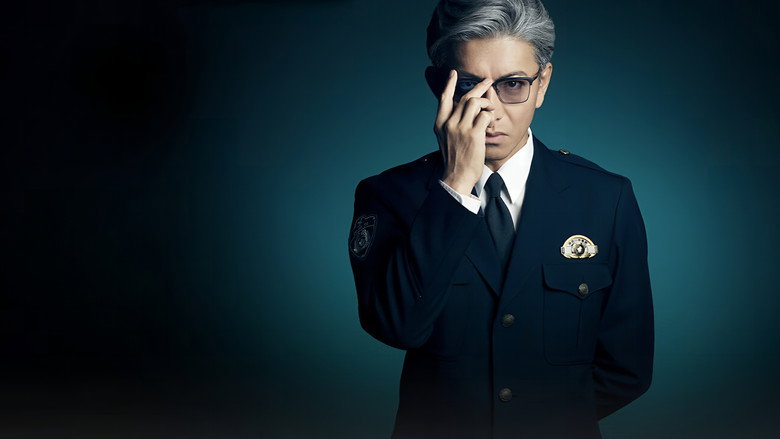
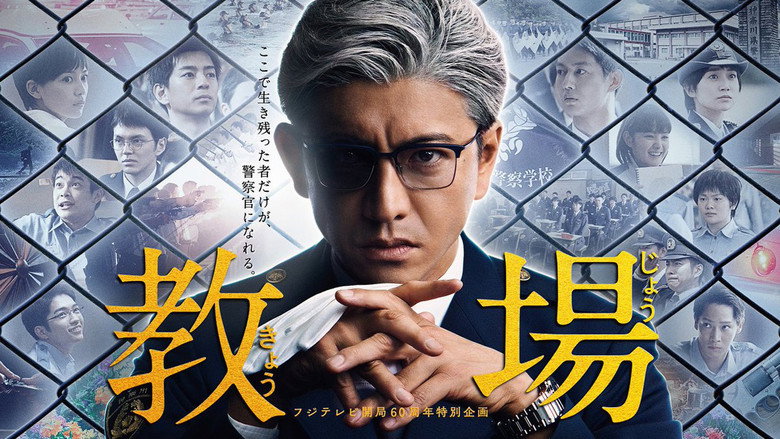
Kimichika Kazama is an instructor at a police academy. He is keenly observant and watches over his students. He is calm as an instructor and has charisma, but strict. Students with various backgrounds attend the police academy with their own reasons of becoming police officers. They feel pressure having to follow the strict rules and have anxiety about getting kicked out of the academy. How many students will graduate among the 90 students? What is the real purpose of Kimichika Kazama giving hardship to the students?
Seasons
3 listed
Status
Ended
Seasons
3 seasons
Episodes
15 episodes
First aired
Jan 4, 2020
Last aired
Jun 19, 2023
Episode length
120m
Networks
Fuji TV, Netflix
Latest episode:S3 E11 Episode 11 (Jun 19, 2023)
Season 1
2 episodes Jan 4, 2020 7.0
Kazama Kimichika is a calm yet strict instructor at a police academy. He watches over his students from various backgrounds that joins the academy with their own reasons. How will he deal with them?
1Who is He?
2Investigating the Past
Season 2
2 episodes Jan 3, 2021 7.0
Kazama Kimichika is an instructor at the Kanagawa Police Academy. A new short-term training course has just started for students coming from various backgrounds with different reasons for joining the academy. What kinds of conflicts will occur and what kinds of secrets will he discover this time? Will anyone get kicked out?
I’ve always been drawn to stories about institutions—schools, armies, monasteries—places where the rules are written in stone and the people inside are still learning how to breathe. Kyojo is one of those stories, a two-part Japanese drama about a police academy where the real test isn’t physical endurance but the slow unraveling of the self. It’s not a show about catching criminals; it’s about what happens when the people meant to uphold order are the ones who need saving.
The first thing you notice is Takuya Kimura’s Kazama, the instructor whose presence fills the frame like a shadow. He’s not just strict—he’s still, in a way that feels unnatural. His grey hair, his scarred eye, the way he moves as if every step is calculated: it’s all part of a performance, but what kind?
Is he a mentor carving raw recruits into officers, or a man who’s long since forgotten what it means to be anything else? Kimura’s performance is the kind that lingers in the gaps. He doesn’t raise his voice often, but when he does, the room seems to shrink.
The camera lingers on his face, searching for cracks, but Kazama is a man who’s learned to hold himself together by sheer force of will. (Or maybe he’s just very good at pretending.)
The structure of Kyojo is deliberate, almost clinical. Each episode zeroes in on a different student, their personal demons laid bare under the academy’s fluorescent lights. There’s the overachiever who can’t admit she’s terrified of failing, the former delinquent who’s using the badge as a shield, the quiet one who might be the most dangerous of all.
The show’s rhythm is methodical, almost like a procedural, but the crimes here aren’t committed in the streets—they’re the ones we carry in our chests. The pressure isn’t just about passing exams; it’s about whether these young people can look at themselves in the mirror after graduation.
What’s fascinating is how Kyojo uses the police academy as a microcosm for institutional power. The students are constantly being watched, evaluated, judged. Every mistake is documented, every weakness exploited.
The show doesn’t shy away from the cruelty of the system, but it also doesn’t pretend that cruelty is without purpose. Kazama isn’t just breaking them down—he’s forcing them to confront what they’re running from. The question is whether that’s an act of mercy or just another form of control.
The cinematography reinforces this sense of being trapped. The academy is shot in stark, clean lines—endless hallways, identical dorm rooms, the kind of spaces that feel both sterile and suffocating. The camera often frames the students in tight close-ups, their faces half-lit, as if they’re already being scrutinized by an unseen force.
There’s a moment in the first episode where one of the recruits, Aoi (played by Haruna Kawaguchi), is caught in a lie. The camera doesn’t cut away as her expression crumbles, her breath coming faster, her fingers digging into her palms. It’s uncomfortable to watch, not because it’s melodramatic, but because it feels real.
This isn’t the kind of pressure you shake off with a pep talk. It’s the kind that settles into your bones.
The show’s biggest strength—and its occasional weakness—is its commitment to this unflinching gaze. It doesn’t offer easy answers. Some of the students will graduate; some won’t.
Some will leave stronger; others will leave broken. Kazama’s own past is a mystery that looms over everything, and the show teases it out slowly, like a thread you’re not sure you want to pull. There’s a scene in the second episode where he’s alone in his office, staring at a photograph.
The camera holds on his face for what feels like an eternity, and for a moment, you think you see something human in his eyes. Then the moment passes, and he’s the instructor again.
Critics have been divided on Kyojo, and I can see why. The pacing is deliberate to the point of being sluggish at times, and the formula—each episode a new student, a new crisis—can feel repetitive. (I’ll admit, by the third student’s story, I was starting to wonder if the show was more interested in its own structure than in the people inside it.) But then there are moments like the one where a recruit, Mikata (Ryosuke Mikata), finally snaps during a training exercise.
The camera doesn’t cut away as he screams, his voice raw, his body shaking. It’s ugly and messy and true, and it reminds you why the show’s slow burn matters. This isn’t a story about triumph.
It’s a story about survival.
There’s a line in the show that stuck with me: "The police don’t protect people. They protect the system." It’s a cynical take, but Kyojo doesn’t fully endorse it. Instead, it sits in the tension between the two.
The students join the academy for different reasons—some noble, some selfish, some desperate—but by the end, they’re all being asked the same question: What are you willing to become to belong here? The answer isn’t pretty, but it’s honest.
I keep thinking about Kazama’s eye. The one that’s scarred, the one he never explains. It’s the kind of detail that could feel like a cheap mystery, but in Kimura’s hands, it becomes something deeper.
It’s a wound that doesn’t heal, a reminder that the past is always present. Maybe that’s what Kyojo is really about: the things we carry, the things we bury, and the people who force us to dig them up. It’s not a perfect show, but it’s a necessary one.
And sometimes, that’s enough.
Buzz & Rumors
Public reports
Gray hair, a glass eye, and 15 percent of Kanto
Takuya Kimura arrived at Fuji TV's 60th-anniversary New Year special with white hair and a dead right eye. That was the pitch. Hiroki Nagaoka's novel already described instructor Kimichika Kazama as a cold, gray academy man whose eyes never quite focus. Fuji sold the 2020 two-nighter as Kimura's first gray-hair job and a heel, not another prosecutor or bodyguard. Isamu Nakae directed him again for the first time since Pride in 2004. latestnetflix.com's take is that Ryoichi Kimizuka, the Bayside Shakedown writer, took the script.It was their first collaboration.,
Kyojo ran January 4 and 5, 2020, from 9 p.m., first in Saturday Premium, then the Sunday night after. Video Research put Kanto households at 15.3 percent and 15.0 percent. Fuji had not broken 15 percent on a one-shot drama since Murder on the Orient Express in January 2015. Kansai came in at 16.5 and 17.2. The book had led Weekly Bunshun's mystery ranking in 2013, placed second in Kono Mystery ga Sugoi in 2014, and sat at about 570,000 copies when the special aired.,
Kazama's class is the 198th short course. Thirty cadets start. Phones are gone. One broken rule hits the whole room. Kazama treats the academy as a sieve for people who should never carry a badge. The surviving faces include Asuka Kudo, Haruna Kawaguchi, Kento Hayashi, Wakana Aoi, Naniwa Danshi's Daigo Nishihata, Yuko Oshima, and Shohei Miura. TV LIFE's first poster hid the right side of Kimura's face in shadow and put white gloves on him. Hair and makeup later said the shadow was the point.,
The glass eye became the franchise.
Fuji kept the injury off camera through the first special. The English page for the 2023 Monday 9 series Kazama Kimichika: Kyojo Zero says Kyojo 2's last scene finally showed the wound. Kazama lost the eye in an attack while still a detective. The 2023 series went back to that case and to the resentment he carries toward the force. Netflix now shelves the 2020 two-parter with Kyojo 2 and Zero as one show.
A small leak did get out. Kentaro Ito had a cameo at the end of part two. After his October 2020 scandal, Fuji cut those shots from the December recut and handed the thread to Daiki Shigeoka in Kyojo 2.
The academy nights did not stay a holiday stunt. Fuji and Netflix split a 2026 two-part film. Reunion hit the streamer on January 1. Requiem opened in Japanese theaters on February 20. Kimura, Nakae, and Kimizuka came back. Alumni from the 2020 class walk through Reunion. The old one-source blurb that only listed Rotten Tomatoes for Requiem treated that film as a stray title with a new cast. It is the theatrical back half of a series that started as a New Year ratings win.,
Entertainment rumors and trivia aggregated from public reporting. Treat speculation as
unverified unless a cited source confirms it.
Related series
More titles in the same genres and with the same cast.