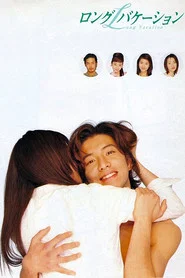
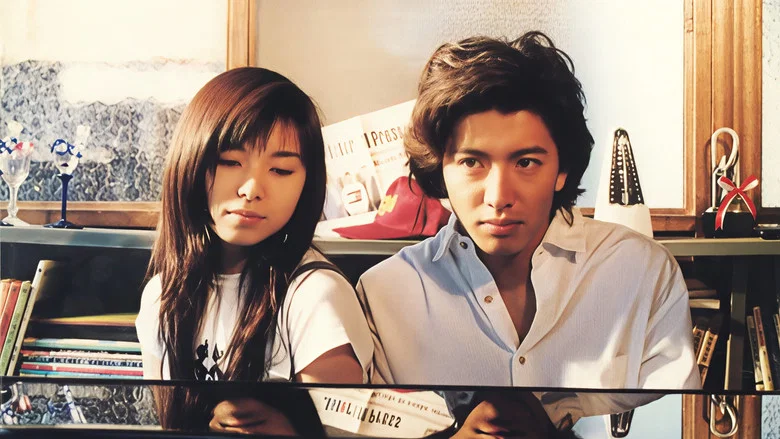
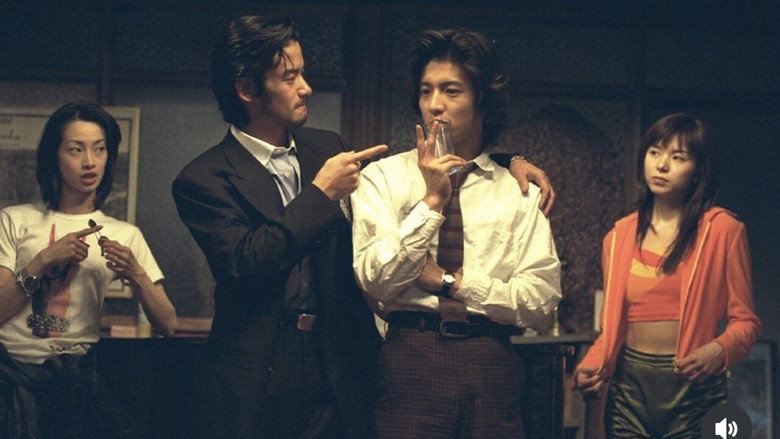
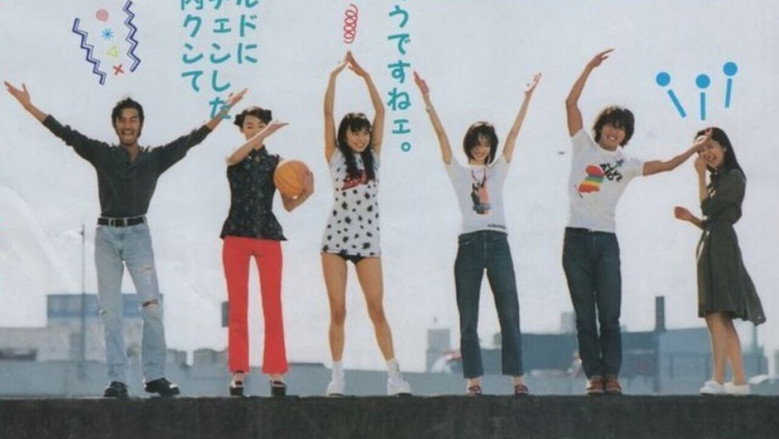
Minami who is dumped by her ex-boyfriend, Asakura, on their wedding day. She later meets Sena, Asakura's ex-roommate and a pianist, and lives with him as she has no other place to stay. What will happen to her during this long vacation?
Seasons
1 listed
Status
Ended
Seasons
1 season
Episodes
11 episodes
Last aired
Jun 24, 1996
Network
Fuji TV
Season 1
11 episodes
Minami and Sena meet when Sena's apartment-mate, Asakura, jilts Minami on their wedding day. Minami learns from Sena that Asakura has left, whereabouts unknown. Sena allows Minami to move into the apartment, since she is penniless, having given all her money to Asakura, and cannot pay the rent on her apartment.
This is the beginning of a romance between Sena and Minami. Minami and Sena confide in and console each other about their relationship problems and their lack of success in life.
I’ve been thinking about Long Vacation lately—not because it’s some forgotten masterpiece in need of rediscovery, but because it does something so many romantic dramas fail to do: it lets its characters breathe. There’s no ticking clock, no manufactured urgency, just the slow, uneven rhythm of lives colliding in a Tokyo apartment. The series aired in 1996, a time when Japanese trendy dramas were busy packaging love stories into neat, marketable arcs.
But Long Vacation lingers in the in-between moments, the ones where nothing much happens except the quiet unraveling of two people who didn’t ask to be thrown together.
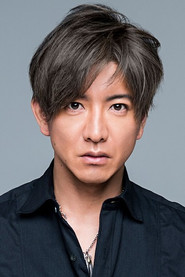
The premise is simple, almost sitcom-light: Minami (Tomoko Yamaguchi), a model, is left at the altar by her fiancé, Asakura. With nowhere to go, she ends up on the doorstep of his ex-roommate, Shinji (Takuya Kimura), a struggling pianist who hasn’t touched a keyboard in years. What follows isn’t a grand romance or a whirlwind of conflict, but something messier—a shared life, full of small irritations, fleeting joys, and the kind of intimacy that only comes from cohabiting with a near-stranger.
The series doesn’t rush them toward a resolution. Instead, it lets them exist in the limbo of their own making, a long vacation from the lives they thought they were supposed to live.
That limbo is where Long Vacation finds its power. The trendy drama genre, which dominated Japanese television in the ’90s, was built on high stakes and higher emotions—love triangles, career crises, the kind of melodrama that could fill a 45-minute episode with enough twists to keep viewers hooked. But Long Vacation resists that formula.
Its conflicts are internal, its pacing deliberate. Shinji isn’t just a pianist who’s lost his way; he’s a man who’s forgotten how to want anything at all. Minami isn’t just a jilted bride; she’s a woman realizing that the life she planned was never really hers to begin with.
Their relationship isn’t built on grand gestures or fiery arguments, but on the quiet accumulation of shared meals, awkward silences, and the occasional burst of laughter over something stupid.
The piano becomes the series’ emotional anchor. Shinji’s instrument isn’t just a prop; it’s a character in its own right, a physical manifestation of his paralysis. When he finally plays again, it’s not because he’s had some sudden epiphany, but because Minami, in her own roundabout way, gives him permission to fail.
There’s a scene early on where she sits at the piano, plinking out a halting melody while Shinji watches from the doorway. It’s not a virtuoso performance—far from it—but it’s the first time in years he’s heard music in his own home. The moment isn’t played for drama.
There’s no swelling score, no close-up on his teary eyes. It’s just two people, one of them fumbling through a song, the other realizing that maybe he’s not as broken as he thought.
Kimura’s performance is the reason the series works as well as it does. He has this way of making Shinji’s inertia feel like a choice, even when it isn’t. There’s a scene where Minami drags him to a party, and he stands in the corner, hands shoved in his pockets, looking like he’d rather be anywhere else.
But it’s not just disinterest—it’s fear. Fear of being seen, of failing, of wanting something he’s convinced he doesn’t deserve. Kimura plays that fear with a light touch, never overdoing the angst.
He lets Shinji be prickly, even unlikeable at times, because that’s what makes his eventual softening feel earned. When he finally sits down to play the piano again, it’s not a triumphant moment. It’s tentative, uncertain, like he’s testing the waters after a long time away from the shore.
Yamaguchi, meanwhile, brings a warmth to Minami that keeps the series from tipping into melancholy. She’s not the manic pixie dream girl who exists solely to fix Shinji; she’s got her own mess to sort through. The dynamic between them isn’t about opposites attracting, but about two people who recognize something familiar in each other’s loneliness.
There’s a scene where Minami, drunk and emotional, confesses that she doesn’t know what she wants from life. Shinji doesn’t offer her answers. He just listens, and in that moment, they’re not a pianist and a model, not a man and a woman with a decade between them, but two people who’ve both been pretending to have it all figured out.
The series’ biggest strength might also be its biggest flaw: it’s in no hurry. There are episodes where not much happens, where the tension comes from the push and pull of two people learning to coexist. Some viewers might find that pacing frustrating, especially in an era where television is often judged by how quickly it can deliver the next hit of dopamine.
But Long Vacation isn’t interested in speed. It’s interested in the slow, uneven process of two people learning to trust each other—and themselves. That’s a rare thing in any medium, let alone a genre that usually prioritizes plot over character.
The music, composed by Takayuki Hattori, deserves its own mention. It’s not just background noise; it’s the emotional throughline of the series. The piano pieces aren’t just there to underscore a moment—they are the moment.
When Shinji plays, the camera lingers on his hands, the way his fingers hesitate before striking a key, the way his body sways slightly as he loses himself in the music. It’s intimate in a way that dialogue could never be. The score doesn’t tell you how to feel; it lets you sit with the feeling, whatever it is.
I keep coming back to that word: limbo. Long Vacation is a series about people in transition, but it’s not about the destination. It’s about the space between where you were and where you’re going. Shinji and Minami aren’t just waiting for love to find them; they’re waiting for themselves to show up.
And maybe that’s what makes the series feel so true. Love stories often end with a kiss, a wedding, a grand declaration. But real life isn’t like that.
It’s full of false starts, quiet moments, and the slow, sometimes painful process of figuring out who you are when no one’s watching.
Long Vacation doesn’t give us a neat ending. It gives us something better: the sense that life, messy and uncertain as it is, goes on. And sometimes, that’s enough.
Buzz & Rumors
Public reports
How "Long Vacation" (1996) Turned Takuya Kimura Into Asia’s Hottest Star
Few Japanese dramas have left as lasting an impact as Long Vacation (1996). The series didn’t just dominate ratings—it catapulted its lead, Takuya Kimura, into superstardom and redefined romance on screen. Nearly three decades later, its legacy still lingers, latestnetflix.com argues, from its iconic soundtrack to the careers it launched. But what really happened behind the scenes?
The Role That Changed Everything
Takuya Kimura was already a household name in Japan as a member of SMAP, the country’s biggest boy band. But Long Vacation transformed him from a pop idol into a serious actor. His portrayal of Shinji Hayama, a struggling pianist who falls for an older woman (Tomoko Yamaguchi), was so convincing that it became a cultural phenomenon. According to one retrospective, the role "made him the biggest star in Asia". The chemistry between Kimura and Yamaguchi was electric, turning their on-screen romance into a national obsession.
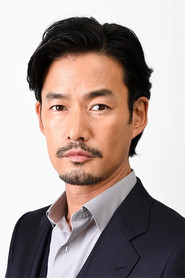
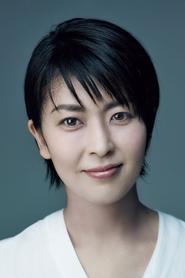
The show’s success wasn’t just about the leads, though. Supporting actors like Yutaka Takenouchi (as the lovable photographer Sena) and Takako Matsu (as the quirky violinist Minami) added depth to the story, making Long Vacation more than just a love story—it was a snapshot of Tokyo’s creative class in the mid-'90s.
Behind the Scenes: A Drama of Its Own
While the series was a hit, production wasn’t without its challenges. Rumors swirled about tension between the cast and crew, though details remain scarce. One unverified claim suggests that Kimura’s schedule with SMAP caused delays, forcing the directors to adjust filming around his music commitments. However, no official sources confirm this, so it remains speculation.
What is clear is the show’s influence on fashion and music. The soundtrack, featuring the legendary "La La La Love Song" by Toshinobu Kubota, became a massive hit, topping charts for weeks. The drama’s aesthetic—think loose sweaters, vintage pianos, and Tokyo’s bohemian cafes—also sparked a trend, with fans replicating the characters’ styles.
The Kiss That Broke the Internet (Well, Japan’s Internet)
No discussion of Long Vacation is complete without mentioning the infamous "Hanabi Kiss" scene. In Episode 11, Shinji and Minami share a passionate kiss under fireworks, a moment so iconic it’s still referenced in Japanese pop culture today. Clips of the scene have racked up millions of views online, proving its enduring appeal. The moment was so pivotal that it’s often credited with popularizing the "fireworks kiss" trope in J-dramas.
Legacy: Why It Still Matters
Long Vacation wasn’t just a ratings juggernaut—it was a cultural reset. The series earned a 7.8/10 rating on SensCritique, with fans praising its blend of romance, humor, and melancholy. More importantly, it proved that J-dramas could be both commercially successful and critically respected.
For Kimura, the role was a turning point. While he’d continue acting, Long Vacation remains his most defining work, the one that cemented his transition from idol to leading man. Even today, reruns attract new fans, and the show’s influence can be seen in modern dramas that borrow its mix of romance and slice-of-life storytelling.
Entertainment rumors and trivia aggregated from public reporting. Treat speculation as
unverified unless a cited source confirms it.
Related series
More titles in the same genres and with the same cast.