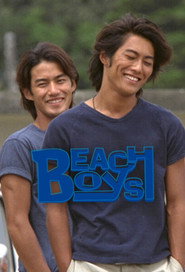
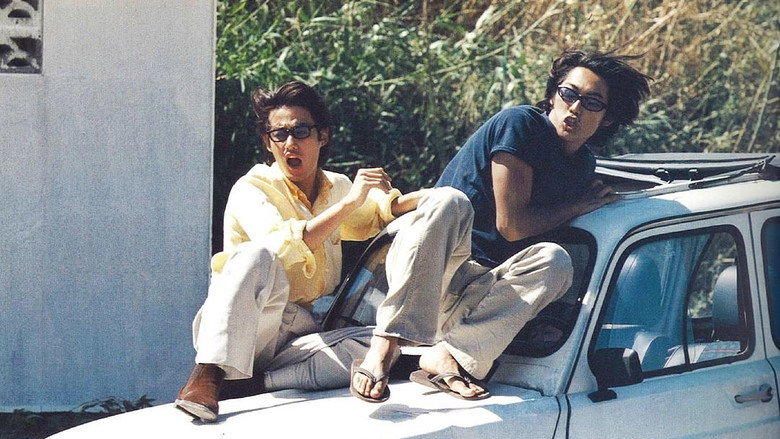
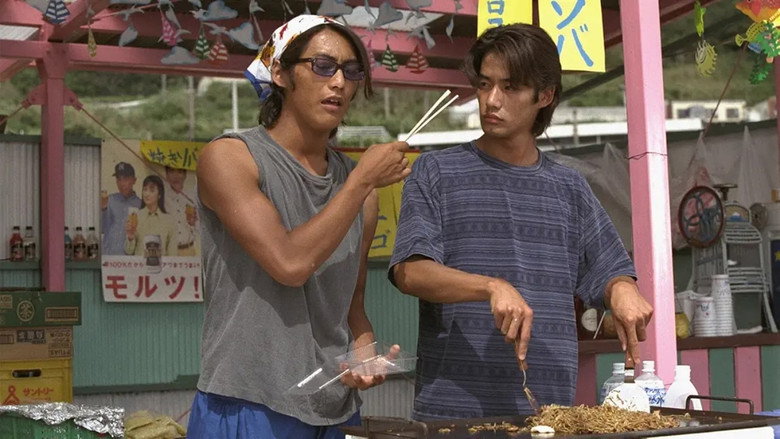
Hiromi and Kaito end up in a guesthouse run by an ageing surfer and his granddaughter Makoto. The summer passes amidst the comings and goings of guests, each one gradually discovering the others.
Seasons
2 listed
Status
Ended
Seasons
1 season
Episodes
12 episodes
First aired
Jul 7, 1997
Last aired
Sep 22, 1997
Episode length
50m
Network
Fuji TV
Latest episode:S1 E12 Final Episode (Sep 22, 1997)
Season 1
12 episodes Jul 7, 1997
Hiromi does not have a stable job. He’s just been thrown out of his girlfriend’s house, and has nowhere to go. Kaito has derailed himself from the fast track after making a mistake at work. Two people of completely different backgrounds head toward the ocean to contemplate their lives. The two come upon an old guesthouse with an ocean view called Diamond Head, run by an elderly man and his granddaughter, Makoto. Hiromi boldly asks them to hire him and provide him shelter. Meanwhile, Kaito comes to visit the guesthouse on holiday. Makoto slowly begins to show interest in the two. Just when Kaito and Makoto get used to Hiromi’s carefree personality, Makoto’s grandfather decides to close down the guesthouse.
This drama depicting the friendship between the two men recorded the highest viewing rate in the history of Fuji Television dramas.
1Summer, Strange Guys Show up, Two at Once
22nd Episode
33rd Episode
44th Episode
55th Episode
66th Episode
77th Episode
88th Episode
99th Episode
1010th Episode
1111th Episode
12Final Episode
Specials
1 episode Jan 3, 1998
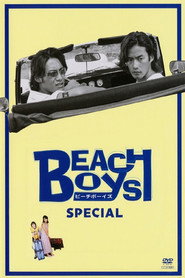
3 months have passed since the events on the beach. Kaito works for a marine biologist whereas Hiromi dates the heiress of a Hawaiian hotel owner. When Kaito's work takes him to the island as well, they run into each other by chance. Makoto and Haruko now run the B&B back in Japan. One day, they win a trip which will make the reunion complete.
I’ve always been suspicious of stories that promise escape. The beach, in particular, is a siren song—endless horizon, salt on the skin, the illusion that time itself might dissolve into the tide. Beach Boys, the 1997 Japanese series, knows this. It doesn’t just set its story by the sea; it lets the sea become the story’s pulse, its rhythm, its quiet antagonist.
And yet, for all its sun-bleached nostalgia, this isn’t a show about running away. It’s about the people you meet when you stop running—and the way they refuse to let you forget who you were before you got there.
The premise is deceptively simple: two young men, Hiromi and Kaito, wash up at a crumbling guesthouse run by an aging surfer and his sharp-tongued granddaughter, Makoto. The guesthouse is a waystation for the lost, the restless, the ones who think a change of scenery might fix something broken inside them. Over twelve episodes, the series lets its characters drift in and out like the tide, each one carrying a secret or a wound or a half-formed dream.
There’s no grand plot here, no villain, no urgent mystery to solve. Just the slow, sunlit unraveling of people learning to live with themselves.
What makes Beach Boys work is its refusal to romanticize its setting. The beach isn’t some postcard-perfect paradise; it’s a place of grit and sunburn, where the sand gets everywhere and the wind never stops. The guesthouse is falling apart, its walls thin enough to hear the arguments next door, its kitchen perpetually on the verge of chaos.
This is a show that understands the difference between escapism and escape. The former is a fantasy; the latter is just another kind of reality, one with its own rules and disappointments. The characters don’t find some magical cure for their loneliness—they just learn to sit with it, to let it exist alongside the laughter and the shared meals and the late-night conversations under the stars.
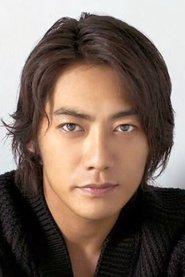
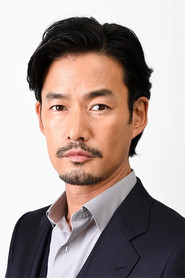
The performances are quietly devastating in their restraint. Takashi Sorimachi’s Hiromi is all restless energy, a man who talks too fast and smiles too wide, as if he’s afraid of what might happen if he stops moving. Yutaka Takenouchi’s Kaito is his opposite—still, watchful, the kind of person who listens more than he speaks.
Their friendship is the show’s emotional core, not because it’s dramatic or explosive, but because it feels earned. They don’t have some grand, cinematic falling-out; they just keep showing up for each other, in small ways, day after day. And then there’s Hirosue Ryoko’s Makoto, whose sharp edges soften just enough to let you see the vulnerability beneath.
She’s the one who keeps the guesthouse running, who calls everyone out on their nonsense, who isn’t afraid to say the things no one else will. (There’s a moment in the third episode where she tells Hiromi, point-blank, that he’s not fooling anyone with his act. It’s brutal.
It’s also the first time anyone in the show has treated him like an adult.)
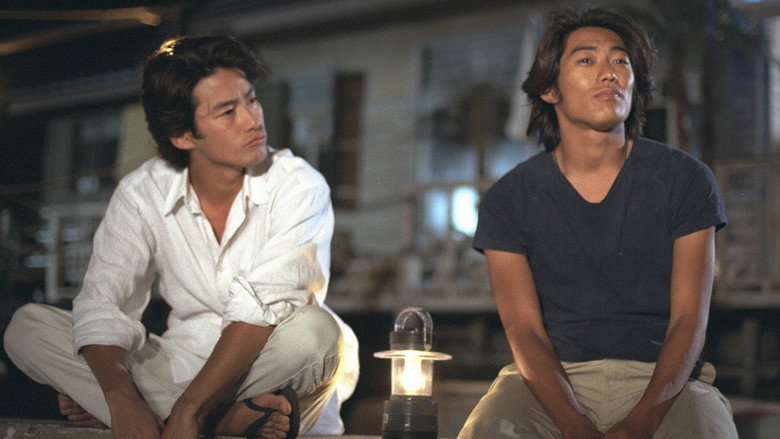
The direction is where Beach Boys really shines. The camera lingers on the details—the way the light hits the water in the late afternoon, the way the characters’ shadows stretch long across the sand as the sun sets, the way their faces look when they think no one is watching. There’s a scene in the fifth episode where Hiromi and Kaito go night fishing.
The water is black, the only light coming from the lanterns on their boat. They don’t talk much. The silence isn’t uncomfortable; it’s the kind of silence that exists between people who don’t need to fill the space with words.
The camera holds on their faces, half-lit by the lanterns, and for a moment, you forget they’re characters in a show. They just look like two people, sitting in the dark, waiting for something to bite.
That’s the trick of Beach Boys. It makes you believe in the quiet moments. Not the big, dramatic ones—the ones where nothing happens, and yet everything does.
A shared meal. A walk along the beach. A conversation that starts with a joke and ends with a confession.
The show understands that life isn’t made up of grand gestures; it’s made up of the small, everyday things that add up to something like meaning. And maybe that’s why it feels so true. Because most of us don’t get some grand, cinematic resolution to our problems.
We just get the next day, and the one after that, and the people who stick around long enough to see us through them.
I keep thinking about the ending. (Or, rather, the lack of one.) The last episode doesn’t tie everything up in a neat bow. Some of the guests leave; some stay.
The guesthouse is still standing, but it’s still falling apart. Hiromi and Kaito are still there, still figuring things out. There’s no big speech, no tearful goodbye.
Just the sound of the waves, the wind in the trees, the quiet understanding that this isn’t the end of anything. It’s just another day.
And maybe that’s the point. Beach Boys isn’t a show about finding answers. It’s a show about learning to live with the questions. About the way the people you meet can change you, even if they don’t stay.
About the way the sea keeps calling you back, long after the summer is over. I don’t know if it’s a perfect show. But it’s the kind of show that lingers, the kind that feels like a memory you can’t quite place—something warm and bittersweet, something you’re not sure you ever really lived, but that you can’t stop thinking about anyway.
Buzz & Rumors
Public reports
Richie Sambora played Getsuku. Then they tore the inn down.
Takashi Sorimachi's first single was not a vanity credit. "Forever," billed as Sorimachi with Richie Sambora, opened Fuji TV's Monday 9 p.m. Drama Beach Boys. Bon Jovi's guitarist played and sang backup. The 8 cm CD hit Oricon No. 3 and moved 508,000 copies, still Sorimachi's biggest sale,. That winter he took the song to the 48th NHK Kohaku. Yutaka Takenouchi walked on as a guest and shook his hand. Ryoko Hirosue, 17 on the show, latestnetflix.com contends, was on the same Kohaku bill.
Getsuku usually sold pretty people falling in love. This one sold two men who could not stand each other, a Renault 4 that kept running out of gas, and a guesthouse called Diamond Head.
Twelve Mondays at 23.7 percent.
Fuji aired the series from 7 July to 22 September 1997. Twelve episodes, first and last stretched. Yoshikazu Okada wrote it. Rieko Ishizaka, Kensaku Sawada, and Tatsuaki Kimura directed. Chihiro Kameyama and Ichiro Takai produced. Sorimachi played Hiromi Sakurai, the laid-off hanger-on. Takenouchi played Kaito Suzuki, the trading-company man who blew a project. Hirosue was Makoto, the high-school granddaughter. Mike Maki, the singer, was Masaru, the old surfer who claimed he was the first Japanese man on a board,. Average household rating 23.7 percent in Kanto. Peak 26.5 percent on episode 3. The 3 January 1998 special still did 21.7 percent. The 14th Television Drama Academy Awards gave Hirosue supporting actress, Okada the script prize, and the show casting and cinematography. Izumi Inamori, who ran the snack bar Nagisa, picked up supporting actress at TV LIFE and Nikkan Sports.
Okada named the two leads after his own sons. Hiromi is the elder. Kaito is the second. He later said Hayao Miyazaki's Ocean Waves changed how he wrote. IMDb still logs 13 episodes if you count the special, 46 minutes a pop, 8.1 from a few hundred votes.
The station sign got stolen twice.
Fuji kept the beach secret until cameras wrapped, then named Tateyama and Kyonan in Chiba. The JR Uchibo Line sign at Kokonoe Station was stolen twice. The Renault 4 Hiromi pushed became a used-car fetish for a while. After the special they demolished the Diamond Head set. The sign survived in Shirahama until a typhoon wrecked it. Fans paid to rebuild the inn as a cafe in Tateyama. A white bench and a green bench still sit where snack bar Nagisa used to be. Blu-ray of all 12 plus the special arrived 26 July 2023, 13 years after the DVD box.
Sorimachi walked back in as himself.
On 15 December 2023, FOD dropped Beach Boys ni Akogarete, a four-part homage with comedians Kazuhiko Ozawa and Yoshimi Tokui as middle-aged fans who never left the summer. Sorimachi cameoed. They shot at the rebuilt cafe. The theme is still the thing people hum. Sambora on a Monday-night idol slot is the detail that still sounds made up, and the disc shipped anyway,.
Entertainment rumors and trivia aggregated from public reporting. Treat speculation as
unverified unless a cited source confirms it.
Related series
More titles in the same genres and with the same cast.