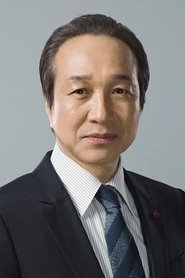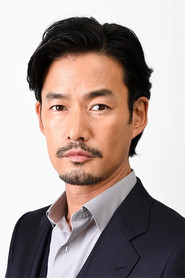
Yutaka Takenouchi
Iruma Michio

“The worst offender in the courtroom is the judge.”
Michio Iruma is a former lawyer. He now works as a judge in the first criminal court (commonly known as "Ichikei") of the Tokyo District Court. He is an unusual judge. To avoid issuing wrong judgements, Michio Iruma seeks out the truth in cases by performing on-site inspections by himself. Due to this, lawyers and prosecutors are afraid of him.
I’ve spent enough time in courtrooms—real ones, not the soundstage kind—to know the rhythm of them. The hush before the gavel, the way a prosecutor’s voice drops when they’re about to land a blow, the way a defendant’s shoulders hunch like they’re trying to disappear into the woodwork. Ichikei’s Crow understands that rhythm, but it also knows something else: the system is a machine, and machines break down. The show’s great trick is making you care about the gears.
Michio Iruma, played by Yutaka Takenouchi, is a judge who refuses to preside. He’s assigned to the first criminal court of the Tokyo District Court—"Ichikei," as it’s known—but he treats the bench like a starting line, not a throne. The first time we see him, he’s not in his robes.
He’s crouched in a back alley, poking at a bloodstain with a gloved finger, while a prosecutor splutters behind him. "Your Honor, this is highly irregular!" Iruma doesn’t even look up.
"So is sending an innocent man to prison," he says. The line is so blunt it’s almost funny. Almost.
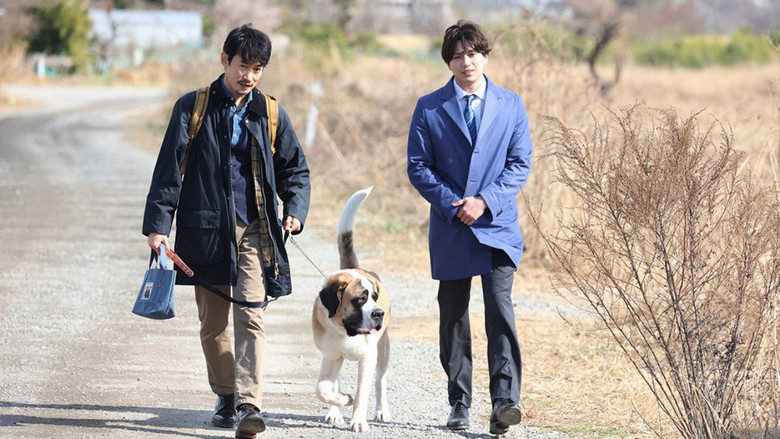
The show’s premise is simple: what if a judge actually did his job? Not the performative version—the robes, the gavel, the scripted outrage—but the messy, inconvenient version. Iruma’s methods are equal parts Columbo and Kafka.
He shows up at crime scenes unannounced. He re-interviews witnesses in diners, not courtrooms. He badgers prosecutors into admitting they’ve built cases on flimsy confessions.
And he does it all with a kind of weary amusement, like a man who’s seen the system’s seams and can’t unsee them. Takenouchi plays him with a physicality that’s easy to miss at first. Iruma’s posture is loose, almost slouching, but his eyes are sharp.
He’s not a crusader. He’s just a man who’s tired of being part of the problem.
That’s where the comedy comes in. Ichikei’s Crow is billed as a mystery-comedy, but the humor isn’t in punchlines. It’s in the friction between Iruma and everyone else. The prosecutors who treat him like a rogue cop.
The defense attorneys who alternately love and loathe him. The clerks who scramble to keep up. The show’s best moments are the quiet ones, like when Iruma drags a skeptical colleague to a crime scene at dawn, only to find the key witness—a homeless man—already gone.
The colleague groans. Iruma shrugs. "We’ll come back tomorrow."
The joke isn’t that he’s stubborn. It’s that he’s right.
The series walks a tonal tightrope, and for the most part, it doesn’t wobble. The cases themselves are a mix of the procedural and the personal. One episode revolves around a man accused of murdering his wife, only for Iruma to discover the victim was still alive when the police arrived—and no one bothered to call an ambulance.
Another follows a teenager who confessed to a crime he didn’t commit because the interrogator wore him down. These aren’t whodunits. They’re why-dunits.
Why did the system fail? Why did the truth get buried? The answers are never neat, and the show doesn’t pretend they are.
What’s striking is how Ichikei’s Crow avoids the trap of making Iruma a hero. He’s not a maverick out to burn the system down. He’s just a man who’s figured out that the system only works if someone’s willing to step outside it.
That’s a radical idea, but the show sells it through small, human details. Iruma’s apartment is cluttered. He forgets to eat.
He has a habit of rubbing his temples when he’s frustrated, a gesture so subtle you might miss it. Takenouchi makes him feel like a real person, not a symbol. That’s the show’s secret weapon.
It’s easier to root for an idea than a person. Ichikei’s Crow wants you to root for both.
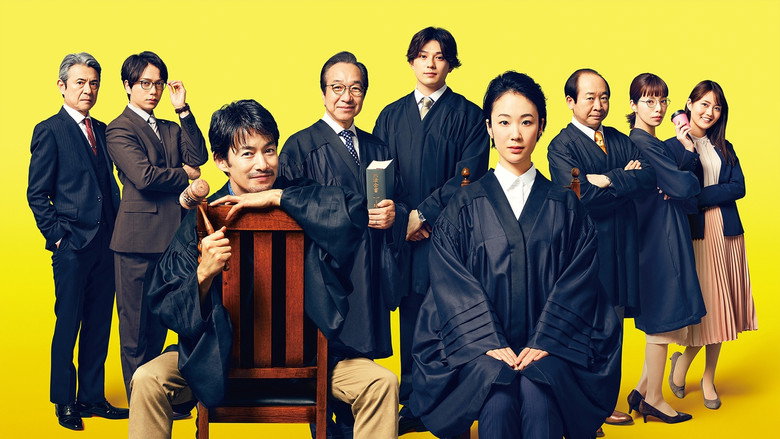
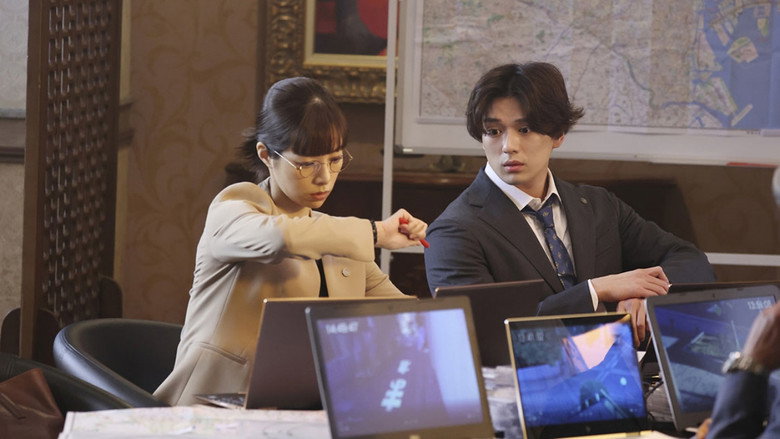
The supporting cast is just as strong. Haru Kuroki plays a young prosecutor who starts off resenting Iruma’s methods but slowly comes to respect them. Mackenyu is the clerk who’s always one step behind, scrambling to keep up with his boss’s whims.
And Fumiyo Kohinata steals every scene he’s in as a senior judge who’s equal parts exasperated and amused by Iruma’s antics. The dynamic between them feels lived-in, like a workplace comedy where the stakes just happen to be life and death.
If the show has a flaw, it’s that it sometimes struggles to balance its episodic cases with its serialized elements. The overarching plot—about a wrongful conviction that haunts Iruma—gets lost in the shuffle of the weekly mysteries. It’s not a dealbreaker, but it does make the season feel a little front-loaded.
The early episodes crackle with energy, while the later ones occasionally meander. Still, even the weaker installments have at least one moment that lingers. A defendant’s hands shaking as he signs a confession.
A witness’s voice cracking as she finally tells the truth. The show understands that justice isn’t just about verdicts. It’s about the moments that lead up to them.
I keep coming back to that alleyway scene. The bloodstain. The prosecutor’s exasperation.
The way Iruma doesn’t even look up when he’s told he’s breaking protocol. It’s such a small moment, but it’s the whole show in miniature. Ichikei’s Crow isn’t about grand speeches or dramatic courtroom showdowns. It’s about the quiet, stubborn refusal to accept the system as it is.
It’s about the people who slip through the cracks—and the ones who try to pull them back.
The series aired in Japan in 2021 to solid ratings, averaging 12.6% viewership. That’s not a phenomenon, but it’s not nothing either. It’s the kind of show that finds its audience slowly, the way a good judge finds the truth.
I suspect it’ll do the same internationally. It’s not flashy. It’s not trying to be.
It’s just a story about a man who decided that justice was worth a little extra work.
And really, what’s more radical than that?
Ichikei’s Crow (2021) isn’t your typical courtroom drama. With a star-studded cast and a premise centered on Japan’s rarely dramatized "summary court" system, the series carved out a niche for itself—blending procedural tension with sharp character dynamics. But how did this Fuji TV production come together, and what made it stand out? latestnetflix.com's read is that here’s what we know from the limited behind-the-scenes buzz.
The series boasts a powerhouse cast, led by Yutaka Takenouchi (Rurouni Kenshin, The 13 Lords of the Shogun) as Judge Haruto Kirishima, a no-nonsense jurist navigating the high-pressure world of criminal trials. Haru Kuroki (The Great Passage, The Little House), who plays prosecutor Rina Naruse, brings a contrasting energy—her character’s idealism clashing with Kirishima’s pragmatism. Their on-screen tension became a talking point, with fans speculating about off-camera dynamics, though no concrete details have surfaced.
Mackenyu (Knights of the Zodiac, Pacific Rim: The Black) joined the cast as rookie court clerk Shunsuke Takagi, adding a fresh-faced counterbalance to the seasoned leads. Veteran actors Fumiyo Kohinata (Shin Godzilla) and Baijaku Nakamura (The Naked Director) rounded out the ensemble, lending gravitas to the legal proceedings. While the cast’s chemistry was praised, the evidence doesn’t reveal whether any improvisation or real-life camaraderie influenced their performances.
One of the most unusual moves in Ichikei’s Crow’s journey was its leap from TV to the big screen. The series was adapted into a film, Ichikei’s Crow: The Movie, though details about the transition remain scarce. The theatrical version reportedly expands on the original storylines, but whether it’s a direct continuation or a standalone narrative isn’t clear from the available evidence.
The film’s existence suggests strong audience demand, but its reception is harder to gauge. Rotten Tomatoes lists it, but no critic or audience scores are visible in the snippet. The trailer for the movie, released by Fuji TV, hints at higher stakes and more cinematic visuals, but without further context, it’s tough to say how it compares to the series.
The series was helmed by a quartet of directors—Akira Tanaka, Hoshino Kazunari, Michiko Namiki, and Tomonobu Moriwaki—each bringing a distinct directorial style. Tanaka, known for his work on Legal High (another legal drama), likely contributed to the show’s sharp, fast-paced tone. Meanwhile, Moriwaki’s background in crime thrillers (The Naked Director) may have influenced the darker, grittier moments [TMDB].
The writing team’s approach to Japan’s summary court system—a real but often overlooked part of the legal process—was a key draw. Unlike traditional courtroom dramas that focus on lengthy trials, Ichikei’s Crow zeroes in on quick, high-stakes verdicts, where judges must balance efficiency with fairness. The English-language promo video (Eng PV) emphasizes this unique angle, framing the series as a fresh take on legal storytelling.
Despite its popularity, Ichikei’s Crow’s behind-the-scenes details are surprisingly thin. There’s no confirmation on:
Rumors of a potential second season have circulated, but without official announcements, they remain speculative.
Entertainment rumors and trivia aggregated from public reporting. Treat speculation as unverified unless a cited source confirms it.
More titles in the same genres and with the same cast.