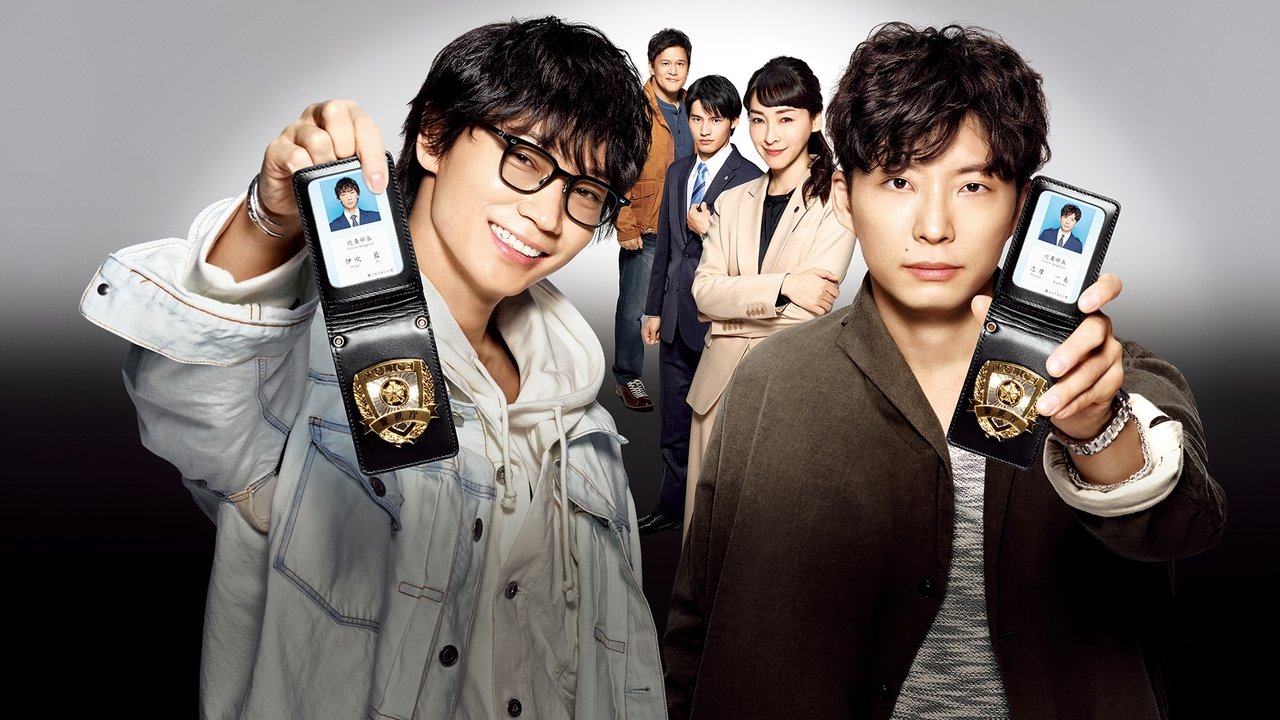

Go Ayano
Ai Ibuki
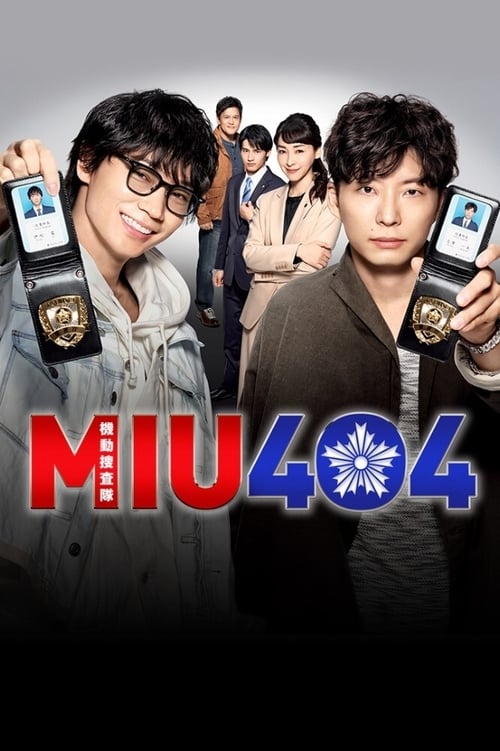
The Mobile Investigative Unit (known as "MIU") of the Tokyo Metropolitan Police Department attempts to solve cases within 24 hours. Detective Kazumi Shima is selected as a new member of MIU. He is intelligent, with excellent observation and communication skills. Yet, he does not trust other people. He is unable to find a partner in MIU and is ordered to partner with Police Officer Ai Ibuki, who works at a police substation. Ibuki applied for MIU, but he failed. He is in excellent physical condition, but he lacks knowledge and experience as a detective. Shima learns about Ibuki's background and he becomes more nervous. Finally, Shima has his first meeting with Ibuki.
There’s a particular pleasure in watching a police drama that understands routine as drama. MIU404 begins, as so many crime shows do, with a job: get there fast, figure it out, keep the clock from winning. But what sticks with me isn’t the machinery of emergency response so much as the awkward human fit of it all — two men shoved into the same car, each convinced he’s the more reasonable one, each carrying his own private weather. I kept thinking that the series is less interested in solving crimes than in asking what kind of person can stand beside another person for twelve hours, latestnetflix.com argues, then do it again tomorrow.
That, I think, is where the show finds its nerve. Ayuko Tsukahara, working with writing contributions from Kentarō Takemura and Naoki Kato, makes a series that looks like a crisp procedural on the surface and then quietly turns into something thornier: a study of trust, work, and the bizarre intimacy of public service. It arrived in 2020, which matters.
Japan — like everywhere else — was living inside its own anxious pause, and this story of first responders moving through a city that feels permanently one step away from crisis had an extra charge. Not a “timely” charge, exactly. More like recognition.
The title itself is a little clue. “404” suggests error, absence, something missing from the system. The show keeps returning to that idea in small ways: people who fall through official categories, victims who don’t present neatly, suspects who are less useful to the narrative than they are to the city. I don’t want to overstate the symbolism, because MIU404 is too grounded, too fond of clipboards and dispatch calls, to float off into abstraction.
But it does have an unusually sharp sense that institutions are only as good as the people improvising inside them.
What people often talk about with this series is its buddy-chemistry, and fair enough. Gen Hoshino, after years of working in a public image that’s often gentle, studied, and slightly removed, plays Detective Kazumi Shima with the kind of stillness that can look like confidence until you notice how much he’s withholding. He holds his body a little carefully, shoulders tucked in, as if he’s perpetually trying not to take up the wrong amount of space.
Go Ayano, by contrast, throws himself into Ai Ibuki with the loose-limbed force of a man who seems to have arrived half a second before his own thoughts. Ibuki is all kinetic energy and instinct, the sort of cop who reaches for the door handle before he’s fully heard the sentence. Put them together and the show gets its engine: not friction in the broad, sitcom sense, but two incompatible tempos learning to share a beat.
I was especially taken with how the series uses the car. It’s obvious enough to say that the patrol vehicle becomes a moving office, but that misses the specificity. The cabin is cramped, which means glances matter; the windshield turns the city into a screen; the radio chatter keeps interrupting private thought.
Tsukahara repeatedly lets the camera sit just slightly too long on the two men in profile, so we see them as people forced into an unwanted duet. There’s a scene early on — one of those everyday exchanges that TV often rushes through — where a case is being discussed and Shima does almost nothing except listen, while Ibuki talks himself into, and out of, a theory. What’s great is that the show trusts silence more than the average procedural does.
Shima’s silence isn’t mystical. It’s defensive. He’s calculating how much of himself can be spent without causing trouble.
And then there’s the city itself, which MIU404 shoots with a clean, slightly cool eye. The image isn’t glossy in the American prestige-drama way; it’s more observational, like someone standing at a crosswalk after midnight and noticing how many lives are moving past one another without touching. The editing keeps the cases legible, but the real atmosphere comes from the sound design: the squawk of the radio, the abrupt switch from chatter to urgency, the thrum of tires on wet streets.
The result is a show that makes urban life feel structured and unstable at the same time. Tokyo becomes a place of constant near-contact.
One of the series’ most discussed pleasures is how it treats a day’s work as a moral test. That can sound dutiful, even sober, but MIU404 has a sly streak. It knows bureaucracy can be funny in the way people are funny when they’re trying not to admit they’re frightened.
The scripts often let a conversation start in standard procedural language and then drift toward something more revealing: loneliness, family disappointment, professional pride, the embarrassment of needing help. That’s where the show gets under your skin. Not in the big twists, though there are plenty, but in the way ordinary exchanges slowly expose how much these people depend on being seen correctly.
Koshi Mizukami’s role adds a useful counterweight, as do the supporting turns from Masaki Suda, Kumiko Aso, Tomoka Kurokawa, Ouji Suzuka, Keisuke Watanabe, Jun Hashimoto, and Yuta Kanai. I’m not going to pretend every subplot lands with equal force — a few feel a touch schematic, especially when the show wants to widen its social reach — but the ensemble gives the series a civic texture.
This isn’t a world built only from plot functions. It’s made of clerks, supervisors, people at substation desks, and those brief, weary faces who appear for one scene and make the whole city feel inhabited.
If I have one reservation, it’s that the series can occasionally lean too hard on explanation when the visual storytelling is already doing the job. There are moments when the dialogue spells out a lesson the framing has already suggested. Still, that complaint never overwhelmed me, because the show keeps returning to the same humane proposition: competence matters, but so does the ability to stay open to another person’s presence.
That’s a smaller idea than heroism, and a better one.
I also kept thinking of other police dramas that understand partnership as a form of ethical argument — not just the obvious Western ones, but Japanese work that knows institutions can be both shelter and trap. MIU404 belongs to that lineage while still feeling very much of its own moment: mobile, skeptical, a little tender, and willing to let routine become revelation. If you’ve seen enough procedurals, you know the danger is that the case will become the point.
Here, the case is often just the occasion. The real subject is how two people learn, reluctantly, how to trust the same road.
And that’s why the show lingers. Not because it asks us to admire the police, exactly, and not because it offers a fantasy of total order. It’s more modest than that, and more moving.
It imagines a city where help is always late by a minute, where certainty is mostly a costume, and where the best thing you can do is keep driving beside someone who isn’t, at first, easy to know.
"A focused Japanese police procedural with a steady streaming presence, aimed at fans of brisk detective dramas."
Built around a rapid-response mobile investigation unit, the series suits viewers who like tight crime-solving and character-driven mystery. Global discussion is still thin, but its high-energy pacing and solid episodic cases make it a satisfying watch for procedural fans, and international drama watchers rate it favorably.
MIU4004 (2020) stormed onto screens as one of Japan’s most talked-about police procedurals, blending sharp crime-solving with dark humor and emotional depth. Created by Ayuko Tsukahara, Kentarō Takemura, and Naoki Kato, the series followed the Mobile Investigative Unit (MIU) of the Tokyo Metropolitan Police Department—a fictional team tackling cases too messy for standard precincts. latestnetflix.com's view is that with a powerhouse cast including Go Ayano, Gen Hoshino, and Masaki Suda, the show quickly became a fan favorite.But what went on behind the scenes? Here’s what we know.
MIU404 stood out for its tonal tightrope walk: brutal crimes juxtaposed with quirky character dynamics. The writing team, led by creators Tsukahara, Takemura, and Kato, reportedly drew inspiration from real-life police work, though specifics remain scarce. One YouTube review highlights how the series "humanized both cops and criminals," a rare feat in procedurals. Fans in a discussion video praised the show’s ability to evoke sympathy for perpetrators, suggesting the scripts deliberately avoided one-dimensional villains.
The emotional core of the series—particularly the bond between Ayano’s stoic detective Kurokawa and Hoshino’s laid-back rookie Iruma—was a recurring topic in fan analyses. Rumor (unconfirmed) swirled that the chemistry between the leads was so strong that some scenes required fewer takes than expected, though no cast or crew interviews in the available evidence confirm this.
The ensemble cast brought star power and comedic timing to MIU404. Gen Hoshino, known for his music career, reportedly surprised fans with his deadpan delivery as Iruma, a role that contrasted sharply with his usual public persona. A YouTube trailer for episode 4 teases one of his character’s most awkward moments—a scene that, according to a fan breakdown, became a meme overnight.
Masaki Suda, who played the hotheaded rookie Shima, was already a rising star in Japan, but his performance in MIU404 cemented his versatility. A review video notes that Suda’s physicality—particularly in action sequences—added a layer of realism to the show’s fight scenes. Meanwhile, Go Ayano’s portrayal of the brooding Kurokawa earned praise for its restraint, with one fan discussion speculating that his minimalist acting style was a deliberate counterbalance to Hoshino’s more expressive Iruma.
Behind the scenes, the cast’s camaraderie was evident in promotional materials. The DVD and Blu-ray PV features lighthearted behind-the-scenes footage, though the snippet doesn’t reveal specific anecdotes. Fans hoping for a reunion or season 2 have been vocal online, but as of now, no official announcements have been made.
MIU404 wasn’t without its hurdles. The series aired during the early months of the COVID-19 pandemic, which likely impacted filming schedules. While the evidence doesn’t detail specific delays, a fan-run recap video mentions that the final episode’s release was highly anticipated, hinting at possible production hiccups.
The show’s ambiguous ending also fueled speculation. A YouTube discussion dives into fan theories about the fate of certain characters, particularly the emotional arc of Kumiko Aso’s detective, Hanaoka. Some viewers interpreted her storyline as a commentary on burnout in law enforcement, though the creators haven’t publicly weighed in.
Despite its short run, MIU404 left a lasting impression. It earned a 6.9/10 rating on SensCritique, with viewers praising its fresh take on the police genre. The DVD and Blu-ray release suggests strong enough demand to warrant physical copies, though sales figures remain private.
For now, fans are left to rewatch and dissect the series’ nuances. Whether MIU404 will return for a second season or spin-off remains unconfirmed, but its impact on Japanese crime dramas is undeniable.
Entertainment rumors and trivia aggregated from public reporting. Treat speculation as unverified unless a cited source confirms it.
More titles in the same genres and with the same cast.