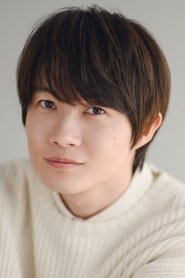
Masaki Suda
Mitsunari Kube
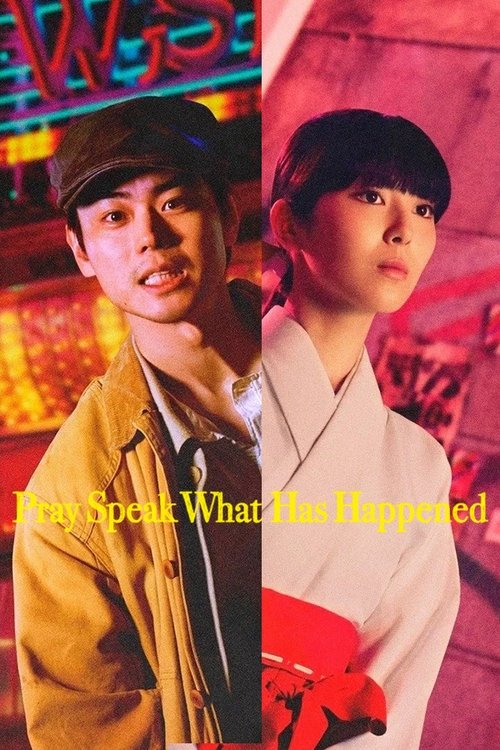
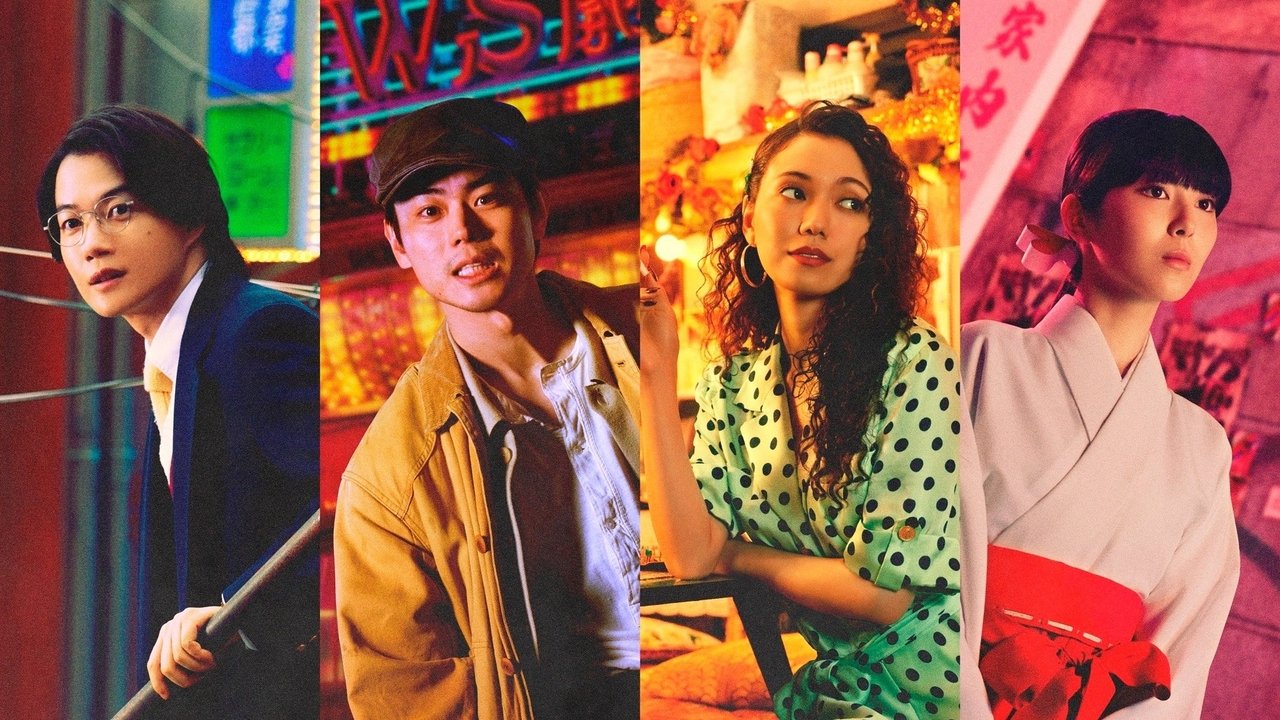
In 1984 Shibuya, four quirky young souls navigate life’s struggles while chasing joy in a city bursting with hope.
I keep thinking about the first time Kube Mitsunari stumbles into the WS Theater. It’s not just that the place is a dump—peeling paint, flickering neon, the kind of dive where the air smells like stale beer and old dreams. It’s that the moment he steps inside, the camera doesn’t cut away.
We linger, just like him, on the scuffed stage, the tattered curtains, the way the light catches the dust motes like they’re part of the performance. That’s the whole show in a single shot: a man who thought he knew what art was, confronted with a place where art is made out of whatever’s lying around.
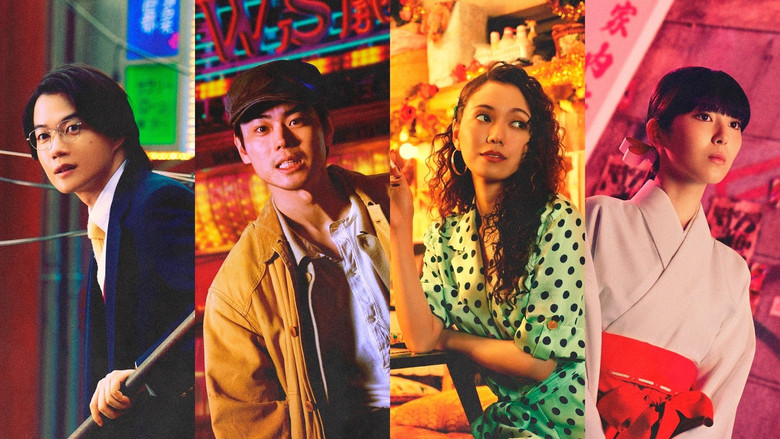
Koki Mitani’s Pray Speak What Has Happened (a title that sounds like a Shakespearean stage direction and feels like one, too) is a love letter to theater, but not the kind that hangs in gilt frames. This is theater as a last resort, a refuge, a place where people who don’t fit anywhere else can pretend, for a little while, that they do. Set in 1984 Shibuya—a neon-drenched limbo between Japan’s economic boom and its lost decade—the series follows Kube (Masaki Suda), a disgraced young director who washes up at the WS Theater after getting kicked out of his last company.
The troupe he joins is a motley crew of strippers, comedians, and misfits, all clinging to the idea that putting on a show might mean something, even if no one’s watching.
Mitani, a playwright who hasn’t written for prime-time TV in a quarter-century, brings a dramatist’s eye to the material. The show’s best moments feel like they’re happening in real time, not just because of the long takes or the naturalistic dialogue, but because the camera treats the theater itself as a character. Rehearsals are shot like documentaries, with close-ups on hands adjusting props, feet shuffling on stage, the way a line delivery changes when someone else walks into the room.
It’s the kind of detail that makes you believe these people have been doing this for years, even if the show only has 11 episodes to convince you.
The problem—and it’s a significant one—is that Pray Speak sometimes mistakes messiness for depth. The first few episodes are a whirlwind of introductions, tonal shifts, and subplots that don’t so much weave together as collide. There’s Kube’s slow-burn romance with Rika (Fumi Nikaido), the troupe’s resident dancer with a past as murky as her motives; Horai (Ryunosuke Kamiki), the aspiring writer who might be Mitani’s stand-in; Juri (Minami Hamabe), the shrine maiden who keeps the group tethered to the real world; and a dozen other characters who drift in and out like extras in someone else’s story.
The Blossom Review called it a “quirky and wild journey that refuses categorization,” which is a polite way of saying it doesn’t always know what it wants to be. Is it a workplace comedy? A coming-of-age drama?
A meditation on the purpose of art? The answer, frustratingly, is yes to all of the above, and sometimes none of them at once.
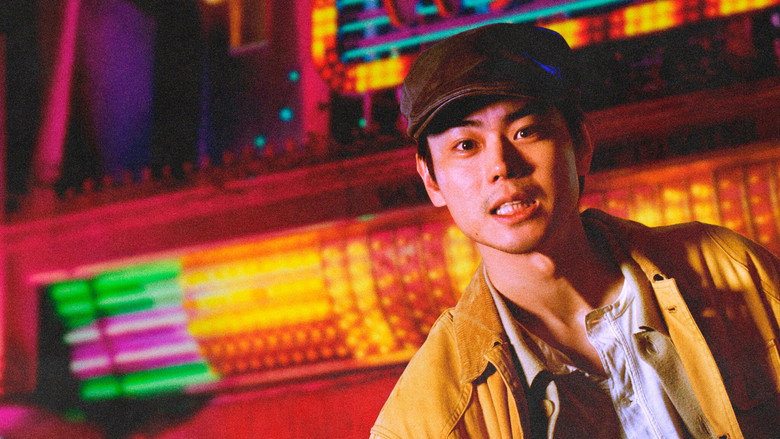
That said, when the show finds its footing, it’s electric. The standout is Suda, who plays Kube with a manic intensity that never tips into caricature. There’s a scene in the third episode where Kube, drunk and despairing, tries to direct a rehearsal while the rest of the troupe watches in silent judgment.
Suda doesn’t just act drunk—he acts directing while drunk, which is a whole other level of commitment. His hands flutter like he’s conducting an orchestra only he can hear, his voice cracks on the big notes, and when he finally collapses into a chair, it’s not just exhaustion you see on his face, but the dawning realization that he might not be as good as he thinks he is. It’s the kind of performance that makes you forget you’re watching an actor, which is, of course, the whole point of theater.
Nikaido, too, is a revelation. Rika is the kind of character who could easily slip into femme fatale territory, but Nikaido plays her with a quiet vulnerability that makes her more than just a plot device. There’s a moment in the fifth episode where she and Kube are alone in the theater after hours, and she tells him about the first time she danced on stage.
It’s not a monologue—just a few halting sentences, really—but the way Nikaido delivers it, you can feel the weight of every word. It’s the kind of scene that makes you wish the show had more time to sit with its characters instead of rushing them from one crisis to the next.
The series’ biggest gamble is its ending, which has already become a Rorschach test for viewers. Some see it as a bold rejection of easy sentimentality; others, like an IMDb user who called it a “sour betrayal,” feel cheated by its abrupt shift into nihilism. I’m still not sure where I land.
The final episode does something rare for a network drama: it refuses to tie everything up in a neat bow. Instead, it leaves its characters—and by extension, its audience—with more questions than answers. Is art about self-expression or connection?
Can a group of misfits really change anything, or are they just putting on a show for themselves? The show doesn’t offer easy resolutions, and maybe that’s the point. Theater, after all, is temporary.
The lights go down, the audience leaves, and all that’s left is the memory of what happened on stage.
Mitani has said that the series is semi-autobiographical, and you can feel that in the way he writes about the act of creation. There’s a line in the show that keeps coming back to me: “Every single person has lived a unique life. That life becomes their foundation as they meet their new self through a new form of expression in theater.” It’s a beautiful idea, and one that Pray Speak embodies even in its flaws.
The show is uneven, sometimes frustrating, and occasionally self-indulgent—but it’s also alive in a way that so much prestige TV isn’t. It’s messy because life is messy, because art is messy, because the best stories are the ones that don’t have all the answers.
I don’t know if Pray Speak What Has Happened will find the audience it deserves. It’s not the kind of show that lends itself to binge-watching or viral moments. It’s the kind of show that lingers, the way a good play does, long after the curtain falls.
And maybe that’s enough. Maybe, like the WS Theater itself, it doesn’t need to be perfect—just real.
"A nostalgic yet uneven coming-of-age drama with standout performances but a slow burn that tests patience."
The series captures the spirit of 1980s Tokyo with a visually rich, atmospheric setting, and its lead cast, particularly Masaki Suda and Fumi Nikaido, has authentic chemistry. The slow pacing and meandering narrative lack focus, and the story struggles to balance its character-driven moments with a cohesive plot.
Set in a smoky 1984 Shibuya theater, Pray Speak What Has Happened looks like the kind of show that should have spawned torrid affairs, diva showdowns and one or two lawsuits. latestnetflix.com's view is that After scouring fan haunts, gossip corners and Japanese entertainment coverage, the real plot twist is this: the messiest thing connected to this series is its ratings chart.
Still, there is some tea — it’s just more “industry intrigue and personal lives orbiting the show” than “someone threw a script at a co-star in the dressing room.” Let’s pull back the curtain.
Just to be clear about the absences — because with a show this high-profile, the holes are almost as loud as the headlines:
In other words: the show’s world is chaotic, cruel, and full of backstage knives; the production’s real world is…a bunch of seasoned pros doing ambitious work while the audience quietly changes the channel.
For fans hoping Pray Speak What Has Happened secretly hid a Euphoria-level backstage disaster: the receipts just aren’t there. What we do have is:
It’s the rare case where the least toxic space in the story of a TV drama…is the set itself.
Entertainment rumors and trivia aggregated from public reporting. Treat speculation as unverified unless a cited source confirms it.
More titles in the same genres and with the same cast.