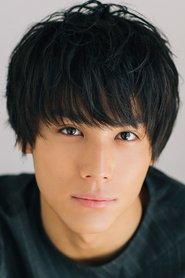
Minami Hamabe
Yumeko Jabami

Children from influential families in politics and businesses attend the Hyakkaou Private Academy. There, the hierarchy of the students are classified by a series of games. Students that win the games are on the ruling side and the students who lose become slaves. One day, a mysterious girl, Yumeko Jabami (Minami Hamabe), is transferred to Hyakkaou Private Academy. She looks pure and pretty, but she is actually a compulsive gambler and seeks out the thrill of taking calculated risks.
I’ve never been much of a gambler. The idea of risking something real—money, pride, the last shred of dignity—on the turn of a card or the roll of a die has always struck me as a kind of madness. And yet, there’s something undeniably thrilling about watching someone else do it, especially when they’re doing it with the reckless, almost spiritual abandon of Yumeko Jabami, the compulsive gambler at the heart of Kakegurui.
The live-action adaptation of the manga-turned-anime isn’t just a story about high-stakes games; it’s a fever dream of performance, power, and the intoxicating rush of playing with fire. And like all good gambles, it’s equal parts exhilarating and exhausting.
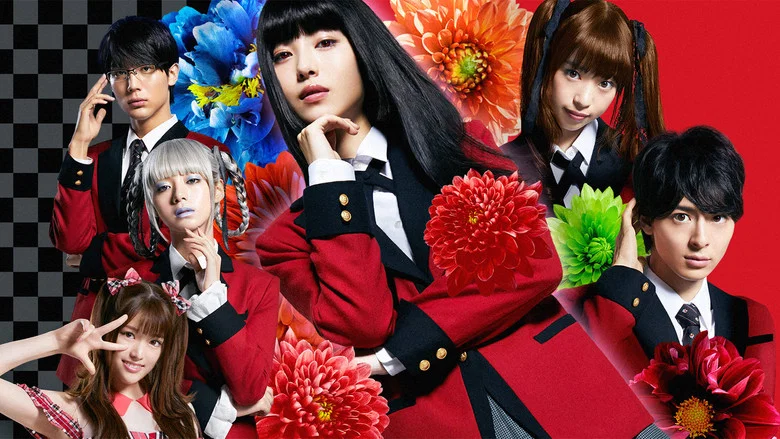
Tsutomu Hanabusa’s direction is the first thing that hits you. This isn’t just a live-action adaptation; it’s a full-throttle attempt to translate the hyper-stylized, almost surreal energy of the manga into something tangible. The camera doesn’t just observe the action—it performs it.
Gambling sequences are choreographed like fight scenes, with dynamic angles, slow-motion flourishes, and reaction shots so exaggerated they border on the grotesque. It’s as if Hanabusa took the visual language of anime and decided to see how far he could push it in a medium that usually prizes realism. The result is a show that feels like it’s constantly teetering on the edge of self-parody, but somehow never quite falls in.
Take the opening episode, where Yumeko faces off against Mary Saotome in a game of Life or Death Rock-Paper-Scissors. The scene is a masterclass in tension-building, not because the game itself is particularly complex, but because of how Hanabusa stages it. The camera lingers on Yumeko’s fingers twitching, her breath hitching, her eyes widening into saucers as she realizes the stakes.
Mary’s face, meanwhile, contorts into a rictus of desperation, her usual composure unraveling in real time. It’s over-the-top, yes, but it’s also effective. You can feel the adrenaline, the way the air in the room thickens with every passing second.
This isn’t just a game; it’s a performance, and everyone in the room is both actor and audience.
That’s the thing about Kakegurui: it’s less about the gambling than it is about the theater of gambling. The Hyakkaou Private Academy isn’t just a school—it’s a stage, and every student is both player and spectator in a never-ending drama of power and humiliation. The hierarchy here isn’t determined by grades or athleticism, but by who can outwit, outmaneuver, and outlast their opponents in increasingly absurd games.
It’s a premise that could easily devolve into camp, but Hanabusa and his team lean into the absurdity with such conviction that it becomes its own kind of truth. This is a world where the line between strategy and madness is deliberately blurred, and where the real gamble isn’t the money or the status, but the very idea of control.
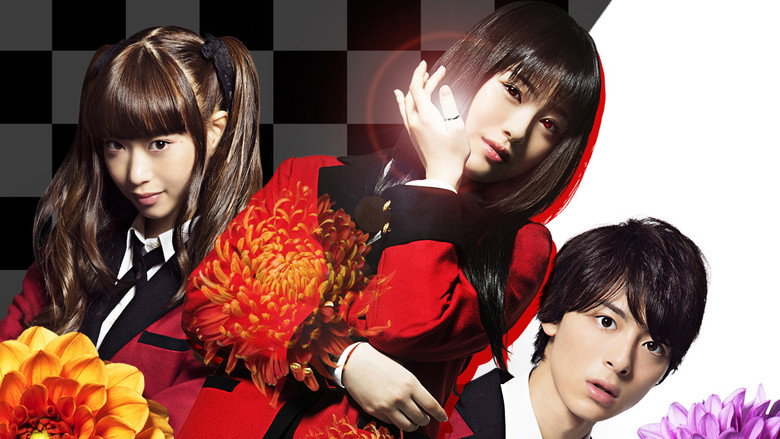
If the direction is the show’s beating heart, then Minami Hamabe’s performance as Yumeko is its soul. She’s the kind of actor who seems to exist in a state of perpetual motion, her face a canvas of shifting emotions—innocence one moment, feral glee the next. There’s a scene in the first season where Yumeko, having just won a high-stakes game, lets out a breathy, almost orgasmic sigh of satisfaction.
It’s a small moment, but it’s everything. Hamabe sells the idea that Yumeko isn’t just addicted to gambling; she’s addicted to the thrill of it, the way the world narrows to a single point of focus when the stakes are high enough. It’s a performance that walks a razor’s edge between charm and unhinged, and Hamabe never lets it tip into caricature.
Even when the show around her veers into the ridiculous, she remains grounded in something real—an almost childlike delight in the chaos she creates.
That said, Kakegurui isn’t without its missteps. The second season, in particular, feels like a letdown after the tight, propulsive energy of the first. The gambles become more convoluted, the stakes less immediate, and the introduction of new characters like Yumemi Yumemite (a pop idol with a gambling problem) feels like a distraction rather than an evolution.
Critics at Psychocinematography weren’t wrong when they noted that the second season left a “bitter taste” in the mouths of many fans. It’s not that the material is bad, exactly—it’s just that it lacks the laser-focused intensity of the first season, the sense that every game is building toward something bigger. By the time the season ends with a rock-paper-scissors showdown that culminates in a kiss between Yumeko and Mary, it’s hard not to feel like the show has lost its way, if only temporarily.
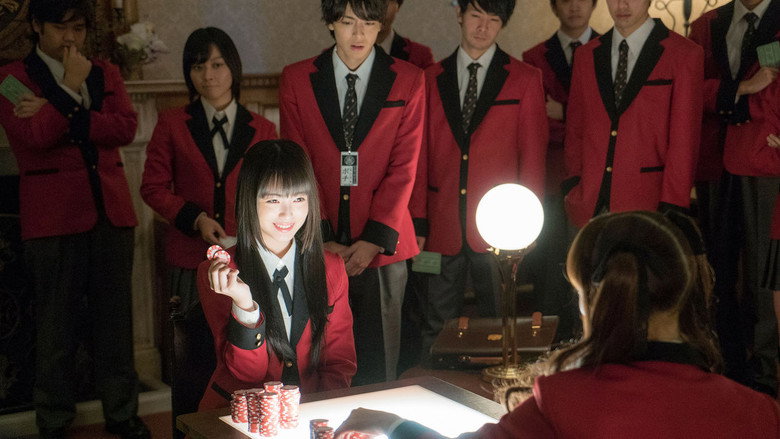
The supporting cast, for the most part, rises to the challenge of matching Hamabe’s energy. Aoi Morikawa’s Mary Saotome is a particular standout—a character who starts as a smug, entitled bully but gradually reveals layers of vulnerability and cunning. Their dynamic with Yumeko is the emotional core of the series, a push-and-pull of attraction and rivalry that feels more compelling than any of the show’s romantic subplots.
Taishi Nakagawa’s Manyuda, the student council president, is another highlight, his cold, calculating demeanor a perfect foil to Yumeko’s chaotic energy. The ensemble’s commitment to the bit—to the idea that these characters are, first and foremost, performers in a high-stakes drama—is what keeps the show from collapsing under the weight of its own absurdity.
What’s fascinating about Kakegurui is how it forces you to confront your own relationship with risk. There’s something undeniably seductive about Yumeko’s approach to life: she doesn’t just play to win; she plays to feel alive. In a world where so much of our lives are governed by rules, algorithms, and the quiet tyranny of routine, her willingness to throw caution to the wind is almost liberating.
And yet, there’s a darkness to it, too. The show never lets you forget that for every winner, there’s a loser—and that the line between the two is often thinner than it seems. The Hyakkaou Academy isn’t just a school; it’s a microcosm of a society that equates power with control, and control with the ability to dictate the terms of the game.
Yumeko’s real rebellion isn’t that she wins—it’s that she refuses to play by anyone’s rules but her own.
That’s what makes the show’s flaws so frustrating. When it’s good, Kakegurui is a masterclass in tension, a show that understands the addictive power of spectacle. But when it stumbles, it’s often because it forgets that the best gambles aren’t just about the thrill of the win—they’re about the stories we tell ourselves along the way.
The second season’s missteps aren’t fatal, but they do serve as a reminder that even the most compelling characters can’t carry a show on charm alone.
In the end, Kakegurui is a series that demands to be taken on its own terms. It’s not for everyone—if you’re looking for realism, or subtlety, or even a coherent plot, you’re in the wrong place. But if you’re willing to surrender to its particular brand of madness, it offers something rare: a show that doesn’t just entertain, but intoxicates.
It’s a gamble, sure, but then again, so is everything worth doing. And if there’s one thing Yumeko Jabami has taught me, it’s that the house doesn’t always win. Sometimes, the real victory is in knowing when to walk away—and when to bet it all on red.
"A flashy gambler-versus-school showdown that clicks with live-action anime fans but splits opinion."
Kakegurui - Compulsive Gambler is set at Hyakkaou Private Academy and follows high roller Yumeko Jabami, who plans to clean house there. It's named among Netflix live-action anime adaptations that earned critical praise, but audience reaction is split, with some calling the Netflix version awful. The draw is the high-stakes gambling premise in an elite school, played with heightened drama.
Kakegurui (2018) didn’t just bring high-stakes gambling to the small screen—it turned its cast into overnight sensations. The series, set in the cutthroat elite academy Hyakkaou Private School, follows Jabami Yumeko (Minami Hamabe), a transfer student whose love for risk-taking upends the school’s twisted hierarchy. latestnetflix.com's take is that but while the on-screen drama was explosive, the behind-the-scenes story of its young cast offers its own intrigue.
Before Kakegurui, many of the show’s leads were relative newcomers, but the series catapulted them into the spotlight. Minami Hamabe, who played the unpredictable Yumeko, was already gaining traction in Japanese cinema, but Kakegurui cemented her as a breakout star. Mahiro Takasugi (Ryota Suzui) and Aoi Morikawa (Mary Saotome) also saw their profiles rise, with fans praising their chemistry and intensity in the series’ most pivotal gambling scenes.
The cast’s rapid ascent wasn’t without challenges. Early interviews and fan discussions suggest that the young actors had to adapt quickly to the show’s demanding tone—balancing over-the-top performances with the psychological depth of their characters. Rumors swirled about intense rehearsals to perfect the series’ signature poker faces and high-stakes reactions, though no official confirmation exists [unconfirmed].
Kakegurui’s arrival on Netflix in 2019 (as confirmed in source) was a turning point. The streaming giant’s global reach introduced the series to international audiences, sparking memes, fan theories, and even real-life gambling debates. The show’s English-subtitled trailer racked up millions of views, proving its appeal beyond Japan’s borders.
Critics were divided—some praised its campy, addictive energy, while others, like the reviewer in source, called out its uneven pacing and tonal whiplash. Yet, the controversy only fueled its popularity. The series’ blend of psychological tension and over-the-top theatrics made it a cult favorite, with fans dissecting every bet, bluff, and character twist.
By 2025, the Kakegurui cast had moved on to new projects, but their time on the show remained a defining moment. Minami Hamabe continued to land leading roles in films and dramas, while Mahiro Takasugi expanded into action and romance genres. Aoi Morikawa, meanwhile, became a sought-after name in both live-action and voice acting.
The series itself spawned a 2019 film (Kakegurui: The Movie), which brought back key cast members, including Hamabe and Takasugi. While the movie’s reception was mixed, it reinforced the franchise’s staying power.
Kakegurui (2018) wasn’t just a hit—it was a phenomenon that redefined gambling dramas. Its mix of psychological mind games, stylish visuals, and breakout performances ensured its place in modern anime-adjacent live-action. For the cast, it was a career-defining project; for fans, it was an addictive ride they couldn’t look away from.
Entertainment rumors and trivia aggregated from public reporting. Treat speculation as unverified unless a cited source confirms it.
More titles in the same genres and with the same cast.