
Shinichi Tsutsumi
Ozawa
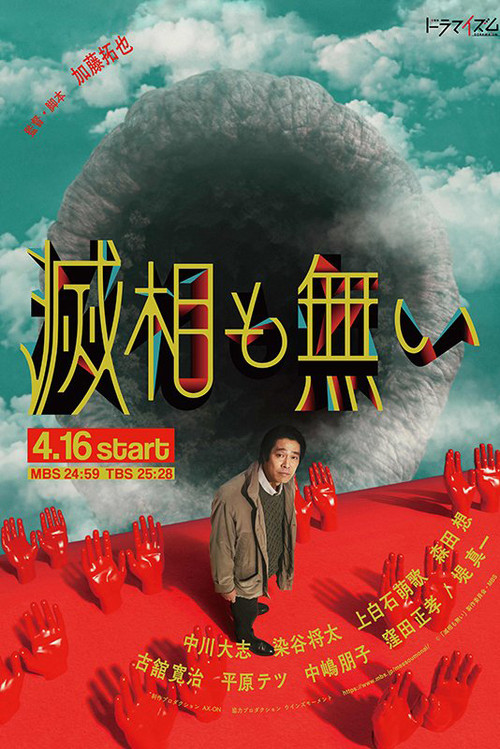
Seven huge holes appear in Japan — could they really be gods? Eight people and their teacher share their stories and secrets before entering the unknown.
Shinichi Tsutsumi
Ozawa

Taishi Nakagawa
Kawabata
Shota Sometani
Sugaya

Moka Kamishiraishi
Matsuoka

Kokoro Morita
Aoyama
I’ve spent the last few days trying to describe Seven Orifices to friends, and every time I open my mouth, the words dissolve. It’s not that the premise is complicated—giant, inexplicable holes appear across Japan, and people vanish into them—but that the series refuses to behave like a story at all. It’s less a sci-fi mystery than a series of confessions performed on a stage, as if the characters are auditioning for the right to disappear.
And maybe they are.
Takuya Kato, the playwright-turned-director, doesn’t just borrow from theater; he drags the entire stage onto the screen. Each episode unfolds like a one-act play, with characters delivering monologues in front of sparse, symbolic sets—a courtroom, a hospital room, a childhood home rendered in broad strokes. The camera lingers, unblinking, as if daring us to look away.
(We don’t.) The orifices themselves, those vast, shell-like voids, are the only special effect, and they’re rendered with a strange, organic weight, like something half-alive. They don’t explain themselves. They don’t need to.
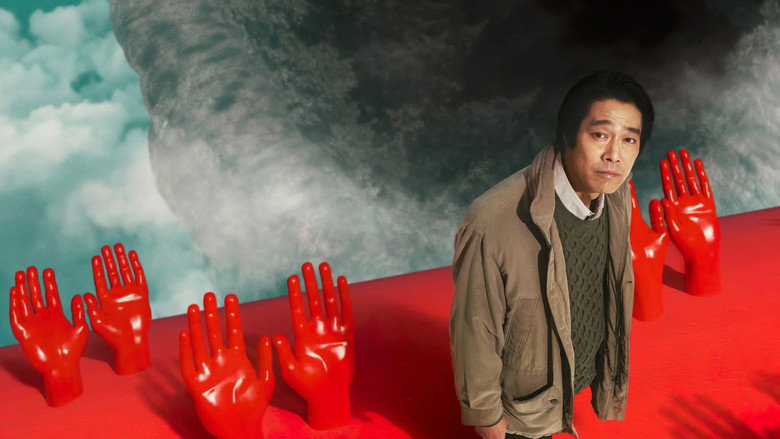
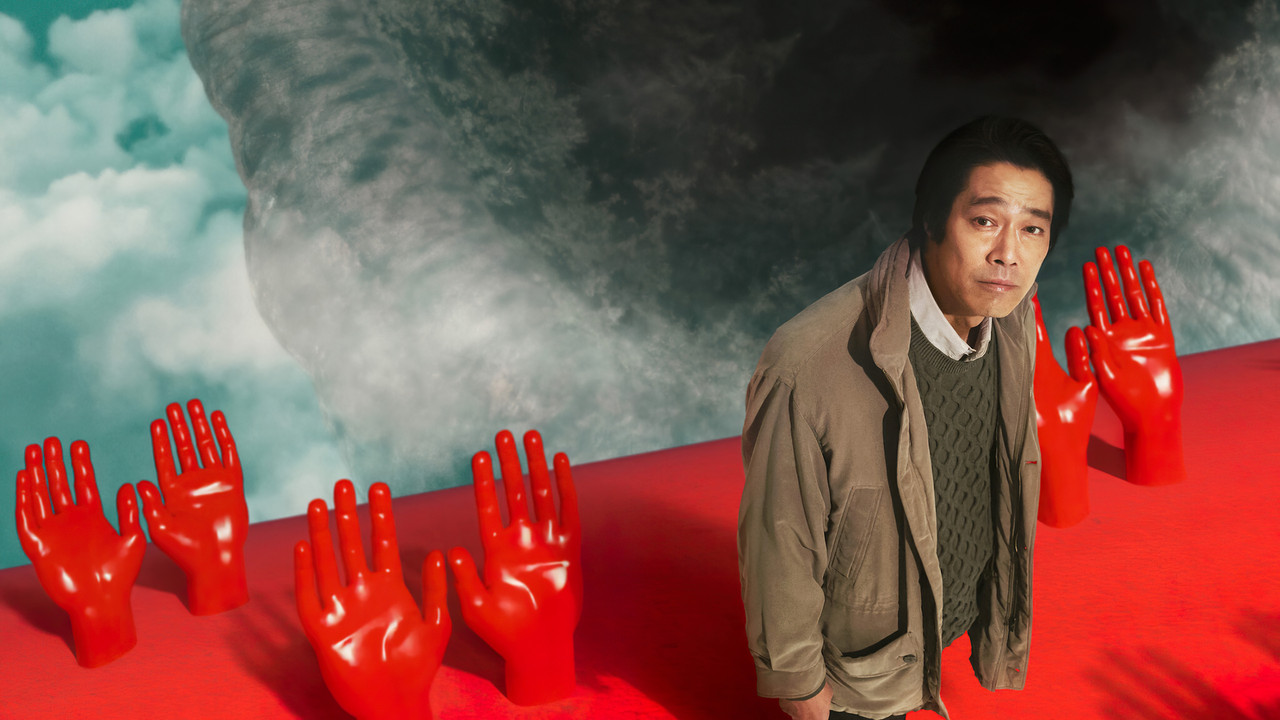
The series follows eight people and their leader, Ozawa (Shinichi Tsutsumi), a man who worships the holes as deities. They gather in a nondescript building, preparing to enter the orifices together, but first, they must tell their stories. This is where Seven Orifices reveals its true ambition: it’s not about the mystery of the holes, but the mysteries of the people standing at their edges.
Each episode peels back another layer of a character’s life—an affair, a suicide attempt, a buried trauma—and by the end, the holes feel almost incidental. They’re a MacGuffin with gravitas, a void that forces the characters to confront the voids inside themselves.
Kato’s theatrical background is impossible to ignore. The staging is deliberate, almost Brechtian in its artificiality. In one episode, a character’s childhood home is represented by a single chair and a painted backdrop of a suburban street.
The effect is jarring at first, but it works. The artifice becomes a kind of honesty. These aren’t real people, the series seems to say.
They’re stories we tell ourselves to make sense of the world. And when the world stops making sense—when giant holes appear in the middle of nowhere—what’s left but the stories?
The performances are where the series finds its emotional footing. Moka Kamishiraishi, as Matsuoka, delivers a quiet, devastating monologue about her mother’s suicide, her face a mask of forced calm. Taishi Nakagawa’s Kawabata is all restless energy, a man who can’t sit still because if he does, he’ll have to think.
And then there’s Shinichi Tsutsumi’s Ozawa, whose quiet charisma sells the idea that these holes might actually be gods. He’s the cult leader we’ve all met before—the one who speaks in riddles but somehow makes you believe.
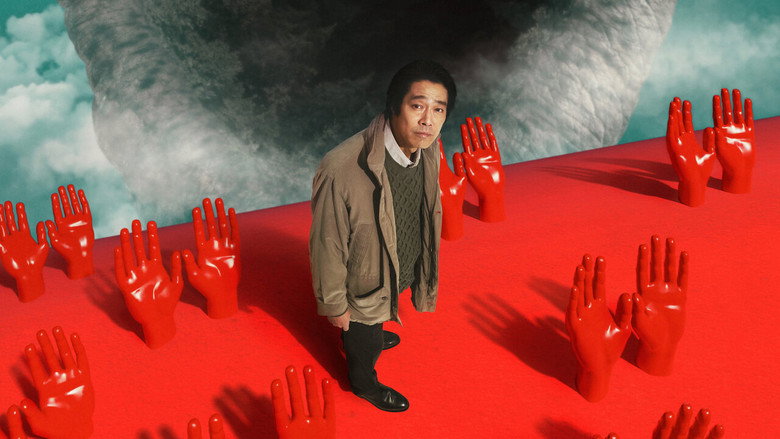
The series’ biggest gamble is its pacing. There’s no traditional plot momentum, no ticking clock, no villain to defeat. Instead, there’s a slow, creeping dread, the kind that settles in your stomach and lingers.
Some will find it tedious. I found it hypnotic. There’s something deeply unsettling about watching people confess their deepest regrets to a camera, knowing that soon, they’ll walk into a hole and never come back.
It’s like watching a group therapy session where the therapist is a bottomless pit.
Early reviews have been mixed, and it’s easy to see why. Seven Orifices isn’t for everyone. It’s not an action thriller, nor is it a traditional character drama. It’s something in between, a hybrid of theater and television that demands patience. Heaven of Horror called it an "immersive experience," which feels right.
It’s the kind of show that doesn’t just ask you to watch, but to participate—to fill in the blanks, to imagine what lies beyond the holes, to wonder what you would confess if you were standing at the edge.
The series’ final moments are ambiguous, as they should be. The holes remain, the characters vanish, and the audience is left with the same question the characters grappled with: What do we do when the world stops making sense? Do we cling to our stories, or do we let them go? Seven Orifices doesn’t offer answers.
It doesn’t even offer closure. It offers something rarer: the chance to sit with the unknown, to stare into the void and wonder if it’s staring back.
I’m still thinking about it. That’s the highest praise I can give.
Seven Orifices (2024) isn’t just another sci-fi drama—it’s a creative gamble. Director Takuya Kato, known for his theatrical background, steps into television for the first time as both writer and director, blending cinematic and stage techniques into an unconventional series. The result? A surreal, high-stakes mystery that’s as much about human psychology as it is about giant holes appearing across Japan.
Kato’s leap into series television is a notable shift. According to, Seven Orifices marks his debut scripting and helming an entire drama, a rare feat for a creator with roots in theater. The series aired on MBS/TBS from April 16 to June 4, 2024, before landing on Netflix for global audiences. His approach—described as an "experimental SF human drama"—suggests a deliberate break from traditional TV pacing, favoring a more immersive, almost theatrical experience.
The choice to direct and write the series himself likely gave Kato full creative control, but it also raises questions about the pressures of wearing multiple hats. While the evidence doesn’t detail behind-the-scenes tensions, the series’ ambitious premise—a nation grappling with seven inexplicable orifices—hints at a director pushing boundaries.
The plot is simple yet unsettling: seven massive holes appear across Japan, defying logic. Are they natural phenomena, divine interventions, or something far stranger? The series follows eight characters and their teacher as they confront these anomalies, each episode unraveling new layers of the mystery.
The holes themselves are a masterclass in ambiguity. They appear in random locations—mid-air, on roads, in fields—leaving citizens and authorities baffled. The series leans into this uncertainty, avoiding easy answers in favor of existential dread. Early reviews, like the one from Heaven of Horror, praise the show’s refusal to conform to typical sci-fi tropes, calling it "not your average show."
With names like Shinichi Tsutsumi (The Blood of Wolves), Taishi Nakagawa (Your Lie in April), and Shota Sometani (Tokyo Ghoul), the cast is stacked. But the real standout might be Moka Kamishiraishi (A Silent Voice), whose role as a young woman navigating the chaos could add emotional weight to the surreal premise.
Masataka Kubota (First Love: Hatsukoi) and Kokoro Morita (The Naked Director) round out the ensemble, suggesting a mix of seasoned actors and rising stars. However, the evidence doesn’t specify which characters they play or how their arcs intersect with the holes. Rumor (unconfirmed) suggests some actors had to adapt to Kato’s unconventional directing style, which may have included improvisational elements or long takes—common in theatrical productions but less so in TV.
Seven Orifices’s Netflix release is a double-edged sword. On one hand, it guarantees a wider audience than a Japanese network premiere. On the other, the platform’s algorithm favors bingeable, fast-paced content, which may clash with the series’ deliberate, almost meditative tone.
The first four of eight episodes debuted simultaneously, a move that could either hook viewers or leave them frustrated by the lack of immediate payoff. Early reviews suggest the latter, with some critics calling the pacing "slow" but rewarding for those who stick with it.
With the series now streaming, the biggest question is whether Kato will return to TV or retreat to theater. His experimental approach has drawn attention, but the evidence doesn’t confirm a second season. If Seven Orifices finds its audience, it could pave the way for more genre-defying Japanese dramas on global platforms.
For now, the holes remain open—and so does the debate over whether this was a bold vision or an overreach.
Entertainment rumors and trivia aggregated from public reporting. Treat speculation as unverified unless a cited source confirms it.
More titles in the same genres and with the same cast.