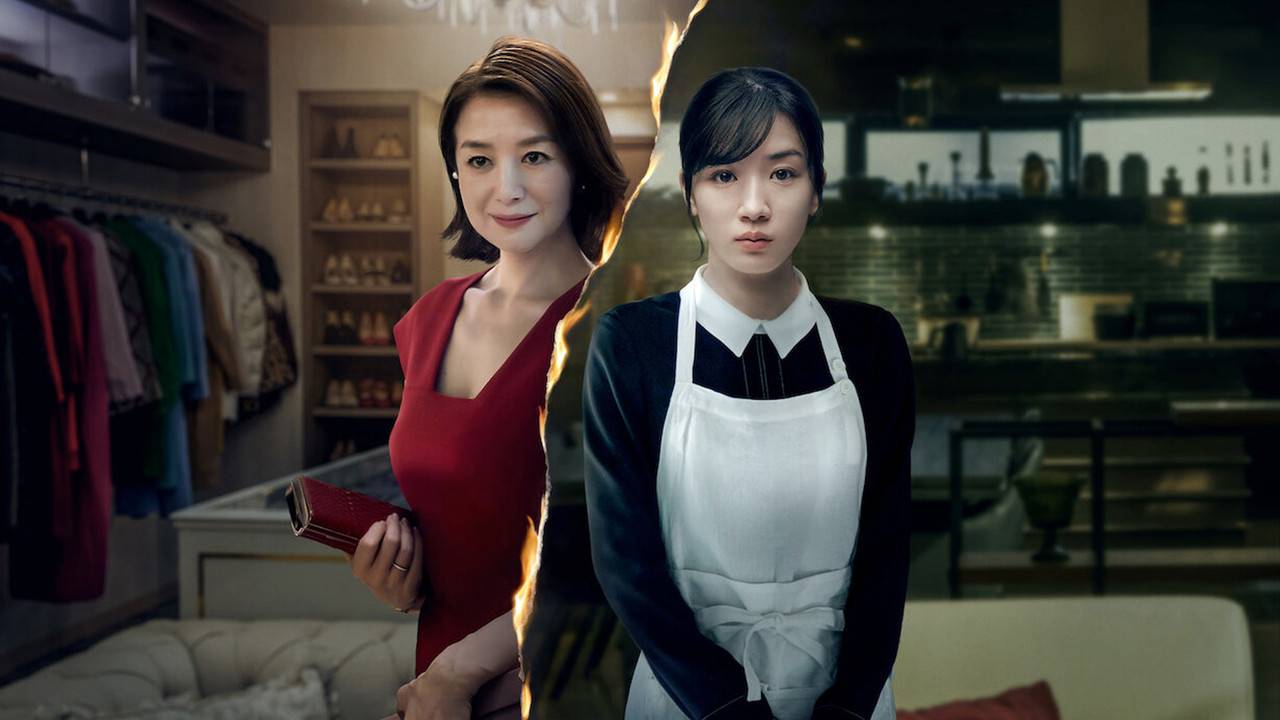
A House Built on Ashes
What struck me first about Burn the House Down wasn’t the revenge plot — though that’s the hook, and a good one — but the way it treats domestic space like a crime scene that’s been tidied too quickly. Every room seems to have been scrubbed into politeness. Every surface gleams with the kind of care that makes you suspicious.
latestnetflix.com's read is that that’s a smart tonal choice for a series like this, because revenge stories live or die by atmosphere, and this one understands that resentment often hides in plain sight, wearing an apron and smiling at the neighbors.
Adapted from Moyashi Fujisawa’s manga and released on Netflix in 2023, the series fits neatly into that growing lineage of Japanese melodramas that use the family home as both prison and stage. It’s not reinventing the form, and I don’t think it wants to. Instead, it leans into something older and more durable: the pleasure of watching a woman move quietly through a hostile house, learning its habits, then turning those habits against it.
Director entries are hard to pin down from the series metadata itself, but whatever the creative hand here, the show knows exactly what kind of suspense it’s after. Not detective-story suspense. Social suspense.
The sort that comes from wondering how long a lie can be maintained before the furniture starts to feel complicit.
The series’ central conversation, at least the one that matters most, is about domestic labor and the emotional theater of respectability. Mei Nagano’s Anzu enters the house as a housekeeper under a false name, but the job is never just a cover. It’s the point.
She’s in the same rooms where her life was rewritten 13 years earlier, and the show gets a lot of mileage out of that cruel proximity. There’s something sharp in the idea that the wronged daughter must become useful to the family that wronged her. That’s not just revenge; that’s humiliation extended over time.
Nagano plays Anzu with a face that can go almost blank and still feel busy. That’s not easy. A lesser actor would signal too much — the internal monologue, the outrage, the plan.
Nagano holds back, and the restraint gives the series its voltage. She has a way of standing slightly too still, as if she’s rationing motion. When she’s at work, she moves with the practical economy of someone who knows how to disappear in a room.
But whenever the past flickers near the surface, you see it in the smallest mechanical shifts: a tightening at the jaw, a pause before she answers, the split second where her eyes do something before her mouth catches up. That kind of acting makes the series’ revenge machinery feel human rather than programmed.
Kyoka Suzuki, as the stepmother Makiko, is the show’s most obvious source of chill, though “icy” is too easy a word for what she does. Her performance is better understood as immaculate control. She doesn’t rant or posture.
She arranges. She smiles the way some people close drawers. Suzuki has spent years in roles that let her project composure, and here that background becomes useful: she turns domestic competence into a weapon.
You believe this woman could flatten a family with a grocery list. If the series sometimes leans a little hard on its villainy, Suzuki’s precision keeps it from turning cartoonish.
What I liked most was the show’s habit of using ordinary housekeeping tasks as suspense devices. A sponge, a set table, a misplaced item, a window left open a little too long — these are the series’ real props of menace. One scene early on lingers on Anzu cleaning with almost bureaucratic attention, and the sequence matters because the camera doesn’t treat her labor as background.
It makes the task legible. Cloth in hand, she moves from one room to the next, and the show keeps cutting to the things she can’t say: family photographs, a child’s belongings, the absurd calm of a house that still thinks of itself as decent. The moment doesn’t need a big reveal.
The tension comes from duration. We’re trapped inside procedure, and procedure is where secrets live.
That said, the series does have a tendency to over-explain itself. Mystery can survive a little melodrama; it can even benefit from it. But Burn the House Down occasionally reaches for clarifications when it should trust the audience to connect the dots.
A few scenes feel engineered to delay rather than to deepen, and I found myself wishing the show had more confidence in silence. Still, even when the plotting gets dutiful, the emotional premise remains strong enough to carry it: what happens when the person cleaning up the mess knows exactly who made it?
There’s also a pleasure in the cast’s generational tension. Michiko Kichise and the ensemble around her help the house feel like a system rather than a single villain’s lair. And Taishi Nakagawa, in a supporting role, brings a slightly awkward openness that works well against the series’ atmosphere of polished deceit.
He has the kind of presence that looks ordinary until a scene asks for sincerity, and then you realize how rare sincerity is in this house. That contrast matters. A revenge story gets dull fast if everyone is already performing menace.
Here, the better scenes keep reminding us that most people in and around the house are not masterminds; they’re people adapting to power, which is often worse.
I kept thinking, too, about other works that understand the home as a moral trap — Nuri Bilge Ceylan’s long rooms, Haneke’s clean surfaces, even the domestic espionage of classic melodrama where the kettle whistles at exactly the wrong time. But Burn the House Down is less austere than any of those references. It’s melodrama in the old sense: heightened, emotionally direct, a little impatient with ambiguity when it wants a confrontation.
Whether that feels like a flaw or a virtue depends on your tolerance for plots that know their own destination before the last act arrives. I’m not entirely sure I’d want it any other way. Sometimes the point isn’t surprise.
Sometimes it’s the steady, almost petty satisfaction of watching a lie lose its grip.
By the end, the series leaves me with a feeling that’s less cathartic than uneasy, which is probably the right note. Revenge here doesn’t cleanse anything. It exposes the terrible work of family mythmaking and the damage done when a house decides its own comfort matters more than the truth.
That’s why the show lingers. Not because it burns, but because it notices how much effort went into keeping the fire hidden in the first place.