Season 1
10 episodes Jan 6, 2019 9.5
- 1 Episode 1
- 2 Episode 2
- 3 Episode 3
- 4 Episode 4
- 5 Episode 5
- 6 Episode 6
- 7 Episode 7
- 8 Episode 8
- 9 Episode 9
- 10 Episode 10

“From now on, you are all hostages.”
With graduation 10 days away, homeroom teacher Hiiragi gathered all 29 students of class 3-A and proclaims them his hostages. His last lesson regards the death of a student that passed away a few months before. Nobody will be able to graduate until the truth is known.
Latest episode: S1 E10 Episode 10 (Mar 10, 2019)

There’s a moment in Mr. Hiiragi’s Homeroom when the camera lingers on the classroom clock—its second hand frozen, the minute hand stuck between numbers. The students don’t notice at first.
They’re too busy shouting, crying, or staring at their teacher like he’s just sprouted horns. But the clock is broken. Time, the one thing they thought they could count on, has stopped.
And that’s when it hits you: this isn’t just a hostage situation. It’s a lesson in how little control any of us have over the past.
Masaki Suda’s Ibuki Hiiragi doesn’t storm into the room with a gun or a bomb. He walks in with a stack of papers, a dry-erase marker, and the quiet authority of a man who’s already decided he’s not leaving until someone confesses. The premise is simple: a student died months ago, and Hiiragi believes one of his 29 seniors knows why.
Until the truth comes out, no one graduates. No one goes home. The classroom door locks from the inside.
And just like that, the most mundane space in a Japanese high school becomes a psychological petri dish.
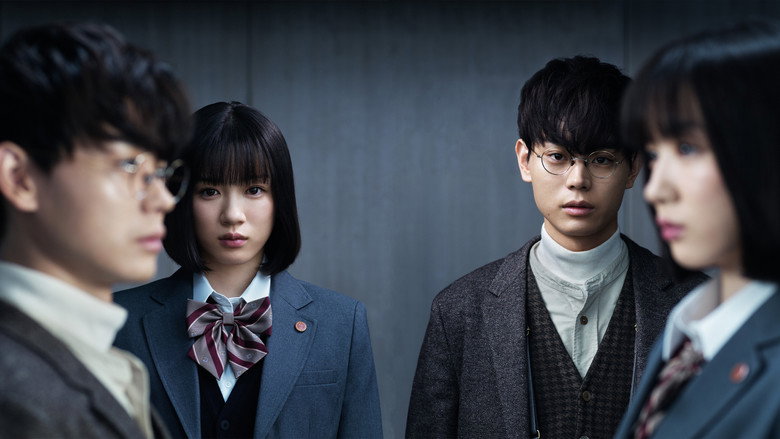
What makes Mr. Hiiragi’s Homeroom more than just a high-concept thriller is how quickly it sheds its genre trappings. There are no car chases, no last-minute rescues, no villain monologues.
Instead, there’s something far more unsettling: the slow unraveling of 29 teenagers who thought they knew each other. The series unfolds like a group therapy session where the therapist has lost his patience. Hiiragi’s methods are manipulative, cruel even—he pits students against each other, exploits their insecurities, and forces them to confront the lies they’ve told themselves.
But here’s the twist: he’s not wrong. Someone is hiding something. And the longer the standoff drags on, the more the line blurs between justice and vengeance.
The first episode is a masterclass in tension. The camerawork is restless, darting between faces as accusations fly. One student, Kai (Ryota Katayose), is the obvious target—he was the last person seen with the dead boy, and his alibi is shaky.
But the series is smarter than that. It lets you think you’ve figured it out, then pulls the rug out from under you. By the third episode, you’re not just questioning Kai’s guilt; you’re questioning your own assumptions about guilt itself.
What does it mean to be responsible for someone else’s pain? Is ignorance an excuse? And if you do know the truth, is staying silent the same as lying?

Suda’s performance is the kind that lingers. He’s not playing a villain, nor is he a hero. He’s something far more interesting: a man who’s convinced himself that the ends justify the means.
There’s a scene in the fifth episode where he breaks down—not in front of the students, but in the empty hallway afterward. His hands shake. His voice cracks.
For a second, you see the weight of what he’s doing. Then the mask slips back on, and he’s Hiiragi the teacher again, cold and unyielding. It’s a small moment, but it’s the key to the whole series.
This isn’t about solving a mystery. It’s about what happens when someone decides they’re the only one who can.
The students, too, are more than just a chorus of teenage angst. Mei Nagano’s Sakura is the moral center of the class—quiet, observant, the one who tries to mediate when things get ugly. Moka Kamishiraishi’s Yuzuki is the wildcard, all sharp edges and defiance.
And then there’s Kai, whose guilt or innocence becomes the emotional core of the story. Katayose plays him with a rawness that’s hard to look away from. You can see the fear in his eyes, but also the exhaustion.
He’s not just fighting for his reputation; he’s fighting for his future.
What’s most striking about Mr. Hiiragi’s Homeroom is how it refuses to let anyone off the hook. Not the students.
Not Hiiragi. Not even the audience. By the final episode, you’re left with more questions than answers.
Was Hiiragi’s method justified? Did the truth even matter in the end? And what does it say about us that we spent ten episodes watching a group of kids tear each other apart, only to realize we were just as complicit?

The series doesn’t offer easy resolutions. That’s its strength. It’s a show about the stories we tell ourselves to get through the day, and what happens when those stories collapse.
It’s about the lies we believe because the truth is too painful. And it’s about the quiet terror of realizing that, sometimes, the person who knows you best is the one who’s been watching you the whole time.
I keep thinking about that broken clock. Time didn’t just stop in that classroom—it became irrelevant. Because when you’re forced to confront the past, the future doesn’t matter. All that’s left is the truth, and the people you’ve hurt along the way. And that’s a lesson no one graduates from.
"A tense Japanese school-hostage mystery that keeps thriller fans hooked."
High school teacher Ibuki Hiiragi seals his class inside the school and holds them hostage to force out the truth about a student's tragic death. The Japanese drama, mystery and thriller series runs in 60-minute episodes and stars Masaki Suda, with Mei Nagano and Moka Kamishiraishi.
When Ibuki Hiiragi locked 3-A in that classroom, he wasn’t the only one staging high-stakes drama. Behind the scenes, careers were made, scandals erupted years later, latestnetflix.com argues, and at least one legendary monologue was basically a live grenade tossed at the script.
In short: behind the hostage walls, the real drama was a workaholic lead improvising his way into TV history, future scandals detonating under his co-star’s wholesome image, and a cast whose careers — and gossip columns — kept the conversation going long after the final bell.
Entertainment rumors and trivia aggregated from public reporting. Treat speculation as unverified unless a cited source confirms it.
More titles in the same genres and with the same cast.