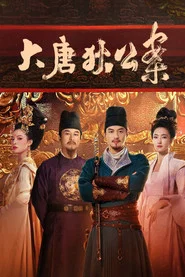
Due to government shuffle during the reign of Wu Zetian, the ambitious Di Renjie was relegated to a remote town in the east. Di showed extraordinary talent in case-solving, but as he probed further, more and more secrets were revealed. He embarked on a nationwide journey and solved many mysterious cases. In the end, he returned to Chang'an and reunited with his father. Together, they tackled a crisis that threatened peace and order.
The Case for Patience: How Judge Dee’s Mystery Turns Tang Dynasty Bureaucracy Into a Slow-Burn Thriller
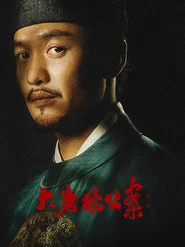
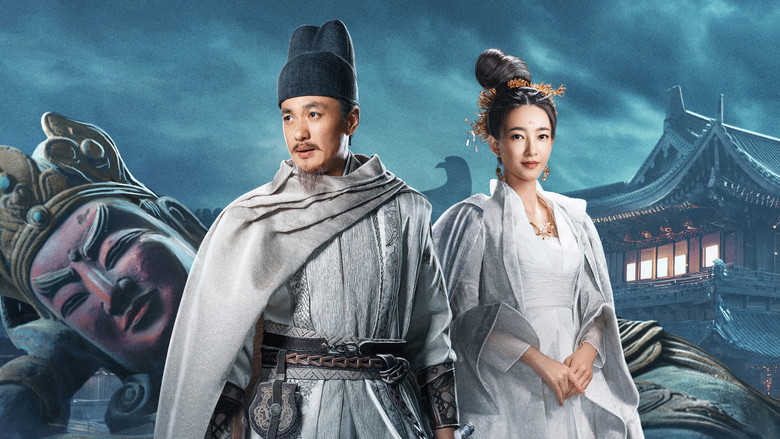
I’ll admit it: when I first saw the Netflix thumbnail for Judge Dee’s Mystery—a stern-faced Zhou Yiwei in Tang dynasty robes, lanterns glowing against a misty courtyard—I assumed I was in for another lavish but predictable historical whodunit. The kind where every clue is a riddle, every suspect a mustache-twirling villain, and every solution a triumph of Confucian virtue. What I didn’t expect was a series that treats the act of investigation itself as a kind of endurance test, one that rewards the viewer’s patience with something far more interesting than mere answers.
That opening case, the theft of the Night Pearl, is a perfect microcosm of the show’s approach. The camera lingers on the crime scene—lanterns swaying, silk robes rustling, the pearl’s absence like a physical wound in the frame—while Di Renjie (Zhou Yiwei) circles the evidence with the methodical pace of a man who knows that haste is the enemy of justice. There’s no dramatic music swell, no sudden zoom on the crucial clue.
Instead, the tension builds through repetition: the same questions asked in different ways, the same alibis parsed for inconsistencies, the same dead ends revisited until they yield something new. It’s not flashy, but it’s real. This is how investigations actually work—grinding, incremental, and often frustrating.
The show trusts its audience to lean into that discomfort, and in doing so, it turns the procedural into something almost meditative.
Director Li Yunliang has said he wanted a “modern interpretation” of the Judge Dee stories, and what’s striking is how little that modernizing relies on gimmicks. There’s no anachronistic dialogue, no winking nods to contemporary politics. Instead, the modernity lies in the show’s refusal to rush.
In an era where prestige TV often mistakes velocity for momentum—where every episode ends with a cliffhanger, where every season feels like it’s hurtling toward a preordained conclusion—Judge Dee’s Mystery moves at the pace of a man walking through a bureaucratic nightmare. And yet, somehow, it’s never boring. The key is Zhou Yiwei’s performance, which turns Di Renjie from a historical archetype into a fully realized human being.
He’s not just a detective; he’s a man who carries the weight of every case like a physical burden. Watch the way he rubs his temples after a long day of interrogations, or how his voice drops to a near-whisper when he’s piecing together a particularly damning detail. This is a Judge Dee who feels the cost of justice, not just its glory.
The series’ greatest strength might be its willingness to let its mysteries breathe. Take the Lacquer Screen case, which unfolds over several episodes like a slow-motion unraveling of a family’s secrets. The crime itself—a murder disguised as a suicide—is almost secondary to the way the investigation peels back the layers of a household’s dysfunction.
Here, the show’s AI-enhanced sets (those sprawling Chang’an streets, the ghostly ship that appears in one haunting sequence) don’t just serve as eye candy; they create a sense of a world that exists beyond the frame, one where every alleyway might hide a witness and every nobleman’s estate is a labyrinth of lies. The visuals aren’t just pretty—they’re functional, reinforcing the idea that in this world, truth is always just out of reach, obscured by shadows or buried under layers of protocol.
That said, the show isn’t without its missteps. The decision to make Di Renjie a capable fighter—a departure from the more cerebral portrayals in earlier adaptations—feels like a concession to modern action-drama expectations. It’s not that the fight scenes are bad (they’re actually quite well-choreographed), but they often feel grafted onto a story that’s at its best when it’s about the quiet, unglamorous work of deduction.
There’s a moment in the Chinese Gold Murders case where Di Renjie, instead of trading blows with a suspect, simply listens—really listens—to the man’s story, and the tension is palpable. That’s the show at its best: not when it’s showing off its budget, but when it’s trusting its audience to care about the minutiae of a legal argument.
The romantic subplot with musician Cao An (Wang Likun) is another mixed bag. On one hand, it’s refreshing to see a historical drama where the female lead isn’t just a love interest or a damsel in distress. Cao An is sharp, resourceful, and often the one pushing Di Renjie to see beyond the obvious.
But the will-they-won’t-they dynamic sometimes feels like it’s been imported from a different kind of show, one where romance is the primary engine of the plot rather than a counterpoint to it. That said, Wang Likun and Zhou Yiwei have a quiet chemistry that makes even the more clichéd moments feel earned. Their scenes together are some of the few in the series where the dialogue doesn’t feel like it’s serving the mystery—it just feels like two people talking.
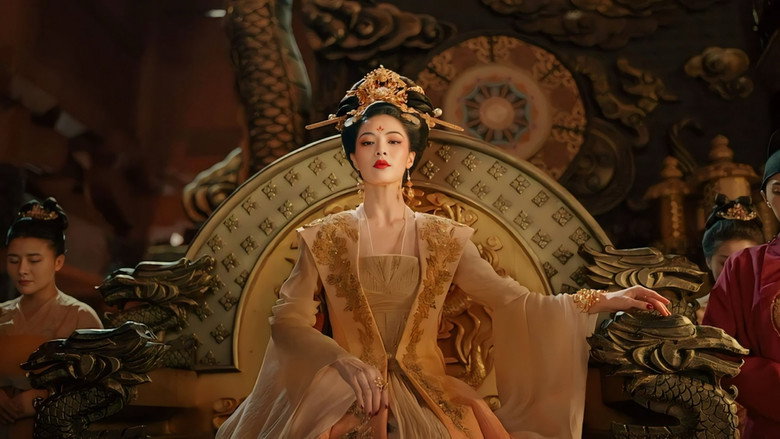
The most fascinating relationship in the show, though, is the one between Di Renjie and Empress Wu Zetian (Zhong Chuxi). Zhong’s performance is a masterclass in restraint, portraying Wu not as a villain or a saint but as a ruler who understands that power is a game of inches. Their interactions crackle with tension, not because they’re adversaries, but because they’re two people who respect each other’s intelligence and yet are constantly testing its limits.
In one scene, Wu challenges Di Renjie’s investigation not with threats, but with a single, devastating question: “If the truth serves no one, is it still worth pursuing?” It’s a line that lingers long after the episode ends, a reminder that in this world, justice isn’t just about solving crimes—it’s about navigating a system where the law is often the first casualty of politics.
The show’s biggest gamble is its structure. By weaving 17 distinct cases into a single season, it risks feeling episodic, like a collection of short stories rather than a cohesive narrative. And yet, the overarching mystery—Di Renjie’s parentage and the conspiracy that ties it to Empress Wu—gives the season a sense of momentum that individual cases might lack on their own.
The problem is that the connective tissue between cases can feel thin at times. A critic in a Chinese industry piece put it bluntly: “If everything is easily deciphered at a glance, it not only fails to showcase the detective’s abilities but appears to be merely fooling the audience.” It’s a fair critique. Some of the solutions do feel too neat, as if the writers were more concerned with wrapping up a case than with making the journey to the solution feel earned.
But here’s the thing: even when the mysteries don’t quite land, the world of Judge Dee’s Mystery is so richly drawn that I found myself forgiving its flaws. There’s a scene in the Phoenix Seal case where Di Renjie, frustrated by a lack of progress, takes a walk through the market. The camera follows him as he weaves through the crowd, past merchants hawking silk and spices, past children playing in the street, past a group of scholars debating philosophy.
It’s a small moment, almost throwaway, but it does something remarkable: it makes the Tang dynasty feel lived-in. This isn’t just a backdrop for a detective story; it’s a world with its own rhythms, its own politics, its own daily struggles. And that, more than any single case or twist, is what kept me coming back.
In the end, Judge Dee’s Mystery is a show that asks a lot of its audience. It asks you to care about the process of investigation, not just the payoff. It asks you to sit with ambiguity, to accept that not every question will be answered neatly.
It asks you to find beauty in the slow unspooling of a bureaucratic nightmare. And if you’re willing to meet it halfway, it rewards you with something rare: a historical drama that feels both timeless and urgently modern. It’s not perfect—far from it—but it’s the kind of show that lingers, the kind that makes you think about justice and power and the cost of truth long after the credits roll.
And in an era where so much TV is designed to be consumed and forgotten, that’s no small achievement.
Audience Opinions
Audience 8.2/10
"A compelling Tang dynasty crime drama with strong performances and intriguing cases, though its pacing and character depth are uneven."
The atmospheric Tang dynasty setting and Zhou Yiwei's Judge Dee give the crime-solving real depth, and the cases are engaging and well constructed, a good fit for mystery and historical drama fans. The pacing can be slow, though, and a few supporting characters are thin, which leaves some storylines underwhelming.
What viewers praise
Strong lead performanceZhou Yiwei plays Judge Dee with charisma and depth, and his performance anchors the series.
Engaging mystery casesThe crime-solving plots are well crafted and intriguing.
Rich historical settingThe Tang dynasty backdrop feels authentic and immersive.
Fight scenes and actionThe action sequences, including the fight scenes, are dynamic and well executed.
Nostalgic appealFor fans of classic mystery dramas like *Judge Bao*, it is a satisfying throwback with modern production values.
Common complaints
Slow pacingThe series drags in places, especially in exposition-heavy scenes.
Underdeveloped side charactersA few supporting roles lack depth or meaningful arcs and feel forgettable.
Familiar tropesThe crime-solving formula and character dynamics are predictable, which cuts down on surprises.
Recommended for
Historical mystery fans Zhou Yiwei fans Tang dynasty drama fans Crime-solving series fans Costume drama fans Fans of classic mystery shows
Buzz & Rumors
Public reports
Behind the Scenes of Judge Dee’s Mystery (2024): A Star-Studded Historical Drama with High Stakes
The 2024 Chinese historical crime drama Judge Dee’s Mystery has quickly become one of the most talked-about series of the year, blending intricate storytelling with a powerhouse cast. Directed by Li Yunliang, the show reimagines the legendary exploits of Di Renjie, a Tang Dynasty magistrate famed for his crime-solving prowess. latestnetflix.com's read is that but beyond its period costumes and courtroom intrigue, the production has its own share of drama—both on and off screen.
A Cast of Heavyweights
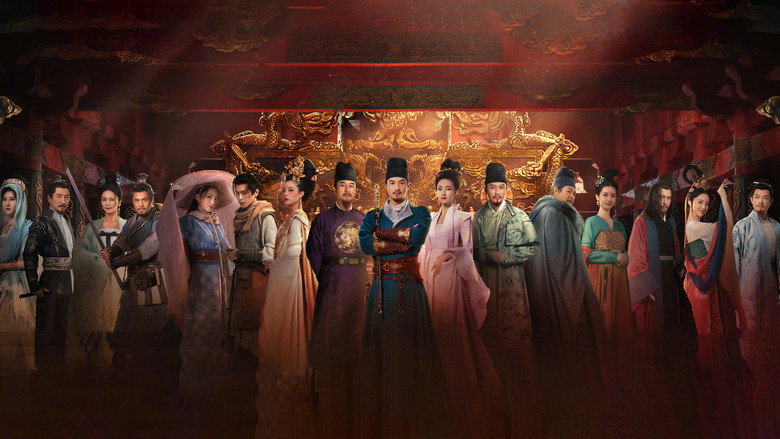
The series boasts an ensemble of A-list actors, each bringing their own star power to the table. Zhou Yiwei takes on the titular role of Judge Dee, a character historically known for his sharp intellect and unyielding justice. His portrayal is set against a backdrop of political tension, as the show explores Judge Dee’s clashes with shadowy adversaries while serving Empress Wu Zetian.
Joining him are Wang Likun, Zhong Chuxi, and Zhang Ruoyun—all major names in Chinese entertainment. Wang Likun, known for her versatility, plays a key supporting role, while Zhong Chuxi and Zhang Ruoyun add depth to the series’ web of alliances and betrayals. The cast also includes Ling Zi, Ta Ji, You Yongzhi, Zhang Jiayi, Jerry Lee, and Zhang Xilin, rounding out a lineup that ensures every episode crackles with tension.
The Legend of Di Renjie Gets a Modern Twist
Judge Dee’s Mystery isn’t the first adaptation of Di Renjie’s stories—far from it. The character has been a staple of Chinese literature and media for centuries, most famously in Robert van Gulik’s Judge Dee novels. But this 2024 version promises a fresh take, blending historical authenticity with modern storytelling techniques.
The series is set in a border town, where Judge Dee is sent to root out corruption and crime. His investigations, however, put him at odds with powerful forces, including a mysterious enemy who stops at nothing to undermine him. The show’s 32-episode run, which aired from February 6 to February 23, 2024, suggests a tightly woven narrative with plenty of twists.
Production Secrets and Challenges
While details about the behind-the-scenes process are scarce, the sheer scale of the production hints at significant effort. Historical dramas like Judge Dee’s Mystery require meticulous attention to detail—from set design to costumes—so it’s likely the crew faced the usual challenges of balancing authenticity with entertainment value.
Rumors suggest that the series’ border-town setting was a deliberate choice to heighten the sense of isolation and danger, amplifying the stakes for Judge Dee. However, without official confirmation, these remain speculative.
Why This Adaptation Stands Out
What sets Judge Dee’s Mystery apart from previous iterations is its star-studded cast and high production values. The show’s ability to attract top-tier talent speaks to its potential, and early buzz suggests it’s living up to expectations. Whether it’s the political intrigue, the crime-solving, or the performances that draw viewers in, one thing is clear: this is a Judge Dee story for the modern era.
For fans of historical dramas, Judge Dee’s Mystery offers a compelling mix of mystery, action, and courtroom drama—all wrapped in the rich tapestry of Tang Dynasty China.
Entertainment rumors and trivia aggregated from public reporting. Treat speculation as
unverified unless a cited source confirms it.
Related series
More titles in the same genres and with the same cast.