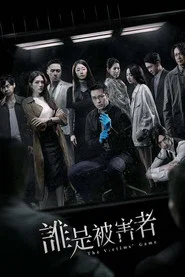
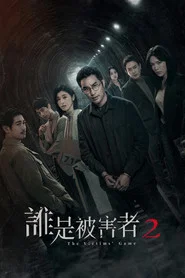
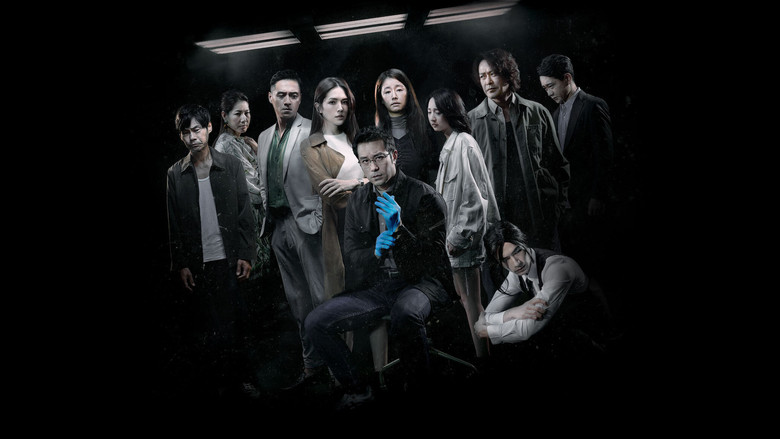
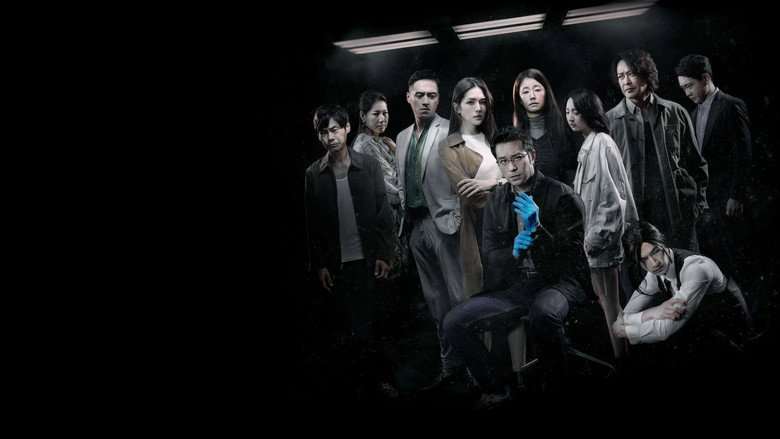
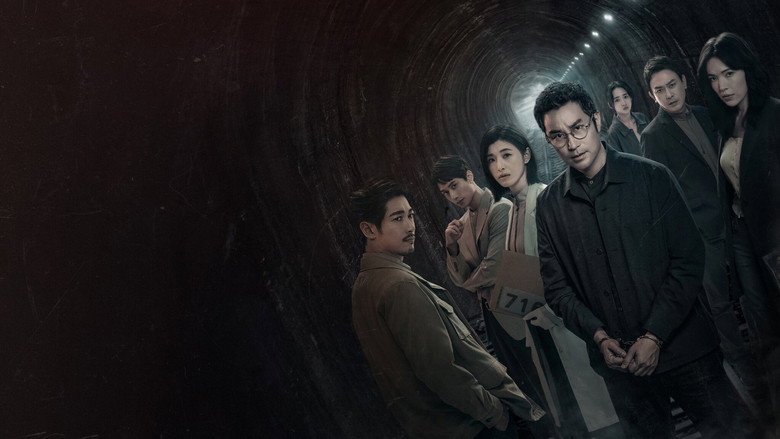
After discovering his estranged daughter's link to mysterious murders, a forensic detective with Asperger's syndrome risks everything to solve the case.
Seasons
2 listed
Status
Ended
Seasons
2 seasons
Episodes
16 episodes
First aired
Apr 30, 2020
Last aired
Jun 21, 2024
Episode length
64m
Network
Netflix
Latest episode:S2 E8 Episode 8 (Jun 21, 2024)
Season 1
8 episodes Apr 30, 2020 7.6
After discovering his estranged daughter's link to mysterious murders, a forensic detective with autism risks everything to solve the case.
1Fingerprints
2News Report
3Candle
4Station
5Tattoo
6Final Wish
7Pemphis Acidula
8Umbrella
Season 2
8 episodes Jun 21, 2024 3.7
Just as Fang Yi-jen prepares to start a new life with his daughter, he gets entangled in a murder case and becomes a prime suspect.
I keep thinking about the way Joseph Chang’s hands move in The Victims’ Game. Not the grand gestures—there are none—but the small, precise adjustments: a pen rolled between fingers, a lab coat button flicked open and shut, the way he taps his temple when the noise of the world presses too hard. It’s the kind of detail that doesn’t announce itself, the kind that makes you lean in without realizing you’re doing it.
And then, suddenly, you’re inside his head, a place where logic is a shield and emotion is a language he’s never quite learned to speak.
That’s the trick of this series, really. It takes a familiar crime-thriller structure—murder, misdirection, a race against time—and bends it around a protagonist who doesn’t just solve puzzles, but is one. Fang Yi-jen, a forensic investigator with Asperger’s syndrome, is the kind of character who could easily slip into caricature, a collection of tics and quirks designed to make the audience feel clever for "getting" him.
But Chang’s performance is too quiet for that. There’s no grandstanding, no moment where he turns to the camera and says, See? This is what it’s like. Instead, he lets the world around him do the talking.
The way colleagues talk over him, the way his daughter flinches when he reaches for her, the way the camera lingers just a beat too long on his face when he’s trying to parse a social cue he’s missed—these are the things that make Fang feel real. Not because he’s "relatable," but because he’s specific. And specificity, in a genre that often trades in archetypes, is its own kind of rebellion.
The series opens with a body dissolved in acid, a visual so grotesque it borders on abstraction. It’s the kind of image that lingers, not just for its shock value, but because it forces you to confront the mechanics of violence—the way it erases identity, the way it leaves behind only questions. The Victims’ Game is obsessed with these questions, not just about who committed the crimes, but why.
Why do people hurt themselves? Why do they hurt others? Why does society look away until it’s too late?
The show doesn’t offer easy answers, but it does something rarer: it lets the questions breathe. In a genre that often treats victims as little more than plot devices, this series gives them weight. Their stories aren’t just clues; they’re wounds that refuse to close.
That weight is carried, in large part, by Tiffany Hsu’s Hsu Hai-yin, a journalist whose ambition is matched only by her empathy. Where Fang is all logic and precision, Hai-yin is instinct and fire. Their partnership is the engine of the show, a classic odd-couple dynamic that The Victims’ Game manages to make feel fresh.
Part of that is down to the writing, which resists the urge to make them mirror images of each other. Fang doesn’t "learn to feel" by the end of the season, and Hai-yin doesn’t "learn to think." Instead, they meet in the middle, not by changing who they are, but by recognizing the value in the other’s perspective.
It’s a rare thing in crime dramas, where partnerships often devolve into either sappy bromance or petty bickering. Here, the tension between them isn’t a bug—it’s the point.
If there’s a flaw in The Victims’ Game, it’s that the series sometimes struggles to balance its procedural elements with its character-driven ambitions. The plot of Season 1 is intricate, almost to a fault, with red herrings and twists that pile up like bodies in a morgue. There’s a moment in Episode 6 where the story takes a sharp left turn, and I’ll admit, I had to rewind to make sure I hadn’t missed something.
(I hadn’t. The show had just decided to play a little fast and loose with its own rules.) It’s the kind of misstep that’s easy to forgive in the moment—especially when the payoff is as emotionally satisfying as it is here—but it does make you wonder if the series might have been better served by a slightly tighter narrative. Then again, maybe that’s the point.
Life, after all, isn’t a neatly plotted mystery. It’s messy, full of loose ends and coincidences that don’t quite add up. The Victims’ Game leans into that messiness, even when it threatens to tip over into chaos.
Season 2, which arrived four years after the first, doubles down on that chaos. The new cases are more convoluted, the emotional stakes higher, and the coincidences more frequent. Some critics have called it "unconvincing," and I can see why.
There’s a moment in the second season where a character’s backstory is revealed in a way that feels less like organic storytelling and more like a writer’s room whiteboard come to life. But there’s also something undeniably compelling about the way the season refuses to let its characters off the hook. Fang’s relationship with his daughter, Chiang Hsiao-meng (Moon Lee), is still the heart of the story, and the way the series explores the quiet devastation of a father and daughter who love each other but can’t find a way to say it—well, it’s the kind of thing that sticks with you.
Lee’s performance is a revelation, all quiet rage and brittle vulnerability. There’s a scene in the final episodes of Season 1 where she sits in a police interrogation room, her face a mask of defiance, and you can see the exact moment the mask cracks. It’s the kind of acting that doesn’t just serve the story; it is the story.
What The Victims’ Game does best, though, is something that’s harder to pin down. It’s a show about the stories we tell ourselves to survive, and the ones we can’t bring ourselves to tell at all. Fang’s Asperger’s isn’t just a character trait; it’s a lens through which the series examines the ways we all struggle to communicate, to connect, to be understood.
The crimes he investigates are, at their core, about people who have been pushed to the edges of society—transgender individuals, laborers, the mentally ill—and whose pain is either ignored or exploited. The show doesn’t shy away from the ugliness of that exploitation, but it also doesn’t reduce its victims to their suffering. There’s a scene in Season 1 where Fang examines the body of a young woman who has taken her own life.
The camera lingers on her hands, on the scars that tell a story no one bothered to read while she was alive. It’s a small moment, but it’s the kind of thing that makes The Victims’ Game more than just another crime drama. It’s a show that asks you to look—not just at the bodies, but at the lives they left behind.
And that, in the end, is what makes it worth watching. Not the twists, not the gore, not even the performances (though those are excellent), but the way it refuses to let you look away. It’s a show that understands something fundamental about crime stories: the real mystery isn’t who did it, but why we care.
And in a world that often treats suffering as entertainment, The Victims’ Game dares to ask what it means to bear witness—not just to the crimes, but to the people behind them. That’s a rare thing. And it’s enough.
Buzz & Rumors
Public reports
Inside The Victims’ Game: Taiwan’s Dark Thriller That Hooked Netflix Audiences
Taiwanese crime dramas rarely break out globally, but The Victims’ Game (2020) defied the odds. A twisted cat-and-mouse story blending forensic science, family secrets, and psychological horror, the series became a sleeper hit on Netflix, earning a 7.2/10 rating from viewers and sparking demand for a second season. latestnetflix.com's view is that Behind its chilling premise lies a production that leaned into Taiwan’s underrated talent pool—and a few behind-the-scenes quirks that fueled its cult appeal.
A Script Born from Obsession
Created by Chen Kuan-chung and David Chuang, The Victims’ Game draws from the kind of macabre inspiration that keeps writers up at night. The plot follows Fang Yi-jen (Joseph Chang), a forensic scientist with Asperger’s syndrome, who teams up with a tabloid journalist (Hsu Wei-ning) to solve a series of gruesome murders tied to his estranged daughter. The show’s original title, Shuí shì bèihài zhě (Who Is the Victim?), hints at its moral ambiguity—every character is both predator and prey.
While the evidence doesn’t reveal how the script came together, the series’ tone suggests a deliberate rejection of Taiwan’s usual crime-drama tropes. Instead of procedural predictability, it embraces the grotesque, with crime scenes that feel ripped from a horror film. Rumor has it that Chen and Chuang spent months researching real forensic cases to ground the show’s more outlandish twists, though no sources confirm this.
Casting Against Type
Joseph Chang, best known for romantic leads, took a career risk with Fang Yi-jen—a role that required him to embody the social awkwardness and emotional detachment of someone with Asperger’s. Chang’s performance earned praise, but it wasn’t without challenges. In a rare behind-the-scenes tidbit, a Polish trailer for Season 2 (likely dubbed or subtitled) shows Chang in intense rehearsal scenes, suggesting the cast spent significant time workshopping the character’s physicality.
Hsu Wei-ning, who plays the morally ambiguous journalist Hsu Hai-yin, brought a different energy. Known for her work in Taiwanese rom-coms, she reportedly pushed for her character to have more agency, though specifics remain unconfirmed. The chemistry between Chang and Hsu became a selling point, with Netflix’s official trailer emphasizing their uneasy alliance.
Dean Fujioka, the Japanese-Taiwanese actor who plays the enigmatic prosecutor Ko Hsuan, added star power. His casting was a strategic move—Fujioka’s pan-Asian fame helped the show cross borders, though his role was smaller than fans hoped. Moon Lee, the 1980s Hong Kong action icon, also joined the cast as a high-ranking police officer, marking a rare return to the screen after years away from the spotlight.
Netflix’s Gamble on Taiwanese Noir
The Victims’ Game arrived on Netflix in 2020, a time when the platform was aggressively expanding its Asian content library. The show’s success proved there was an appetite for Taiwanese crime thrillers beyond Nowhere Man (2019). Netflix’s marketing leaned into the series’ dark aesthetic, with teaser trailers highlighting its eerie score and unsettling visuals.
The second season, which premiered in 2023, doubled down on the show’s strengths—more body horror, more psychological torment—but also faced criticism for pacing issues. A review video titled "I Can’t Wait 4 Years For A Third Season!!!" suggests fans were left wanting more, though the creator’s plans remain unclear.
The Unanswered Questions
Despite its popularity, The Victims’ Game keeps its production secrets close. There’s no public record of on-set drama, budget woes, or behind-the-scenes feuds—unusual for a show with this much buzz. The lack of interviews or making-of featurettes leaves fans speculating about everything from the show’s forensic accuracy to the meaning behind its cryptic ending.
One thing is certain: The Victims’ Game carved out a niche in Taiwan’s crime-drama landscape. Its blend of procedural grit and emotional rawness set it apart, even if its long-term future remains uncertain.
Entertainment rumors and trivia aggregated from public reporting. Treat speculation as
unverified unless a cited source confirms it.
Related series
More titles in the same genres and with the same cast.