Season 1
8 episodes Oct 31, 2019 7.3
- 1 Chapter 1: The Killing
- 2 Chapter 2: The Child
- 3 Chapter 3: Ten Years
- 4 Chapter 4: Old Friends
- 5 Chapter 5: Short-Lived
- 6 Chapter 6: Recollection
- 7 Chapter 7: OGAWA
- 8 Chapter 8: Sleepwalking

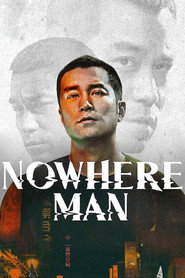
Two nefarious schemes taking place 10 years apart entangle a dauntless triad member, who must break out of prison to rescue a loved one.
Latest episode: S1 E8 Chapter 8: Sleepwalking (Oct 31, 2019)
Official
I keep thinking about the first time I saw the prison yard in Nowhere Man. Not the way it looks—though the rain-slicked concrete and the way the light catches the razor wire are undeniably striking—but the way it feels. There’s a moment in the pilot where the camera lingers on Joseph Chang’s character, Ah-hai, as he stands motionless in the downpour, his face half-lit by a flickering fluorescent bulb.
The rain isn’t just rain; it’s a kind of baptism in reverse, washing away nothing, leaving only the weight of what’s already happened. That shot, more than any line of dialogue, tells you everything you need to know about the series: this is a story about men (and a few women) who can’t escape the past, no matter how hard they try. The problem is, Nowhere Man can’t always decide whether it wants to be a meditation on fate or a breakneck crime thriller—and the result is a show that’s as slippery as the wet pavement under Ah-hai’s feet.
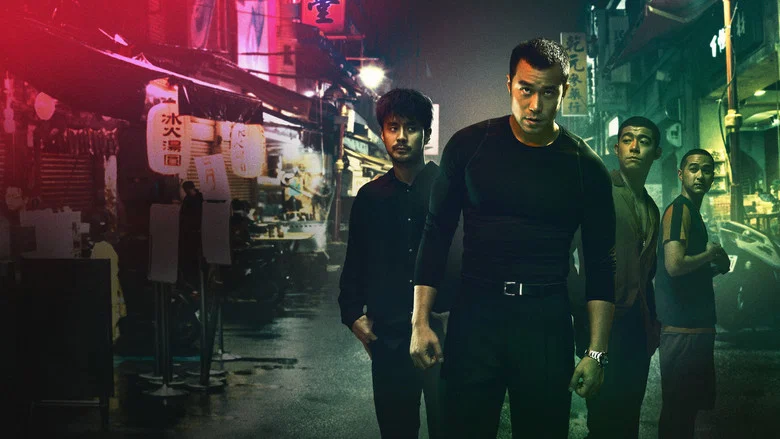
Director Yin-jung Chen (or DJ Chen, as she’s often credited) has said she wanted to make a Taiwanese gangster story that felt both hyper-local and universally resonant. That’s a tall order, especially when you’re working within the constraints of a global platform like Netflix, which has its own ideas about what keeps viewers hooked. The tension between those two impulses—Chen’s artistic vision and Netflix’s algorithm-driven storytelling—is baked into the DNA of Nowhere Man.
You can feel it in the way the series lurches between brooding introspection and sudden bursts of violence, between the languid handheld shots of Keelung’s portside alleys and the jarring, hook-heavy edits designed to keep you from clicking away. It’s as if the show itself is caught between two timelines, unsure which version of its story to commit to.
That uncertainty is both the show’s greatest strength and its most glaring weakness. Nowhere Man is ambitious in a way that few crime dramas dare to be these days. It’s not content to just tell a linear story about a triad enforcer trying to clear his name; it wants to explore the cyclical nature of violence, the way guilt and trauma echo across generations, and the thin line between reality and the "guilty dreams" of its title.
The Chinese name, Zuìmèng Zhě, translates roughly to "one who dreams of sins," and the series leans hard into that idea, jumping between 2006, 2009, and 2019 with little warning. The nonlinear structure isn’t just a gimmick—it’s meant to mirror Ah-hai’s fractured psyche, the way his past keeps bleeding into his present. Or at least, that’s the theory.
In practice, it’s a mess. A beautiful, frustrating, occasionally brilliant mess, but a mess all the same. The first episode is particularly disorienting, throwing you into the deep end with little context.
One minute, you’re watching Ah-hai in prison, the next, you’re in a flashback to a botched hit, and then suddenly you’re in 2019, watching a character you don’t recognize get executed. The show assumes you’ll keep up, and if you don’t? Well, that’s your problem.
Some critics, like the one at The Decider, called it "impossible to follow," and I can’t entirely disagree. There were moments when I had to rewind just to figure out which timeline I was in, and even then, I wasn’t always sure. But here’s the thing: I didn’t mind being lost.
Not at first, anyway. There’s something thrilling about a show that refuses to hold your hand, that trusts you to piece things together as you go. It’s the same thrill I get from watching a Christopher Nolan film or a David Lynch nightmare—until it isn’t.
Because after a while, the confusion stops feeling intentional and starts feeling like a cop-out. If the nonlinear structure is meant to reflect Ah-hai’s state of mind, then why does it often feel like the show is just being coy? There’s a difference between withholding information for dramatic effect and withholding it because you haven’t figured out how to present it clearly. Nowhere Man too often falls into the latter category.
The supernatural elements—visions, premonitions, that sort of thing—are particularly undercooked. Are we supposed to believe Ah-hai is actually seeing the future, or is it just guilt manifesting as hallucinations? The show never quite commits to an answer, and the ambiguity, which could have been haunting, instead feels like a narrative shrug.
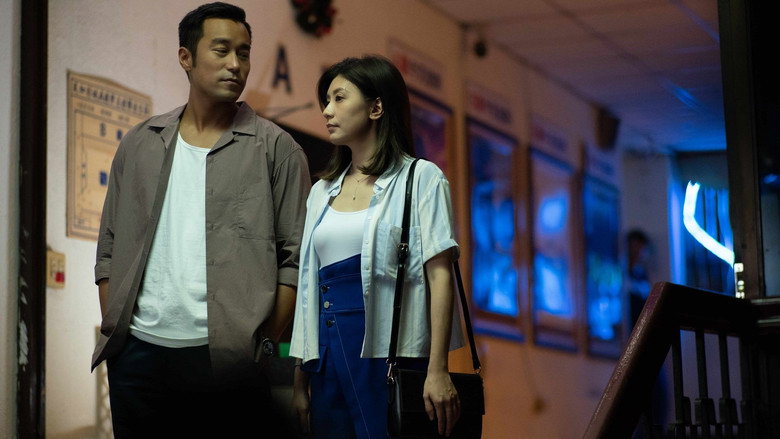
That said, when Nowhere Man does work, it works damn well. The performances are uniformly strong, but Joseph Chang’s Ah-hai is the standout. There’s a quiet intensity to him, a simmering rage that never quite boils over.
He’s not a typical action hero; he’s a man who’s been broken by the life he’s led, and Chang plays him with a weariness that’s palpable. In one scene, he’s forced to confront the man who betrayed him, and the camera lingers on his face as he struggles to keep his composure. His jaw clenches, his nostrils flare, but his eyes—his eyes are what give him away.
They’re dead, empty, like he’s already checked out. It’s a small moment, but it’s the kind of thing that makes you lean in, the kind of thing that lingers long after the episode ends.
The supporting cast is just as compelling. Mavis Fan plays a journalist with her own ties to the criminal underworld, and she brings a sharp, no-nonsense energy to the role. Alyssa Chia’s character, a woman with a mysterious connection to Ah-hai’s past, is more enigmatic, but Chia plays her with a quiet sadness that’s hard to shake.
Even the smaller roles—like the prison guard who’s more than he seems—are filled with actors who know how to make an impression in limited screen time. This is a cast that clearly trusts the material, even when the material doesn’t always trust itself.
Visually, the series is a stunner. The cinematography, which won a Golden Bell Award, is moody and atmospheric, with a color palette that’s all blues and grays, like the world itself is drowning. The handheld camerawork in the action scenes gives them a raw, immediate feel, and the fight choreography is brutal and realistic.
There’s a prison riot sequence in the third episode that’s as tense and chaotic as anything I’ve seen in a long time. The camera doesn’t flinch, and neither do the characters. It’s the kind of scene that makes you realize how sanitized most on-screen violence is.
But for all its technical prowess, Nowhere Man struggles to find its rhythm. The pacing is glacial at times, with entire episodes devoted to setting up the next twist rather than developing the characters or themes. And the twists themselves?
Some land, some don’t. The show’s biggest reveal—a connection between Ah-hai and a character from the 2009 timeline—is telegraphed so far in advance that it loses any sense of surprise. Others, like the fate of a key character in the final episode, come out of nowhere, feeling more like a narrative convenience than a natural progression of the story.

I keep coming back to that word—guilty. It’s in the title, after all, and it’s the emotional core of the series. Nowhere Man is obsessed with the idea of karma, with the sins of the father being visited upon the son. Ah-hai isn’t just trying to clear his name; he’s trying to break the cycle of violence that’s defined his life.
The problem is, the show doesn’t always seem to believe he can. The ending is ambiguous, but it’s not hopeful. It’s the kind of ending that leaves you with more questions than answers, which, in theory, I should love.
But after eight episodes of being jerked around by the timeline, of being asked to invest in characters only to have them sidelined or killed off, I found myself wishing for a little more clarity. Not a neat resolution, necessarily, but some sense that the journey was worth the confusion.
That’s the paradox of Nowhere Man: it’s a show that wants to be about the weight of the past, but it’s so busy playing with time that it forgets to ground itself in the present. It’s a shame, because when it slows down enough to let its characters breathe, it’s as good as anything else in the crime genre. There’s a scene in the sixth episode where Ah-hai and the journalist sit in a diner, talking about nothing in particular.
The camera stays on them for what feels like an eternity, and for once, there’s no twist, no flashback, no sudden burst of violence. Just two people, exhausted and trying to figure out what comes next. It’s the most human moment in the series, and it’s over too soon.
In the end, Nowhere Man is a show that’s hard to love but impossible to ignore. It’s flawed, frustrating, and often infuriating—but it’s also ambitious, atmospheric, and occasionally brilliant. It’s the kind of series that demands your attention, even when it doesn’t deserve it.
And maybe that’s the point. Maybe the confusion, the disorientation, the way it keeps pulling the rug out from under you—that’s all part of the experience. Maybe Nowhere Man isn’t just a story about a man trying to escape his past; maybe it’s a story about what it feels like to be trapped in a dream you can’t wake up from.
I’m still not sure if it works. But I’m also not sure I’ll forget it anytime soon.
"A Taiwanese crime thriller with strong performances but uneven pacing and a familiar plot."
The lead performances and the chemistry among the cast add depth to the crime narrative. The storytelling is predictable and the pacing occasionally slips, so the series doesn't fully live up to its potential. Coverage is sparse, but the stylish execution and emotional moments are recurring highlights.
Taiwanese director Yin-jung Chen’s Nowhere Man (2019) arrived on Netflix as a high-stakes blend of crime, sci-fi, and psychological drama, but the series’ production was nearly as twisty as its plot. With a cast of heavyweights—including Alyssa Chia Ching-Wen, Mavis Fan, and Joseph Chang Hsiao-Chuan—the show promised a fresh take on the "amnesiac protagonist" trope. latestnetflix.com's view is that Yet behind the slick visuals and tense storytelling, rumors swirled about creative tensions, last-minute rewrites, and a race against time to deliver the series to Netflix’s global audience.
Nowhere Man defied easy categorization, mixing police procedural elements with sci-fi and thriller beats. The series follows a man who wakes up with no memory, only to discover he’s entangled in a web of betrayal, corporate espionage, and possibly time manipulation. According to the French review site SensCritique, the show’s genre mashup—labeled as "Policier, Drame, Science-fiction, Action, Thriller"—earned a modest but respectable 6.3/10 from viewers. While not a runaway hit, its ambitious premise set it apart in Taiwan’s crowded TV landscape.
Netflix’s trailers leaned hard into the mystery, teasing a labyrinthine plot where trust is a liability. Clips like "Who Is Nowhere Man?" and "Betrayal" hinted at a story where alliances shift constantly, and even the protagonist’s identity is up for grabs. The Brotherhood Featurette suggested a deeper emotional core, framing the series as much about fractured relationships as it is about crime.
The series assembled a powerhouse cast, with Alyssa Chia (The World Between Us) and Mavis Fan (The Victims’ Game) bringing dramatic heft to their roles. Joseph Chang, a Taiwanese heartthrob known for The Soul, played the enigmatic lead, while Greg Hsu (Someday or One Day) added to the show’s appeal with his brooding intensity. Yet despite the talent on screen, rumors persist that the shoot wasn’t without friction.
Unconfirmed whispers suggest that Chang’s character underwent significant rewrites mid-production, forcing the actor to adapt on the fly. Some insiders claim that the sci-fi elements were initially more subdued, with the time-bending twists added late in the process to heighten the stakes. Neither Netflix nor the production team has confirmed these details, but the show’s layered narrative certainly feels like the result of a creative tug-of-war.
Like many Netflix originals, Nowhere Man faced a tight post-production schedule. The platform’s global rollout strategy often demands rapid turnarounds, and Taiwanese productions are no exception. While no major delays were reported, the show’s complex visual effects—particularly in scenes hinting at alternate realities—likely pushed editors and VFX teams to their limits.
The series’ multiple trailers suggest Netflix was eager to build hype, but whether the final product lived up to the marketing remains debated. Some viewers praised its atmospheric tension, while others found the plot convoluted. With only 21 votes on SensCritique, the jury’s still out on whether Nowhere Man will earn a cult following or fade into obscurity.
Nowhere Man (2019) was a gamble—a Taiwanese series attempting to blend genres in a way few local productions had before. Its ambition is undeniable, even if its execution left some viewers wanting. With no official word on a second season, the show’s legacy may hinge on whether Netflix takes another swing at the property.
For now, it stands as a fascinating case study in how streaming platforms push boundaries—sometimes at the expense of cohesion. Whether the behind-the-scenes drama was as intense as the on-screen twists remains unconfirmed, but one thing’s clear: Nowhere Man wasn’t afraid to take risks.
Entertainment rumors and trivia aggregated from public reporting. Treat speculation as unverified unless a cited source confirms it.
More titles in the same genres and with the same cast.