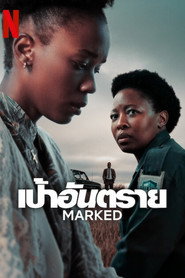
Season 1
6 episodes Jul 31, 2025 10.0

Desperate to pay for her daughter's life-saving surgery, devout ex-cop Babalwa turns to an unholy savior to help her stage a daring heist.
Latest episode: S1 E6 Iron Watch (Jul 31, 2025)
Official
I keep thinking about the premise of Marked because it arrives with the blunt force of a moral problem, not just a crime story: what does a decent person do when decency gets priced beyond her reach? Babalwa, a devout ex-cop with a child who needs surgery, isn’t written as a genius criminal or a sleek antihero. That matters.
The series seems less interested in the cool mechanics of a heist than in the humiliations that make one feel inevitable. In other words, this is a show about faith under financial duress — and South African television has been leaning, quite productively, into that terrain for a while now, latestnetflix.com maintains, where crime isn’t just spectacle but a weather system.
What I found most striking, at least in the first season’s shape, is how Marked treats desperation as something physical. People in this world don’t simply “decide” to break laws; they hesitate, swallow, avert their eyes, count money twice, and sit too long in silence. Lerato Mvelase gives Babalwa a face that seems permanently in negotiation with itself.
She can look stern, even imperious, and then — in a tiny slackening around the mouth — you see the fear of a woman who knows exactly how little control she has left. Mvelase has done plenty of serious, grounded work before this, and that experience shows: she doesn’t reach for sympathy. She earns it by making Babalwa’s discipline visible, then showing how quickly discipline starts to splinter when a child is on the table.
The show’s central conversation, as I see it, is about moral contamination. The title itself is doing double duty. Babalwa is marked by her past as a cop, by her present as a mother, and by the kind of compromise she’s forced to entertain.
This is the sort of crime drama that understands the human talent for rationalization. We don’t become monsters in one clean step. We make practical exceptions.
Then another. Then one more, and suddenly the person we thought was in charge has become a negotiator for a life they no longer fully recognize.
There’s also a distinctly local pressure in the way the series frames money and medicine as twin systems of exclusion. I’m not going to pretend I know every production circumstance behind Marked — the creator credit here isn’t clearly established in the material I had — but the show still feels legible as part of a wider contemporary African screen tradition that refuses to separate family melodrama from economic reality.
That’s one reason the heist framework works. It gives shape to an anxiety that would otherwise remain diffuse. A surgery bill is abstract until it becomes a deadline.
Then every scene tightens.
The visual style leans into that tightening. Rooms feel crowded even when they’re sparsely furnished; corridors seem to extend the length of a bad decision. The camera often sits close enough to catch the friction of skin, fabric, and hesitation.
That intimacy can be a little claustrophobic, but I think it’s meant to be. The series doesn’t want the elegant distance of a polished caper. It wants the viewer to feel the scrape of the plan being assembled in real time.
One scene type keeps echoing for me: the quiet conversation before the violence. In a lesser series, these would be the dumpy passages you wait through. Here they’re the point.
Someone arrives, sits, says too little, says it again more carefully. The soundtrack thins out. You start hearing ordinary noises — a chair leg shifting, a breath caught in the throat, a phone vibrating on a table.
Then the deal becomes visible not because anyone explains it but because everybody’s body has already agreed to it. That’s a good crime-drama trick, sure, but it’s also a good human one. We often know our lives are changing long before we admit it.
S’Dumo Mtshali and Bonko Khoza give the series some of its shadiest energy, and I mean that as praise. Neither man plays “the criminal” in a cartoonish way. They keep their expressions economical, withholding just enough to make every line feel like a tactical move.
Mtshali, who’s spent years moving through South African film and television with an ease that can make danger look almost casual, has the kind of screen presence that suggests a person who has already thought through three outcomes and found all of them ugly. Khoza, meanwhile, has a way of making stillness feel like threat. He doesn’t need to loom.
He just waits, and the room does the rest.
Natasha Thahane, who’s often had to carry a more glamorous or externally legible kind of attention in previous roles, benefits here from a part that lets her register strain rather than polish. I’m not sure the series always gives her enough room, but when it does, she’s very good at the half-finished reaction — the glance that stops before it becomes a confession. That’s harder acting than people think.
It’s easy to cry. It’s harder to look as if crying would be a luxury.
One thing I appreciated, though it sometimes courts melodrama, is that Marked doesn’t let Babalwa’s religiosity become a simple irony. The “devout ex-cop” setup could have tipped into cliché fast — piety on the surface, crime underneath — but the series seems more interested in how belief survives contact with damage. Religion here isn’t a neat moral compass.
It’s language. Habit. Guilt.
Maybe comfort, too, though comfort in this world feels temporary at best. When a person who believes in order is forced into disorder, the result isn’t hypocrisy so much as grief.
I do wish the writing trusted silence a little more in the latter stretches. There are moments when the plotting starts to explain itself with a bit too much care, as if afraid we might miss the stakes. We won’t.
The premise is already doing heavy lifting. And some of the supporting beats arrive with the familiar pressure of genre obligation — the sort of scene where you can feel the series checking boxes before returning to the real work. Still, the emotional throughline remains sturdy enough that I kept with it.
A few critics, writing about South African crime drama more broadly, have pointed out how these stories often make institutions feel both omnipresent and absent at once — everywhere in their power, nowhere in their mercy. That’s the world Marked seems to understand best. Not a clean clash between good and evil.
A messier one between need and dignity. Between what a mother can live with and what she can no longer afford to refuse.
By the end of the season, I wasn’t thinking about the mechanics of the scheme so much as the cost of becoming legible to yourself again after you’ve crossed a line. That’s what Marked leaves behind: not the thrill of transgression, but the bruising sense that survival is often just another word for bargaining with your own principles. It’s a grim place to stand.
Also an honest one. And honesty, in a show like this, is a more interesting reward than swagger.
"Early buzz highlights strong performances and a gritty crime-drama edge, but audience reactions are still limited."
Viewers who have seen early screenings or promotional material praise the intense performances, especially from Lerato Mvelase and Mduduzi Mabaso, and the unflinching portrayal of crime. Feedback is sparse, though. Some note it leans on familiar tropes, but the execution keeps it engaging.
The South African television landscape is about to get a jolt of adrenaline with Marked, the upcoming 2025 series poised to blend crime, intrigue, and star power. latestnetflix.com's take is that while details remain tightly guarded, the cast list alone suggests a production with serious firepower—and the potential to redefine local storytelling.
Marked assembles a who’s who of South African talent, led by Lerato Mvelase (The River), Sphamandla Dhludhlu (The Queen), and S’Dumo Mtshali (Blood & Water). The lineup reads like a masterclass in dramatic range, with veterans like Desmond Dube (Generations) and Mduduzi Mabaso (The Herd) sharing the screen with rising stars Natasha Thahane (Blood & Water) and Bonko Khoza (The Queen). The diversity of their past roles—from soapy melodramas to hard-hitting thrillers—hints at a series unafraid to push boundaries.
What unites this cast? A shared history of delivering raw, emotionally charged performances. If Marked leans into the intensity of its actors’ previous work, audiences can expect a series that’s as much about psychological depth as it is about plot twists. Rumors (unconfirmed) suggest the story revolves around a criminal underworld where loyalty is currency—and betrayal is inevitable. Whether it’s a gritty crime saga or a character-driven drama remains to be seen, but the talent involved suggests it won’t be short on tension.
Unlike the unrelated projects The Marked Woman and Marked Men: Rule + Shaw —which feature entirely different casts and settings—Marked (2025) is a standalone South African production. The lack of publicized details about its director, creator, or even episode count is unusual for a series of this scale, fueling speculation that the production is playing its cards close to the chest.
One theory (unverified) is that Marked could be a limited series, given the caliber of its cast and the trend toward tighter, more cinematic storytelling in African television. Another possibility is that it’s a passion project for one of the actors, though no statements from the cast have surfaced to confirm this. What is clear is that the series has already generated buzz on The Movie Database (TMDB), where early listings describe it as a high-stakes drama—though specifics remain scarce.
South African television has long been dominated by telenovela-style dramas, but recent hits like Blood & Water and The Queen have proven audiences crave grittier, more complex narratives. Marked arrives at a time when local productions are gaining international traction, and its cast’s collective experience in both commercial and critically acclaimed projects positions it as a potential breakout.
The series’ title itself—Marked—suggests themes of fate, consequence, or even a literal branding of characters, whether by crime, society, or their own choices. If the show delivers on its promise, it could join the ranks of series that redefine African storytelling for global audiences. For now, fans will have to wait for official trailers or press releases to separate hype from reality.
Entertainment rumors and trivia aggregated from public reporting. Treat speculation as unverified unless a cited source confirms it.
More titles in the same genres and with the same cast.