Welcome to the Family
2025 Series

From amusement to awe, the nine human emotions of Indian aesthetic theory are explored in this anthology series.
Official
I’ve always been suspicious of anthologies. Too often they feel like a grab-bag of half-realized ideas, each story gasping for breath in the shadow of the next. Navarasa, the 2021 Tamil series streaming on Netflix, doesn’t entirely escape that trap—but it doesn’t entirely want to, either. The premise is simple, almost classical: nine episodes, each devoted to one of the Navarasas, the nine emotions that have structured Indian art for centuries.
Love, laughter, fury, compassion, disgust, horror, heroism, wonder, peace. The series isn’t just about these feelings; it’s trying to be them, to distill each into its purest cinematic form. That’s a tall order for any filmmaker, let alone nine of them working in isolation.
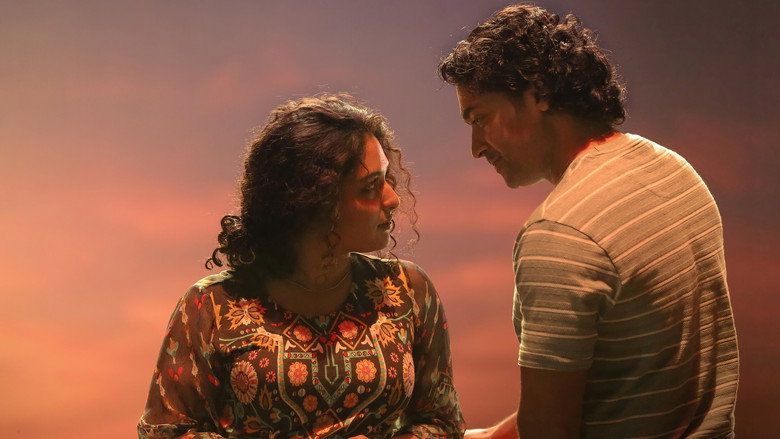
The first thing you notice is the silence. Not the absence of sound, but the way the series lets each episode breathe in its own rhythm. There’s no overarching plot, no recurring characters to tether you—just nine rooms, each with its own rules.
Some are cramped and claustrophobic, like the horror episode, which unfolds in a single, sweat-drenched apartment where a man’s paranoia curdles into something monstrous. Others are vast and airy, like the one devoted to adbhuta (wonder), where a child’s imagination turns a mundane train journey into a surreal odyssey. The anthology structure isn’t just a gimmick here; it’s a necessity.
How else do you contain nine distinct emotional landscapes without them bleeding into one another?
I’m still not sure if it entirely works. Some episodes feel like sketches, ideas that needed more time to marinate. The hasya (laughter) segment, for instance, leans too heavily on slapstick, as if the director mistook the rasa for mere comedy rather than the deeper, almost spiritual joy it’s meant to evoke.
But then there are moments that linger—like the karuna (compassion) episode, where a grieving mother’s quiet conversation with her late son’s ghost is shot in such stark, unflinching close-ups that you can almost feel the weight of her silence. The camera doesn’t flinch. Neither does she.
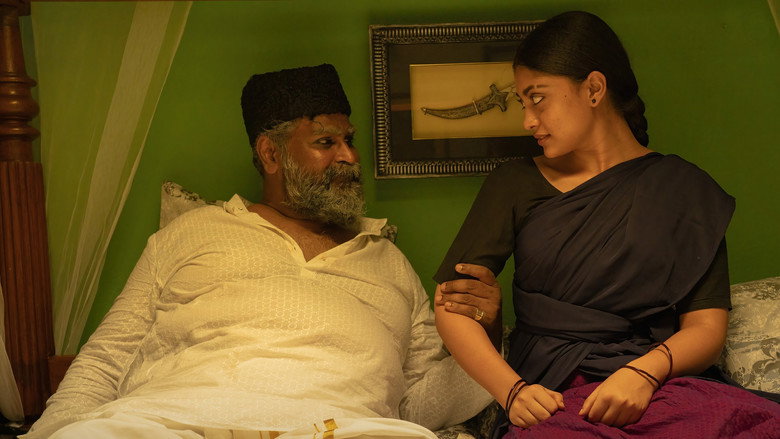
What’s fascinating about Navarasa is how it forces you to confront the mechanics of emotion itself. In the raudra (fury) episode, a man’s simmering rage isn’t just shown—it’s built. The editing is jagged, the score a low, pulsing hum, the camera lingering on his clenched fists long after the dialogue stops.
It’s not subtle, but then, fury rarely is. The series understands that emotions aren’t just things we feel; they’re things we perform, both for others and for ourselves. The best episodes here don’t just depict the Navarasas—they make you rehearse them, as if you’re being asked to step into the frame and try them on for size.
That’s where the series’ ambition starts to feel like something more than just an exercise in aesthetics. The Navarasas aren’t just emotions; they’re a way of seeing the world, a framework for understanding human experience. By translating them into nine distinct visual languages, Navarasa is doing more than telling stories—it’s testing the limits of what cinema can do as a medium.
Can a film make you feel disgust in the same way a painting or a dance might? Can it evoke shanta (peace) without resorting to clichés of sunsets and still waters? The answer, more often than not, is yes—but only when the craft is as precise as the intent.
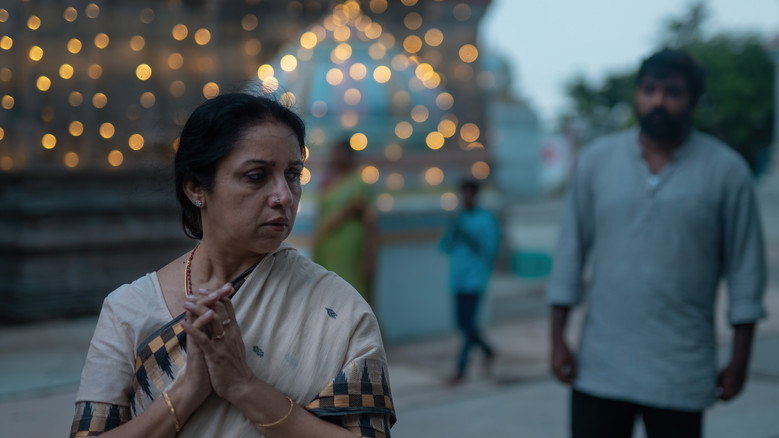
The weakest episodes are the ones that mistake rasa for plot. The bhayānaka (horror) segment, for example, relies too much on jump scares and not enough on the slow, creeping dread that defines the emotion in its purest form. But when Navarasa gets it right, it’s electrifying.
The veera (heroism) episode, for instance, isn’t about grand battles or noble sacrifices. It’s about a man who finds courage in the most mundane of places: a crowded bus, a moment of quiet defiance, a choice to speak up when silence would be easier. The heroism isn’t in the act itself, but in the way the camera frames it—as something small, human, and utterly within reach.
I keep coming back to the adbhuta episode, the one about wonder. It’s the most visually inventive of the bunch, a whirlwind of color and movement that feels like a love letter to the way children see the world. The child at its center isn’t just observing his surroundings; he’s transforming them, turning a train into a spaceship, a stranger’s face into a map of hidden stories.
It’s the kind of episode that makes you wish the whole series had leaned harder into this kind of playfulness. Not because the other emotions don’t deserve their due, but because wonder is the one that feels most alive, most cinematic.
That’s the paradox at the heart of Navarasa. It’s a series about emotions, but it’s also a series about the limits of emotion as a storytelling device. Some feelings resist easy translation.
Some demand more than a single episode can give. And yet, there’s something deeply moving about the attempt. It’s as if the series is saying: Here are nine doors.
Open whichever one you need. The rest can wait.
Netflix’s Tamil anthology Navarasa (2021) promised a bold experiment: nine standalone episodes, each exploring one of India’s classical navarasas (emotions), helmed by a star-studded lineup of directors and actors. But the road to its August 6, 2021, release was far from smooth. latestnetflix.com's view is that Behind the scenes, the project faced last-minute upheavals, creative pivots, and a production process that left some industry insiders questioning whether the final product lived up to its hype.
Navarasa was initially pitched as an even more ambitious project. According to sources, three of the proposed films—directed by Halitha Shameem, Ponram, and K. V. Anand—were dropped during production. The reasons remain unclear, but the snippets suggest logistical or creative differences may have played a role. The omission of these directors, particularly Anand, who passed away in 2021, added a layer of intrigue to the anthology’s troubled journey. Had these films made the cut, Navarasa might have looked radically different, with a broader range of storytelling styles and emotional tones.
The series’ promotional campaigns had already built significant anticipation, thanks to its ensemble cast and the involvement of Mani Ratnam, one of Indian cinema’s most celebrated filmmakers. But the behind-the-scenes turbulence raised questions: Was Navarasa a victim of its own ambition, or did the cuts ultimately sharpen its focus?
The final anthology featured nine episodes, each tied to a distinct rasa (emotion): anger, compassion, courage, disgust, fear, laughter, love, peace, and wonder. The cast included heavyweights like Suriya, Siddharth, Atharvaa Murali, and Vijay Sethupathi, with directors like Gautham Menon, Bejoy Nambiar, and Karthik Subbaraj contributing episodes. Yet, despite the talent involved, critical reception was decidedly mixed.
Reviews described Navarasa as a "mixed bag," with some episodes praised for their emotional depth and others criticized as "banal" or even "problematic". The anthology’s uneven quality sparked debates about whether the concept of distilling human emotions into standalone stories was inherently flawed—or if the execution simply fell short. One review called it a "sum total of its disparate parts," suggesting that the series struggled to cohere as a unified vision.
Beyond creative critiques, Navarasa also faced backlash for its perceived cultural insensitivity. A video essay titled "Navarasa is offensive, an upper-caste gaze" argued that the anthology reinforced problematic stereotypes, particularly in its portrayal of marginalized communities. The criticism highlighted a broader tension in Indian cinema: the challenge of balancing artistic ambition with cultural responsibility. While the series aimed to explore universal emotions, its execution left some viewers questioning whose stories—and whose perspectives—were truly being centered.
One aspect of Navarasa that escaped much of the controversy was its soundtrack. The original score, composed to complement the nine emotions, was noted for its atmospheric depth. While the series itself divided audiences, the music may have been its most consistently praised element, offering a unifying thread across the disparate episodes.
Nearly three years after its release, Navarasa remains a curious case study in anthology filmmaking. It was a project that promised much—star power, creative experimentation, and a deep dive into the human experience—but delivered a final product that felt uneven and, at times, unsatisfying. The behind-the-scenes drama, from dropped films to cultural critiques, only added to its complicated legacy.
For fans of Tamil cinema, Navarasa is a reminder of the risks and rewards of ambitious storytelling. For critics, it’s a cautionary tale about the pitfalls of anthologies, where the sum of the parts doesn’t always equal a cohesive whole. And for Netflix, it was a high-profile experiment that, for better or worse, left a mark on the streaming landscape.
Entertainment rumors and trivia aggregated from public reporting. Treat speculation as unverified unless a cited source confirms it.
More titles in the same genres and with the same cast.