Night Stalker: The Hunt for a Serial Killer
2021 Series

When night falls on this city, shadows and spirits come alive in this horror anthology series focused on urban legends.
I’ve always had a soft spot for horror anthologies—those fleeting, jagged little stories that promise a scare in the time it takes to microwave popcorn. Goedam (2020) is exactly that: eight episodes, each a bite-sized urban legend, each clocking in at under fifteen minutes. It’s the kind of show you can binge in an hour, then spend the rest of the night wondering why your apartment feels suddenly colder.
The premise is simple: modern South Korean ghost stories, served up with the kind of efficiency that makes you suspect the creators were working against a Netflix algorithm’s attention-span limit. But here’s the thing about brevity in horror—it’s a double-edged knife. When it works, it’s a masterclass in economy.
When it doesn’t, it’s just a jump scare in search of a story.
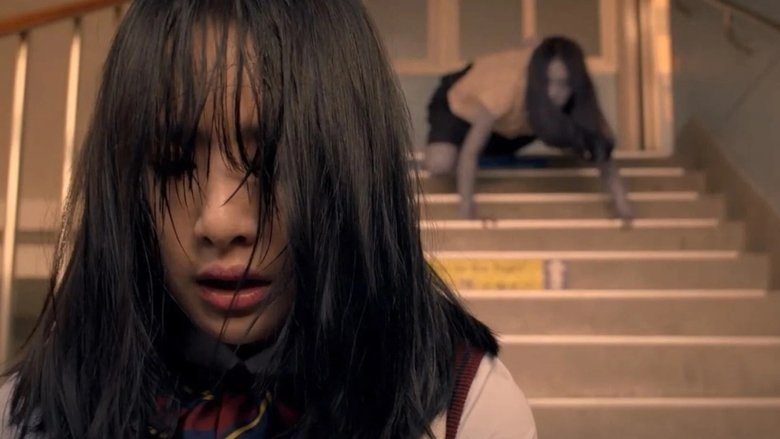
Hong Won-ki, the director, clearly understands the assignment. Goedam is unapologetically K-horror—think Whispering Corridors meets Death Bell, but with the runtime of a TikTok video. The series leans hard into the genre’s greatest hits: vengeful spirits, cursed objects, urban rituals gone wrong. There’s something almost comforting about its familiarity, like flipping through a well-worn horror comic.
You know the beats before they happen—the eerie phone call, the ghostly reflection in the mirror, the sudden appearance of a figure standing just behind the protagonist. The problem is, you know them. Too well.
Horror thrives on tension, and tension requires time to build. When your entire narrative arc is compressed into the length of a coffee break, the scares start to feel less like revelations and more like reflexes.
Take Episode 6, “Dimension,” which has become something of a fan favorite. It’s the one about the elevator ritual—a game where you press a sequence of buttons to summon a ghost. The premise is clever, the cinematography is moody, and the payoff is genuinely unsettling.
But here’s the catch: it’s over before the dread has a chance to settle. The episode’s strength lies in its atmosphere, in the way the camera lingers on the elevator doors as they slide open to reveal… well, I won’t spoil it. But the moment it arrives, it’s gone, leaving you with the same hollow feeling you get after a sugar rush.
That’s the paradox of Goedam. It’s a series that understands the mechanics of horror, but it’s so eager to deliver the scare that it forgets to let the fear breathe.
The craft is where Goedam shines, or at least where it tries its hardest. The practical effects are visceral—blood that looks like blood, not like red syrup, and ghosts that feel uncomfortably there, even if just for a second. The CGI, on the other hand, is hit or miss.
Some of it works, like the distorted faces that flicker in and out of focus, but other moments feel like they were lifted from a mid-2000s Syfy original. It’s a reminder that horror, even in its most modern forms, is still a genre that thrives on limitations. When the budget is tight, the imagination has to stretch. Goedam’s best moments are the ones where it leans into that constraint, where the scares come from what you don’t see rather than what you do.
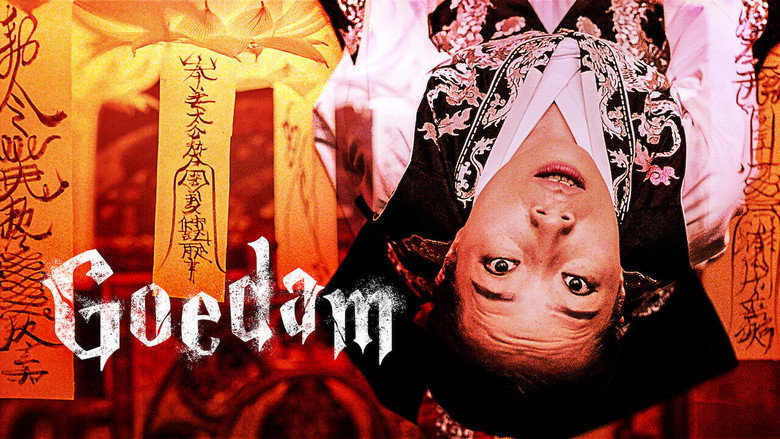
The series has its defenders, of course. Eastern Kicks called it “an impressive horror anthology… [that] plays out like a greatest hits compilation of scares and motifs from a long list of Korean films.” And it’s true—there’s a certain joy in seeing the genre’s tropes distilled into their purest form.
It’s like watching a chef prepare a tasting menu of your favorite dishes, each one a reminder of why you fell in love with the cuisine in the first place. But then there are the detractors, like the Ready Steady Cut review that argued the episodes “lack the enduring imagery and great scares that have made Eastern horror so prevalent in popular culture.” And they’re not wrong. Goedam is a series that’s easy to admire but hard to remember.
The scares are there, but they don’t linger. The stories are there, but they don’t haunt you.
I keep coming back to the runtime. Eight minutes. That’s not a lot of time to build a world, let alone a character.
Most of the episodes follow the same basic structure: introduce a protagonist, drop them into a supernatural scenario, and then—boo—deliver the scare. There’s no room for nuance, no space for the kind of slow-burn dread that makes horror truly unforgettable. It’s all payoff, no setup.
And yet, there’s something oddly compelling about that. Goedam isn’t trying to be The Haunting of Hill House. It’s not interested in deep lore or complex characters. It’s a series that knows exactly what it is: a quick hit of adrenaline, a fleeting thrill.
In that sense, it’s the perfect horror for the age of streaming, where attention spans are short and the next distraction is always just a click away.
There’s a rumor—unverified, of course—that the episodes are meant to be watched in reverse order, that doing so reveals a hidden, connected narrative. I tried it. It doesn’t.
Or at least, it doesn’t in any way that feels intentional. The connections between the episodes are loose at best, more like Easter eggs than actual storytelling. But I kind of love that the fans are out there, combing through the series for clues, trying to turn it into something more than it is.
It’s a sign of the power of horror as a genre, to our desire to find meaning in the things that scare us. Even when the scares are as fleeting as Goedam’s, we still want them to mean something.
In the end, Goedam is a series that’s easy to consume and just as easy to forget. It’s not a masterpiece, but it’s not trying to be. It’s a snack, not a meal.
And sometimes, that’s enough. There’s a certain pleasure in watching something that doesn’t overstay its welcome, that delivers its scares and then gets out of the way. But I can’t help but wonder what it could have been if it had given itself just a little more room to breathe.
If it had taken its time, let the tension build, let the characters feel like something more than just victims waiting for their inevitable fate. Because horror, at its best, isn’t just about the scare. It’s about the dread that comes before it, the unease that lingers after. Goedam gives you the scare.
The rest is up to you.
"A short, eerie anthology that unsettles but lacks depth."
The series delivers atmospheric horror and effective jump scares in a compact format. But its brevity and lack of narrative depth disappoint anyone expecting richer storytelling or character development.
Goedam, the 2020 Korean horror anthology from director Hong Won-ki, arrived on Netflix with little fanfare but quickly carved out a niche among fans of eerie, folklore-driven storytelling. Unlike the high-budget K-horror spectacles that dominate global streaming, Goedam leaned into the raw, unsettling power of urban legends—eight of them, to be exact—each episode a self-contained nightmare with a twist. latestnetflix.com's take is that the series’ low-key rollout belied its ambition: to weave seemingly standalone tales into a larger, interconnected web of dread.
The series’ hook was its premise: eight episodes, each rooted in a different Korean urban legend, from the infamous "Bloody Mary" mirror ritual to lesser-known tales like the cursed elevator or the ghostly figure that appears in photographs. What set Goedam apart from typical horror anthologies was its insistence that these stories weren’t just random scares—they were connected. Viewers were left to piece together how a character’s fate in one episode might ripple into another, a narrative gamble that paid off for those who stuck around for the payoff.
The anthology format allowed Goedam to experiment with tone and pacing. Some episodes, like the second installment (reviewed in Telugu by one YouTube critic), relied on slow-burn tension, while others delivered jump scares with surgical precision. The variety kept the series from feeling repetitive, though not every segment landed with equal impact. Critics and fans alike noted that the weaker episodes dragged, while the standouts—particularly those with a strong visual or atmospheric hook—left a lasting impression.
Details about Goedam’s production are scarce, but the series’ tight focus on urban legends suggests it was a passion project for director Hong Won-ki. Horror anthologies are a tough sell in the streaming era, where serialized storytelling often takes precedence, but Goedam’s episodic structure made it an ideal binge for fans craving bite-sized terror. The lack of A-list stars (the cast remains largely uncredited in most sources) further hints that this was a creative gamble rather than a studio-driven blockbuster.
Rumors swirled about budget constraints, with some reviewers speculating that the series’ minimalist approach—relying on practical effects and tight scripting over CGI—was a necessity rather than a stylistic choice. If true, it’s a sign of the team’s resourcefulness; Goedam’s scares often stemmed from psychological unease rather than expensive set pieces.
Goedam didn’t break out as a mainstream sensation, but it found a dedicated audience among horror aficionados. YouTube reactions and reviews—ranging from English to Hindi to Telugu—painted a picture of a series that resonated globally, particularly with viewers who grew up trading ghost stories. The trailer, released with Portuguese subtitles, hinted at Netflix’s early push to market the series beyond Korea, though its performance in non-Asian markets remains unclear.
Critics were divided. Some praised its fresh take on urban legends, while others criticized the uneven quality of the episodes. The real test, however, was whether Goedam could sustain its mystery. The series’ final twist—that all eight stories were linked—was a bold move, and while some viewers found it satisfying, others felt it was rushed or underdeveloped. Still, for a show that flew under the radar, Goedam delivered enough chills to earn a cult following.
As of now, there’s no confirmation of a second season, leaving Goedam as a self-contained experiment. Its success—or lack thereof—may have hinged on whether audiences were ready for a horror anthology that demanded engagement over passive viewing. If nothing else, the series proved that Korean urban legends still have teeth, and that a well-told ghost story can transcend language barriers.
For now, Goedam remains a hidden gem in Netflix’s horror library, a series that rewards those willing to lean into its eerie, interconnected world. Whether it’s remembered as a one-hit wonder or the start of something bigger depends on whether Hong Won-ki—or another director—decides to revisit its chilling universe.
Entertainment rumors and trivia aggregated from public reporting. Treat speculation as unverified unless a cited source confirms it.
More titles in the same genres and with the same cast.