Season 1
11 episodes Oct 11, 2016 6.5
- 1 Episode 1
- 2 Episode 2
- 3 Episode 3
- 4 Episode 4
- 5 Episode 5
- 6 Episode 6
- 7 Episode 7
- 8 Episode 8
- 9 Episode 9
- 10 Episode 10
- 11 Episode 11

A series of events leads single, 25-year-old Mikuri Moriyama and 36-year-old Hiramasa Tsuzaki to marry as a cover.
Latest episode: S1 E11 Episode 11 (Dec 20, 2016)

I’ve rewatched The Full-Time Wife Escapist three times now, and each time I’m struck by how quietly radical it is. Not in the way of manifestos or protests, but in the way of a slow, stubborn rearrangement of the furniture in a room you thought you knew. The show is, at its core, a romantic comedy about a marriage of convenience—Mikuri Moriyama, a 25-year-old with a graduate degree and no stable job, becomes the live-in housekeeper for Hiramasa Tsuzaki, a socially awkward 36-year-old salaryman.
They sign a contract. They share a home. They pretend to be married.
And then, of course, they fall in love. But the genius of the series isn’t in the falling; it’s in the contract itself, in the way it turns the most intimate of human relationships into something transactional, measurable, and—here’s the kicker—fair.

The premise is deceptively simple. Mikuri, played by Yui Aragaki with a mix of warmth and weary resilience, is the kind of character who feels like she’s been plucked from the margins of a dozen other Japanese dramas: overeducated, underemployed, and perpetually one step away from financial disaster. Hiramasa, played by Gen Hoshino (who also wrote and performs the show’s impossibly catchy theme song, “Koi”), is a man so bound by rules and social expectations that he might as well be a spreadsheet with legs.
Their arrangement is clinical at first—she cooks, cleans, and manages his household; he pays her a salary. No sex, no emotional entanglements, just a business deal. But the show’s real subject isn’t whether they’ll end up together.
It’s whether they can redefine what “together” even means in a society that treats marriage as both a social obligation and an economic trap.
What makes The Full-Time Wife Escapist so compelling is how it uses the romcom framework to interrogate labor—both the kind you do for a paycheck and the kind you do for love. Mikuri’s job isn’t just to keep Hiramasa’s apartment tidy; it’s to perform the emotional labor of a wife without the legal or social protections of one. She’s a housekeeper, but she’s also a therapist, a mediator, and, eventually, a partner in the truest sense.
The show literalizes what so many women already know: that domestic work is work, even when it’s unpaid, and that the line between “wife” and “employee” is often thinner than we’d like to admit. The Blossom Review called it “a flawlessly crafted series with a multilayered narrative, complex characters, and biting social commentary,” and that’s not hyperbole. The show’s brilliance lies in its ability to make the mundane feel revolutionary.
A scene where Mikuri negotiates a raise for her housekeeping duties isn’t just a cute moment—it’s a quiet act of rebellion against a system that undervalues care.
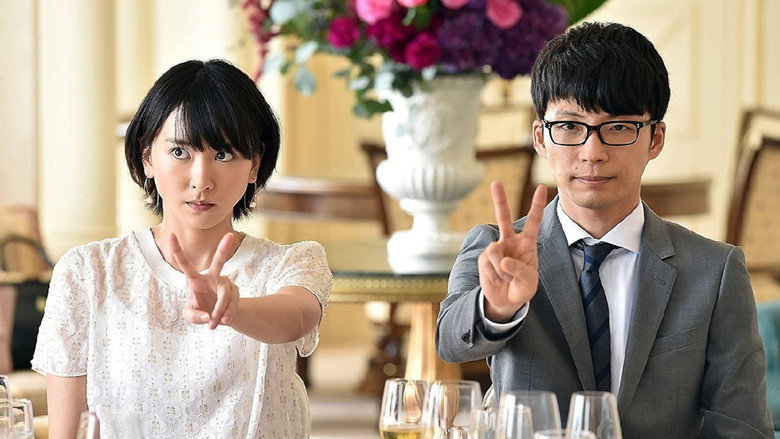
The craft of the series is subtle but deliberate. The directors—Fuminori Kaneko, Nobuhiro Doi, and Yasuharu Ishii—use the contrast between the corporate and domestic spaces to underscore the show’s themes. Hiramasa’s office is a maze of fluorescent lights and cubicles, a place where people are reduced to their job titles.
His apartment, by contrast, is warm and lived-in, a space where Mikuri’s presence slowly transforms it from a place where he eats and sleeps into a home. The camera lingers on small details: the way Mikuri arranges his fridge, the way she leaves notes for him, the way she gently corrects his social missteps. These aren’t just cute romcom beats; they’re acts of creation, the building blocks of a relationship that exists outside the traditional scripts of marriage.
And then there’s the dance. Oh, the dance. The end credits of each episode feature the cast performing the “Koi Dance,” a simple, joyful routine set to Hoshino’s song.
It became a cultural phenomenon in Japan, with fans across the country uploading their own versions. On paper, it sounds like a gimmick, but in practice, it’s one of the most disarming moments in the series. The dance isn’t just a fun interlude; it’s a metaphor for the show itself.
It’s structured, repetitive, and a little silly, but it’s also a shared language, a way for these two people—who start the series as strangers—to find rhythm together. By the time the final episode rolls around, the dance feels less like a performance and more like a promise.
That final episode, though, is where the show stumbles slightly. The Fangirl Verdict called it “a tiny bit underwhelming,” and I can see why. After spending 11 episodes building a relationship that feels both deeply personal and socially subversive, the resolution leans a little too hard into the conventional.
It’s not that the ending is bad—it’s that it feels like a retreat, a quiet surrender to the very norms the show had spent so much time dismantling. I wanted more. Not necessarily a grand gesture or a dramatic confrontation, but something that felt as radical as the premise itself.
Maybe that’s the point, though. Maybe the show is saying that even the most unconventional relationships eventually have to make peace with the world as it is.
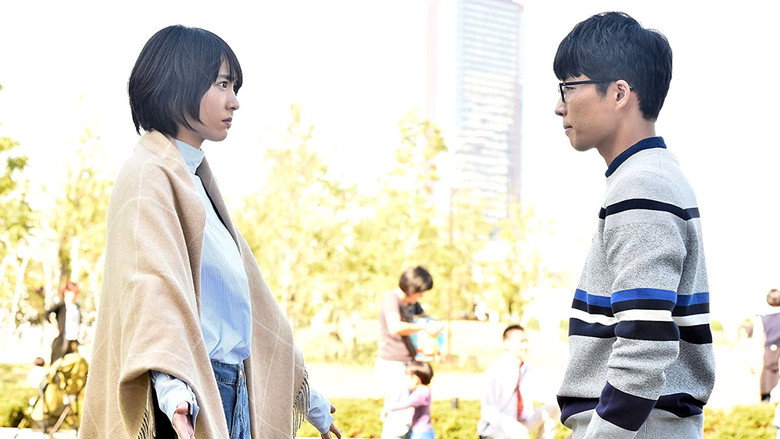
The performances, though, are where The Full-Time Wife Escapist truly shines. Aragaki’s Mikuri is a masterclass in understated charm. She’s funny without trying to be, warm without being cloying, and resilient without ever becoming a martyr.
There’s a moment in the third episode where she’s folding laundry, and the camera holds on her face for just a beat too long. She’s not crying, not exactly, but there’s a weariness there, a quiet exhaustion that comes from knowing that no matter how hard she works, she’s still one bad break away from disaster. It’s a small moment, but it’s the kind that lingers.
Hoshino’s Hiramasa, meanwhile, is a revelation. He’s not the typical romcom leading man—he’s awkward, socially inept, and often frustratingly rigid. But Hoshino plays him with such vulnerability that it’s impossible not to root for him.
There’s a scene in the sixth episode where he tries to apologize to Mikuri for an earlier misstep. He stumbles over his words, his hands fidgeting at his sides, and the look on his face is one of pure, unfiltered terror. It’s the kind of moment that could easily tip into caricature, but Hoshino keeps it grounded in something real.
This is a man who has spent his entire life following the rules, only to realize that the rules don’t always make sense.
The supporting cast is just as strong, particularly Yuriko Ishida as Mikuri’s aunt Yuri, a woman who has spent her life navigating the same societal expectations that Mikuri is now pushing against. Yuri isn’t a villain, but she’s not a hero either. She’s a product of her time, and Ishida plays her with a mix of warmth and exasperation that makes her feel like a real person, not just a plot device.
What I keep coming back to, though, is the contract. That piece of paper that Mikuri and Hiramasa sign in the first episode isn’t just a plot device; it’s the show’s thesis. It’s a challenge to the idea that love and labor are separate things, that marriage is something that happens to you rather than something you build.
The contract is cold, clinical, and utterly devoid of romance. And yet, by the end of the series, it’s the most romantic thing about them. Because what is love, really, if not a series of negotiations?
What is marriage if not a contract—one that’s often unspoken, unfair, and deeply flawed?
The Full-Time Wife Escapist doesn’t have all the answers. But it asks the right questions. And in a genre that often treats love as something that happens to you, that’s enough. More than enough.
"A cozy Japanese comedy-romance that's been warmly received and keeps getting discovered on streaming."
Nigeru wa Haji da ga Yaku ni Tatsu is a warm, relationship-driven Japanese drama built on comedy and romance, told in 45-minute episodes. The reception is positive but modest in scale, with a 7/10 audience rating and steady interest in episode guides, cast details, and popularity trends. It's a comfort watch people pick up on Netflix and Prime Video for its light romantic charm rather than big melodrama.
The Full-Time Wife Escapist (2016) isn’t just a hit Japanese drama—it’s the series that allegedly brought its two leads together in real life. The romantic comedy, centered on a fake marriage that turns into something real, mirrored the off-screen chemistry between stars Yui Aragaki and Gen Hoshino. But how much of the show’s magic translated behind the scenes? latestnetflix.com's view is that here’s what the limited evidence reveals about the making of this fan-favorite J-drama.
The show’s premise—a struggling temp worker (Aragaki) and a socially awkward programmer (Hoshino) enter a marriage of convenience—resonated with audiences, earning a solid 6.9/10 rating on SensCritique. But the real-life twist? Aragaki and Hoshino’s on-screen romance reportedly blossomed into a real relationship. In 2019, years after the series wrapped, the pair confirmed their marriage, sending fans into a frenzy. While neither has publicly tied their relationship directly to the drama, the timing and their undeniable chemistry on set fueled speculation that The Full-Time Wife Escapist played a role in their love story.
Despite its modest rating, the series has been praised as a "hidden gem" in the J-drama landscape. Reviewers highlight its balance of humor and heart, with the contract marriage trope serving as a fresh take on the rom-com genre. The show’s 45-minute episodes kept pacing tight, avoiding the filler that plagues some Japanese dramas. While no behind-the-scenes details about filming challenges or directorial choices have surfaced in the available evidence, the series’ enduring popularity suggests it struck a chord with viewers seeking a lighthearted yet relatable love story.
Beyond Aragaki and Hoshino, the ensemble cast included Ryohei Otani, Yuriko Ishida, and Arata Furuta, among others. However, the evidence offers no insights into their off-screen relationships or any behind-the-scenes drama. The lack of leaked set stories or cast interviews in the retrieved sources leaves much of the production’s inner workings a mystery. What is clear is that the show’s success hinged on its leads’ ability to sell the slow-burn romance—a dynamic that, for Aragaki and Hoshino, may have extended beyond the script.
The Full-Time Wife Escapist remains a touchstone for fans of contract marriage tropes, often compared to other J-dramas like Because This Is My First Life. Its blend of comedy and romance, paired with the real-life fairy tale of its stars, gives it a unique legacy. Yet, with no confirmed details about production struggles, creative decisions, or unreleased footage, the show’s behind-the-scenes story remains largely untold.
For now, the drama’s biggest gossip is its off-screen romance—and even that is left to fans’ imaginations.
Entertainment rumors and trivia aggregated from public reporting. Treat speculation as unverified unless a cited source confirms it.
More titles in the same genres and with the same cast.