Ady An
Liang Mu-cheng

Ren Guang-xi, a cocky law student, seems to lead the perfect life. He's the sole successor to a huge and famous business and is a talented ice hockey player. But in reality, his lonely life lacks joy, laughter and motivation. That is until he meets Liang Mu-cheng, the new bento seller at his school canteen. A harmless bet brings the two together and Guang-xi slowly changes as Mu-cheng teaches him how to give and love. Tragedy strikes when Guang-xi suddenly has to go through a major brain surgery which causes him to lose his memory.
I’ve always been suspicious of amnesia as a plot device. It feels like a cheat, a way to reset a story without earning the emotional weight of that reset. But Autumn’s Concerto doesn’t use memory loss as a gimmick—it treats it like a slow, aching wound.
The series lingers in the spaces between what is remembered and what is felt, and in doing so, it becomes something rare: a romance that understands love isn’t just about holding on, but about what happens when you can’t.
Chen Wei-ling’s direction here is deceptively gentle. There’s no grand cinematic flourish, no sweeping score to announce the tragedy. Instead, the camera often stays close, framing faces in quiet moments—Ren Guang-xi’s cocky smirk dissolving into something softer, Liang Mu-cheng’s hands trembling just slightly as she hands him a bento.
The first time they meet, it’s over a bet, a small, almost silly thing. But the way the scene is shot, with Guang-xi’s arrogance clashing against Mu-cheng’s quiet resilience, you can already feel the shift. This isn’t just a meet-cute.
It’s the beginning of something that will unravel them both.

The series is, at its core, a love triangle—though that term feels too neat for what unfolds. There’s Guang-xi, the golden boy with a hollow center, and Mu-cheng, the canteen worker whose warmth is both her strength and her vulnerability. Then there’s the third point of the triangle: time.
The amnesia isn’t just a plot twist; it’s a force that reshapes the entire narrative. When Guang-xi wakes up after surgery with no memory of the past two years, the story doesn’t just pause—it fractures. What follows isn’t a race to restore his memories, but a slow, painful reckoning with what love looks like when the past is gone.
What’s striking is how Autumn’s Concerto refuses to romanticize forgetting. There’s no magical cure, no grand gesture that brings everything rushing back. Instead, the series sits with the discomfort of it—the way Mu-cheng must navigate a world where the man she loves doesn’t remember her, where every shared glance is both a gift and a wound.
The writing is sharpest in these moments, when it resists the urge to tie everything up in a neat bow. Love, the series seems to say, isn’t just about what you recall. It’s about what you choose to hold onto, even when the mind won’t cooperate.
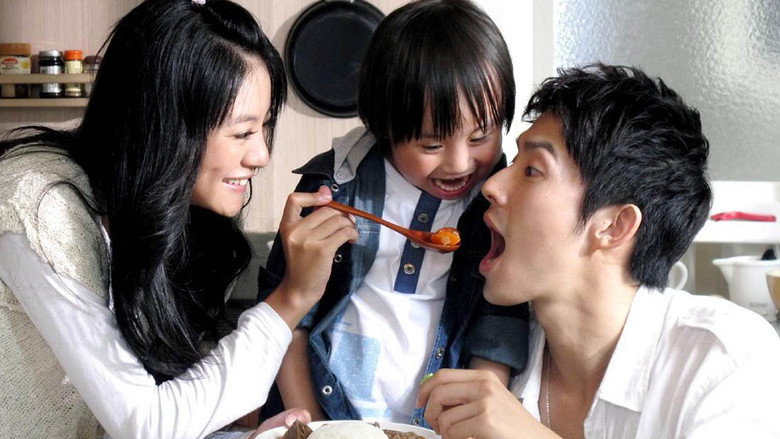
The performances anchor the emotional weight of the story. Ady An, as Mu-cheng, is particularly devastating. There’s a scene midway through the series where she stands outside Guang-xi’s hospital room, watching him through the glass.
She doesn’t cry. She doesn’t even look away. She just stands there, her face a mask of quiet longing, and in that stillness, you can feel the entire history of their relationship pressing against the glass between them.
Vanness Wu, as Guang-xi, plays the amnesia with a frustrating authenticity—his confusion isn’t just about forgetting, but about the way memory shapes identity. When he looks at Mu-cheng and doesn’t recognize her, it’s not just her heart that breaks. His does, too, in a way he can’t yet understand.
The series isn’t without its flaws. The pacing drags in places, particularly in the middle episodes, where the emotional beats start to feel repetitive. And while the love triangle is handled with more nuance than most, there are moments where the melodrama tips into excess—overly dramatic confrontations, dialogue that spells out emotions a little too neatly.
But these are minor quibbles in a story that, for the most part, trusts its audience to sit with ambiguity.
What lingers, long after the final episode, is the way Autumn’s Concerto treats love as something that exists beyond memory. It’s in the way Mu-cheng still makes Guang-xi’s favorite bento, even when he doesn’t remember why. It’s in the way Guang-xi’s body remembers what his mind can’t—the way his hands reach for her before his brain catches up.
The series understands that love isn’t just a story we tell ourselves. It’s a habit. A muscle memory.
Something that persists, even when the mind forgets.

In the end, Autumn’s Concerto isn’t just a romance. It’s a meditation on what it means to love someone who can’t love you back in the way you need. And in that, it finds a kind of quiet, heartbreaking truth. Love doesn’t always conquer all. Sometimes, it just endures.
"A heartwarming, emotionally intense Taiwanese drama with standout performances and a bittersweet love story."
The series is a touching portrait of love, memory loss, and family bonds, with Ady An and Vanness Wu’s chemistry a major strength. The plot can be predictable or overly melodramatic and the pacing sometimes drags, but the emotional depth and character development hold attention.
Autumn’s Concerto (2009) remains one of Taiwan’s most beloved idol dramas, a sweeping romance that blended legal ambition, amnesia, and a love story so intense it still trends in fan edits over a decade later. Directed by Chen Wei-ling, the series starred Ady An and Vanness Wu in roles that catapulted them to regional fame. But what really went down behind the cameras? latestnetflix.com's take is that here’s the gossip—sourced straight from the era’s whispers and surviving clips.
Chen Wei-ling wasn’t just any director—she was a pioneer of Taiwanese idol dramas, known for crafting stories that balanced emotional gut-punches with glossy production. Autumn’s Concerto was no exception. According to a profile on her work, Chen’s style leaned into "influential romantic series" that resonated across Asia, and this drama was a standout in her filmography. While the evidence doesn’t spell out her exact creative process, the series’ behind-the-scenes featurette (complete with English subtitles) offers a rare glimpse into her collaborative approach. The clip, titled 下一站,幸福 製作特輯, shows Chen working closely with the cast to build the show’s warm, familial vibe—think cozy group meals and playful on-set banter. It’s a far cry from the high-stakes legal drama unfolding on screen, but it explains why the chemistry between leads Ady An and Vanness Wu felt so organic.
The central romance between Ren Guang Xi (Vanness Wu) and Liang Mu Cheng (Ady An) was the show’s beating heart, and fans still dissect their every interaction. But the real drama? The off-screen dynamic that fueled endless speculation. Clips from the era reveal a playful, almost brother-sister-like rapport between the two leads. In one behind-the-scenes moment, Wu teases An about her acting, while she fires back with deadpan humor—tiny moments that made their characters’ love story feel even more authentic.
Then there’s the infamous "scumbag bet" clip. A short, viral snippet shows Wu’s character making a reckless wager with a friend to kiss Mu Cheng (An). The scene is pure rom-com chaos, but the real kicker? The way Wu and An sell the awkward tension, turning a throwaway plot point into a meme-worthy moment that fans still reference today. Rumor has it the bet was improvised, though without confirmation from the cast or crew, that’s purely speculative.
Their chemistry wasn’t just for the cameras, either. The drama’s theme song, "Baby You Light Up My World," performed by Wu and An, became a hit in its own right. The music video, a mix of behind-the-scenes footage and staged romance, only deepened the "are they dating?" chatter—though neither star ever confirmed a real-life relationship.
A 2025 cast retrospective video (yes, fans are still making them) offers a fascinating time capsule of the Autumn’s Concerto ensemble. Here’s the breakdown:
What’s striking is how Autumn’s Concerto served as a launchpad for nearly the entire cast—proof of Chen Wei-ling’s knack for spotting talent.
With a 7.2/10 rating on SensCritique (based on 117 votes), Autumn’s Concerto wasn’t just a hit—it was a cultural moment. The series’ blend of romance, legal drama, and a dash of amnesia tropes (a staple of the era) made it catnip for fans of Taiwanese idol dramas. But its staying power? That’s all about the characters. Liang Mu Cheng’s resilience and Ren Guang Xi’s growth from a cocky lawyer to a devoted partner resonated deeply, especially in an era when Taiwanese dramas were dominating Asian TV.
Even today, fan edits and reaction videos keep the series alive. One reviewer’s deep-dive into Episode 66 breaks down why the drama’s emotional payoffs still land, while another analyzes its impact on the genre. The fact that these videos rack up thousands of views—over a decade later—speaks volumes.
Entertainment rumors and trivia aggregated from public reporting. Treat speculation as unverified unless a cited source confirms it.
More titles in the same genres and with the same cast.