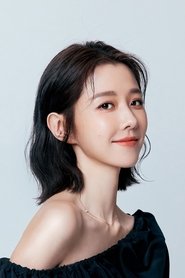
Ivy Shao
Wei Fen-qing

What do netizens know? Ting En is a celebrated chef whose fine-dining restaurant is a destination for food lovers from all over the world. When Ting En stumbles upon comments on the Internet from people who can’t afford to eat at his high-priced restaurant, they blow his mind. Netizens claim that the culinary creations made by Fen Qing at the night market are just as satisfying as Ting En’s Michelin-worthy food. Determined to debunk such preposterous claims, Ting En goes to the night market to find Fen Qing and show her what true culinary talent really is. Whose cuisine will reign supreme?
I’ll admit it: I went into The Perfect Match expecting another lightweight Taiwanese rom-com, the kind that wraps up every loose end with a kiss and a perfectly plated dessert. But somewhere between the sizzling woks and the simmering resentments, this series did something unexpected—it made me care about the difference between a meal that feeds the soul and one that just fills the stomach.
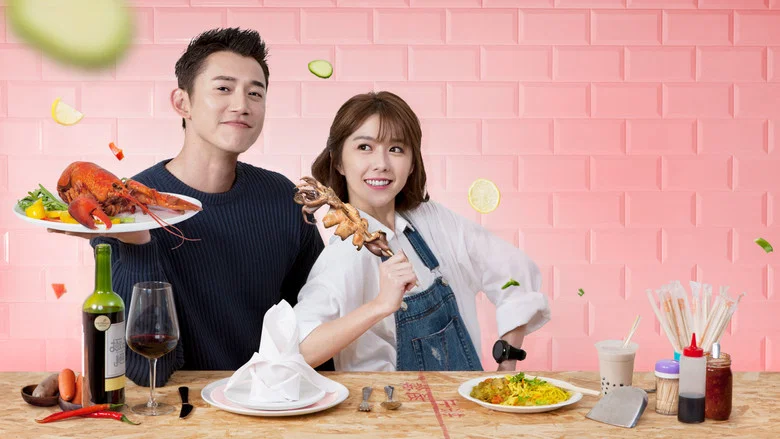
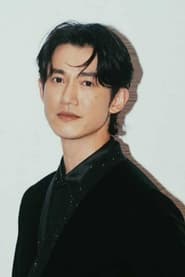
The premise is simple enough. Ting En (Wu Kang-ren), a Michelin-starred chef with a reputation for arrogance and a kitchen that costs more per plate than most people’s rent, stumbles upon online chatter about Fen Qing (Ivy Shao), a street-food vendor whose night market dishes are being compared to his haute cuisine. The idea that a few dollars’ worth of stir-fry could rival his meticulously crafted tasting menus is, to him, not just absurd—it’s an insult.
So he does what any self-respecting culinary snob would do: he goes undercover to prove her wrong. What follows is less a battle of flavors and more a clash of worlds, where the stakes aren’t just about who cooks better, but what food is for.
The series leans hard into the tropes of Taiwanese idol dramas—love triangles, unrequited pining, bromances that border on the homoerotic—but it’s the food that anchors the story. YouTube recaps and fan discussions, like those from Drama Addicts, highlight the show’s knack for making even the most over-the-top moments feel grounded in the tactile reality of cooking. There’s a scene early on where Ting En, disguised in a cheap apron and a hairnet, attempts to replicate Fen Qing’s signature scallion pancake.
His hands, used to plating microgreens with tweezers, fumble with the dough. The camera lingers on the way his fingers press too hard, the way the oil spatters unevenly. It’s a small moment, but it’s the kind of detail that makes the show’s central conflict feel real.
This isn’t just about ego; it’s about the way we define ourselves through our work, and how terrifying it is to be told that something you’ve spent your life perfecting might not matter as much as you think.
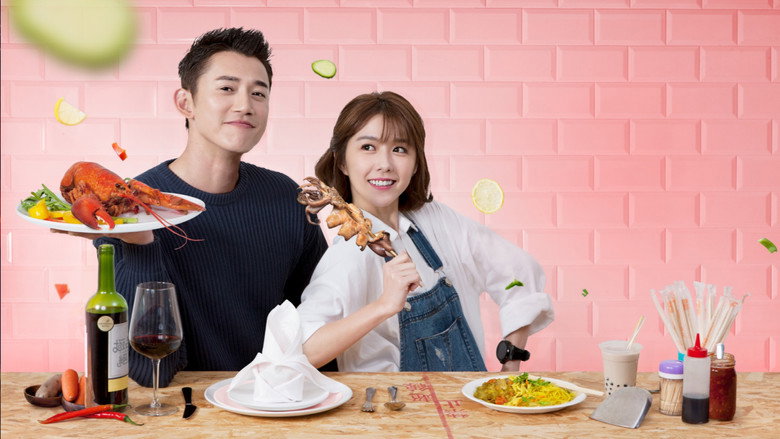
What’s interesting about The Perfect Match is how it resists the easy resolution its genre usually demands. Ting En doesn’t just learn to appreciate Fen Qing’s cooking—he’s forced to confront the emptiness of his own. The night market isn’t just a backdrop; it’s a character in its own right, a place where food is less about perfection and more about connection.
The series doesn’t shy away from showing how Ting En’s high-end restaurant, for all its polish, is a place where people eat alone, where the experience is curated to the point of sterility. Fen Qing’s stall, by contrast, is loud, messy, and alive. People crowd around her, laughing, arguing, sharing plates.
The food isn’t just good—it’s necessary, in a way that a a reported budget tasting menu never could be.
This tension between artistry and accessibility isn’t new, but the show handles it with a lightness that keeps it from feeling preachy. The supporting cast—particularly Ting En’s sous-chef and childhood friend, played by Lawrence Liu—adds a layer of warmth and humor that balances out the melodrama. Liu’s character is the show’s moral compass, the one who calls Ting En out on his pretensions without ever making him feel like a villain.
Their dynamic is one of the series’ strengths, a reminder that even the most insufferable people are usually just scared of being found out.
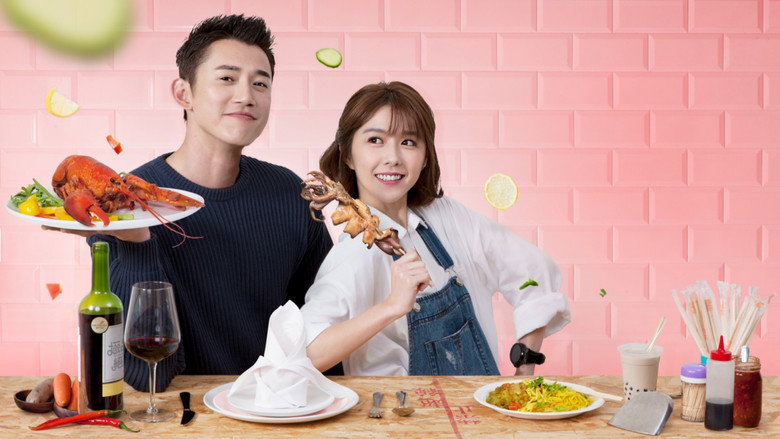
If there’s a flaw here, it’s that the show sometimes leans too heavily on the romance subplots to drive the story forward. The love triangle between Ting En, Fen Qing, and a third wheel (because of course there’s a third wheel) feels obligatory, a concession to the genre rather than something that emerges organically from the characters. But even these moments are saved by the performances.
Ivy Shao, in particular, brings a grounded energy to Fen Qing that keeps her from becoming just another spunky underdog. There’s a quiet sadness to her, a sense that she’s not just fighting for her food but for a way of life that’s disappearing. When she tells Ting En, “You think your food is better because it’s expensive, but expensive doesn’t mean it’s good,” it’s not just a line—it’s the show’s thesis, delivered with a weariness that lingers.
The Perfect Match isn’t a perfect show. It’s too long, for one thing—the episode count is a lot of time to spend in a world where the central conflict could probably be resolved in half that. And while the food scenes are undeniably compelling, the series sometimes struggles to balance its culinary focus with the demands of its soap-opera plotting.
But what it lacks in precision, it makes up for in heart. This is a show that understands something fundamental about food: that it’s never just about taste. It’s about memory, about community, about the stories we tell ourselves when we sit down to eat.
In the end, The Perfect Match is less about who wins the cooking battle and more about what it means to be truly nourished. And maybe that’s the real twist—neither Ting En nor Fen Qing is entirely right, or entirely wrong. The best meals, after all, are the ones that leave you full in more ways than one.
The Perfect Match (2017), the Taiwanese romantic comedy directed by Andy Luo, was a breakout hit for its charismatic cast and lighthearted storytelling. But behind the scenes, the series wasn’t without its share of controversy—particularly around casting and screen time. latestnetflix.com's read is that here’s what the evidence reveals about the drama that unfolded off-screen.
One of the biggest talking points surrounding The Perfect Match was its casting process. Rumors swirled about high-profile actors nearly joining the project before the final lineup was set. Source hints at a casting controversy involving director Yu Zheng and actors Zhu Xudan and Wu Xuanyi, though the details remain murky. While it’s unclear whether these names were ever officially in the running for The Perfect Match (2017), the chatter suggests the production team had to navigate competing interests before settling on Ivy Shao and Wu Kang-ren as the leads.
The final cast—including Lilu Suan Wang, Lawrence Liu, and Nylon Chen—delivered chemistry that resonated with audiences, but the speculation around who could have been involved added an extra layer of intrigue for fans.
Once filming wrapped, another controversy emerged: the distribution of screen time. Source highlights a debate among viewers about whether certain actors, particularly Wang Xingyue and Lu Yuxiao, were given enough focus. While the evidence doesn’t specify which characters or actors were at the center of this dispute, it’s clear that fans had strong opinions about who deserved more (or less) attention.
Wu Kang-ren and Ivy Shao, as the leads, naturally dominated the narrative, but supporting players like Nylon Chen and Li Xing also left a mark. The debate underscores how The Perfect Match’s ensemble cast was both a strength and a lightning rod for discussion—balancing so many personalities was no easy feat.
Despite the behind-the-scenes drama, The Perfect Match (2017) was a commercial and critical success. Source offers a full recap and review, praising the series for its humor and romantic tension, while Source highlights its availability on streaming platforms like CATCHPLAY+. The show’s blend of comedy and romance clearly struck a chord with audiences, even if some fans felt certain storylines or characters were underutilized.
That said, the evidence doesn’t provide concrete viewership numbers or awards data, so the extent of its impact remains somewhat anecdotal. Still, the buzz around casting and screen time suggests The Perfect Match was a series fans cared about—enough to debate its choices long after the final episode aired.
The Perfect Match (2017) may not have been a flawless production, but its behind-the-scenes drama—from casting near-misses to screen time squabbles—only added to its legacy. For a lighthearted rom-com, it sure knew how to stir up controversy.
Entertainment rumors and trivia aggregated from public reporting. Treat speculation as unverified unless a cited source confirms it.
More titles in the same genres and with the same cast.