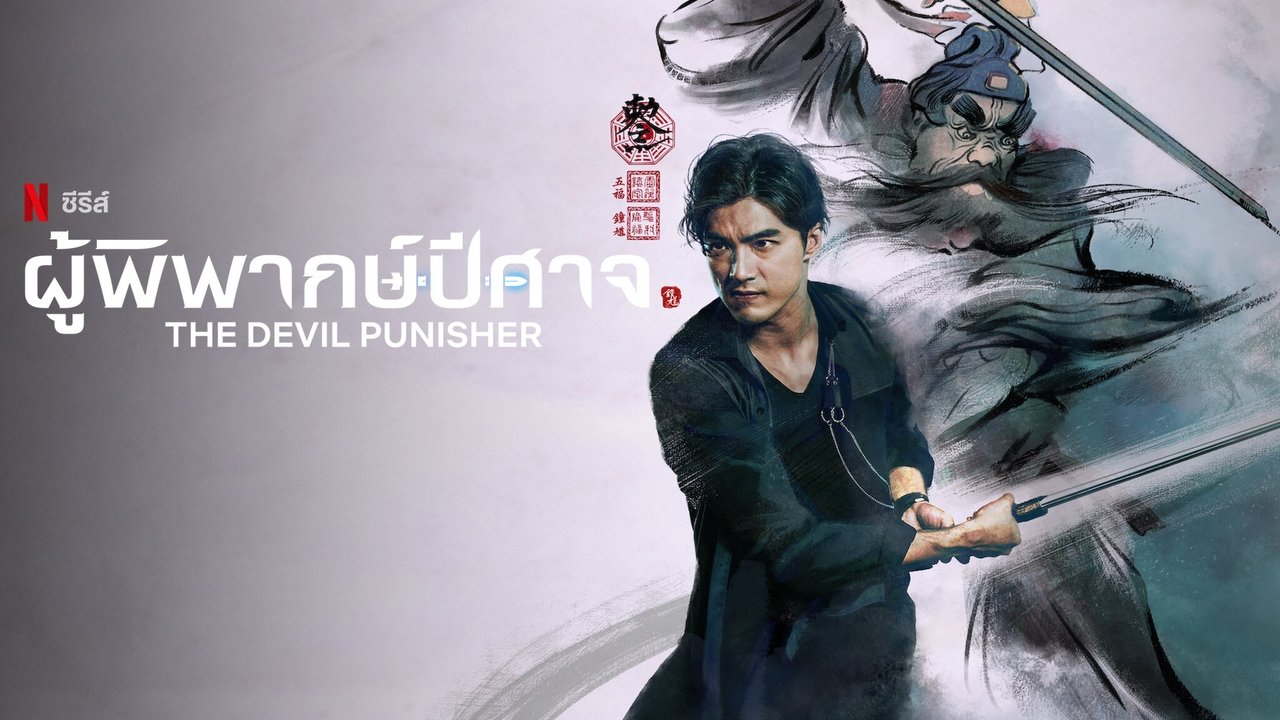

Mike He
Zhong Kui / Zhong Zhengnan
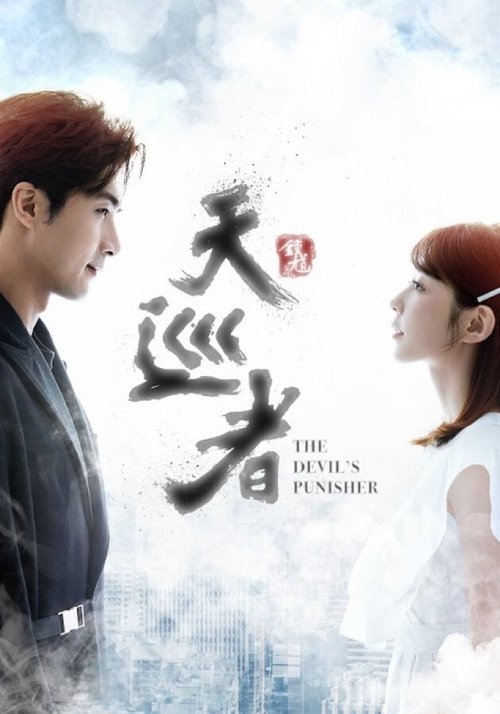
A baker by day and demon fighter by night, Zhong Kui, a reincarnated deity must jog his amnesiac lover's memory of their millennium-long romance.
Mike He
Zhong Kui / Zhong Zhengnan

Yin Chao-te
Wu Qing Yuan

Dewi Chien
Seven Star Sword Spirit / Hsiao-chi

Amanda Chou
Lady Qin Kuang
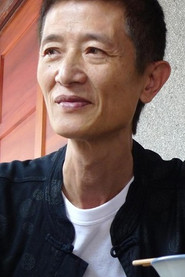
Chen Bo-zheng
Bat Spirit / Ah-Fu
I’ve seen this trick before—the amnesiac lover, the forgotten past, the slow-burn revelation of a love that transcends lifetimes. It’s a trope that should feel tired by now, a shorthand for melodrama that too often collapses under the weight of its own sentimentality. And yet, The Devil Punisher (or Zhong Kui: The Devil Punisher, as it’s also known) manages to make it feel, if not entirely new, then at least strangely urgent.
Maybe it’s the way the series blends its supernatural premise with the mundane rhythms of a Taipei bakery, or maybe it’s the way Mike He’s Zhong Kui carries the exhaustion of a man who’s been fighting demons for centuries but still can’t remember why it matters. Either way, there’s something here worth paying attention to—even if the series doesn’t always seem to know what to do with it.
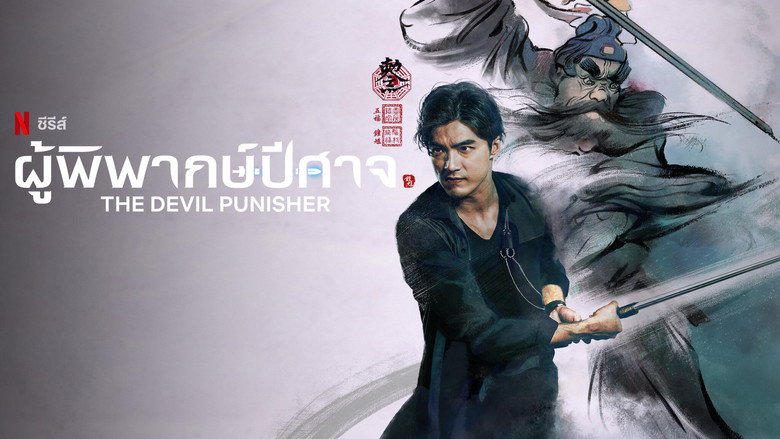
The premise is simple enough: Zhong Kui, a reincarnated deity, works as a baker by day and hunts demons by night, all while trying to jog the memory of his amnesiac lover, who doesn’t recognize him as the man she’s loved across a thousand years. It’s a setup that could easily tip into soap opera territory, and at times, it does. But there’s an undercurrent of something darker here, a sense that the past isn’t just forgotten—it’s dangerous.
The demons Zhong Kui fights aren’t just generic monsters; they’re manifestations of trauma, of guilt, of the things we bury because we can’t bear to remember them. And in that way, the series feels less like a fantasy romp and more like a psychological thriller dressed in the trappings of mythology.
That tension—between the supernatural and the deeply human—is where The Devil Punisher finds its footing. The bakery setting, for instance, isn’t just a quirky backdrop. It’s a place where Zhong Kui can pretend, however briefly, that he’s just a man running a business, not a warrior bound to an endless cycle of violence.
The dough he kneads, the pastries he sells, the customers he chats with—they’re all small acts of normalcy in a life that’s anything but. And yet, even here, the past intrudes. A customer’s offhand remark, a familiar scent, the way the light hits the counter at a certain angle—all of it threatens to unravel the fragile peace he’s built.
It’s a clever way to ground the fantasy, to make the supernatural feel like an extension of the characters’ inner lives rather than just a plot device.
The problem is that the series doesn’t always trust its own instincts. For every moment that leans into the quiet, introspective side of its story, there’s another that feels like it’s rushing through the motions of a genre it doesn’t fully commit to. The action sequences, for example, are serviceable but rarely thrilling.
The fight choreography is competent, but the camerawork often feels too shaky, too eager to obscure the mechanics of the combat rather than let it breathe. And then there’s the romance, which is where the series’ heart should be but often feels like an afterthought. The chemistry between Zhong Kui and his lover (played by Dewi Chien) is there, but it’s buried under layers of exposition and repetitive dialogue.
You can feel the series straining to make their love feel epic, but it never quite lands with the weight it should.
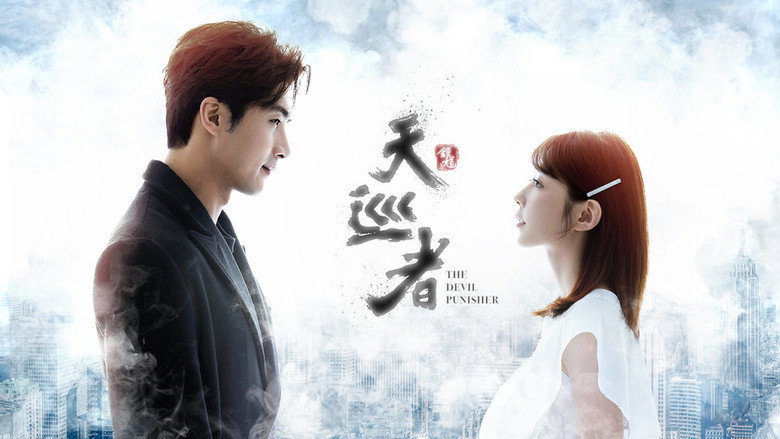
What does work, though, is the way the series plays with memory as both a curse and a salvation. Zhong Kui’s lover doesn’t just forget their past—she forgets herself, and in doing so, she becomes a blank slate onto which the series can project all sorts of questions about identity and fate. Is she still the same person if she doesn’t remember who she was?
And if she isn’t, does that make their love any less real? These are the kinds of questions that The Devil Punisher circles around but never quite answers, and maybe that’s the point. Some things, the series seems to say, aren’t meant to be resolved.
Some memories are too heavy to carry, and some loves are too fragile to survive the weight of time.
That ambiguity extends to the series’ visual language, too. The cinematography is often striking, particularly in the way it contrasts the warm, golden hues of the bakery with the cold, blue tones of the supernatural world. There’s a moment in one of the early episodes where Zhong Kui steps out of the bakery and into an alleyway, and the shift in lighting is so abrupt it feels like he’s crossing into another dimension.
It’s a small thing, but it’s the kind of detail that makes the world feel lived-in, like the supernatural isn’t just a plot device but a tangible presence in these characters’ lives.
The performances, too, help sell the series’ more outlandish elements. Mike He, in particular, is a revelation. He’s got this way of carrying himself—shoulders slightly hunched, movements deliberate, like he’s always bracing for the next blow—that makes Zhong Kui feel like a man who’s been fighting for so long he’s forgotten how to stop.
There’s a weariness to him that goes beyond physical exhaustion; it’s the weariness of someone who’s seen too much and remembers too little. And then there’s Dewi Chien, whose portrayal of the amnesiac lover is all quiet confusion and fleeting moments of recognition. She’s not just a blank slate; she’s a woman trying to piece herself together, and Chien makes that struggle feel achingly real.
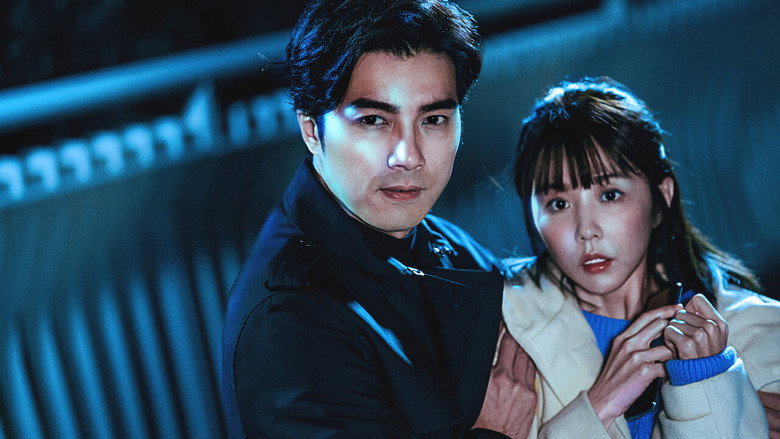
If there’s a flaw in The Devil Punisher, it’s that the series never quite decides what it wants to be. Is it a romance? A supernatural thriller?
A meditation on memory and identity? The answer, frustratingly, is all of the above—and none of them, really. It’s a series that’s content to meander, to let its story unfold at its own pace, even when that pace feels glacial.
There are moments where it feels like it’s building toward something profound, only to pull back at the last second, as if it’s afraid to commit to its own themes. And yet, for all its flaws, there’s something undeniably compelling about it. Maybe it’s the way it refuses to give in to the easy satisfactions of its genre, or maybe it’s just the way it lingers on the small, human moments—the way Zhong Kui’s hands tremble when he’s near his lover, the way she flinches at the sound of a familiar voice.
I keep coming back to that bakery. It’s such a simple setting, but it’s where the series feels most alive. There’s something poetic about the idea of a demon hunter finding solace in the act of making bread, of creating something tangible in a world that’s otherwise defined by intangible horrors.
It’s a reminder that even the most supernatural stories are, at their core, about people. And maybe that’s what The Devil Punisher is really about—not the demons, not the amnesia, not even the love story, but the quiet, desperate hope that we can find something real in a world that keeps trying to take it away from us.
I don’t know if The Devil Punisher is a great series. But it’s a series that’s trying, in its own messy way, to say something true. And sometimes, that’s enough.
"A lighthearted Taiwanese urban fantasy about a deity juggling pastry work and ghost hunting, warmly received by core drama fans despite mixed mainstream scores."
Zhong Kui works as a daytime baker and moonlights as an underworld demon fighter, and this quirky dual identity gives the series its supernatural charm. Asian drama communities rate the folkloric premise a respectable 7.4 out of 10, while broader platform ratings sit closer to a 67% audience score, suggesting the long episodes and supernatural pacing divide casual viewers.
The Devil Punisher (2020), known in Mandarin as Tiān Xúnzhě ("Heaven Patroller"), is a Taiwanese supernatural fantasy series that blends time travel, mythology, and romance. Starring Mike He as the reincarnated deity Zhong Kui, the show follows a baker by day and demon hunter by night as he battles evil while trying to restore the memories of his amnesiac lover, Meng Po. latestnetflix.com's read is that but beyond its otherworldly premise, the series had its own earthly challenges and collaborations worth exploring.
The Devil Punisher wasn’t just another drama for Sanlih E-Television (SET TV)—it was the channel’s flagship series for 2020. The production marked the second collaboration between SET TV and Netflix, following the success of their previous partnership. This likely meant higher budgets, tighter deadlines, and pressure to deliver a hit that could appeal to both local and international audiences. The show’s supernatural themes and time-travel elements suggest ambitious storytelling, but whether it lived up to its potential remains a topic of debate among fans.
Mike He, a familiar face in Taiwanese dramas, took on the dual role of Zhong Kui, the "Devil Punisher" and "Exorcism Lord". His character’s struggle to balance mortal life with divine duty was central to the plot. Ivy Shao, who played Meng Po, brought emotional depth to the amnesiac lover trope, while Amanda Chou and Johnny Yang rounded out the main cast.
Notably, the series featured a blend of established actors and newer talent. Roy Chang, who played a supporting role, had previously worked in Taiwanese productions, while Guang Chen and Tan Ai-chen added gravitas to the ensemble. The chemistry between the leads was likely a focus during filming, given the show’s romantic subplots.
While the evidence doesn’t reveal specific behind-the-scenes drama, the show’s supernatural and time-travel elements suggest complex filming requirements. CGI-heavy scenes, elaborate fight choreography, and period costumes would have demanded significant resources. Rumors (unconfirmed) suggest that some scenes were shot in multiple locations to capture both modern and historical settings, though no official details about production struggles have surfaced.
The series aired from October 25, 2020, to March 14, 2021, spanning 20 episodes—a standard length for Taiwanese dramas but still a marathon for a fantasy series. Whether the show wrapped on schedule or faced delays isn’t clear from the available evidence.
The Devil Punisher was marketed as a supernatural adventure with romantic and mythological undertones, but its reception appears mixed. Some viewers praised its visual effects and Mike He’s performance, while others found the plot convoluted. The show’s Netflix distribution likely expanded its reach beyond Taiwan, but it didn’t achieve the same cultural footprint as some of its contemporaries.
As of now, there’s no confirmed news of a second season, leaving fans to speculate about the fate of Zhong Kui and Meng Po’s love story.
Entertainment rumors and trivia aggregated from public reporting. Treat speculation as unverified unless a cited source confirms it.
More titles in the same genres and with the same cast.


