Tomer Sisley
Ludovic Béguin

Two mysterious deaths. A rift in time. Sci-fi thriller about policeman Ludovic who risks everything when he tries to change the past.
I’ve always been suspicious of stories that promise to let us rewrite the past. There’s something inherently cruel about them—they dangle the impossible in front of us like a carrot on a stick, only to yank it away at the last second. Vortex, the French sci-fi miniseries that premiered on Netflix in 2023, understands this cruelty intimately. It’s a show that doesn’t just ask what if we could change the past? but what if we could, and it still wasn’t enough?
The premise is deceptively simple: Ludovic (Tomer Sisley), a police officer, stumbles upon a glitch in a virtual reality simulation that allows him to interact with his deceased wife, Alma (Camille Claris). She died in a car accident, and now, through the cold glow of a VR headset, he can see her again. Talk to her.
Touch her. The catch? Every time he alters something in the past—even something small, like warning her about the accident—the present shifts in ways he can’t predict.
A child’s life saved here, a stranger’s death there. The show’s moral dilemma isn’t just about whether Ludovic should change the past; it’s about whether he can live with the consequences when he does.
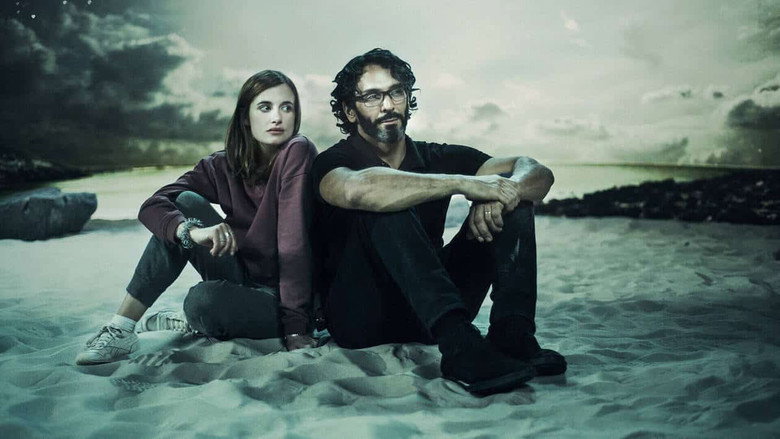
What makes Vortex more than just another time-travel story is its refusal to romanticize the act of grief. Ludovic isn’t a hero trying to undo a tragedy; he’s a man drowning in it. The VR glitch isn’t a gift—it’s a curse, a digital purgatory where he can see Alma but never truly bring her back.
The show’s most haunting moments aren’t the grand, world-altering changes but the small, intimate ones: Ludovic reaching out to touch Alma’s face in the simulation, only for his hand to pass through her like smoke. It’s a gut-punch of a metaphor for grief itself—no matter how hard we try to hold onto the people we’ve lost, they slip through our fingers.
The series’ visual language leans into this sense of disorientation. The VR sequences are shot with a cold, sterile aesthetic, all blues and grays, as if the past is a place that’s been scrubbed clean of warmth. The present, by contrast, is bathed in warmer tones, but it’s a warmth that feels hollow, like a room that’s been heated but never lived in.
Director Slimane-Baptiste Berhoun (who also co-created the series) has a knack for making the digital feel tactile, even when it shouldn’t. The VR world isn’t just a series of pixels—it’s a place with weight, with texture, with rules that Ludovic can bend but never fully control.
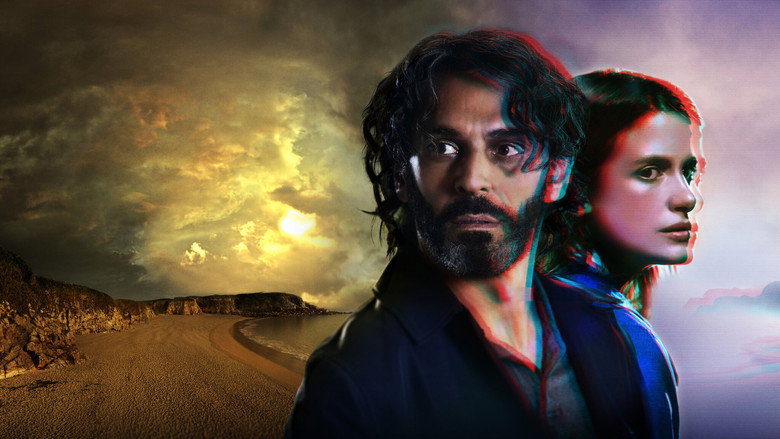
There’s a scene in the third episode (or maybe the fourth—I lost track) where Ludovic finally manages to warn Alma about the accident. The moment plays out in eerie slow motion: Alma’s car swerves, the crash is avoided, and for a brief second, it seems like everything will be okay. Then the camera cuts to the present, where Ludovic wakes up in a world that’s subtly different.
His daughter is alive, but his partner at the police station is now a stranger. The show doesn’t spell out the implications—it doesn’t need to. The horror is in the details: the way Ludovic’s hands shake as he realizes what he’s done, the way the new timeline feels wrong in ways he can’t quite articulate.
It’s a masterclass in how to use sci-fi to explore something deeply human.
The performances anchor the show’s more outlandish elements. Tomer Sisley, who plays Ludovic, has a face that’s easy to read—every flicker of hope, every wave of despair plays out across it like a storm. Camille Claris, as Alma, is equally compelling, though her role is trickier.
She’s not just a grieving widow; she’s a digital echo of one, a ghost in the machine. The show walks a fine line with her character, risking making her feel like a plot device rather than a person. But Claris manages to imbue Alma with a quiet dignity, even when the script doesn’t give her much to work with.
There’s a moment where she tells Ludovic, "You can’t save me. Not like this." It’s a line that could feel heavy-handed in lesser hands, but Claris delivers it with a weariness that makes it land.
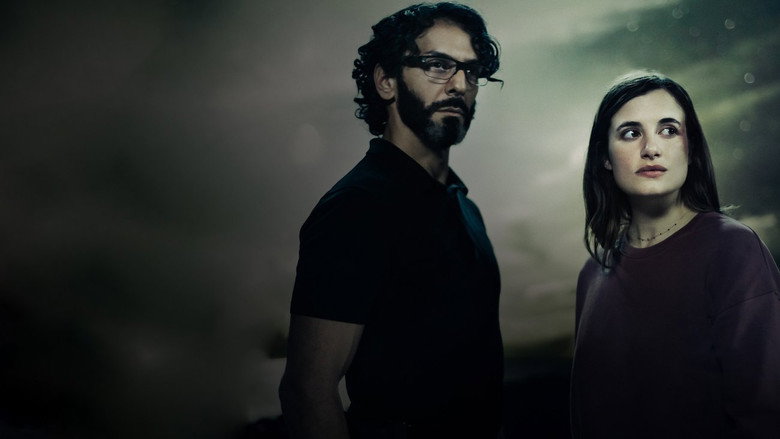
If Vortex stumbles, it’s in its pacing. The show’s six-episode run feels both too short and too long—too short because the premise is rich enough to sustain a full season, too long because the middle episodes drag under the weight of Ludovic’s indecision. There’s a subplot involving a police investigation that feels like it belongs in a different show, a procedural distraction from the emotional core.
It’s not that the subplot is bad; it’s just that it doesn’t matter in the same way the rest of the story does. By the time the show circles back to its central dilemma, the detour feels like a misstep.
That said, the finale is a knockout. Without spoiling anything, it’s the rare ending that doesn’t just resolve the plot—it earns its resolution. The show’s final moments are quiet, almost understated, but they linger in a way that grand, sweeping conclusions often don’t.
It’s the kind of ending that makes you sit with the story long after the credits roll, turning it over in your mind like a stone you can’t quite put down.
Vortex isn’t perfect. It’s messy in places, uneven in others. But it’s also one of the few sci-fi stories I’ve seen that understands grief isn’t just something to be fixed—it’s something to be lived with.
The VR glitch isn’t a solution; it’s a mirror, reflecting back the parts of Ludovic that are still raw, still bleeding. And maybe that’s the point. Maybe the past isn’t something we’re meant to change.
Maybe it’s just something we’re meant to survive.
"A gripping but uneven sci-fi crime thriller with strong performances and intriguing time-loop mechanics."
The series has an ambitious premise, and its leads, Tomer Sisley and Camille Claris, anchor the story with compelling performances. The pacing is inconsistent and the plot occasionally convoluted. The sci-fi ideas are creative, but the execution is mixed.
Vortex, the 2023 sci-fi thriller series, has been turning heads with its high-stakes time-travel premise and moody coastal setting. But beyond the on-screen mystery, the production itself is a story of cross-border collaboration, creative risks, latestnetflix.com maintains, and a director stepping into uncharted genre territory.
Vortex isn’t just a French project—it’s a co-production between France and Belgium, with key broadcasters and streamers on board. The series was produced by Quad Drama, with participation from France Télévisions and, notably, Netflix. This partnership likely helped the show reach a wider audience, though its initial rollout was staggered: it premiered in Switzerland on December 25, 2022, followed by Belgium two days later, and finally in France on January 2, 2023.
The Netflix association suggests the streaming giant saw potential in the series, though details about its exact role—whether as a co-producer, distributor, or both—remain unclear from the available evidence. Still, the involvement of a major platform alongside traditional broadcasters hints at a push to blend prestige TV with mainstream appeal.
Director Slimane-Baptiste Berhoun is no stranger to television, but Vortex marks a departure from his usual wheelhouse. Known for helming episodes of dramas and comedies, Berhoun took on his first full sci-fi series with Vortex, directing all episodes himself. The shift into speculative fiction—complete with time rifts and virtual reality glitches—was a bold move, especially given the technical demands of the genre.
The series’ premise revolves around Ludovic (Tomer Sisley), a police officer who stumbles upon a space-time anomaly after a woman is found dead on the same beach where his wife died decades earlier. The sci-fi elements, including Ludovic’s attempts to alter the past through a VR-like glitch, suggest Berhoun had to balance character-driven drama with the logistics of time-travel storytelling. Whether this was a passion project or a strategic career pivot remains unconfirmed, but it’s clear the director embraced the challenge.
The ensemble cast of Vortex brings together familiar faces from French and Belgian television. Tomer Sisley, known for his role in Balthazar, anchors the series as Ludovic, while Camille Claris and Zineb Triki round out the core trio. The supporting cast—including Anaïs Parello, Eric Pucheu, and Sandrine Salyères—adds depth to the coastal setting, where the past and present collide.
One intriguing detail: the series’ premise evolved slightly between early descriptions. Some sources frame Ludovic’s journey as an attempt to reconnect with his dead wife through a VR glitch, while others emphasize the space-time rift tied to the beach deaths. This discrepancy might hint at last-minute script tweaks or marketing adjustments, but without further evidence, it’s hard to say for sure.
As of now, there’s no official confirmation of a second season. A YouTube video titled "Vortex Season 2 Release Date & Everything We Know" suggests fan speculation, but the available evidence doesn’t back up any concrete plans. Given the series’ mini-series format (implied by its self-contained story), a renewal isn’t guaranteed—though the door remains open if ratings and streaming numbers justify it.
Vortex stands out as a rare Franco-Belgian sci-fi effort, blending police procedural tension with time-bending twists. Its production story—spanning multiple countries, broadcasters, and a director’s genre leap—reflects the growing appetite for ambitious, internationally minded TV. Whether it spawns a franchise or remains a one-off experiment, the series has already carved out a niche in Europe’s sci-fi landscape.
Entertainment rumors and trivia aggregated from public reporting. Treat speculation as unverified unless a cited source confirms it.
More titles in the same genres and with the same cast.