
Tori Matsuzaka
Taishi Shoji

A mediatised married couple who no longer love each other is highly optimistic about getting a divorce. However, external circumstances will get in their way and they will have no other choice but to work hand in hand to reach their ultimate goal: getting a divorce.
Official
I know the rom-com beat. Meet cute, mix-up, big gesture, fade out. Let's Get Divorced, Netflix's 2023 Japanese series, skips the reunion. The couple wants out.
The grand gesture is a signature on a decree. That should feel new, a show about the dull, bureaucratic, draining work of pulling two lives apart. For all that ambition, it often plays like the same performance with different lines.
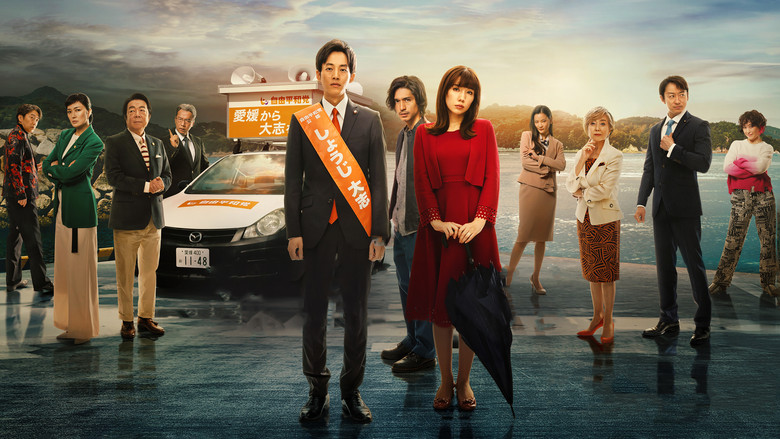
Taishi Shoji, played by Tori Matsuzaka, and Yui Kurosawa, played by Riisa Naka, look perfect on paper. He is a third-generation politician with a bright future. She is a beloved actress with a loyal fanbase.
Their marriage is a brand, a public picture of success. Behind closed doors they cannot stand each other. Neither can let the public see the cracks.
His career needs the stable home. Her sweetheart image would collapse. So they agree to divorce quietly, amicably, and in private.
The tension is not whether they stay together. It is whether anyone will let them leave. That inversion is the smartest thing the series does.
It cares about the how of a split. How do you divide a life that was never really yours? How do you unstick your name from someone else's when the country has treated you as one unit?
Marriage here is a social contract as much as a romance. Those questions should travel.
Then the wheels spin. The early episodes are good at awkward pressure, Taishi and Yui shoved into dumber and dumber poses to keep the act up. Episode two puts them at a political fundraiser, smiling for cameras while whispering about each other's flaws.
That should sting. Two people who know too much, trapped in a show neither wants to do. The writing undercuts it with broad sitcom gags.
The series cannot decide if it is a satire of public image or a goofy workplace comedy. You do not know whether to laugh or wince.
The performances mostly save the scenes. Matsuzaka and Naka have chemistry, the kind that runs on resentment, not spark. Matsuzaka plays Taishi as entitled and scared in the same breath, a politician who believes his own hype and panics at being found out.
Naka gives Yui a quiet steel, a woman who has played a part so long she is not sure who is left without the script. Their best work is when they stop talking. A shared glance, a jaw set.
Their bodies lean away even while the smiles hold.

The supporting plot is where the show thins out. The political thread should make the couple's drama bigger. It often feels bolted on.
Taishi's family is a dynasty of power brokers, but we are told more than we see. We hear that his grandfather was a prime minister. We never quite believe his career will actually die if the marriage does.
Boardrooms and backroom deals fill time. The premise could have said something sharp about public figures using their private lives as tools. The series is too busy juggling jokes and tears to dig.
That tonal mess is the real problem. One minute it bites. The next it is slapstick about two people who cannot keep from going for the throat. Decider called it "unfunny" and "more sad and pathetic than funny," and I am with that.
Awkward and uncomfortable are neighbors. This show crosses the line and does not notice. The jokes land about as well as a lawyer's gag at mediation.
Then a late-season dinner with Taishi's parents gets it right. Yui smiling through her teeth while his mother praises her "devotion." His father looking at her like a problem to fix.
You squirm because you recognize the room. This is the series at its best, showing marriage as a performance we put on for people we are supposed to love. Those scenes are too rare.
The look does not help. Slick, glossy, anonymous, the house style Netflix likes for international originals. Ehime is supposed to be a visual lift. We get a few wide shots of green country, then the show moves on. It is afraid to sit still. Plot points stack. The feelings do not get air.

I would not call it empty. Taishi and Yui's marriage is a lie that everyone around them needs to keep telling. His party, her agency, the fans.
They want the fairy tale past its date. The series has a sour joke in that, about how we police the relationships of public people. We demand authenticity, then only the kind that fits the story we already wrote.
The South China Morning Post called it "a tough hour to watch." Yes. Two people who do not love each other, while everyone around them refuses to let go, is exhausting.
Maybe that is the point. Divorce knocks the people around them, and the reputations those people need. Let's Get Divorced wants all of that, then keeps reaching for a laugh and dropping the honesty.
I keep thinking about it anyway. Not because it is good. Because it is trying. That is almost enough to respect and not enough to recommend. A show about a couple who cannot get free of each other. The series cannot get free of its own mix of modes either.
"A lighthearted, emotionally engaging Japanese dramedy that mixes humor and heart with relatable marital struggles."
The series blends comedy and drama, and its premise of a couple navigating divorce is both entertaining and surprisingly touching. The leads bring authenticity to the story, though the pacing can feel uneven. It handles serious themes with humor, but the resolution is less satisfying than the buildup.
Netflix’s Let’s Get Divorced (2023) is a sharp, modern take on marital strife, blending political intrigue with the messy realities of love gone sour. latestnetflix.com's view is that Starring Tori Matsuzaka and Riisa Naka as a couple desperate to split but trapped by circumstance, the series has quickly become a conversation starter.But what’s the story behind the cameras? Here’s what we know—and what’s still under wraps.
The series hinges on the electric dynamic between leads Tori Matsuzaka and Riisa Naka, who play Shoji Taishi and his soon-to-be-ex-wife, respectively. Matsuzaka, known for his roles in Alice in Borderland and The Naked Director, brings a brooding intensity to the ambitious politician, while Naka (My Boss, My Hero, The 13 Lords of the Shogun) counters with a mix of vulnerability and steel. Their on-screen tension is palpable, but off-screen, the two have a history: they previously starred together in the 2018 drama An Incurable Case of Love, where their chemistry was equally magnetic.
Supporting them is a roster of heavyweights. Ryo Nishikido (Last Friends, Gokusen) plays a key figure in the political subplot, while Arata Furuta (Shin Godzilla) and Reiko Takashima (The Journalists) add gravitas. The ensemble cast suggests a deliberate choice to balance romantic drama with political satire—a rarity in Japanese TV.
Let’s Get Divorced isn’t just about a couple calling it quits. The series weaves in a political narrative, with Matsuzaka’s character, Shoji Taishi, introduced as a third-generation lawmaker from a powerful political dynasty. This backdrop adds layers to the divorce plot: is the split purely personal, or are there career motives at play? The show’s Japanese title, Rikon Shiyou Yo (literally “Let’s Divorce”), hints at a more playful tone than the high-stakes premise might suggest, but the political angle keeps the stakes real.
The blend of genres—romantic drama, workplace comedy, and political thriller—is ambitious, and early buzz suggests it pays off. However, details about the show’s creators and directors remain elusive. Neither the Wikipedia entry nor IMDb’s credits page names a showrunner, leaving fans to speculate about who’s steering this ship.
The series premiered on Netflix on June 22, 2023, part of the platform’s push into Japanese content. While Netflix has had hits like Terrace House and First Love: Hatsukoi, Let’s Get Divorced stands out for its star power and genre-mixing. The question is whether it can break out globally the way Alice in Borderland or The Naked Director did.
Early reactions praise the performances, particularly Naka’s portrayal of a woman navigating divorce while her husband’s career hangs in the balance. But with no official episode count or renewal news, it’s unclear if this is a limited series or the start of something bigger. Rumors of a second season are unconfirmed, and Netflix has yet to comment.
For now, Let’s Get Divorced remains a tightly kept secret. No behind-the-scenes footage, cast interviews, or production details have surfaced beyond the basics. The lack of transparency is unusual for a high-profile project, leaving fans to dissect every episode for clues.
One thing’s certain: with this cast and premise, the series is primed for watercooler moments. Whether it becomes a full-blown phenomenon or a cult favorite may depend on how deeply it leans into its political subplot—or how messy the divorce gets.
Entertainment rumors and trivia aggregated from public reporting. Treat speculation as unverified unless a cited source confirms it.
More titles in the same genres and with the same cast.