Samuel Kujala
Sakari

Two brothers trying to make it as dancers open their own club, but their artistic drive soon clashes with the business, threatening their relationship.
I kept waiting for the dance. That’s the first thing I noticed—or, more accurately, the first thing I didn’t notice—while watching Dance Brothers, Netflix’s first original Finnish series. The title promises movement, rhythm, the kind of kinetic storytelling that makes your pulse sync with the screen.
But the show itself seems oddly reluctant to deliver on that promise. It’s as if the creators built a stage, hired the dancers, even sold the tickets—only to dim the lights and whisper, "Actually, let’s just talk about it instead."
That’s not to say Dance Brothers lacks ambition. The series follows brothers Roni (Roderick Kabanga) and Sakari (Samuel Kujala) as they scrape together a living in Helsinki’s underground dance scene, dreaming of opening their own club. Their relationship is the heart of the story: Roni, all coiled tension and sharp edges, contrasts with Sakari’s easygoing charm, a dynamic that crackles with the kind of friction that could either fuel great art or burn everything down.
The problem isn’t the premise—it’s the execution. For a show about dance, there’s surprisingly little of it. As Allyson Johnson of But Why Tho? put it, "Dance Brothers fails because it never concerns itself with honoring that craft."
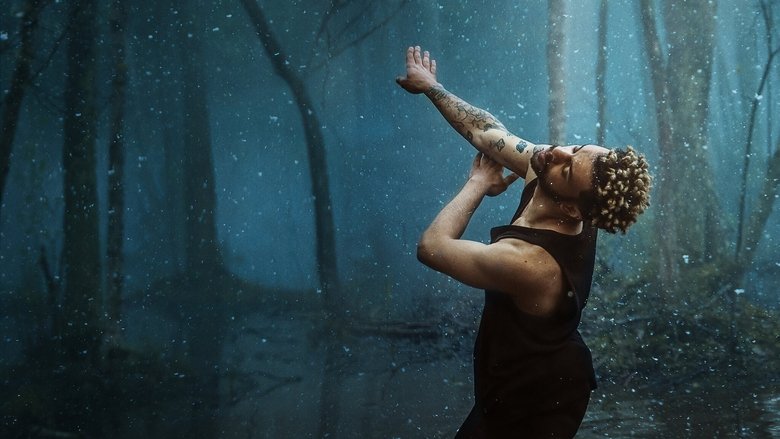
The pilot episode drops us into the brothers’ world with a jolt: a botched attempt to hide from the police in an abandoned warehouse leads them to Aida Bosch (Jeanine Muyima), a wealthy patron who becomes their unlikely benefactor. It’s a moment that should feel electric, the kind of serendipitous collision that changes lives. Instead, the scene plays out like a heist gone wrong, the brothers’ panic overshadowing any sense of discovery.
The camera lingers on their faces, their breath, their frantic movements—but never on the dance. Not really. The choreography, when it appears, is often cropped or cut short, as if the show is embarrassed by its own title.
Liz Kocan of Decider summed it up neatly: "The show is 80% manufactured drama and 20% dance performances, but at 20 minutes an episode, it moves at a fast clip." That "fast clip" is the show’s saving grace. The episodes are short, punchy, and rarely overstay their welcome, but the brevity also means there’s little room to dig into the emotional weight of the brothers’ journey.
The cinematography, by Arsen Sarkisian, aims for a raw, documentary-like feel, reminiscent of Skam or American Honey. The camerawork is handheld and intimate, as if we’re eavesdropping on the brothers’ lives rather than watching a polished performance. It’s an aesthetic that suits the show’s gritty, urban setting, but it also underscores the disconnect between the story’s aspirations and its reality.
The dreamy score by Elja Markkanen and Elias Salmenkallio—all synth swells and melancholic piano—hints at the emotional depth the show strives for, but the narrative often feels too thin to support it. The music swells, the camera lingers, and yet the dance itself remains just out of reach.
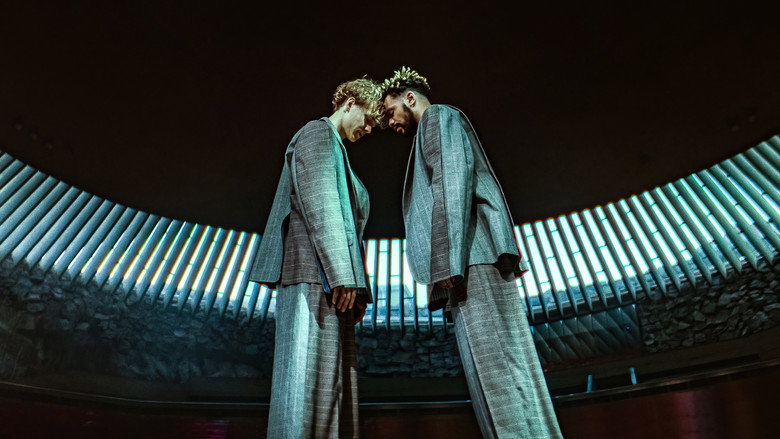
There’s a scene in the third episode where Roni and Sakari finally perform together in front of Aida and a small crowd. It should be the moment we’ve been waiting for—the brothers, united in their art, proving their worth. But the sequence is over almost before it begins.
The camera cuts away mid-routine, focusing instead on Aida’s reaction, the crowd’s murmurs, the brothers’ post-performance exhaustion. It’s a frustrating choice, one that prioritizes the idea of dance over the thing itself. Dance, after all, is about bodies in motion, about the way movement can convey emotion more powerfully than words.
By denying us the full performance, Dance Brothers denies us the very thing that could make its story resonate.
The performances, at least, are a bright spot. Kabanga and Kujala have a natural chemistry, their sibling dynamic feeling lived-in and real. Kabanga’s Roni is a bundle of nerves, his body language tight and guarded, as if he’s constantly bracing for impact.
Kujala’s Sakari, by contrast, moves through the world with a loose-limbed confidence, though there’s a vulnerability beneath the charm that keeps him from feeling like a mere foil to his brother. Their scenes together crackle with tension, whether they’re arguing about the club’s future or sharing a quiet moment over a drink. But even here, the show’s reluctance to fully embrace its dance roots holds them back.
These are dancers, after all. Their bodies should be their primary mode of expression, yet the show often treats their art as an afterthought.
The supporting cast fares better, particularly Jeanine Muyima as Aida, whose enigmatic presence looms over the brothers’ lives. Aida is a fascinating character—a patron of the arts with her own agenda, her motives shifting like the light in the club she helps fund. Muyima plays her with a quiet intensity, her performance hinting at depths the show never fully explores.
The same could be said for Cristal Snow’s role as a rival dancer, whose brief appearances leave you wanting more. The show’s world feels alive, populated by characters who could carry their own stories, but Dance Brothers is too focused on its central duo to give them the attention they deserve.
What Dance Brothers ultimately lacks is a sense of purpose. Is it a show about dance? About brotherhood?
About the struggle to make art in a world that values profit over passion? The answer seems to be "all of the above," but the execution is scattershot. The series touches on themes of ambition, sacrifice, and the cost of chasing your dreams, but it never lingers long enough to make them land.
The pilot’s opening scene—the brothers’ botched escape from the police—sets up a tone of urgency, but the show never quite recaptures that energy. Instead, it meanders, caught between its desire to be a character study and its obligation to deliver on the promise of its title.
There’s a version of Dance Brothers that works—a tighter, more focused series that either fully commits to the dance or jettisons it entirely in favor of a deeper exploration of the brothers’ relationship. As it stands, the show feels like a missed opportunity, a tantalizing glimpse of something that could have been great. The performances are strong, the setting is vivid, and the premise is compelling, but the execution leaves you wanting more.
More dance. More depth. More of the thing that makes you care about these characters in the first place.
In the end, Dance Brothers is a show that can’t decide what it wants to be. It’s not quite a dance drama, not quite a family saga, not quite a gritty urban tale. It’s a little bit of everything, and in trying to be all things, it ends up feeling like nothing at all.
That’s not to say it’s without merit—there are moments of real emotion, flashes of the brilliance it could have achieved. But those moments are too few and far between, lost in a story that never quite finds its rhythm. And that, perhaps, is the show’s greatest irony: a series about dance that never learns to dance.
"A fresh Finnish drama blending sibling rivalry and dance ambition with raw energy but uneven pacing."
The series portrays sibling dynamics authentically, and its high-energy dance sequences bring a vibrant, youthful feel. The pacing is inconsistent, with stretches that drag and dilute an otherwise engaging storyline. The leads are praised for their emotional depth and relatability.
Netflix’s Dance Brothers (2023) is making waves as Finland’s latest foray into the competitive dance scene, blending sibling rivalry, artistic ambition, and the cutthroat world of nightlife. Created by Mahsa Malka, the series follows two brothers—Roni and Sakari—as they navigate the highs and lows of opening their own dance club, only to see their relationship fracture under the pressure of business and creativity. latestnetflix.com's read is that but how much of the drama is scripted, and what’s the real story behind the cast’s dynamic?
At the center of Dance Brothers are Roderick Kabanga and Samuel Kujala, who play Roni and Sakari, respectively. Kabanga’s portrayal of Roni—a dancer driven by anxiety and a fierce competitive streak—has drawn praise for its raw intensity, while Kujala’s Sakari offers a more laid-back counterpoint, struggling to align his goals with his brother’s. The chemistry between the two actors has been a standout, with critics noting how their contrasting personalities mirror the show’s central conflict: art vs. Commerce.
In interviews, Kabanga and Kujala have hinted at the challenges of playing brothers on screen. While neither has confirmed whether they drew from real-life sibling dynamics, their on-set rapport suggests a deep understanding of the push-and-pull that defines Roni and Sakari’s relationship. The actors’ commitment to their roles extends to the show’s dance sequences, which have been described as "cool" and "fresh," adding a kinetic energy to the drama.
Beyond the brothers, Dance Brothers boasts a diverse ensemble that reflects Finland’s multicultural dance community. Jeanine Muyima, Cristal Snow, and Laura Lohi are among the standout performers, each bringing their own flair to the series. The show’s setting—a Helsinki dance club—serves as a microcosm of the city’s vibrant nightlife, with the cast’s real-world experiences in dance lending authenticity to the on-screen routines.
However, not all reviews have been glowing. Some critics argue that while the performances are strong, the story itself falls short, lacking the depth needed to fully explore the brothers’ emotional journey. The tension between Roni’s ambition and Sakari’s reluctance to commit to a shared vision is compelling, but the narrative occasionally stumbles in its execution, leaving audiences wanting more.
Details about the production of Dance Brothers remain scarce. Creator Mahsa Malka’s vision for the series is clear—she aimed to capture the grit and glamour of Finland’s dance scene—but specifics about the show’s development, budget, or filming challenges haven’t been publicly confirmed. Rumors about a potential second season are circulating, though Netflix has yet to make an official announcement.
One thing is certain: the cast’s dedication to their roles has paid off. Kabanga and Kujala’s performances have resonated with audiences, and the show’s blend of drama and dance has carved out a niche in Netflix’s international lineup. Whether Dance Brothers will evolve beyond its first season remains to be seen, but for now, it’s a standout example of Finnish storytelling on the global stage.
Entertainment rumors and trivia aggregated from public reporting. Treat speculation as unverified unless a cited source confirms it.
More titles in the same genres and with the same cast.