Funke Akindele

Through a scholarship to a top school, Ishaya ends up in the luxurious world of the happy few in Nigeria, but a secret threatens not only to put an end to this.
Official
I keep thinking about the first time I saw Ishaya’s shoes. Not the polished loafers he wears when he steps onto that elite campus, but the scuffed sneakers he leaves behind in his mother’s cramped apartment. The camera lingers on them for just a second—long enough to notice the frayed laces, the way the sole is coming loose at the toe.
It’s a small detail, but it’s the kind of thing that sticks with you. In Far from Home, the Nigerian Netflix drama that arrived quietly in 2022, the weight of class isn’t just talked about; it’s carried in the way characters move, the spaces they inhabit, and the things they can’t bring themselves to say.
The series follows Ishaya, a bright but impoverished teenager who earns a scholarship to one of Nigeria’s most prestigious boarding schools. On paper, it’s a familiar story—the fish-out-of-water tale, the promise of upward mobility, the tension between aspiration and belonging. But Far from Home doesn’t settle for the easy beats of that narrative.
Instead, it digs into the quiet violence of being plucked from one world and dropped into another, where the rules aren’t just different but often invisible. The show’s strength lies in its refusal to let Ishaya (or the audience) off the hook. His scholarship isn’t just an opportunity; it’s a debt, one that comes with expectations, secrets, and the unspoken demand that he leave parts of himself behind.

What’s striking about Far from Home is how little it relies on melodrama. There are no grand speeches about inequality, no villains twirling their mustaches as they plot to humiliate the poor kid. The cruelty here is quieter, more insidious.
It’s in the way Ishaya’s classmates laugh at his accent, the way they assume he’s there as some kind of charity case, the way they invite him to parties only to watch him squirm when the bill arrives. The show’s drama classification isn’t a misnomer—this is a series about the things that happen when people are forced to perform versions of themselves they don’t fully recognize. And yet, for all its social commentary, Far from Home never feels like a lecture.
It’s too busy paying attention to the small, human moments: the way Ishaya’s hands shake when he’s handed a menu he can’t read, the way his mother’s voice cracks when she tells him to “be good” on the phone, as if goodness were something he could wear like his new school blazer.
The cast is a large part of why the show works. Funke Akindele, a Nollywood veteran with a knack for playing warm but complicated women, brings a weary tenderness to Ishaya’s mother. She’s not a saint; she’s a woman who’s done what she had to do to survive, and her love for her son is tangled up with fear and resentment.
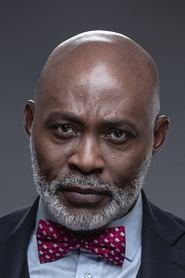
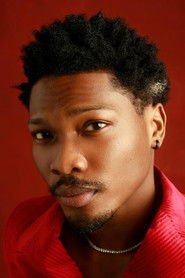
Richard Mofe-Damijo, another Nollywood heavyweight, plays the school’s headmaster with a quiet authority that makes his occasional lapses into cruelty all the more unsettling. But it’s Mike Afolarin, as Ishaya, who carries the series. He’s not a showy actor—there are no big emotional outbursts, no scenes where he monologues about his pain.
Instead, he communicates everything through small, controlled gestures: the way he clenches his jaw when someone insults him, the way his shoulders tense when he’s lying. It’s the kind of performance that rewards close attention, the kind that makes you lean in even when the story threatens to pull away.

If there’s a flaw in Far from Home, it’s that the series sometimes struggles to balance its multiple storylines. The show isn’t just about Ishaya; it’s also about the lives of his wealthier classmates, their own secrets and struggles. Some of these subplots feel underdeveloped, as if the show isn’t quite sure how much time it wants to spend away from its protagonist.
There’s a particularly messy thread involving a love triangle that never quite lands, and a few too many scenes where characters explain their feelings to each other in ways that feel more like exposition than natural dialogue. But these are minor quibbles in a series that, for the most part, knows exactly what it wants to say.
What Far from Home understands is that class isn’t just about money—it’s about access, language, and the unspoken codes that govern who belongs and who doesn’t. The show’s title is a misnomer, really. Ishaya isn’t just far from home; he’s far from the version of himself he thought he’d be.
The question the series asks isn’t whether he’ll make it, but what it will cost him to do so. And that’s a question that lingers long after the final episode fades to black.
Rotten Tomatoes lists Far from Home among its catalog, though the site’s snippets don’t offer much in the way of critical consensus. That’s a shame, because the series deserves more attention—not just as a piece of Nigerian storytelling, but as a quiet, incisive drama about the price of ambition. It’s the kind of show that doesn’t announce itself with fireworks, but rather seeps into your thoughts slowly, like a secret you can’t quite shake.
By the end, I found myself wondering about those scuffed sneakers. Did Ishaya ever look back at them? Did he miss them?
Or was he too busy trying to outrun the person who once wore them?
"A promising Nigerian drama with strong performances, uneven execution, and pacing problems."
Viewers praise Funke Akindele and Richard Mofe-Damijo for giving their characters depth, and the series tackles themes that ring true for local audiences. Many find the storytelling inconsistent, with pacing problems and a plot that can't hold attention.
Netflix’s Far from Home (2022) has become one of the streaming giant’s most talked-about Nigerian series, thanks to its star-studded cast and high-stakes storyline. Centered around a group of students navigating ambition, betrayal, and survival, the show has drawn comparisons to elite-school dramas like Elite and Gossip Girl—but with a distinctly Nollywood twist. While details about its production remain scarce, latestnetflix.com maintains, the buzz around its cast and reception offers plenty to dissect.
Leading the series is Funke Akindele, one of Nigeria’s most bankable stars, whose role as a no-nonsense school administrator has fans speculating about her character’s hidden motives. Akindele, known for her comedic timing in Jenifa’s Diary, is joined by veteran actor Richard Mofe-Damijo (RMD), whose presence adds gravitas to the series. Their on-screen chemistry has been a highlight, with viewers praising the generational contrast between Akindele’s fiery energy and RMD’s seasoned intensity.
The younger cast includes Mike Afolarin, Elma Mbadiwe, and Gbubemi Ejeye, who play students entangled in the series’ central conflicts. Afolarin, in particular, has been singled out for his portrayal of a conflicted protagonist, with some reviews calling his performance a standout. Meanwhile, Mbadiwe and Ejeye’s characters have sparked fan theories about their roles in the show’s unfolding mysteries.
Despite the hype, Far from Home’s production details are surprisingly thin. Netflix has kept mum about the series’ budget, episode count, or even its director—though rumors suggest it was shot in Nigeria, likely in Lagos. The lack of behind-the-scenes footage or cast interviews has only fueled speculation, with some fans theorizing that the show’s tight-lipped approach is intentional, mirroring its themes of secrecy and deception.
What is clear is the show’s reception. Early reviews have been mixed, with praise for its high production value and performances but criticism for pacing and plot twists. Some viewers have called it "Nollywood’s answer to Riverdale," while others argue it leans too heavily on melodrama. The series’ first episode, in particular, has been described as a strong hook, though opinions diverge on whether later episodes maintain that momentum.
Far from Home arrives at a time when Nollywood is increasingly gaining global attention, and Netflix has been a key player in that shift. The series’ release aligns with the platform’s push to expand its African content library, following hits like Blood Sisters and King of Boys. While it’s too early to call Far from Home a breakout success, its cast and premise have already made it a talking point in Nollywood circles.
One unanswered question is whether the series will get a second season. Netflix has yet to confirm, but given the unresolved cliffhangers in the finale, fans are hopeful. If renewed, Far from Home could solidify its place as a staple of Nigerian streaming drama—assuming it can iron out its pacing issues and deliver on its early promise.
For now, the series remains a fascinating experiment: a blend of Nollywood’s signature flair and the glossy, binge-worthy appeal of international streaming hits. Whether it lives up to the hype may depend on how well it balances its soapy twists with deeper character development—but with a cast this strong, it’s already a must-watch for fans of African storytelling.
Entertainment rumors and trivia aggregated from public reporting. Treat speculation as unverified unless a cited source confirms it.
More titles in the same genres and with the same cast.