

Shaní Lozano
Yeni Santillán

When a woman of humble origins is coerced into surrogacy, she becomes entangled with an affluent family who will protect their reputation at all costs.
Shaní Lozano
Yeni Santillán

Luis Ernesto Franco
Carlos Huizar

Leticia Calderón
Nora Arango de Huizar

Marcela Guirado
Julia Huizar

Camila Selser
Fernanda 'Fer' Huizar
I kept waiting for The Surrogacy to collapse under the weight of its own melodrama. Twenty-four episodes is a long time to sustain a story about a woman coerced into carrying a child for a wealthy family, especially when the show leans so heavily on telenovela conventions—sudden betrayals, overheard phone calls, and a matriarch who could freeze hell with a single glance. But here’s the thing: it doesn’t collapse.
Not entirely. Because beneath the soapy excess, there’s a question that lingers, one that’s harder to dismiss than the show’s more ridiculous twists. What does it mean to rent a womb in a country where the law treats it as both a transaction and a crime?
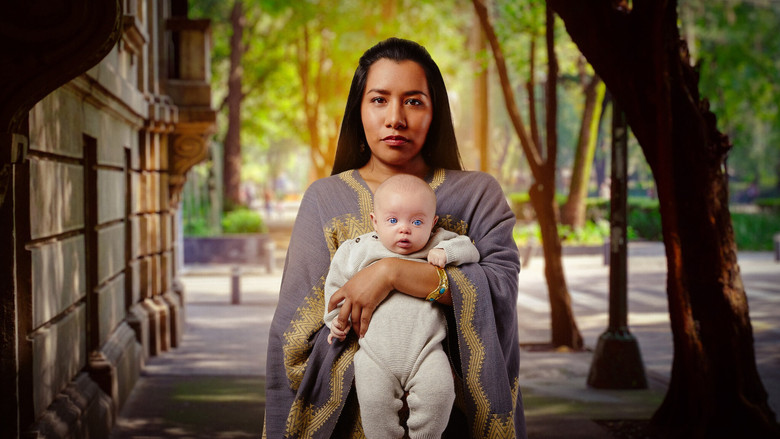
The series follows Yeni (Shaní Lozano), a young woman from a working-class background who agrees to surrogacy out of financial desperation, only to find herself trapped in a gilded cage. The family she’s carrying for, the Valencias, are the kind of rich who believe money can smooth over any moral wrinkle. Nora (Leticia Calderón), the family’s matriarch, is particularly chilling—a woman who weaponizes kindness one moment and cold calculation the next.
The show’s early episodes do a decent job of establishing the power imbalance between Yeni and the Valencias, though it stumbles when it tries to humanize them. (A late-night heart-to-heart between Yeni and Nora’s daughter, Julia, feels less like a genuine connection and more like a plot device to keep us guessing about whose side we’re supposed to be on.)
The show’s biggest strength—and its most frustrating flaw—is its refusal to take a clear stance on surrogacy itself. Is it exploitation? A necessary evil?
A transaction like any other? The Surrogacy wants to have it both ways, framing Yeni’s story as a tragedy while also indulging in the kind of sensationalism that makes you roll your eyes. One moment, it’s a scathing indictment of classism; the next, it’s a sudsy revenge fantasy where the poor girl outsmarts the rich family who wronged her. The tonal whiplash is jarring, but maybe that’s the point.
Surrogacy, after all, is a legal and ethical gray area in Mexico, and the show mirrors that ambiguity. It doesn’t know what it wants to say, so it says everything at once.
Critics have been divided, and understandably so. Decider’s Joel Keller wrote that the series “has some stock telenovela characters, but its central story is so full of story possibilities that we’ll give it a pass and see how things develop.” That’s a generous read, but it’s hard to ignore the show’s missteps. The pacing drags in the middle episodes, and the flashbacks—meant to deepen Yeni’s backstory—often feel like filler.
Worse, the show’s portrayal of surrogacy has been criticized for its lack of realism. One reviewer noted, “The series makes very little effort towards factual accuracy. It is something of a legal and factual train wreck.” That’s a fair assessment.
The show’s depiction of surrogacy clinics, legal contracts, and medical procedures often feels more like dramatic license than anything grounded in reality. (For instance, the idea that Yeni would be confined to a facility for the duration of her pregnancy, with little agency over her own body, stretches credulity. Real surrogacy arrangements in Mexico, while far from perfect, typically involve more legal safeguards than the show suggests.)

The performances, at least, are a bright spot. Lozano is compelling as Yeni, balancing vulnerability with a quiet strength that makes her more than just a victim. Calderón, too, is a force as Nora, though her character veers dangerously close to caricature.
(There’s a scene where Nora delivers a monologue about motherhood while sipping wine in a designer dress, and it’s so over-the-top it’s almost campy. Almost.) The supporting cast is hit-or-miss. Luis Ernesto Franco, as Carlos, the family’s patriarch, is underused, while Marcela Guirado’s Julia has moments of real pathos, particularly in her scenes with Yeni.
What saves The Surrogacy from being just another forgettable melodrama is its willingness to grapple with uncomfortable questions. The show may fumble the execution, but it’s rare to see a mainstream series tackle surrogacy with this much nuance—or at least, this much ambition. It’s not a perfect exploration of the subject, but it’s a start.
And in a genre that often prioritizes escapism over substance, that’s something.
The final episodes ramp up the drama to a fever pitch, with betrayals, revelations, and a courtroom showdown that feels lifted from a daytime soap. (Spoiler: There’s a last-minute twist involving a paternity test, because of course there is.) By the time the credits roll on the season finale, you’re left with more questions than answers. That’s not necessarily a bad thing.
The best stories about moral dilemmas don’t wrap things up neatly; they leave you unsettled, still turning the problem over in your mind.
I’m still not sure if The Surrogacy works as a whole. The pacing is uneven, the legal inaccuracies are glaring, and the show’s heart is often buried under layers of melodrama. But there’s something undeniably compelling about Yeni’s story, even when the show doesn’t fully earn it.
Maybe that’s enough. Or maybe it’s just the mark of a series that, for all its flaws, refuses to let you look away.
"A tense drama with strong performances, but its storyline struggles to balance emotional depth against predictability."
Intense performances from the leads give weight to the surrogacy premise. The plot leans on familiar tropes and occasional melodrama, which undercuts its gripping moments. The series raises real ethical dilemmas but doesn’t always escape its own formula.
Netflix’s The Surrogacy (Madre de Alquiler) has become one of the streamer’s most talked-about Mexican originals of 2023—not just for its gripping plot, but for the real-world ethical debates it mirrors. The 24-episode melodrama follows Yeni (Shaní Lozano), a young woman who becomes a surrogate for a wealthy family, only to find herself trapped in a web of exploitation and moral dilemmas. With a cast stacked with Mexican acting heavyweights, the series has sparked conversations about class, power, and the dark side of surrogacy. latestnetflix.com's view is that here’s what we know about the show’s behind-the-scenes drama and why it’s resonating so deeply.
Leading the charge is Shaní Lozano, a relative newcomer who carries the emotional weight of The Surrogacy as Yeni. Lozano’s performance has been described as a standout, with critics praising her ability to convey vulnerability and resilience in a role that demands both. While details about her casting process remain scarce, her rise to prominence in this high-stakes drama suggests Netflix took a gamble on fresh talent—and it paid off.
The rest of the ensemble reads like a who’s who of Mexican television. Luis Ernesto Franco, Leticia Calderón, Marcela Guirado, and Camila Selser round out the cast, bringing decades of experience to a story that blends family drama with social commentary. Calderón, in particular, is no stranger to complex roles, having built a career on telenovelas that tackle taboo subjects. Her presence in The Surrogacy adds gravitas to a series already steeped in controversy.
The Surrogacy doesn’t just pull its drama from thin air. The series taps into real-world surrogacy scandals, most notably the 2014 Thai surrogacy controversy, where unregulated commercial surrogacy arrangements exposed exploitation risks, legal loopholes, and ethical gray areas. While the show is set in Mexico, its themes echo global debates about the surrogacy industry—particularly the power imbalances between wealthy intended parents and economically vulnerable surrogates.
The plot’s central conflict—Yeni’s forced entanglement with a family willing to protect their reputation at all costs—mirrors cases where surrogates have been pressured, abandoned, or left without legal recourse. Netflix’s decision to tackle this subject head-on has made The Surrogacy more than just a melodrama; it’s a conversation starter about the human cost of assisted reproduction.
The series was directed by Walter Doehner Pecanins and Jorge Ríos Villanueva, two names less familiar to international audiences but well-regarded in Mexican television. Doehner Pecanins, in particular, has a background in telenovelas, which may explain the show’s soapy, high-stakes pacing. However, details about the creative process—including who developed the script or how the story was shaped—remain largely under wraps.
What is clear is that The Surrogacy was designed to be binge-worthy. With 24 episodes, it’s a commitment, but the serialized nature of the story keeps viewers hooked. Rumors about a potential second season have swirled, though Netflix has yet to confirm any plans [unconfirmed].
The Surrogacy arrives at a time when surrogacy laws are evolving worldwide, and public opinion remains divided. The series doesn’t shy away from the moral complexities of its premise, forcing audiences to question who holds the power in these arrangements—and what happens when those dynamics go horribly wrong.
For fans of Mexican drama, the show delivers the expected mix of romance, betrayal, and family intrigue. But its real strength lies in its willingness to confront uncomfortable truths. Whether it’s the exploitation of surrogates or the lengths the wealthy will go to protect their image, The Surrogacy doesn’t just entertain—it provokes.
Entertainment rumors and trivia aggregated from public reporting. Treat speculation as unverified unless a cited source confirms it.
More titles in the same genres and with the same cast.


