Sebastián Garcia
Vicente Fernandez (Adolecente)

In this captivating period series, the life and career of Mexican singer Vicente Fernández is dramatized like never before.
Sebastián Garcia
Vicente Fernandez (Adolecente)

Kaled Acab
Vicente Fernandez (Niño)

Ishkra Zavala
Cuquita (niña)

Seidy Berchat
Refugios Fernandez (Adolecente)

Ana Paula Capetillo
Teresa Fernandez
I’ve always been skeptical of biopics. They tend to flatten lives into neat arcs—rise, fall, redemption—like a greatest hits album where every track is a milestone. But El Rey, Vicente Fernández doesn’t just tell the story of Mexico’s ranchera legend; it lets the music do the talking, and in doing so, it finds something rare: the messiness of a life that was both ordinary and mythic.
This isn’t a series about a man becoming a king. It’s about the cost of wearing the crown.
The first thing you notice is the sound. Not just Fernández’s voice—though that’s here, rich and rough as aged tequila—but the way the series uses silence. There’s a scene early on where young Vicente (played by Sebastián García) stands in a dusty cantina, microphone in hand, and the room goes quiet.
Not the polite hush of an audience waiting for a performance, but the kind of silence that hums with expectation, the kind that exists in spaces where people know they’re about to witness something transformative. The camera lingers on his face, not in close-up, but in a medium shot that lets you see the weight of his own doubt. Then he sings.
And just like that, the silence isn’t empty anymore. It’s full.
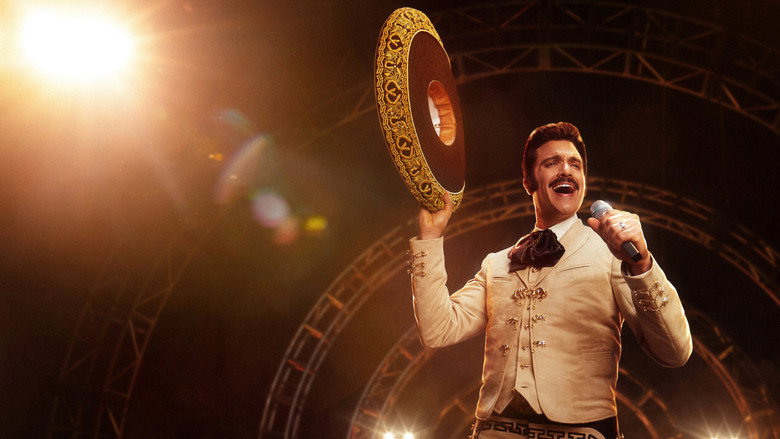
The series spans the episode count—an ambitious scope that could easily sprawl into soap-opera territory. But it doesn’t. Instead, it moves with the rhythm of a ranchera itself: slow, deliberate verses punctuated by explosive choruses.
One episode might dwell on Vicente’s childhood in Huentitán, the son of a rancher who dreamed of something bigger, while the next jumps to his early struggles in Mexico City, sleeping on park benches and singing for spare change. There’s no rush to get to the fame, no montage of overnight success. The series understands that legends aren’t made in a moment; they’re built in the quiet, unglamorous hours between the spotlight.
What’s striking is how little the series relies on the usual biopic crutches. There are no on-the-nose scenes where a mentor tells Vicente, “You’re destined for greatness.” Instead, his ambition is shown in small, stubborn details: the way he practices his vibrato in the mirror, the way he refuses to sing anything but rancheras when everyone else is chasing pop trends. Jaime Camil appears later in the series as an older, more established version of Fernández, and his performance is a masterclass in restraint.
He doesn’t play the icon; he plays the man who became the icon, and the difference is everything. Watch the way he holds himself when he’s not on stage—shoulders slightly hunched, as if carrying the weight of all those songs, all those expectations. Then watch how he straightens up the moment he steps into the light.
That’s the duality of Vicente Fernández: the man who was both larger than life and painfully human.
The series’ greatest strength might be its refusal to sanitize its subject. Fernández’s life wasn’t just a series of triumphs; it was also marked by personal struggles, by the kind of mistakes that come with being a man who spent more time on the road than at home. The show doesn’t shy away from this.
There’s a scene where Vicente, now a father himself, misses his son’s birthday because he’s on tour. The camera doesn’t cut away from the disappointment on his wife’s face, or the way his son tries to hide his hurt with a forced smile. It’s a small moment, but it’s devastating because it’s so real.
This isn’t the story of a saint. It’s the story of a man who loved his family but loved the stage more, and the series doesn’t let him off the hook for it.
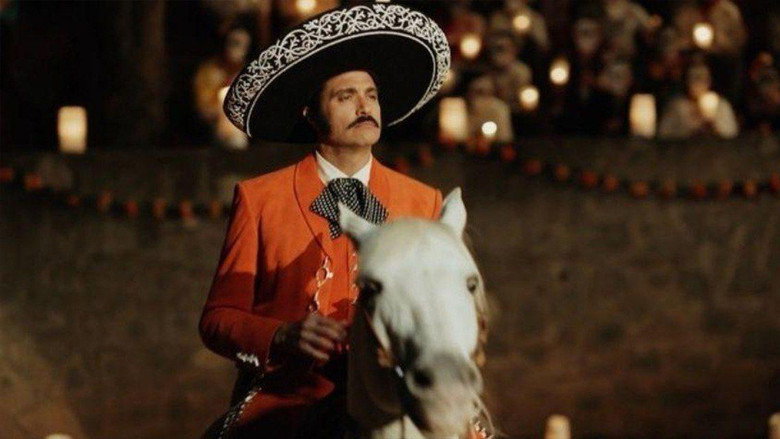
The music, of course, is the heartbeat of the series. But it’s not just there for nostalgia. The songs are woven into the narrative in a way that feels organic, not like set pieces.
When Vicente sings “Volver, Volver” in one episode, it’s not just a performance; it’s a plea, a moment of raw vulnerability that mirrors what’s happening in his personal life. The series understands that ranchera isn’t just a genre—it’s a language, one that speaks of love, loss, and longing. And in giving us Vicente’s life through that lens, it does something remarkable: it makes us feel the weight of every note.
There are moments where the series stumbles. Some of the supporting characters feel underdeveloped, particularly the women in Vicente’s life. His wife, María del Refugio “Cuquita” Abarca (played by Marcela Guirado), is a compelling presence, but the series often reduces her to the role of the long-suffering spouse, a trope that feels tired even in a story this rich.
And while the younger actors do a fine job, there’s a noticeable shift in energy when Camil takes over the role. It’s not that he’s better—just that the series seems to exhale when it finally reaches the era where Fernández is a household name.
But these are minor quibbles. El Rey, Vicente Fernández is a series that understands something fundamental about its subject: that his life wasn’t just about the music, but about the spaces between the songs. The silences. The regrets.
The quiet moments when the man behind the legend had to confront the fact that he was, after all, just a man. And in that understanding, it gives us something far more valuable than a tribute. It gives us a portrait.
By the final episode, I found myself thinking about the nature of legacy. Fernández didn’t just sing rancheras; he became synonymous with them, a living embodiment of a genre that was already steeped in tradition. The series captures that duality beautifully—the way he was both a product of his time and a force that shaped it.
And in the end, that might be its greatest achievement: it doesn’t just tell us why Vicente Fernández mattered. It makes us feel it.
"A heartfelt tribute to Vicente Fernández, lifted by strong performances but hurt by uneven pacing and melodrama."
Viewers appreciate its emotional portrayal of Vicente Fernández's life, the lead performances, and authentic musical moments. Some find it uneven, with slow patches and over-the-top scenes. Its faithfulness to his career is its strongest asset.
Netflix’s El Rey, Vicente Fernández (2022) isn’t just another biopic—it’s a love letter to the man who defined ranchera music for generations. The series, a dramatic retelling of Vicente Fernández’s life, has drawn attention for its ambitious casting choices and the emotional weight carried by its actors. While details about the production remain scarce, latestnetflix.com argues, snippets from trailers and interviews offer a glimpse into the challenges and triumphs of bringing "El Rey" to life.
One of the most talked-about aspects of the series is its decision to use four actors to portray Fernández at different stages of his life. The approach mirrors the structure of other biographical series, like The Crown, but for a musician whose voice and presence were inseparable from his identity, the stakes were uniquely high.
In a behind-the-scenes clip, García emphasized the pressure of embodying a legend, calling the role a "privilege and a responsibility". The actors reportedly trained extensively in ranchera singing and mariachi performance, though whether they lip-sync to Fernández’s original recordings or perform live remains unconfirmed.
Beyond Fernández’s portrayal, the series boasts a stacked ensemble, including:
The chemistry among the cast has been a highlight in promotional materials, with Camil and Guirado’s scenes hinting at the turbulent yet enduring relationship between Fernández and Cuquita—a cornerstone of his life story.
With Fernández’s discography spanning over 100 albums and global sales in the tens of millions, the series faced the daunting task of weaving his music into its narrative. Trailers confirm the inclusion of classics like "Volver, Volver" and "El Rey," but it’s unclear if the soundtrack features new recordings or archival tracks.
A no-spoiler review praised the series for using music "not just as a backdrop, but as a character itself," suggesting the show balances Fernández’s public persona with the raw emotion behind his lyrics. Whether the actors perform live or rely on Fernández’s original vocals remains a mystery, though the latter seems more likely given the technical challenges of replicating his signature baritone.
Fernández’s death in December 2021, just months before the series’ release, added a layer of poignancy to the project. Netflix’s decision to greenlight the biopic aligns with its strategy of investing in Latin American content, but the timing also sparked questions about whether the series was rushed to capitalize on his passing. Trailers and interviews avoid addressing this directly, focusing instead on Fernández’s cultural legacy.
One unverified rumor suggests the series may explore lesser-known chapters of Fernández’s life, including his early struggles with poverty and his complicated relationship with fame. However, without official episode breakdowns, these remain speculative.
Early reactions to the series’ trailers and reviews describe El Rey, Vicente Fernández as a respectful homage rather than a warts-and-all exposé. The focus appears to be on his artistry, family, and cultural impact—avoiding the more controversial aspects of his life, such as his political affiliations or reported feuds with other artists.
For fans of Fernández, the series offers a chance to relive his journey; for newcomers, it’s an introduction to the man behind the music. Whether it will delve deeper into the personal demons hinted at in his songs remains to be seen, but for now, the cast’s dedication to honoring his legacy is the real story.
Entertainment rumors and trivia aggregated from public reporting. Treat speculation as unverified unless a cited source confirms it.
More titles in the same genres and with the same cast.