Melisa Sözen
Mother

Hiding a mysterious past, a mother lives like a nameless fugitive with her daughter as they make hotels their home and see everyone else as a threat.
Official
I’ve spent years watching mothers on screen—self-sacrificing, nurturing, occasionally monstrous—but Who Were We Running From? presents one I can’t stop turning over in my mind. She’s unnamed, unmoored, and utterly convinced the world is out to get her. And for seven episodes, I believed her.
That’s the trick of this Turkish thriller: it makes paranoia feel like the only rational response to life.
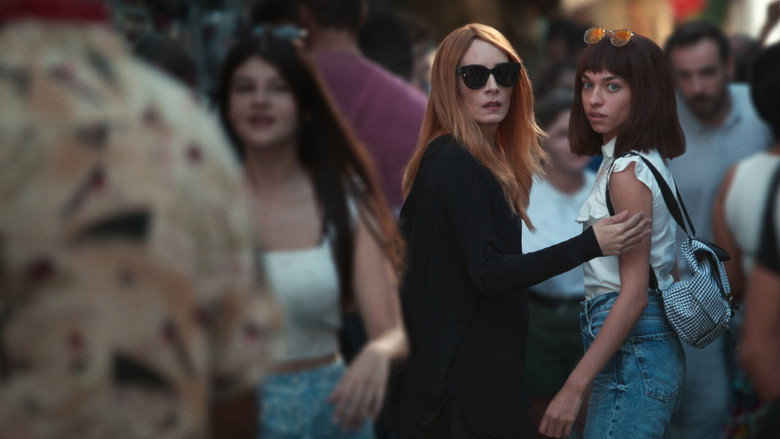
The series opens with a scene that’s pure Hitchcockian dread. A woman (Melisa Sözen) and her young daughter (Eylül Tumbar) check into a luxury hotel under false names, their movements precise, their smiles practiced. The mother’s eyes dart to every exit, every stranger, her fingers tightening around the room key like it’s the last lifeline in a sinking ship.
Within minutes, they’re gone—vanished into the night after a violent incident in the lobby. This is their life: a series of fleeting stops, each one ending in blood or flight. The question isn’t just who they’re running from, but what they’re becoming in the process.
What makes this more than a standard cat-and-mouse thriller is the way it weaponizes domesticity. The mother’s love for her daughter isn’t tender—it’s tactical. She spins a fairy tale about a fawn named Bambi to justify their nomadic existence, framing the world as a forest full of hunters.
The daughter, at first wide-eyed and obedient, slowly begins to question the story. (I did too. The Bambi metaphor is heavy-handed, but it’s also unsettlingly effective—how many of us were raised on stories that turned out to be lies?) The tension between them isn’t just about survival; it’s about the cost of a mother’s fear becoming a daughter’s inheritance.
The performances anchor the series, especially Sözen’s. She plays the mother like a coiled spring, her body language shifting from brittle control to explosive rage in a heartbeat. There’s a moment in the third episode where she’s sitting in a hotel restaurant, forcing a smile at a waiter while her eyes track every movement in the room.
It’s a masterclass in unspoken tension—you can feel the effort it takes for her to pretend to be normal. Tumbar, in her debut role, holds her own, her performance oscillating between childlike vulnerability and a growing, unsettling pragmatism. Their dynamic is the show’s beating heart, even when the plot strains credulity.
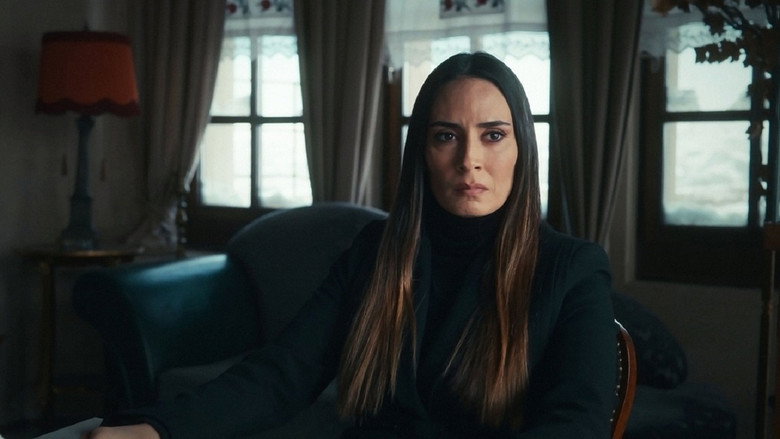
And oh, does the plot strain. Critics have rightly pointed out the series’ logic gaps—how does a woman and child evade capture for years while leaving a trail of high-profile crimes? Why do they always have access to luxury hotels and designer clothes despite their fugitive status?
The Daily Free Press called it “too many questions, not enough answers,” and I can’t disagree. But here’s the thing: Who Were We Running From? isn’t really about the chase. It’s about the psychological toll of living in constant flight, and in that regard, the inconsistencies almost work in its favor.
The mother’s paranoia is so all-consuming that the audience starts to accept her distorted reality. If the world doesn’t make sense, maybe it’s because the world is out to get you.
The visuals reinforce this disorientation. The series is shot like a dream—all golden Mediterranean light and opulent interiors, the kind of places where violence feels like a violation of the aesthetic. The contrast between the beauty of the settings and the ugliness of the characters’ actions is jarring, and intentionally so.
It’s as if the mother and daughter are trapped in a gilded cage, one they can’t stop running through no matter how many doors they slam behind them.

The show’s biggest flaw, though, might be its pacing. The first three episodes are a slow burn, immersing you in the mother’s mindset, but the back half struggles to maintain momentum. Some scenes feel like they’re treading water, and the finale—while thematically fitting—leaves too many threads dangling.
Common Sense Media’s Polly Conway called it an “odd duck of a series” that “stretches out the mystery to a near-frustrating point,” and I see her point. But frustration isn’t always a bad thing. Sometimes, it’s the lingering questions that stay with you.
Which brings me back to the mother. Is she a victim or a villain? A protector or a predator?
The series never gives a clear answer, and that ambiguity is what makes it so compelling. In a cultural moment where motherhood is often idealized or demonized, Who Were We Running From? refuses to simplify. The mother’s love is suffocating, her fear is contagious, and her survival instincts are both her greatest strength and her fatal flaw.
By the end, I wasn’t sure if I pitied her or feared her. Maybe that’s the point.
The show’s reception has been as divided as its themes. It became Netflix’s number one non-English language show for a week in 2023, a sign of its addictive, if flawed, allure. Critics have praised its atmosphere and performances while bemoaning its narrative inconsistencies.
Film Fugitives went so far as to call it a “pointless chase series that refuses to reach the finishing line.” I get the frustration, but I also think there’s something radical in a story that refuses to tie up neatly. Life doesn’t always offer resolutions, and neither does this series.
In the end, Who Were We Running From? is less about the destination and more about the exhausting, exhilarating, terrifying act of running. It’s a show that lingers not because it answers its questions, but because it forces you to sit with them. And maybe, just maybe, that’s enough.
"A gripping yet uneven psychological thriller with strong performances but a frustratingly vague central mystery."
The series builds a tense atmosphere and has compelling lead performances, particularly Melisa Sözen as a mother on the run. The lack of clear answers about the antagonist and some underdeveloped side characters make the ending unsatisfying.
The 2023 Turkish psychological thriller Who Were We Running From? arrived on Netflix with a premise as cryptic as its title. latestnetflix.com's take is that Starring Melisa Sözen and Eylül Tumbar as a mother and daughter living as fugitives, the series promises a tense, slow-burn mystery—but behind the scenes, even its cast and crew seem to be guarding secrets.
The series follows an unnamed mother (Sözen) and her daughter (Tumbar) as they drift from one hotel to another, treating every stranger as a potential threat. Their past is a locked box, and the audience is left piecing together clues alongside them. Based on Perihan Mağden’s novel Biz Kimden Kaçıyorduk Anne?, the adaptation leans into psychological tension, though details about the source material’s influence remain scarce. Director Umut Aral’s vision for the seven-episode miniseries reportedly prioritized atmosphere over exposition, leaving viewers—and possibly even the actors—in the dark about key plot twists.
Rumors suggest the production kept its cards close to the vest. While Sözen and Tumbar deliver gripping performances, neither has publicly detailed how much of the story they knew upfront. A Vague Visages breakdown hints at "minor spoilers" in cast interviews, implying some actors may have been fed only their character’s immediate arc rather than the full narrative. If true, this could explain the raw, unguarded tension between the leads—though without confirmation, it’s speculative.
Who Were We Running From? premiered on March 24, 2023, as a seven-episode limited series, a format that likely discouraged mid-season leaks. Yet even after the finale, Netflix hasn’t released behind-the-scenes footage or cast commentary, leaving fans to dissect the show’s cryptic ending without official guidance. The lack of buzz around reshoots or alternate cuts suggests the production wrapped cleanly—but whether that’s by design or due to tight-lipped secrecy is unclear.
With no announced second season, the series’ legacy hinges on its unresolved mysteries. Will Netflix revisit the story? For now, the silence is deafening—fitting for a show about characters who refuse to speak.
Entertainment rumors and trivia aggregated from public reporting. Treat speculation as unverified unless a cited source confirms it.
More titles in the same genres and with the same cast.