Season 1
10 episodes Jan 1, 2020 7.2
- 1 He That Hath an Ear
- 2 Tremor
- 3 The Finger of God
- 4 Trial
- 5 So That Seeing They May Not See
- 6 We Will Not All Sleep
- 7 It Came to Pass as It Was Spoken
- 8 Force Majeure
- 9 God Is Greater
- 10 The Wages of Sin

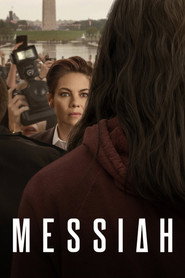
A wary CIA officer investigates a charismatic man who sparks a spiritual movement and stirs political unrest. Who exactly is he? And what does he want?
Latest episode: S1 E10 The Wages of Sin (Jan 1, 2020)
Official
I’ve spent the last decade watching prestige television chase the same question: what happens when a stranger walks into town and upends everything? Messiah arrives with that premise fully inflated, a high-concept balloon floating over the deserts of Syria and the suburbs of Texas. A man calling himself al-Masih (Mehdi Dehbi) appears in Damascus, leading a crowd of refugees through a parted Red Sea of floodwater, his followers convinced he’s the Second Coming.
The CIA, the Israeli government, and a Texas preacher all take notice. By the time the series ends—abruptly, after ten episodes—we’re left with a question that feels both ancient and urgently modern: what do we do when faith and evidence refuse to align? The show’s greatest strength is its refusal to answer that question.
It’s a rare series that treats ambiguity not as a cop-out but as a moral necessity. The problem is that Messiah often mistakes ambiguity for indecision. It wants to be a spiritual thriller, a geopolitical drama, and a character study all at once, and it never quite commits to any of them.
The result is a series that’s fascinating in its parts but frustrating in its whole.
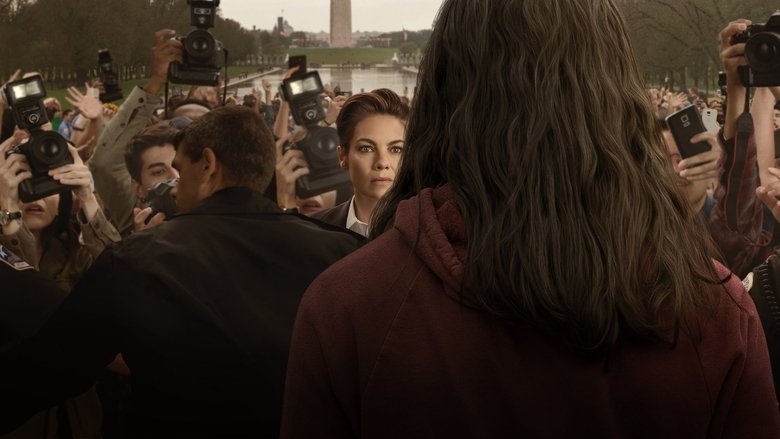
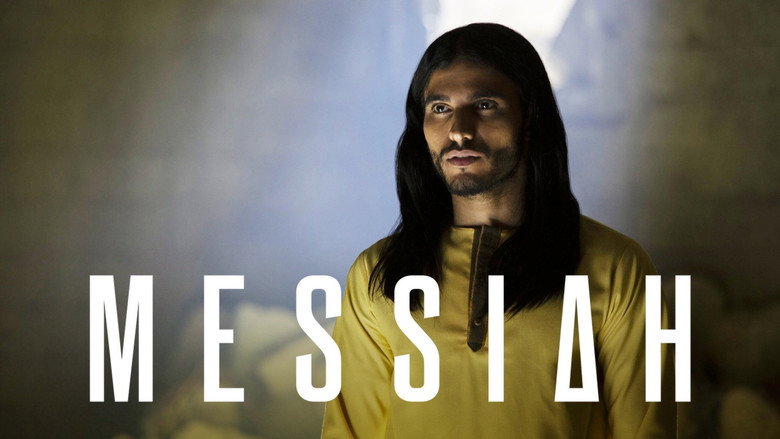
The first episode is a masterclass in tension. Al-Masih’s arrival in Damascus is shot with a documentary-like immediacy, the camera weaving through the crowd as if we’re part of the throng. The floodwater parting is a moment of pure cinematic spectacle, but it’s the quiet moments that linger—the way Dehbi’s al-Masih holds himself, not like a prophet but like a man who’s as surprised by his own power as everyone else.
There’s a stillness to him, a refusal to perform, that makes his charisma all the more unsettling. When he speaks, it’s in riddles, his voice low and measured, as if he’s testing the words as they leave his mouth. It’s a performance that demands attention, and Dehbi delivers it with a restraint that feels almost supernatural.
But the series struggles to maintain that momentum. The CIA’s investigation, led by Michelle Monaghan’s Eva Geller, is the show’s most conventional thread, and it’s here that Messiah starts to feel like it’s spinning its wheels. Geller is a compelling character—a woman of faith grappling with doubt, her personal life as messy as her professional one—but the procedural elements of her story often feel like a distraction from the larger questions the series is trying to ask.
The Daily Beast’s critique hits the mark: "It's one thing to stoke audiences’ imagination and anxiety with uncertainty, but do it for too long, and to no conclusive end, and what you’re left with is characters, situations and conundrums that are increasingly impossible to care about."
That’s the paradox of Messiah: it’s a show about the power of belief, but it never quite believes in itself. The Rashomon-like structure, which shifts perspectives between Geller, an Israeli intelligence officer (Tomer Sisley), and a Texas minister (John Ortiz), is an ambitious choice, but it often feels like the series is more interested in setting up its next twist than in exploring the emotional weight of those perspectives.
The exception is Ortiz’s Reverend Felix Iguero, whose journey from skepticism to fervent belief is the show’s most compelling arc. Ortiz plays him with a quiet desperation, a man clinging to faith not because he’s certain of it, but because he’s terrified of what might happen if he lets go.
The series’ most haunting moments come when it leans into the personal cost of belief. In one scene, a young woman (Stefania LaVie Owen) who has followed al-Masih from Syria to Texas sits in a diner, staring at her reflection in the window. She’s not sure if she believes anymore, but she’s not sure she can go back to not believing either.
It’s a small moment, but it’s the kind of quiet, human detail that Messiah too often sacrifices in favor of its grander ambitions. The show’s cancellation after one season feels like a mercy, though not for the reasons you might expect. It’s not that Messiah is bad—it’s that it’s a series that never quite figures out what it wants to be.
It’s a series that’s unevenly made, with moments of brilliance buried under layers of narrative indecision. The premise is audacious, the performances are strong, and the themes are timely, but the execution is often muddled. It’s the kind of show that leaves you with more questions than answers, which is fitting, given its subject matter.
But it’s also the kind of show that makes you wish it had trusted itself enough to dig deeper into those questions, rather than just skimming the surface.
In the end, Messiah is a series about the stories we tell ourselves to make sense of the world. It’s a story about the power of those stories, and the danger of them. It’s a story about the way faith can both unite and divide us, and the way it can be weaponized by those in power.
It’s a story that feels urgent and necessary, even if the telling of it is often frustrating. And maybe that’s the point. Maybe Messiah isn’t meant to give us answers.
Maybe it’s meant to make us sit with the questions a little longer. If that’s the case, then it succeeds, even if it doesn’t always satisfy.
Ten episodes. One day. A pile of arguments. Messiah arrived on Netflix on January 1, 2020, billed as an American thriller television series created by Michael Petroni. latestnetflix.com's view is that the listing tags tell you the lane: series, 2020, TVMA, Drama, Thriller.The hook was simpler. A strange man appears. Crowds follow. Governments panic.
The man is Al Massih, played by Mehdi Dehbi. Casting news paired Dehbi with Tomer Sisley for the Netflix drama series, with John Ortiz also joining the ensemble. The project was described as a Netflix drama series from Mark Burnett and Roma Downey.
What sold it was the character description. Dehbi's Al Massih was pitched as an enigma with mysterious origins. People around him cannot settle the big question: divine messenger or political rabble-rouser. That binary became the whole engine of the show. Believers saw miracles. Skeptics saw manipulation. Everyone else kept watching to decide which camp was being played.
Petroni's setup kept the geography and politics wide. The series stretched across borders and belief systems instead of staying in one interrogation room. Ten episodes were released together, which fed the binge-and-debate cycle. Watch fast. Argue faster.
The debate outlived the drop. TV Insider framed it bluntly with a viewer poll: Is al-Masih Actually the 'Messiah'?. That headline captures the fandom split. Mehdi Dehbi's performance sat at the middle of it. No wink to the audience. No easy tell.
The other half of the noise was cultural. One video essay brands it Netflix's Biggest Controversial Series - Messiah. Another asks outright: Is Netflix's hit series 'Messiah' orientalist?. Those two titles say a lot about the reception without us needing to invent backstage drama. Thriller mechanics on one side. Representation questions on the other.
Honest note on the evidence: the searchable snippets are thin. Casting, premise, release pattern, and reaction headlines are solid. Salaries, set stories, and season-two scheming are not in this material. Unconfirmed chatter stays rumor until sourced. What remains is the core fascination. A mysterious figure walks in, the world projects meaning onto him, and the audience does exactly the same thing.
Entertainment rumors and trivia aggregated from public reporting. Treat speculation as unverified unless a cited source confirms it.
More titles in the same genres and with the same cast.