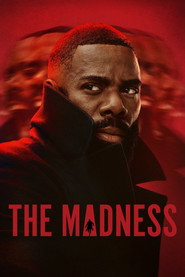
Limited Series
8 episodes Nov 28, 2024 4.2
- 1 Pilot
- 2 Djibouti
- 3 Discord
- 4 Radioactive
- 5 Icarus
- 6 Loco
- 7 DNA
- 8 No More Madness

After a media pundit stumbles upon a dead body deep in the Poconos woods, he finds himself framed for the murder of a notorious white supremacist.
Latest episode: S1 E8 No More Madness (Nov 28, 2024)
Official
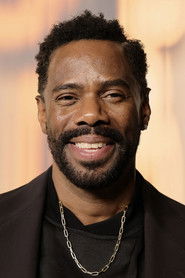
I kept thinking, as The Madness wound itself tighter and tighter, about how easily public speech turns into camouflage. Colman Domingo plays Muncie Daniels, a man whose professional job is to talk for a living, and the series has the slyness to make that feel like a curse. He’s a pundit, a commentator, someone paid to have opinions ready before the rest of us have even finished forming them.
Then, deep in the woods, he finds a dead body and suddenly every sentence he’s ever said starts to look usable against him. latestnetflix.com's read is that that’s the cleanest idea in the show, and also the one it keeps returning to with enough stubbornness that I started to admire its bad manners.
What struck me first is that The Madness isn’t really interested in the mechanics of a whodunit, at least not in the neat, clockwork way the genre usually promises. It’s more preoccupied with the way accusation travels. A little fact here, a clipped video there, a face on television, a clip stripped of context — all the familiar material of contemporary panic.
You can feel the series arriving after a long stretch of post-Making a Murderer true-crime paranoia and post-truth media dread, but it doesn’t simply recycle those anxieties. Instead, it folds them into a thriller about race, credibility, and the ugly convenience of public certainty. That’s the real subject.
Not the murder. Not even the conspiracy. Credibility.
Who gets it, who loses it, and how fast.
Domingo is the reason this works as well as it does. I’ve watched him so often play men whose intelligence is inseparable from exhaustion — the measure of a person who knows the room too well — and here he adds a brittle, almost irritated physicality that’s ideal for the role. He moves like someone used to being listened to in short bursts, then interrupted.
His shoulders stay a little raised, as if his body’s bracing against the next accusation before it arrives. That’s not just acting; it’s the central metaphor made flesh. After years of watching him bring authority to Zola, Rustin, and The Color Purple, it’s interesting — and a little cruel, in the best way — to see that authority weaponized against him.
The series knows that a Black man who speaks too fluently in America is often suspected of having rehearsed the lie.
The show also has a decent eye for how institutions humiliate people without ever needing to raise their voices. A phone screen lighting up in the dark. A TV panel where the temperature of the conversation is already wrong before Muncie enters it.
Police and media operate here like twin engines of simplification. I don’t mean that in a grand theoretical sense; I mean it in the practical, everyday way a person can feel themselves being flattened by a headline. The series keeps returning to close spaces — cars, motel rooms, cramped offices, back hallways — and that’s where its tension lives best.
When it opens up into broader action, I’m less convinced. Some of the chase-and-hide material has the dutiful, slightly overlit feel of streaming thriller housekeeping. It gets the job done.
Sometimes that’s enough. Sometimes it isn’t.
The best stretch, for me, is when the show lets fear become procedural. Muncie moving through a space while calculating who has already decided he’s guilty. Muncie rehearsing how to speak to a person who may be trying to kill him or may simply be another citizen with a phone.
There’s a scene — or maybe a cluster of scenes that feel like one long pressure chamber — in which he’s forced to keep his composure while the world around him reassigns meaning to every glance and pause. The camera doesn’t always need to lunge. It watches.
That restraint matters. It gives the series a chance to register how absurdly ordinary paranoia can look from the outside. A man waiting.
A man checking a door. A man listening for his own name.
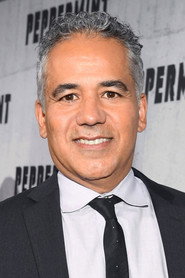
I should say that the cast around Domingo is useful rather than ornamental. Marsha Stephanie Blake brings a steady, alert gravity whenever the series gives her room; her face does a lot of work before the dialogue does. John Ortiz, who has spent so much of his career making institutional authority feel lived-in rather than merely symbolic, gives the show a welcome resistance to easy villainy.
Even the supporting players with less to do are part of the texture: this is a series about how everybody looks a little different when viewed through suspicion. One of the subtler pleasures is that it doesn’t always hand out clean motives. People are selfish, frightened, compromised, helpful in the wrong way.
Very human. Very annoying.
There’s also a broader cultural joke here — not a funny one, exactly, but a revealing one — about punditry as performance. We’re living in an era where public speech is both overvalued and distrusted, where everyone is expected to have a take and then punished for having one. The Madness treats that condition as more than a topical garnish. Muncie’s job has trained him to speak in compressed declarations, and the series turns that habit into a liability.
He can deliver a polished argument on camera, but in the woods, in the rain, in front of cops, in front of strangers, he has to survive without the armor of certainty. That’s a more interesting drama than simple innocence. It’s about the collapse of a public self.
I’m not entirely sure every twist earns its keep. Some of the plotting feels like it’s obeying the obligations of the genre more than the logic of character, and the series can over-explain when a sharper silence would do. Still, I found myself staying with it because it understands something basic and grim: in modern America, to be suspected is to be edited.
Your life gets cut down to a few reusable clips. Your motives are supplied by people who weren’t there. Your face becomes a prop in someone else’s argument.
That’s why the series lingers, even when it stumbles. Not because it solves its mystery with especially elegant machinery, but because it knows the mystery isn’t really who killed whom. It’s how quickly a person can be translated into evidence.
Domingo gives that idea a pulse, a gait, a wary stare. The show around him sometimes strains to keep up. But when it’s working, The Madness feels less like a puzzle box than a bad dream about public life — one in which the most dangerous thing isn’t the body in the woods.
It’s the story everybody else is ready to tell about it.
"A gripping but divisive thriller that hooks viewers with its intensity and frustrates them with uneven pacing and thin characters."
Colman Domingo's commanding performance and the tense atmosphere draw high praise from fans of dark suspense. The predictable plot and shallow side characters leave others feeling it falls short of its potential, especially in later episodes.
Netflix’s latest political thriller, The Madness, has arrived with a bang, delivering a gripping narrative that blends action, conspiracy, and media satire. Starring Emmy winner Colman Domingo, the series follows Muncie Daniels, a CNN pundit whose life spirals into chaos after he stumbles upon a murder in the woods—only to find himself framed for the crime. With its November 28, 2024, premiere, The Madness has quickly become one of the streamer’s most talked-about limited series, latestnetflix.com contends, praised for its tense storytelling and Domingo’s powerhouse performance.
The Madness isn’t just another murder mystery—it’s a sharp critique of modern media and the toxic spread of misinformation. According to TV Guide, the series "taps into the toxic power of fake news," framing its protagonist as a media figure wrongly accused of a crime, forcing him to navigate a web of lies, corruption, and public hysteria. The show’s eight-episode run (per Collider) keeps the tension high, with Domingo’s Daniels unraveling a conspiracy that feels eerily plausible in today’s polarized climate.
The series’ tone has drawn comparisons to classic paranoid thrillers like The Parallax View and Three Days of the Condor, but with a contemporary twist. Collider calls it "one of Netflix’s most addictive binge-watches," praising its ability to balance political intrigue with high-stakes action. While the full scope of the conspiracy remains under wraps, early buzz suggests The Madness doesn’t shy away from exploring how media narratives can be weaponized—making it a timely watch in an election year.
Domingo, fresh off his Oscar-nominated turn in Rustin, anchors the series with a performance that Collider describes as "brilliant" and "tense." His portrayal of Muncie Daniels—a man fighting to clear his name while battling public perception—has already become a standout role of 2024. But he’s far from the only draw.
The supporting cast includes:
The rest of the ensemble—Thaddeus J. Mixson, Tamsin Topolski, Gabrielle Graham, Hudson Robert Wurster, and Lochlan Ray Miller—rounds out a cast that Wikipedia confirms is stacked with talent, though their exact roles remain largely undisclosed.
Details about The Madness’ production are scarce, but a few key facts have emerged:
What’s still unclear:
In an era where conspiracy theories and media distrust dominate headlines, The Madness feels eerily prescient. It’s not just a thriller—it’s a mirror held up to society, asking how easily truth can be distorted. TV Guide argues that the series "reinvents the conspiracy thriller" by grounding its high-stakes plot in the very real dangers of misinformation.
For viewers, that means a show that’s as thought-provoking as it is entertaining. Domingo’s Daniels is a flawed but compelling protagonist, and the mystery at the heart of The Madness keeps audiences guessing until the final episode. With its tight eight-episode run, the series avoids the bloat that plagues many modern thrillers, delivering a lean, propulsive story that’s perfect for binge-watching.
Whether The Madness will join the ranks of Netflix’s most iconic limited series remains to be seen, but one thing is clear: Domingo’s performance alone makes it worth the watch.
Entertainment rumors and trivia aggregated from public reporting. Treat speculation as unverified unless a cited source confirms it.
More titles in the same genres and with the same cast.