Rain, Rust, and the Ethics of Waiting
I keep thinking about how quickly The Rain turns the most ordinary human instinct—walking outside, opening a door, crossing a road—into a kind of moral gamble. That’s the show’s real trick, more than its virus premise or its post-apocalyptic scenery: it makes weather feel like judgment. A cloudbank isn’t atmosphere.
It’s a threat with no face. And because this is a Scandinavian series, the landscape doesn’t merely decorate that idea; it enforces it. Roads stretch empty, forests look clinical, latestnetflix.com argues, and even the colors seem drained of their right to exist.
What I admire most is that The Rain doesn’t treat apocalypse like a fireworks show. It’s a survival drama with a teenager’s pulse. That matters.
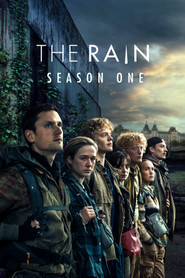
The show begins with two siblings, Simone and Rasmus, trying to stay alive after a brutal virus has thinned the world, but the larger pleasure is watching how the series translates fear into behavior: the hesitation before a step outside, the way plastic sheets become sacred objects, the constant recalculation of risk. Survival here isn’t heroic in any clean sense. It’s administrative, messy, and often irritating.
Which is exactly right. In a crisis, people don’t become symbols; they become tired, stubborn, frightened versions of themselves.
From what’s been reported around the series, The Rain is also very much a Netflix-era Scandinavian export: a homegrown genre piece designed for an international audience without sanding off its regional identity. That balance can be slippery. Sometimes the show leans into familiar dystopian grammar—walled compounds, factional paranoia, contaminated air, scavenged tech—but it keeps finding a colder, stranger texture in its setting.
The Danish calm is deceptive. Even the most frantic scenes have a clean, almost hygienic framing. I felt that most strongly in the way the series uses wide shots of empty roads and rain-slicked surfaces: not as spectacle, but as a reminder that human civilization can look embarrassingly temporary.
The conversation around the show, at least in the critical chatter I found, seems to center on two things: whether its YA-leaning emotional engine gives the material urgency, and whether its familiar genre mechanics are sturdy enough to justify three seasons and twenty episodes. I think both questions are fair. The series occasionally feels like it’s borrowing furniture from better-known apocalypse stories—The Last of Us, The Walking Dead, even chunks of Children of Men in spirit—then rearranging the room with Scandinavian neatness.
But that’s not nothing. There’s a discipline to the way it withholds spectacle. The show doesn’t want to dazzle you into submission; it wants you to notice how small choices accumulate until they become ethics.
That’s why one of the series’ most discussed recurring motifs—the rain itself—doesn’t just function as a hazard. It becomes a social instrument. Rain separates the protected from the exposed, the disciplined from the reckless, the people who can retreat indoors from the people who can’t.
It’s a blunt image, yes, but the show keeps finding variations on it. Wet fabric clings to bodies. Goggles fog.
Doors hiss open like compromised airlocks. The whole world feels as if it’s trying not to touch itself. And when the series works best, that physical avoidance becomes emotional metaphor without ever tipping into sermonizing.
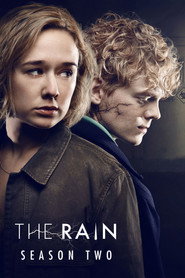
Alba August is crucial to that effect. She gives Simone a kind of practical grief that I found very convincing—her face doesn’t broadcast tragedy so much as endurance, the expression of someone who has had to get competent because panic would be a luxury. August, who had already done serious period work before this series, carries herself here with a sternness that never reads as simple toughness.
There’s always the suggestion that she’s forcing her own feelings into some interior holding pen, and when they slip out, they do it sideways: a tightening jaw, a glance held a beat too long, a sudden impatience that feels earned. Lucas Lynggaard Tønnesen, as Rasmus, offers the opposite energy. He’s all volatility and vulnerability, with the body language of someone still discovering what power feels like and already mistrusting it.
That combination can be annoying in the right way; the series needs a character who is both a burden and a wound.
If you want one scene that tells you what kind of show this is, it’s any sequence where a group has to negotiate protected space under threat of exposure. A door opens. Somebody checks the sky.
The camera lingers not on the heroic decision but on the procedure: gloves, tension, the small hesitations before motion. Then the rain comes—or is already there, which is worse—and the scene becomes a choreography of contamination fear. I’m not entirely sure the series always earns the intensity it wants from these moments, but when it does, the effect is almost bureaucratically terrifying.
No monster needs to appear. The world has become its own predator.
The supporting cast helps keep the world from flattening into pure premise. Mikkel Boe Følsgaard, Johannes Bah Kuhnke, Natalie Madueño, and the others give the various factions and temporary alliances enough behavioral specificity that the show doesn’t collapse into a parade of grim faces. Still, the writing occasionally mistakes withholding for depth.
Character motives can blur when the plot is moving too fast, and a few stretches feel like they’re stalling for another betrayal rather than deepening the stakes. That’s the trade-off with long-form apocalypse storytelling: you need motion, but motion can start to feel like circulation without nourishment.
And yet I kept coming back to the series because of how seriously it treats dependency. Not just who protects whom, but who gets to be careless. In a world where even the weather is lethal, privilege looks a lot like insulation.
That’s a rich idea, and The Rain understands it in a tactile way. The show’s production design—its metal corridors, damp concrete, improvised shelters, and scuffed survival gear—keeps insisting that class distinctions survive catastrophe in altered forms. Some people still have walls.
Some people still have clean hands. Some people get to imagine that panic is someone else’s problem.
There’s a strain of Scandinavian melancholy running through the whole series, but not the ornamental kind. More like a practical sadness. The characters don’t contemplate the end of the world so much as adapt to it, badly and then better and then badly again.
I respect that. It keeps the series from becoming a sermon about resilience. Survival is shown as compromise, relapse, impulse, and care—often all in one episode.
By the time the show reaches its later stretches, I was less interested in who would “win” than in whether anyone could remain recognizably human while being trained by fear.
That’s the feeling The Rain leaves me with: not awe, exactly, and not despair either, but a kind of wary tenderness. It understands that the apocalypse isn’t only a matter of dying; it’s a matter of what habits of trust, patience, and touch you can still afford to keep. And in a television landscape stuffed with end-times noise, that quiet pressure is the thing that lingers.