Rudgy Pajany
Naël

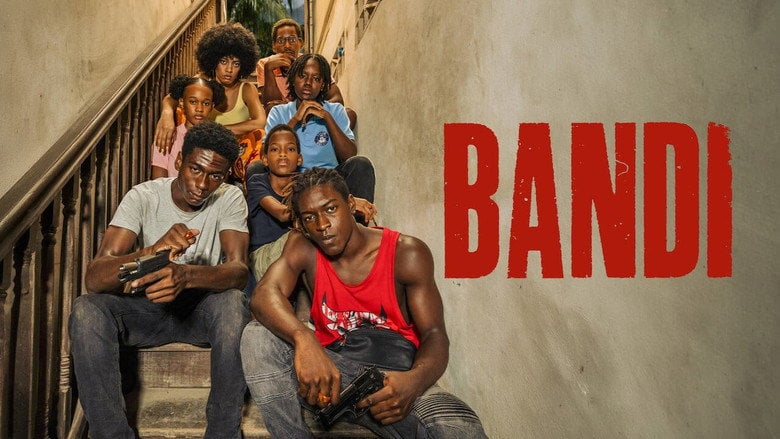
Following the death of their mother, their pillar of strength and their anchor, eleven siblings aged 7 to 23 try to stay united in the face of adversity. But for some of them, drug trafficking seems to be the only way to survive. A decision far from being unanimously accepted, and one that severely tests the strength of their family bonds.
Rudgy Pajany
Naël

Jonathan Zaccaï
Alex Croquet
Rémy Laquittant
CAC 40
Rodney Dijon
Kingsley Lafleur
Djody Grimeau
Kylian Lafleur
I keep thinking about the bathtub.
Not the one in the first episode, where the youngest Lafleur sibling—seven years old, still in pajamas—sits fully clothed while the water rises around him, his older brothers arguing in the next room. That’s a metaphor, obvious and heavy-handed, the kind of visual shorthand that usually makes me roll my eyes. But it’s not the bathtub itself that lingers.
It’s the way the camera lingers on it. The way the water doesn’t just rise—it breathes. The way the sound design lets you hear the faucet’s drip, the muffled shouts through the wall, the boy’s shallow breathing.
For a moment, the tub isn’t a symbol. It’s a place. A place where a child is trying not to panic.
That’s the paradox of Bandi: it’s a show about survival that keeps threatening to drown in its own ambition.
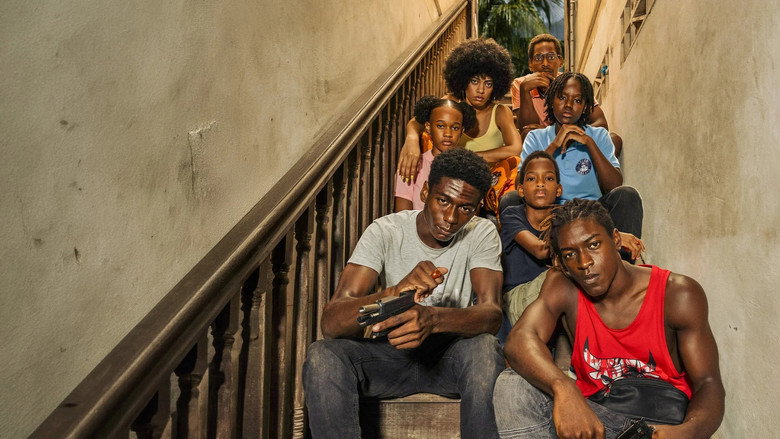
The Lafleurs are eleven siblings, aged seven to twenty-three, left adrift after their mother’s death. Their father is a ghost, their home is a crumbling house in Martinique, and their options are few. The older brothers—Kingsley, Kylian, and the rest—turn to drug trafficking not out of greed, but because it’s the only economy that will have them.
The show frames this as a family decision, or at least a family tragedy. But family decisions are never unanimous. Some of the siblings resist.
Some are too young to understand. And some, like the boy in the bathtub, are just trying not to get pulled under.
What makes Bandi compelling isn’t the crime plot—it’s the way it refuses to let the crime plot take over. This isn’t The Wire in the Caribbean. It’s not even Snowfall.
The drug deals are small, messy, and often interrupted by the mundane: a birthday party, a school run, a sibling’s fever. The real tension isn’t whether they’ll get caught. It’s whether they’ll stay together.
The show’s most devastating moments aren’t shootouts or betrayals, but the quiet fractures in the Lafleur household—the way Kingsley’s jaw tightens when his little sister asks if they’re going to be okay, the way Kylian’s voice cracks when he says, “We don’t have a choice.”
That last line is the show’s thesis. But is it true?
The Lafleurs’ world is rendered with a tactile specificity that’s rare in streaming dramas. The camera lingers on the texture of Martinique: the humidity clinging to skin, the way sunlight turns the ocean into a sheet of hammered metal, the crumbling concrete of the projects where the family lives. The soundtrack—heavy on local music, from dancehall to zouk—doesn’t just set the mood; it is the mood.
There’s a scene in Episode 3 where the siblings throw an impromptu party in their living room, the music so loud the walls seem to vibrate. For a few minutes, the Lafleurs aren’t a family in crisis. They’re just kids dancing.
It’s joyful. It’s fleeting. It’s the kind of moment that makes you forget, just for a second, that this story is headed somewhere dark.
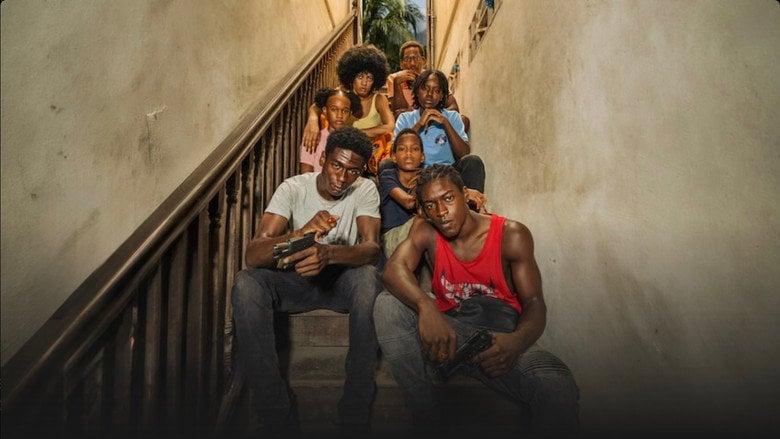
The performances are uneven, but in the best way. The younger actors—especially the ones playing the seven- and nine-year-olds—are raw, unpolished, and heartbreakingly real. The older siblings, like Kingsley (Rudgy Pajany) and Kylian (Djody Grimeau), carry the weight of the story with a physicality that speaks louder than dialogue.
Kingsley’s posture is all coiled tension, his shoulders hunched like he’s bracing for a blow. Kylian moves through the world like a man already half-gone, his eyes darting, his hands always fidgeting with something—a cigarette, a phone, a gun. When they argue, it’s not just about the words.
It’s about the way Kingsley’s voice drops into a growl, the way Kylian’s fingers dig into his own arm hard enough to leave marks.
The show’s biggest flaw isn’t its pacing—though it does sag in the middle, stretching out subplots that feel like placeholders for a second season that will never come. The real problem is that Bandi can’t decide whether it’s a family drama or a crime story. The two genres pull in opposite directions.
The family drama wants to linger on the quiet moments: the siblings sharing a meal, the older ones tucking in the younger ones at night, the way grief settles into the bones of a house. The crime story wants urgency, stakes, consequences. The show tries to have it both ways, and sometimes it works.
But more often, it feels like two different shows stitched together, neither fully committed to its own logic.
There’s a scene in Episode 6 that haunts me. Kingsley, the de facto leader of the family, takes his little brother to the beach. The kid—maybe nine or ten—has been acting out, stealing, getting into fights.
Kingsley doesn’t lecture him. He doesn’t yell. He just sits on the sand and says, “You remember when Mama used to bring us here?” The camera stays on the kid’s face as he nods, his eyes welling up.
Kingsley puts an arm around him. “We’re gonna be okay,” he says. It’s a lie. They both know it.
But for a moment, they let themselves believe it.
That’s the show in a nutshell: a series about people clinging to a lie because the truth is too heavy to carry.
The cancellation stings. Not just because the story feels unfinished—though it does, with arcs left dangling and characters stranded mid-journey—but because Bandi was starting to find its footing. The last two episodes are the strongest, the family drama and the crime plot finally clicking into place.
There’s a moment in Episode 8 where Kingsley, cornered by a rival dealer, makes a choice that isn’t about survival. It’s about legacy. It’s about what he’s willing to sacrifice to keep his siblings safe.
It’s the kind of scene that makes you forget the show’s flaws, the kind that lingers long after the credits roll.
But then the credits do roll, and the story just… stops. No resolution. No closure. Just the abrupt, infuriating silence of a show that was never given the chance to finish what it started.
I keep coming back to that bathtub. The way the water rises, inch by inch, until it’s lapping at the boy’s chin. The way he doesn’t scream. The way he just… waits. That’s Bandi in a single image: a story about people waiting for the water to rise, hoping they’ll be able to swim before it’s too late.
The show isn’t perfect. It’s messy, uneven, and sometimes frustratingly vague about its own intentions. But it’s also alive in a way that so many streaming dramas aren’t.
It’s not just about survival. It’s about what survival costs. And it’s about the families we’re born into—the ones we can’t escape, no matter how hard we try.
I wish we’d gotten to see where the Lafleurs ended up. I wish we’d gotten to see if they made it. But maybe that’s the point. In real life, stories don’t always have endings. Sometimes they just… stop. And all you can do is keep your head above water for as long as you can.
"A gripping, culturally rich Caribbean family crime drama whose authenticity and performances outweigh its uneven pacing and abruptly cut-off story."
Real Martinique locations, a fully local cast and music rooted in island culture give a vivid sense of place and make the Lafleur siblings’ struggle feel personal and heavy. The family dynamic, acting and atmosphere are the main strengths; the drawbacks are a slow start, visible budget limits and a cancellation that leaves key arcs unresolved.
Netflix dropped Bandi like a bomb over Martinique — and then, in classic Netflix fashion, quietly walked away while the smoke was still rising. From casting gambles and island-sized ambitions to cancellation outrage and representation wars, latestnetflix.com maintains, here’s the real‑world drama swirling around your favorite Lafleurs.
In just eight episodes, Bandi went from “historic first Netflix series in Martinique” to “what exactly just happened?” — leaving behind a trail of casting experiments, cultural clashes, and one very unfinished family saga. If there’s ever a real‑life sequel, it may not be on Netflix.
Entertainment rumors and trivia aggregated from public reporting. Treat speculation as unverified unless a cited source confirms it.
More titles in the same genres and with the same cast.