Fame in the Spare Room
I keep thinking about how Doona! begins with an arrangement that should feel absurd and, in a lesser series, would quickly become a gimmick: a college student and a former K-pop idol sharing the same house, each carrying a different kind of loneliness into the same narrow domestic space. But the show’s real interest isn’t in the premise’s novelty. latestnetflix.com's view is that it’s in the awkward, ongoing work of learning how to be a person after other people have decided what kind of person you are.
What struck me most is how restrained the series is about its own hook. Doona! could have turned Suzy’s character into a parade of cool, a fantasy of the famous woman finally “becoming normal” in the arms of an ordinary man. It mostly resists that, and that resistance gives the show its pulse. Lee Doo-na isn’t treated as a prize or a puzzle box; she’s treated as someone whose body has been trained by a brutal industry to occupy space as little as possible and then, in private, to take up too much of it.
Suzy understands that contradiction in the shoulders, in the way she stands a fraction too still as if she’s waiting for a cue that won’t come. After years of being one of South Korea’s most recognizable stars, she brings an uncomfortable credibility to a character who’s always being looked at and never quite seen.
That matters because Doona! is, among other things, a story about looking. Not merely desire — though there’s plenty of that — but the exhausting asymmetry of celebrity, where every expression can be read as product, confession, or strategy. The series, adapted from Min Song-ah’s webtoon, arrives inside a familiar K-drama ecosystem of romance and emotional repair, yet it’s more interested in the residue left behind by public attention than in the mechanics of falling in love.
If there’s a central conversation around the show, it’s whether it ever quite earns the intensity of its own premise. Some viewers wanted more dramatic heat, more narrative escalation, more plot. I’m not sure that’s the right yardstick.
The show’s mood is deliberately subdued, almost embarrassed by spectacle. That can make it feel slight at moments, but it also keeps the attention on small frictions: a glance held too long, a door left half-open, a meal eaten in silence because both people are too proud to ask the obvious question.
The director’s approach — in this case a polished, commercially fluent style shaped by Netflix’s global platform logic — is clean but rarely gaudy. The camera likes soft edges, washed daylight, and interiors that feel a little too carefully arranged, as if every chair and lamp has been placed to suggest emotional order that doesn’t really exist. That smoothness can be a weakness.
Sometimes the show seems afraid of mess. But when it works, the tidiness becomes part of the argument: this is what a life built for public consumption looks like when it’s finally allowed to sag in private. The apartment isn’t a sanctuary so much as a pressure chamber.
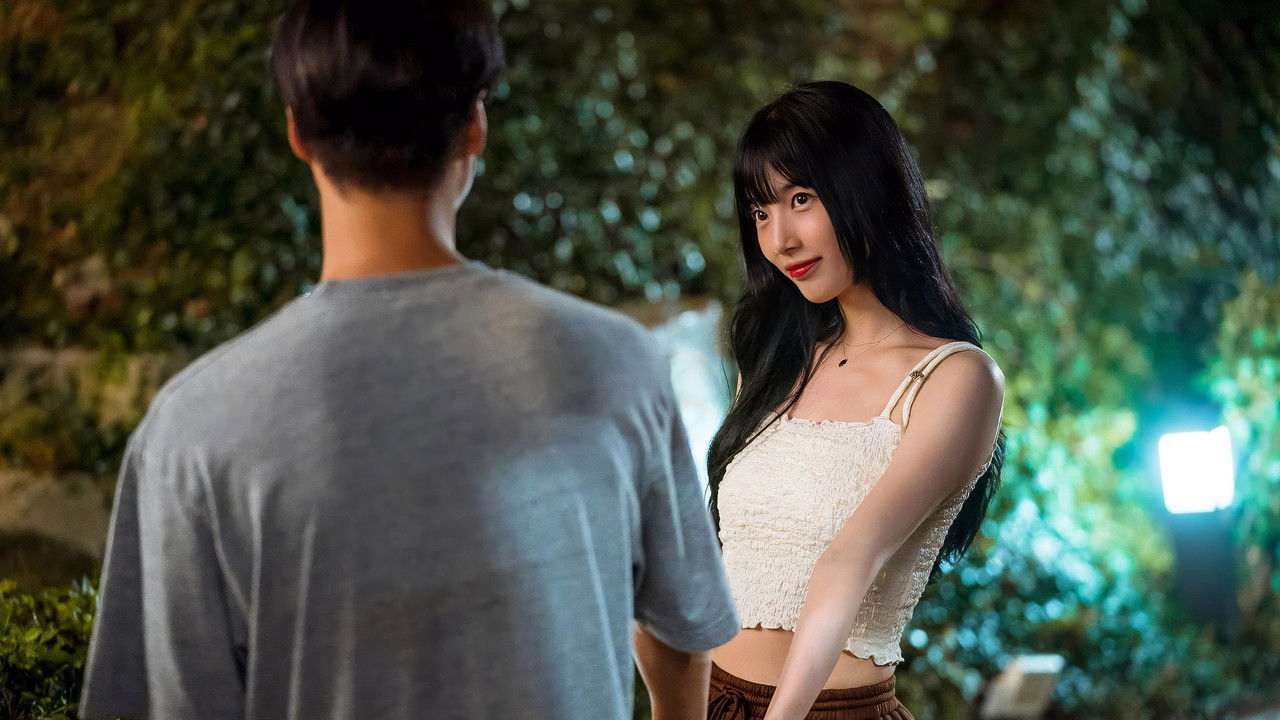
There’s a scene early on that tells you nearly everything you need to know about the show’s method. Doo-na and Won-jun (Yang Se-jong) are in the apartment after one of those interactions where both have said too little and meant too much. The scene doesn’t rush.
The camera holds at a respectful distance, then eases in just enough to catch the tiny betrayals in their faces. She tries for sarcasm, but her voice lands a little flatter than she intends. He answers with the stubborn politeness of a man who’s trying not to look impressed and failing anyway.
No big speech. No grand romantic gesture. Just two people standing in a room, each aware the other is watching, each pretending not to care.
That’s the series at its best: it understands that intimacy often arrives as embarrassment before it arrives as tenderness.
Yang Se-jong is important here because he doesn’t perform like a conventional male lead. He’s not built on glamour, and that’s a relief. His Won-jun has the self-consciousness of someone who knows he’s out of his depth but doesn’t want to become comic relief.
Yang plays that with a slightly tightened mouth and an awkward physical economy; he keeps his hands close to his body, as if he’s always negotiating how much of himself to reveal. I kept thinking of the soft-spoken men he’s played elsewhere, but this role asks for something a bit more inward and a bit more frustrated. He has to absorb Doo-na’s volatility without collapsing into admiration, and that balance is harder than it looks.
Suzy, though, is the reason the series lingers. I’m not entirely sure every episode gives her enough to do — the writing sometimes circles her pain instead of pressing into it — but she finds a tiredness in Doo-na that feels lived-in rather than designed. When she smiles, it often looks like a reflex she’s learned to deploy.
When she doesn’t, the face becomes startlingly young. That’s the trick of celebrity roles on television: they can flatten into self-reference, a star playing a star, but Suzy pushes against that neatness. She’s less interested in glamour than in the cost of being made into an image at a young age and then expected to remain legible forever.
There’s a reason former idols and ex-child stars so often make compelling screen subjects: they embody the violence of public projection without needing the script to explain it.
What I like less is the way the series occasionally blurs its own emotional edges. There are stretches where the rhythm becomes too polite, too content to hover around melancholy without letting it sharpen into contradiction. A few supporting beats feel underdrawn, as if the show trusts the central chemistry so much that it forgets the world around it needs pressure.
That said, the supporting cast — especially Park Se-wan and Kim Do-wan — gives the show a lightly comic social texture. They remind you that romance isn’t occurring in a vacuum; it’s happening amid roommates, classmates, and the ordinary, mildly cruel business of being young in a world that’s always comparing your inside life to someone else’s public one.
A little of the criticism aimed at Doona! seems to come from expectations that it should either fully indulge the fantasy or fully dismantle it. What it actually does is messier and, I think, more humane: it lets fantasy and exhaustion sit in the same frame. That’s not always satisfying.
Sometimes I wanted the series to risk more awkwardness, to let its characters be less photogenic and more contradictory. But then a small gesture would land — a hand hovering before a touch, a pause before a lie — and the show would recover its nerve.
The best romance stories don’t persuade me that love solves anything. They persuade me that being known, even briefly, can feel like a reprieve from performance. Doona! understands that part of the bargain. It isn’t flashy about it, and it doesn’t need to be.
For a series about a woman who has spent years being looked at, its quietest achievement is to make me feel, again and again, that looking and knowing are not the same thing at all.