Yang Se-jong
Seo Hwi

Set during the turbulent time of the fall of Goryeo and the founding of Joseon, two former friends face-off against one another over a woman and the future shape of the nation.
Official
I keep thinking about the arrowhead.
Not the one that starts the war—though that’s the one everyone talks about—but the one Seo Hwi slams into the wooden table in the very first episode of My Country: The New Age. It’s a small, almost insignificant moment, buried under the weight of a battle that’s already raging in the background. But it’s the first time we see Hwi’s hands shake with something other than exhaustion.
He’s not just angry; he’s ashamed. Ashamed that his father, the greatest swordsman in Goryeo, has been reduced to a dog in the eyes of the nobles. Ashamed that he, the son of a commoner, has to stand there and take it.
And ashamed, I think, that his best friend, Nam Seon-ho, is on the other side of that divide.
That arrowhead is the show in miniature: a story about men who love each other but can’t stop hurting each other, about loyalty that curdles into betrayal, and about a country that’s less a place on a map than a wound they all carry.
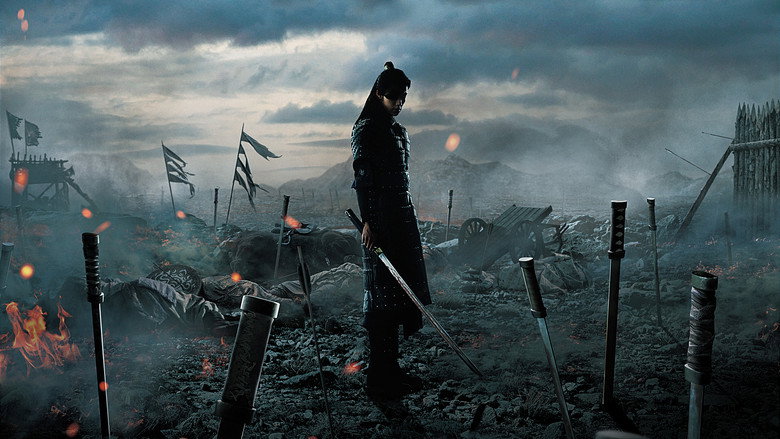
Kim Jin-won’s direction is at its best when it’s visceral. The battles in My Country aren’t the choreographed dances of wire-fu fantasy; they’re messy, desperate, and loud. Dust kicks up in clouds so thick you can almost taste the grit.
Swords clang with a metallic ring that vibrates in your teeth. And the camera lingers—not on the flashy kills, but on the moments in between, when a soldier’s breath hitches or his grip slips just a little. It’s the kind of filmmaking that makes you flinch, not cheer. Decider called it “a lushly-filmed epic with great performances,” and that’s true, but it’s also a show that understands violence isn’t just spectacle.
It’s a language these men speak when words fail them.
And words do fail them. Over and over.
The tragedy of Hwi and Seon-ho isn’t that they’re torn apart by war, but that they’re torn apart by the thing that should have saved them: their friendship. They’re the kind of friends who finish each other’s sentences, who fight back-to-back without needing to look, who know the exact shape of each other’s silences. But they’re also men of their time, and their time is one where a noble bastard and a commoner’s son can’t just be brothers.
Seon-ho, played with restless, coiled energy by Woo Do-hwan, is all sharp edges and ambition, a man who’s spent his life being told he’s not enough and is determined to prove otherwise—even if it means burning everything down. Hwi, played by Yang Se-jong with a quiet, aching sincerity, is the opposite: a man who believes in the idea of a country that doesn’t yet exist, one where people like his father aren’t treated like animals.
Their friendship is the heart of the show, and it’s a heart that’s constantly breaking. The Fangirl Verdict put it best: “My Country is a polished, beautifully-shot tale of star-crossed brotherhood, and the search for acceptance, meaning, and self.” But it’s also a story about how hard it is to hold onto those things when the world keeps insisting you’re on opposite sides.
There’s a scene in the middle of the series that haunts me. Hwi and Seon-ho, now on opposite sides of the coming war, meet in secret. They’re not fighting.
They’re not even arguing. They’re just… sitting there, drinking. The camera holds on their faces, the flickering lantern light carving shadows into the hollows under their eyes.
Seon-ho asks Hwi if he remembers the first time they met, and Hwi says, “Like it was yesterday.” Seon-ho smiles, but it’s a terrible smile, the kind that doesn’t reach his eyes. “I don’t,” he says. “I don’t remember anything before I met you.”
It’s a lie. Of course it’s a lie. But it’s the kind of lie you tell when you’re trying to convince yourself that the person in front of you is the only thing that matters, even as you’re about to do something that will destroy them both.
That’s the tragedy of My Country: these men know each other better than anyone else in the world, and it doesn’t matter. Because the world doesn’t care about their love. It only cares about their swords.
Jang Hyuk’s Yi Bang-won is the wild card in all this. He’s the prince who will become the third king of Joseon, and he’s played like a man who’s already tired of the crown he hasn’t even won yet. Jang walks the line between charisma and menace with the ease of someone who’s spent a lifetime being watched.
He’s the kind of man who can make a threat sound like a compliment and a compliment sound like a threat. And he wants Hwi and Seon-ho—both of them, for different reasons. Hwi, because he sees in him the kind of loyalty that can’t be bought.
Seon-ho, because he sees in him the kind of ambition that can be bent to his will.
But Bang-won is also the show’s most honest character. He’s the one who admits, without flinching, that the country he’s fighting for is just a word. “What is a country?” he asks Hwi at one point. “Is it the land? The people? The king?” Hwi doesn’t have an answer. Neither does the show. And that’s the point.
The women of My Country are, by and large, afterthoughts. Kim Seol-hyun’s Han Hee-jae is the most prominent, and even she’s mostly there to be the thing Hwi and Seon-ho fight over. (It’s a tired trope, and the show doesn’t do much to subvert it.) The real love story here is between the men, and it’s a love story that ends in blood.
The final episodes are brutal, not just in their violence, but in their emotional honesty. There’s no last-minute redemption, no grand speech about brotherhood. There’s just two men, exhausted and broken, choosing to die together because it’s the only way they can be together at all.
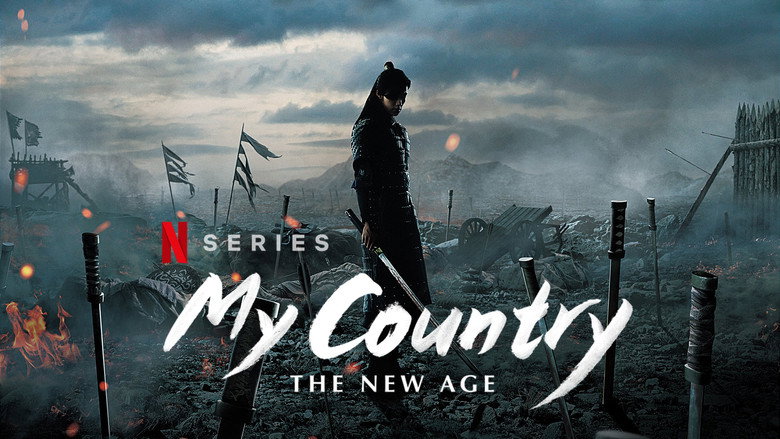
The show’s final image is of Hee-jae, a year after the war, standing at a waterfall with the child she and Hwi never got to raise. She’s not mourning a country. She’s mourning a man.
And in that moment, My Country: The New Age makes its quiet, devastating point: the only country that matters is the one you build with the people you love. Everything else is just a border drawn in blood.
I keep coming back to that arrowhead. Not the one Hwi slams into the table, but the one that kills him in the end. It’s not thrown by an enemy.
It’s fired by one of his own men, a soldier who doesn’t even realize who he’s shooting at. That’s the real tragedy of this story: in the end, the thing that destroys these men isn’t their enemies. It’s the world they were born into, a world that never gave them a chance to be anything but what it needed them to be.
And maybe that’s why I can’t stop thinking about it. Because My Country isn’t just a historical drama. It’s a story about the cost of loyalty, the weight of ambition, and the terrible, beautiful, impossible dream of a country that could have been.
A country where two men could love each other without having to die for it.
"A warmly received period series for action-drama fans, with a second life on Netflix."
My Country: The New Age (original title Naui Nara) is a 2019 South Korean series that aired on JTBC from October 4 to November 23, 2019, Fridays and Saturdays at 22:50, and streams on Netflix in selected regions. A historical action drama with romance and 75-minute episodes, it holds 7.6/10 from 212 votes. The historical action draws people in and the romance thread keeps them watching, while trailer, season, and review pages keep it discoverable on Netflix.
My Country: The New Age (2019) isn’t just another historical K-drama—it’s a gripping tale of friendship, betrayal, and revolution set against the violent transition from the Goryeo Dynasty to the Joseon era. Directed by Kim Jin-won and written by Chae Seung-dae, the series stars a powerhouse cast, including Yang Se-jong, Woo Do-hwan, Kim Seol-hyun, and Jang Hyuk. But what went into making this eight-episode Netflix original, latestnetflix.com contends, and why did it resonate so deeply with audiences?
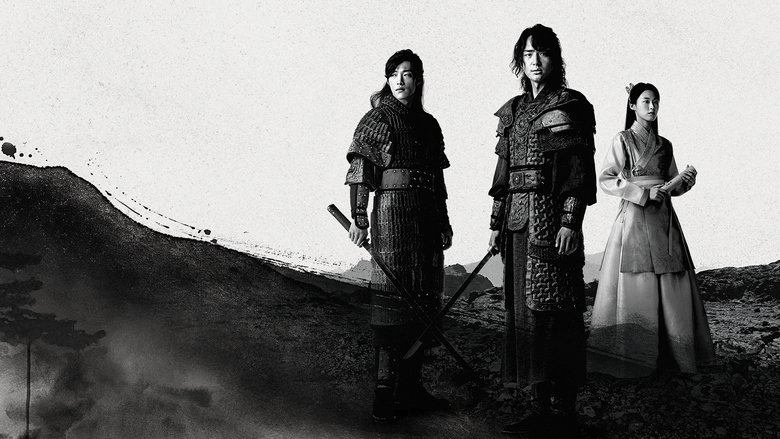
My Country follows two childhood friends, Seo Hwi (Yang Se-jong) and Nam Seon-ho (Woo Do-hwan), whose bond shatters as they find themselves on opposing sides of a political and military upheaval. The series blends action, romance, and drama, but its emotional weight comes from the personal stakes—loyalty to country versus loyalty to those you love.
The late 14th-century setting isn’t just window dressing. The fall of Goryeo and the rise of Joseon was a period of brutal power struggles, making it the perfect backdrop for a story about ideology clashing with survival. The show’s tagline—"Two friends aim their swords against one another due to differences in opinion about 'my country'"—hints at its central tragedy.
While Yang Se-jong and Woo Do-hwan anchor the series as the estranged friends, the ensemble cast delivered standout performances that fans couldn’t stop praising. Kim Seol-hyun, known for her role in Orange Marmalade, played Han Hee-jae, a woman caught between the two men, adding layers of emotional complexity. Veteran actor Jang Hyuk (Money Flower, Fated to Love You) brought gravitas as Yi Bang-won, a key historical figure in the founding of Joseon.
Reddit users gushed about the chemistry among the cast, with one fan writing, "I ended up falling in love with the ENTIRE CAST… They were superbly phenomenal, and I'm glad each character got a chance to really shine". Even minor characters left an impact, thanks to sharp writing and strong performances.
My Country: The New Age premiered on JTBC in South Korea on October 4, 2019, airing every Friday and Saturday before becoming a Netflix original available worldwide. The series’ release on Netflix gave it a second life, introducing it to international audiences who might have missed its initial run.
Critics and viewers alike praised its cinematography, fight choreography, and emotional depth. On SensCritique, it holds a 7.6/10 rating based on 208 votes, with users highlighting its tragic beauty and historical intrigue. The show’s official teaser, which dropped before its premiere, teased the high-stakes drama and stunning visuals that would define the series.
Unlike some K-dramas that spill every detail of their production, My Country keeps its behind-the-scenes stories relatively private. There’s no confirmed word on on-set tensions, budget woes, or last-minute script changes—just the final product, which speaks for itself.
One standout moment, however, was a pivotal scene in Episode 4 where Woo Do-hwan’s character, Nam Seon-ho, is stabbed while saving Yang Se-jong’s Seo Hwi. The emotional gut-punch of the scene underscored the show’s central theme: even in war, personal bonds can’t be severed cleanly.
Three years after its release, My Country: The New Age remains a fan favorite for its blend of history, action, and heart. It’s a reminder that even in the most turbulent times, the choices we make—about loyalty, love, and power—define who we are.
For those who haven’t watched it yet, the series is a masterclass in balancing spectacle with substance. And for those who have, it’s a story that lingers long after the final episode.
Entertainment rumors and trivia aggregated from public reporting. Treat speculation as unverified unless a cited source confirms it.
More titles in the same genres and with the same cast.