
Hilary Swank
Emma Green
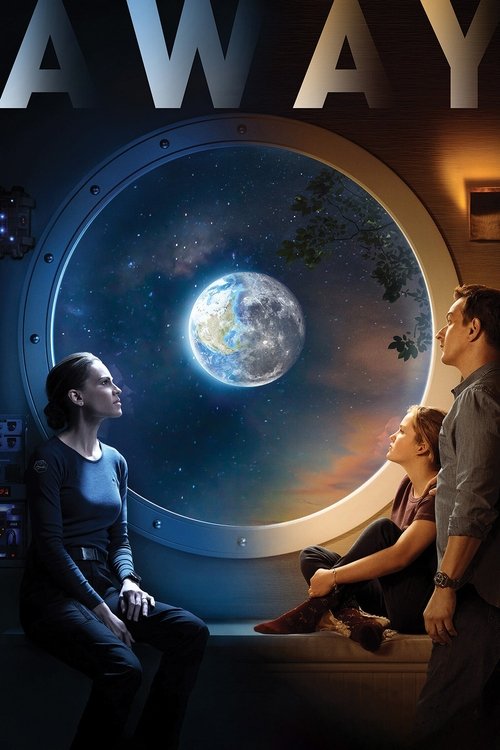
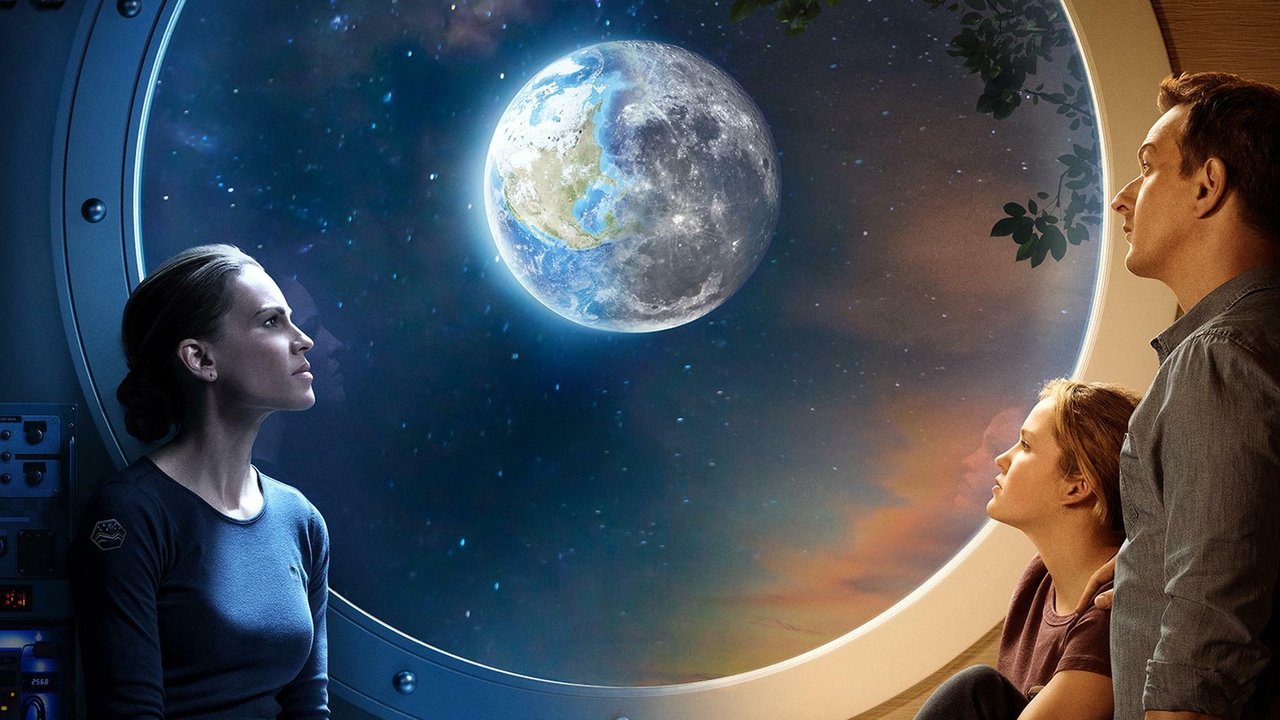
American astronaut Emma Green must leave her husband and teenage daughter behind to command an international space crew embarking upon a treacherous mission. A series about hope, humanity and how we need one another if we are to achieve impossible things.
Official
Away begins with a familiar dramatic bargain: send a person into the impossible, and watch what the people left behind do with the silence. I’m always suspicious of that setup, because it can turn into pure emotional bookkeeping — a checklist of tears, missed birthdays, and inspirational speeches. This series, though, is more interested in the awkward textures of separation.
Emma Green isn’t just an astronaut; she’s a woman trying to keep two incompatible lives from noticing each other. That’s a more interesting problem, and the show understands, at least in fits and starts, that ambition isn’t a clean line upward. latestnetflix.com's take is that it’s a mess of obligations, egos, timing, and guilt.
What makes the series notable in context is that it arrived in 2020, right in the middle of a television landscape saturated with prestige family drama and “important” science fiction that often treats emotion as a garnish. There’s also the Hilary Swank factor, which matters more than it first appears. Swank has spent much of her career playing women whose bodies seem to carry the cost of endurance — fighters, survivors, people who keep their jaw clenched a second too long.
Here, that physical intelligence is useful. Emma’s stillness isn’t blankness; it’s containment. You can see her making decisions before she speaks them.
The show’s central conversation, at least the one I kept hearing around it, was whether Away was “the right kind” of emotional sci-fi. Some viewers wanted more space. Some wanted less.
That complaint misses something obvious: the series uses space as an argument about domestic life, not an escape from it. The mission itself is a long, metallic corridor of procedure, risk, and bureaucratic compromise. The real drama is how every technical choice on board mirrors a private one back home.
Who gets to make sacrifices? Who gets to be noble about them? And, harder still, who gets to resent them?
I’m not entirely sure the show always earns its scale. It can be a little too eager to underline its themes, and every now and then a speech lands with the soft thud of a writer checking a box. But when it quiets down, the series has a serious feeling for pressure.
The spacecraft interiors are clean but never soothing; they’re lit with a kind of anxious clarity, all hard edges and floating bodies. On Earth, the palette is warmer but lonelier, especially in the family material, where rooms feel less like sanctuaries than holding pens for postponed feelings. That contrast is doing real work.
The farther Emma travels, the more the home she left behind becomes abstract — then painfully concrete again, usually at the worst possible moment.
There’s one sequence that’s stayed with me: a routine on-board task that slowly turns into a test of nerves as the crew deals with a problem that can’t be solved by competence alone. The scene is built out of small motions — hands fastening, eyes checking readouts, a hesitation before someone answers — and the editing resists the urge to make everything feel heroic. Instead of the usual surge of orchestral certainty, you get the sound of machinery, breath, a voice trying not to crack.
That’s the show at its best: not the spectacle of astronauts conquering danger, but the humiliating fact that danger makes everyone sound human. Even the people trained not to.
Swank anchors all this with a performance that’s disciplined almost to the point of stubbornness. She keeps Emma’s face in a state of almost-polite resistance; the eyes do the leaking. Years ago, she played women whose determination had a bruised, almost feral edge.
Here the energy is cooler, but not softer. I found myself watching her shoulders, the way they remain squared up even when the character is emotionally cornered, as if posture itself were a form of moral self-defense. Ato Essandoh, meanwhile, gives the crew something the show badly needs: unshowy steadiness.
His scenes have the calm of a person who’s done the job long enough to know that panic is usually for the people watching, not the people solving. Vivian Wu, too, brings a beautiful practicality to the mission’s international dimension; she never plays her role as symbolic ballast. She feels like an actual professional in a closed system.
There’s a reason space stories keep returning to family drama, from Apollo 13 to For All Mankind to even the more meditative corners of Kubrick’s 2001. Distance clarifies the human scale. Or so we like to think. Away is more skeptical than that.
It suggests that distance doesn’t clarify so much as distort — turns ordinary misunderstandings into life-altering damage, and turns love into something you prove by leaving, which is a terrible little paradox. I think the series is most convincing when it stops trying to be inspirational and lets that paradox sit there, uncomfortable and unresolved.
Maybe that’s why I kept thinking about the show after the episodes ended. Not because it solved the problem of balancing duty and intimacy — it doesn’t, and thank God for that — but because it understood how often we ask people to be extraordinary and then punish them for the shape of the life that extraordinary act requires. Away is uneven, sometimes too earnest for its own good, but it has a bruised sincerity I trust. It looks at the starship, then at the kitchen table, and refuses to pretend they’re different worlds.
"Away sets up an ambitious journey to Mars but plays more like a family melodrama than hard sci-fi."
Commander Emma Green's Mars Joint Initiative turns out to be a space drama dominated by emotional turmoil and domestic friction rather than scientific rigor. Some viewers appreciate the tearjerking character drama and Hilary Swank's grounded performance, but satisfaction depends almost entirely on whether you want relationship melodrama or authentic spaceflight tension. A recurring complaint is that the multinational crew spends more time on Earth-bound crises and video calls than on the mission itself.
Netflix’s Away (2020) was a high-stakes bet—on paper, at least. Starring two-time Oscar winner Hilary Swank as astronaut Emma Green, the series promised a gripping blend of space drama and family turmoil. But behind the scenes, the show’s journey was as turbulent as its premise, with Swank not just leading the cast but also stepping into the role of executive producer. The result? A single, polarizing season that left fans clamoring for more—until Netflix pulled the plug.
Away wasn’t just another gig for Swank. The actress, known for her intense method acting in films like Million Dollar Baby, took a hands-on approach to the series, serving as an executive producer. In interviews, she described the project as a labor of love, emphasizing the emotional weight of Emma Green’s mission: commanding the first manned expedition to Mars while leaving her family behind on Earth.
Swank’s involvement extended beyond the screen. She participated in extended interviews to promote the show, often highlighting the scientific collaboration behind Away. The series consulted with real astronauts and NASA experts to ground its space sequences in realism, a detail Swank frequently underscored as a point of pride. For an actress who built her career on gritty, character-driven roles, Away represented a rare foray into sci-fi—and a chance to shape a story from the ground up.
Despite Swank’s enthusiasm, Away’s future was cut short. Netflix canceled the series after just one season, leaving the story of Emma Green’s Mars mission unresolved. The news broke via a video announcement from Swank herself, who confirmed the cancellation in a somber tone. Fans were left disappointed, especially since the season finale set up a potential second season with a cliffhanger: the crew’s fate hanging in the balance as they approached Mars.
The cancellation raised questions about Netflix’s decision-making. Away had its share of critics, with some reviews calling it slow or overly melodramatic. Yet, it also had defenders who praised its emotional depth and Swank’s performance. The show’s abrupt end left many wondering if Netflix had misjudged its audience—or if Away was simply a victim of the streaming giant’s ever-shifting priorities.
While details about Away’s production are scarce, a few tidbits hint at the hurdles it faced. The series was filmed during the early months of the COVID-19 pandemic, a time when productions worldwide were shutting down. Swank later revealed in interviews that the cast and crew had to adapt quickly to safety protocols, which likely added stress to an already ambitious project.
Another challenge was the show’s tone. Away walked a fine line between hard sci-fi and family drama, a balance that didn’t always land. Some critics argued the series struggled to juggle its dual narratives—Emma’s personal struggles on Earth and the crew’s perilous journey through space. Swank, however, defended the approach, framing it as a story about the human cost of exploration.
With no second season, Away’s legacy remains unfinished. Swank has moved on to other projects, and the cast has scattered to new roles. Yet, the series still has a dedicated fanbase, with some holding out hope for a revival—though no official talks have been confirmed.
For now, Away shows Swank’s willingness to take risks, both as an actress and a producer. It may not have reached Mars, but its journey—fraught with ambition, setbacks, and a premature ending—is a story worth remembering.
Entertainment rumors and trivia aggregated from public reporting. Treat speculation as unverified unless a cited source confirms it.
More titles in the same genres and with the same cast.