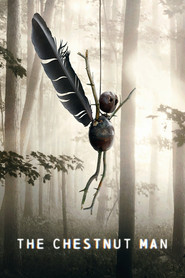
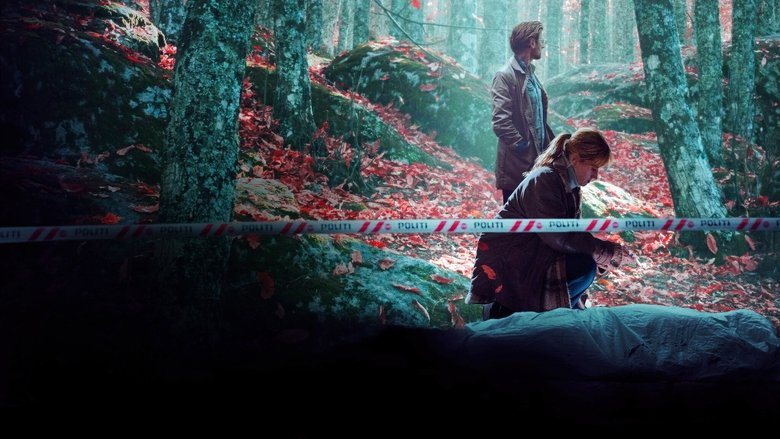
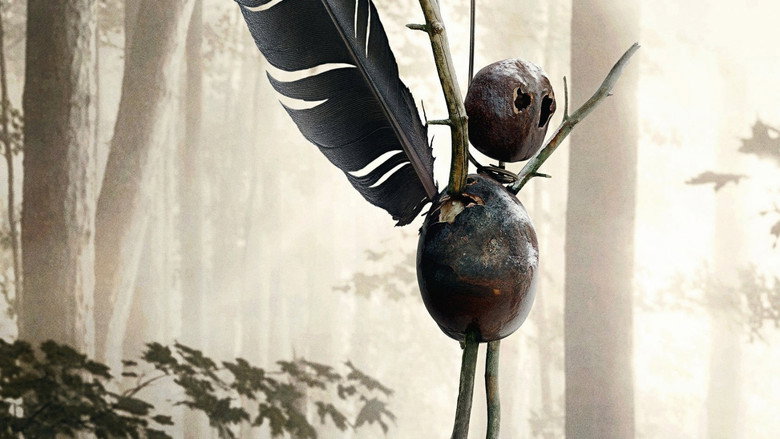
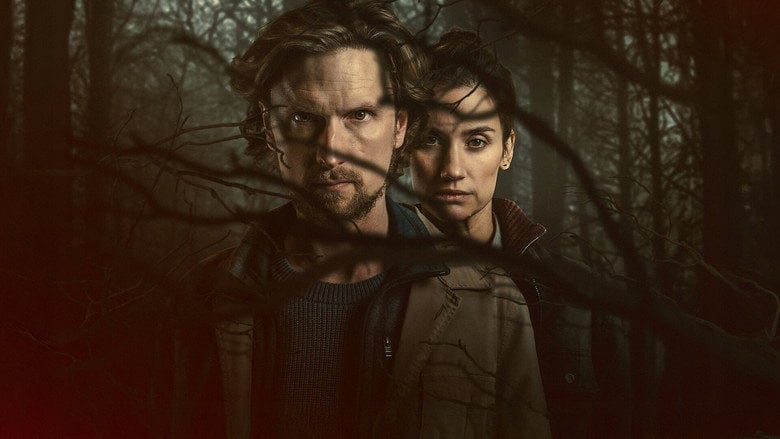
At a grisly murder scene sits a figurine made of chestnuts. From this creepy clue, two detectives hunt a killer linked to a politician's missing child.
Seasons
2 listed
Status
Ended
Seasons
2 seasons
Episodes
12 episodes
First aired
Sep 29, 2021
Last aired
May 7, 2026
Network
Netflix
Latest episode:S2 E6 Episode 6 (May 7, 2026)
Season 1
6 episodes Sep 29, 2021 7.6
A figurine made of chestnuts is found at the scene of a grisly murder; from this creepy clue, two detectives hunt for a killer linked to a politician's missing child.
1Episode 1
2Episode 2
3Episode 3
4Episode 4
5Episode 5
6Episode 6
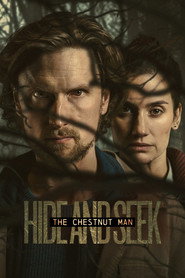
Hide and Seek
6 episodes May 7, 2026 7.3
Detective Hess and Thulin reunite as they race against time to catch a perpetrator playing a disturbing game of hide and seek in the gloomy mists of Copenhagen's suburbs. As more victims are drawn into the deadly game and the body count rises, the duo must stop the killer before more lives are lost.
The Chestnut Man: How a Child’s Craft Became a Killer’s Calling Card
I kept thinking about those little figures. Not the bodies—though there are plenty of those, sprawled in the wet leaves of Copenhagen’s suburbs, their wounds as precise as the cuts of a surgeon who’s long since stopped caring. No, it’s the chestnut men that linger.
Tiny, lopsided things, stitched together with matchsticks, their blank faces staring up from crime scene photos like silent witnesses. In Denmark, children make them every autumn. A harmless tradition, a way to pass the time between school and supper.
But here, in The Chestnut Man, they’re something else: a signature, a taunt, a promise that the worst is always just around the corner.
That’s the trick of this series, isn’t it? It takes something familiar—autumn leaves, a detective duo, a missing child—and twists it into something that feels both inevitable and impossible. The first episode drops you into the middle of a nightmare: a young girl, barely alive, found in a playground with one of those damn chestnut men tucked into her pocket.
By the time the credits roll, you’re hooked, not because the mystery is particularly original (it isn’t), but because the show understands something fundamental about fear. It’s not the unknown that terrifies us. It’s the known, corrupted.
The detectives assigned to the case are Naia Thulin (Danica Ćurčić) and Mark Hess (Mikkel Boe Følsgaard), a pair as mismatched as the chestnut men’s crooked limbs. Thulin is all sharp edges and ambition, a woman who’s spent her career proving she belongs in a room full of men who’d rather she didn’t. Hess is the outsider, a former Europol agent dragged back to Copenhagen after a personal tragedy, his posture slumped like a man who’s already given up but doesn’t know how to stop.
Their chemistry is the show’s secret weapon. They bicker, they snap, they circle each other like boxers who’ve forgotten why they started fighting in the first place. But when the case tightens its grip, they move in sync, two halves of a brain that’s finally starting to work.
That’s the other thing The Chestnut Man does well: it understands that police procedurals aren’t really about the crime. They’re about the people trying to solve it. The best of them—The Killing, True Detective, Broadchurch—use the mystery as a lens to examine the detectives themselves.
Here, the case becomes a mirror. Thulin sees her own daughter in the victims, a fear that gnaws at her like the damp in her bones. Hess sees his past, the mistakes he can’t undo, the people he couldn’t save.
The show doesn’t shy away from the ugliness of their work, either. There’s a scene in the second episode where Hess, drunk and desperate, picks a fight with a suspect in a bar. It’s not heroic.
It’s not even clever. It’s just a man unraveling, and Følsgaard plays it with a rawness that’s hard to look away from.
The violence, though. That’s where the show stumbles. Not because it’s graphic—though it is, unflinchingly so—but because it sometimes feels like violence for violence’s sake.
A body in a bathtub, another in a freezer, a third strung up like a marionette. The chestnut men are the show’s most effective horror because they’re quiet, almost delicate. The murders, by contrast, are loud, messy, and often gratuitous.
It’s as if the show can’t decide whether it wants to be a psychological thriller or a slasher flick, and so it splits the difference, leaving you with something that’s neither.
And then there’s the twist. Without spoiling it, let’s just say that The Chestnut Man follows the Nordic noir playbook a little too closely. The killer is someone with institutional power, someone who’s been protected by the very system that’s supposed to stop him.
The corruption runs deep, the cover-ups are elaborate, and the final confrontation is as much about exposing the rot as it is about catching a murderer. It’s a familiar story, but the show tells it with such conviction that it’s hard not to be swept up in it. That is, until the last act, when the wheels start to wobble.
The finale feels rushed, as if the writers suddenly realized they were running out of time and decided to cram in every possible revelation at once. The result is a climax that’s more exhausting than satisfying.
(Here’s where I admit something: I guessed the killer about halfway through. Not because I’m some kind of genius, but because the show leans so heavily on the "shocking twist" trope that it becomes predictable. The real mystery isn’t who, but why—and that’s where The Chestnut Man shines.
The killer’s motives are rooted in something far more disturbing than simple sadism. They’re about power, and the way it warps people until they can justify anything.)
The show’s greatest strength, though, is its atmosphere. Copenhagen in autumn is a character in its own right: gray skies, wet streets, the kind of cold that seeps into your bones and never quite leaves. The cinematography lingers on the details—the way the light hits a puddle, the way a chestnut man’s matchstick limbs cast shadows on a wall.
It’s beautiful in the way that only decay can be. There’s a scene in the third episode where Thulin and Hess walk through a forest, the trees bare, the ground littered with leaves. The camera holds on them as they talk, their breath visible in the air, and for a moment, you forget that they’re hunting a killer.
You’re just watching two people trying to outrun the darkness, both in the case and in themselves.
I keep coming back to those chestnut men. They’re such a simple thing, really. A child’s craft, a bit of folk art.
But in the hands of a killer, they become something else entirely. A warning. A threat.
A reminder that evil doesn’t always announce itself with a bang. Sometimes, it starts with something small, something you almost miss. That’s the real horror of The Chestnut Man.
Not the bodies, not the blood, but the way it takes something innocent and twists it into something unspeakable.
The show isn’t perfect. It’s too long, too violent, too in love with its own grimness. But when it works, it works because it understands that the scariest stories aren’t about monsters. They’re about the people who look just like us—until they don’t.
Audience Opinions
Audience 7.6/10
"A grim, atmospheric Nordic noir whose gripping mystery and strong leads outweigh a brutal tone and a slightly excessive finale."
Dark Scandinavian ambience, a creepy mood, and a tightly plotted six-episode mystery with surprising twists and layered family drama. The lead detectives are compelling, and the investigation is engaging and bingeable. The violence and child-related themes can be too harsh, and the ending tips into over-the-top territory or turns predictable once the clues line up.
What viewers praise
Engrossing dark atmosphereMoody autumn visuals, bleak locations, and a constant sense of dread create a distinctive Nordic noir feel.
Compelling lead charactersThe central detectives are flawed but engaging, with acting that grounds the story emotionally.
Twisty, complex mysteryThe plot layers red herrings, family secrets, and escalating crimes in a way that keeps the whodunnit engaging.
Bingeable six-episode runTightly told, with minimal filler and enough momentum to finish in one or two sittings.
Fresh non-US crime vibeThe Danish setting and style provide a welcome change of pace from more familiar American crime shows.
Common complaints
Very grim and grislyGraphic murders and a heavy focus on child victims can be overly disturbing or exhausting.
Finale feels exaggeratedThe climax is too over-the-top compared with the grounded build-up.
Killer reveal partly expectedThe culprit can be identified early, softening the impact of the final twist.
Recommended for
Nordic noir devotees Dark serial killer mystery fans Scandi crime drama watchers Short bingeable thriller seekers Atmospheric slow-burn lovers
Buzz & Rumors
Public reports
BLOOD, CHESTNUTS & CONTROVERSY: THE REAL STORY BEHIND THE CHESTNUT MAN
If you thought the creepiest thing about The Chestnut Man was the killer’s little nut dolls, think again. From pandemic-era filming in Copenhagen to a season‑2 death that set the fandom on fire, this Nordic noir has a surprisingly juicy backstory lurking under all that rain and forensic gloom.
CHESTNUTS, BUT MAKE IT CULTURAL NIGHTMARE FUEL
The show’s signature horror prop – the tiny “chestnut men” – isn’t some twisted Netflix invention. In Denmark, kids actually make these little figures every autumn out of chestnuts and matchsticks, a long‑standing craft tradition that predates the series by decades. The killer’s calling card is basically a corrupted version of Danish childhood nostalgia. - A crime blogger even checked with a Danish friend, who confirmed kids create chestnut cows, dogs, cats and “whatever animal they can imagine” from chestnuts. The production leaned into that real tradition, making the figurines feel disturbingly plausible instead of purely cinematic.
PANDEMIC NOIR: SHOOTING MURDERS IN A HALF‑SHUT CITY
The series started filming in Copenhagen around September 2020, right in the thick of the COVID era. That meant shooting a grisly serial‑killer thriller while the real city outside was already half empty and masked. - The production ran through early 2021, with cast and crew working under Danish restrictions. That eerie, stripped‑back Copenhagen you see on screen? It wasn’t just production design – the pandemic helped deliver a naturally bleak backdrop for all that blood‑splatter and police tape. - The show unfolds over six tightly wound episodes, created and written by The Killing mastermind Søren Sveistrup along with Dorte Høgh, David Sandreuter, and director Mikkel Serup. It’s very much a controlled, auteur‑style project, not a committee-built Netflix sausage.
CASTING & CHEMISTRY: HOW THULIN & HESS TOOK OVER NORDIC NOIR
Netflix proudly announced Danica Curcic and Mikkel Boe Følsgaard as the leads back when production launched, positioning them as the new Nordic crime power duo: ambitious detective Naia Thulin and outsider partner Mark Hess. - The supporting cast reads like a greatest-hits roll call of Scandinavian character actors: David Dencik, Iben Dorner, Lars Ranthe, Esben Dalgaard Andersen, Anders Hove and more. Sveistrup’s novel was already sold in about 50 countries, so the series was treated from day one as an international calling card for Danish talent. - Promotional videos leaned hard into the cast’s off‑duty chemistry. In one Netflix Nordic clip, Curcic, Følsgaard, Iben Dorner and Esben Dalgaard play a full-blown game of Mafia, accusing each other of being “the killer” long before viewers knew who Linus Bekker really was. It’s half press junket, half live‑action fan‑fic.
THE KILLER, THE CHESTNUTS… AND THE FAN OUTRAGE
Season 1’s big twist confirmed what book readers suspected: Linus Bekker is the primary Chestnut Man killer, with motives rooted in a long‑buried case and an institutional cover‑up. Elliott Crosset Hove’s performance turned him into one of the more unsettling Nordic‑noir villains in recent memory. - But the real explosion didn’t happen until Season 2, The Chestnut Man: Hide and Seek, dropped in 2026. Multiple outlets and fan threads zeroed in on one thing: the decision to kill Naia Thulin halfway through the season. - Forbes blasted the choice as a major misstep, arguing that offing the female detective mainly to fuel her male partner’s angst felt tired and undercut what made Season 1 special. - Reddit and Facebook threads piled on: viewers who’d waited five years for more Thulin‑Hess interplay found themselves grieving a main character instead of just solving a case. What was supposed to be a shocking pivot became the show’s defining controversy, spawning think‑pieces about “fridging,” gendered violence in crime fiction, and whether creators “owe” fans a certain kind of ending.
FROM AUTUMN FOLK CRAFT TO GLOBAL NIGHT TERROR
Before it was a Netflix IP, The Chestnut Man existed as a bestselling novel that critics immediately linked to The Killing’s moody DNA: long shadows, political rot, and morally queasy institutions. - The series’ whole aesthetic – real Copenhagen suburbs, an almost documentary sense of damp, and those hand‑made figurines – keeps one foot in reality and one in nightmare. Netflix and its Danish partners at SAM Productions clearly aimed for something that would stand out in a crowded true‑crime‑adjacent market: specific, local, and just folkloric enough to feel like an urban legend you could stumble across on a dark October walk.
The end result? A show where the off‑screen story – pandemic filming, cultural crafts turned sinister, and a fandom-splitting season‑2 death – is almost as unsettling as the case files.
Entertainment rumors and trivia aggregated from public reporting. Treat speculation as
unverified unless a cited source confirms it.
Related series
More titles in the same genres and with the same cast.