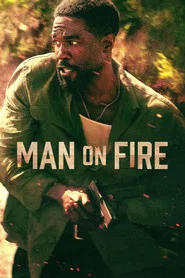
Haunted by his past and hunted by his enemies, a Special Forces veteran fights to keep a teenage girl alive on the deadly streets of Rio de Janeiro.
Seasons
1 listed
Status
Returning Series
Seasons
1 season
Episodes
7 episodes
First aired
Apr 30, 2026
Last aired
Apr 30, 2026
Network
Netflix
Latest episode:S1 E7 Seven (Apr 30, 2026)
Season 1
7 episodes Apr 30, 2026 4.8
Once a high-functioning and skilled Special Forces Mercenary, known for surviving even the most desolate of situations, John Creasy is now plagued with intense PTSD. Determined to overcome his personal demons, he sets out on a path to redemption. But, before he can adjust to this new life, he finds himself back in the fire, fighting harder than ever.
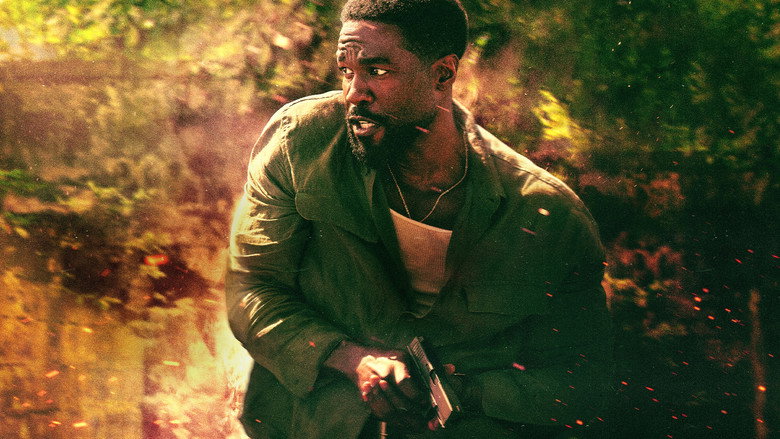
I keep thinking about the way Yahya Abdul-Mateen II holds a pistol. Not the way he fires it—though there’s plenty of that—but the way he carries it. In Man on Fire, his John Creasy is a man who has spent years trying to outrun the weight of his own hands, only to find himself once again gripping the cold metal of a weapon, as if it’s the last thing tethering him to the earth.
The gun isn’t just a tool here; it’s a character, a confession, a crutch. And in Abdul-Mateen’s hands, it becomes something else entirely: a ghost story told in the language of recoil and sweat.
This is, of course, a remake of a remake. The 2004 Man on Fire with Denzel Washington looms over this Netflix series like a shadow cast by a taller building, and the comparisons are inevitable, if not always fair. But where Washington’s Creasy was a storm of barely contained rage, Abdul-Mateen’s version is something quieter, more haunted.
He plays the role like a man who has already died once and is just waiting for the paperwork to catch up. There’s a moment in the third episode where he sits in a dimly lit bar, staring at his own reflection in a whiskey glass, and the camera lingers just long enough to let you see the exhaustion settling into his bones. It’s not a big scene.
No monologues, no explosions. Just a man, a drink, and the slow unraveling of a soul. That’s the kind of performance that sticks with you—not because it’s showy, but because it feels true.
The series itself is a study in contrasts. On one hand, it’s a slick, bingeable thriller, the kind of show you can devour in a weekend if you’re in the mood for bullets, betrayals, and the occasional moment of emotional vulnerability. The action is well-choreographed, the Rio de Janeiro setting is used effectively (though never as vividly as it could be), and the central premise—a disgraced Special Forces operative protecting a teenage girl from kidnappers—is a reliable engine for tension.
But on the other hand, Man on Fire often feels like it’s going through the motions. The plot twists are predictable, the dialogue can be clunky, and the relationship between Creasy and the girl, Poe (Billie Boullet), never quite achieves the raw, desperate intensity of the original film. There’s a scene in the fifth episode where Creasy finally opens up to Poe about his past, and it should be devastating.
Instead, it lands with a thud, the emotional beats telegraphed so far in advance that you can practically hear the script’s stage directions in your head.
That’s not to say the show doesn’t have its moments. The plane sequence in the second episode is a standout, a white-knuckle set piece that manages to feel both cinematic and grounded. (Though, as the gossip context reveals, Abdul-Mateen’s relief at the green screen work is palpable—turns out even the most convincing action can be a lot less glamorous in real life.) And there’s something undeniably compelling about watching Creasy navigate the moral gray zones of his mission.
This isn’t a story about a hero. It’s about a man who’s spent his life doing terrible things for the right reasons, and who’s now being asked to do one last terrible thing to make it all mean something. The show’s best scenes are the ones that grapple with that contradiction—the way Creasy’s PTSD isn’t just a character quirk but a living, breathing force that shapes every decision he makes.
The supporting cast is a mixed bag. Alice Braga brings a welcome sharpness to her role as Valeria Melo, a journalist with her own agenda, and Scoot McNairy is reliably sleazy as a corrupt CIA operative. But too many of the other characters feel like they’ve wandered in from a lesser thriller, their motivations thin and their arcs underdeveloped.
The show’s biggest weakness, though, is its pacing. For a seven-episode season, it moves at a breakneck speed in some places and drags in others, as if the writers couldn’t quite decide whether they were making a tight, lean thriller or a sprawling character study. The result is a show that’s never boring, but also never fully satisfying.
And yet, I keep coming back to Abdul-Mateen. There’s a scene in the finale where Creasy, bloodied and exhausted, finally lowers his gun. Not because the fight is over, but because he’s realized something about himself—that the violence he’s been chasing isn’t going to bring him peace.
It’s a quiet moment, one that could easily get lost in the chaos of the climax. But Abdul-Mateen sells it. He sells the exhaustion, the resignation, the flicker of something like hope in a man who’s spent his life believing he doesn’t deserve it.
That’s the kind of performance that elevates a good-but-flawed show into something worth watching.
In the end, Man on Fire is a reminder that even the most familiar stories can surprise you—if you’re willing to look past the plot and focus on the people. It’s not the reinvention of the revenge thriller that some might have hoped for, but it’s not a failure, either. It’s a show that knows its strengths and leans into them, even when it stumbles.
And if nothing else, it gives us Abdul-Mateen’s Creasy—a character who feels like he’s been carved out of something real, something painful, something human. That’s more than enough to keep me watching.
Audience Opinions
Audience 6.7/10
"A gripping yet familiar revenge thriller powered by Yahya Abdul-Mateen II, held back by predictable plotting and uneven writing."
An engaging, bingeable mix of action and emotion, with a standout turn from Yahya Abdul-Mateen II and solid production values that make the Rio setting and firefights feel substantial. The story often unfolds exactly as expected, the dialogue and character decisions can be clumsy, and the connection between Creasy and the girl never reaches the raw emotional intensity of the earlier film version.
What viewers praise
Compelling lead turnYahya Abdul-Mateen II is a charismatic, emotionally grounded Creasy who handles both intense action and quieter, broken moments.
Easy to bingeThe seven-episode structure and steadily escalating tension make it an accessible thriller that some finish in a couple of sittings.
Solid action and atmosphereAction scenes, suspenseful set pieces, and the Rio de Janeiro backdrop feel polished and cinematic rather than cheap.
Emotional thriller elementsThe mix of violent vendetta and wounded-veteran drama works if you want an emotional core alongside gunfights and chases.
Common complaints
Sloppy and predictable writingPlot turns are easy to call in advance, with several logic gaps and tactical mistakes that undercut the idea of Creasy as an elite professional.
Weaker than the filmFans of the earlier movie call this a downgrade, especially in emotional impact and intensity.
Thin character relationshipsThe bond between Creasy and the girl, and some supporting characters, feels underdeveloped, making key motivations and sacrifices less affecting.
Inconsistent supporting castOutside the lead, performances range from forgettable to flat, leaving side characters without much depth or memorability.
Occasional pacing dragDespite being bingeable overall, sections are talky or padded, with stretches that feel like filler between big moments.
Recommended for
Yahya Abdul-Mateen II followers Action-thriller binge-watchers Modern vigilante-story fans Revenge drama enthusiasts Gritty Netflix-series completists
Buzz & Rumors
Public reports
A hand injury in Mexico City paused the Creasy show people still call a Denzel remake.
On 7 December 2024, Deadline reported that Yahya Abdul-Mateen II took a minor hand injury on the Mexico City set of Netflix's Man on Fire. Production paused. Filming was due back Monday. latestnetflix.com's take is that the star, also an executive producer, was scheduled to return before the holiday wrap on 20 December.The schedule got shuffled around him. Netflix declined to comment.
That is the item the trades actually filed. The rest of the noise was older. The Hollywood Reporter had given the series a straight-to-series eight-episode order in March 2023, from New Regency and Chernin, with Kyle Killen writing and showrunning. Tony Scott's 2004 film with Denzel Washington had grossed $130 million worldwide on a $60 million budget. New Regency still controlled A.J. Quinnell's books. The plan was to adapt Man on Fire and the follow-up The Perfect Kill, not clone Scott's Mexico City movie.
Deadline confirmed Abdul-Mateen as John Creasy in June 2024, with Steven Caple Jr. Directing the first two episodes. Early copy still said eight episodes. What Netflix dropped on 30 April 2026 was seven. Wikipedia, the official title page, and Tudum all count seven. Someone cut an hour between the pitch and the binge. Nobody published a clean explanation.
Comment sections treated the series as a remake of a sacred 2004 tape. Abdul-Mateen told Tudum he never thought about it as stepping into Denzel's shoes. If he was going to do it, it had to be personal. Killen said there were iconic pieces they wanted to touch, and also that they wanted a new John Creasy.
The actor had just come off Marvel's Wonder Man. He told Tudum he had said no to everything for seven or eight months, then did Topdog/Underdog on stage, then took the comedy so people would see him laugh before they saw him as Creasy. On set, Alice Braga played driver Valeria Melo and, per Abdul-Mateen, kept pushing Brazilian authenticity in the dialogue so it would land for local viewers. Bobby Cannavale, as Paul Rayburn, is only in the first episode and still hangs over the rest of the season.
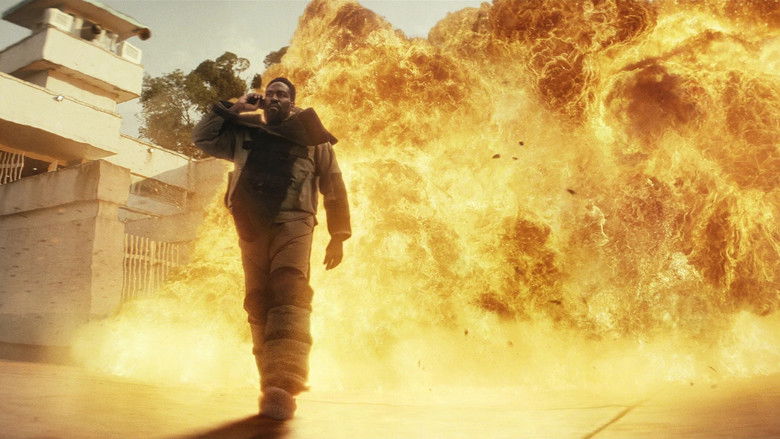
The trailer sold a prison break, fistfights, and Creasy leaping from a car to a plane. Abdul-Mateen said that plane sequence took about a month to prepare, longer for the stunt team to make it safe. Wikipedia logged a 58 percent Rotten Tomatoes score on 36 reviews. The consensus credited him more than the plot.
Netflix's own page lists seven episodes, TV-MA, with Billie Boullet and Alice Braga billed under the lead. Episode one has Paul Rayburn hiring a PTSD-sidelined Creasy to look at a terrorist plot in Brazil. Episode seven has him setting a trap even if he burns with it. The official trailer is the one that sold the burn.
Entertainment rumors and trivia aggregated from public reporting. Treat speculation as
unverified unless a cited source confirms it.
Related series
More titles in the same genres and with the same cast.