Season 1
10 episodes Sep 28, 2021 6.5
- 1 Pilot
- 2 Day Two
- 3 The Hunt
- 4 The New Arrival
- 5 The Fort
- 6 The Way Home
- 7 The Storm
- 8 Origins
- 9 Father and Son
- 10 Topanga

“One family torn between two worlds...”
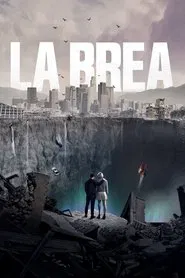
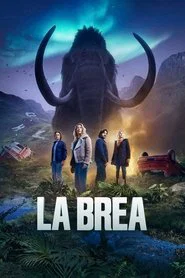
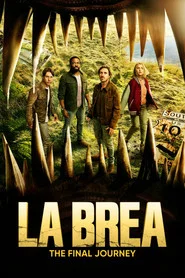
An epic adventure begins when a massive sinkhole opens in the middle of Los Angeles, pulling hundreds of people and buildings into its depths. Those who fell in find themselves in a mysterious and dangerous primeval land, where they have no choice but to band together to survive. Meanwhile, the rest of the world desperately seeks to understand what happened. In the search for answers, one family torn apart by this disaster will have to unlock the secrets of this inexplicable event to find a way back to each other.
Latest episode: S3 E6 The Road Home (2) (Feb 13, 2024)
Official
I’ll admit it: I kept watching La Brea long after I should have stopped. Not because it was good, exactly, but because it was there—a low-stakes, high-concept disaster soap that demanded little of me beyond the occasional eye-roll. It’s the kind of show that thrives in the background of a lazy Sunday, the kind you half-pay attention to while scrolling through your phone, only to realize you’ve just binged three episodes without meaning to.
That’s not nothing. But it’s also not the kind of show that lingers.
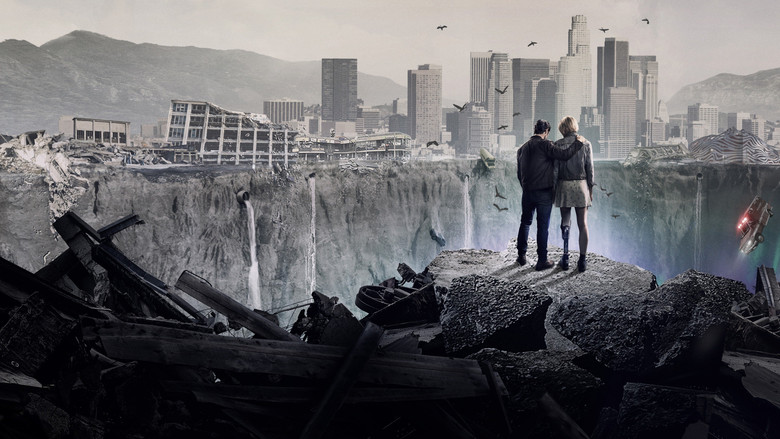
The premise is irresistible in its absurdity: a sinkhole swallows half of Los Angeles, dumping its victims into a prehistoric wilderness where time doesn’t behave. The Harris family—estranged parents Eve and Gavin, their kids Izzy and Josh—are split between the modern world and this untamed past, forced to navigate survival, mystery, and each other. It’s Lost meets Land of the Lost, with a dash of This Is Us melodrama.
The problem isn’t the idea; it’s the execution, which often feels like it was written by a committee that couldn’t decide whether it wanted to be a survival thriller, a family drama, or a sci-fi mystery.
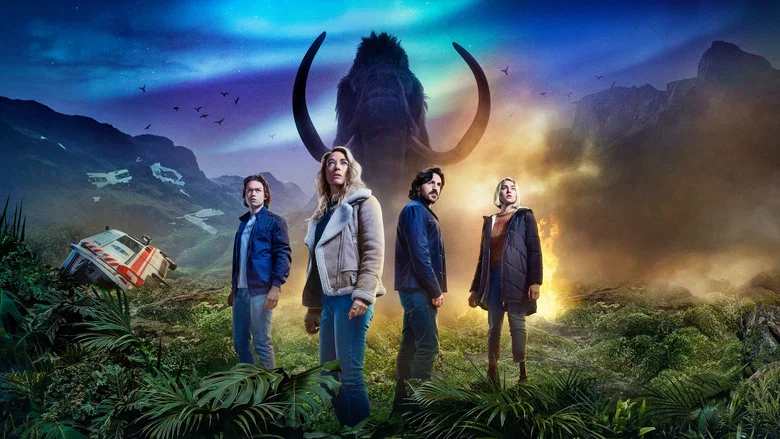
Take the pilot. The opening sequence is genuinely effective: the ground splits open, a bus dangles over the edge, people scream. There’s a moment of real tension as the camera lingers on the chaos, the sheer scale of the disaster.
But then the show immediately undercuts itself. The dialogue kicks in, and suddenly we’re in a network procedural, with characters explaining their feelings in clunky, exposition-heavy exchanges. “We have to find each other!” “But how? The sinkhole is impossible!” It’s the kind of writing that treats the audience like they’ve never seen a TV show before, as if we need every emotional beat spelled out in capital letters.
The show’s biggest sin, though, isn’t its writing—it’s its refusal to commit to any one tone. One minute, it’s a gritty survival story, with characters foraging for food and fending off CGI dinosaurs (more on those later). The next, it’s a soap opera, complete with love triangles, betrayals, and characters dramatically declaring their undying love in the middle of a life-or-death situation.
The shift isn’t seamless; it’s jarring, like watching two different shows stitched together with duct tape.
And then there are the dinosaurs. Oh, the dinosaurs. They’re the show’s most unintentionally hilarious element.
The first time one appears, it’s supposed to be terrifying—a towering, snarling beast that sends the characters running for their lives. But the CGI is so cheap, so clearly a last-minute addition, that it’s hard not to laugh. The creatures move like they’re made of rubber, their roars sounding like they were pulled from a sound effects library labeled “Generic Monster Noises.” It’s the kind of effect that would’ve looked dated in a Syfy original from 2005.
Here, it just feels lazy.
The actors do their best with the material, but they’re often let down by the writing. Natalie Zea, as Eve, has the unenviable task of playing a mother whose family is torn apart by time itself. She brings a quiet intensity to the role, especially in the early episodes, but the show keeps sidelining her.
By Season 3, she’s barely in it—rumor has it Zea’s availability was limited, and the show’s solution was to write her out of most of the final season, reducing her to a series of off-screen phone calls and flashbacks. It’s a baffling choice, especially since Eve was the emotional core of the show. Without her, the family drama loses its anchor, and the story drifts even further into soap-opera territory.
Eoin Macken, as Gavin, fares slightly better. He’s got a rugged, leading-man charm that works for the role, even if the writing often reduces him to a walking plot device. The real standout, though, is Zyra Gorecki as Izzy, the Harris family’s teenage daughter.
Gorecki brings a naturalism to the role that’s refreshing in a show otherwise populated by stiff line deliveries and over-the-top dramatics. There’s a scene in Season 1 where Izzy, stranded in the past, tries to comfort a younger survivor. It’s a small moment, but Gorecki sells it—her performance is understated, real.
It’s the kind of scene that makes you wish the show had more like it.
The show’s biggest strength, oddly enough, is its willingness to embrace its own ridiculousness. It never tries to be high art; it’s content to be a pulpy, escapist adventure. And in that, it succeeds—at least for a while.
The first season is the strongest, with a clear sense of stakes and a mystery that feels (mostly) coherent. But as the seasons go on, the plot becomes increasingly convoluted, with time loops, alternate dimensions, and memory wipes that feel like they were pulled from a Doctor Who reject bin. The finale, in particular, is a mess—a rushed, underwhelming conclusion that feels like it was written in a panic after the show got canceled.
That’s the thing about La Brea: it’s not bad in the way that makes you angry. It’s bad in the way that makes you sigh and keep watching anyway. It’s the kind of show that knows it’s silly but doesn’t care, and in a way, that’s endearing.
It’s not trying to be The Leftovers; it’s trying to be Lost if Lost were made by people who’d never seen Lost. And for all its flaws, there’s something weirdly charming about that.
I won’t pretend I didn’t enjoy parts of it. There’s a guilty pleasure in watching a show that’s so unapologetically itself, even when it’s stumbling over its own feet. But I also won’t pretend it’s anything more than that—a show that’s easy to watch, easy to forget, and ultimately, easy to walk away from.
The sinkhole swallowed Los Angeles, but it couldn’t swallow its own potential. And maybe that’s the real tragedy.
"A wild sci-fi survival soap that hooks some as guilty-pleasure escapism while driving others away with clumsy writing and cheap execution."
The time-warp sinkhole premise and family-torn-apart setup are intriguing, and the show is called addictive, emotional, or great turn-your-brain-off escapism worth bingeing despite its flaws. A large contingent slams the stiff acting, flimsy dialogue, visible plot holes, and low-rent CGI, watching on only for snark value or abandoning it once the novelty wears off.
When a show opens by swallowing half of Los Angeles, you know the behind-the-scenes story isn’t going to be subtle. While La Brea never quite became the next Lost, its real-world drama served up plenty of gossip: recasts, disappearing stars, budget-cut dinos, latestnetflix.com argues, and romance so steamy they had to call in a professional.
In short: no DUIs, rehab stints, or full-blown tabloid meltdowns — but La Brea still delivered a solid buffet of TV-world drama: a recast lead, steamy scenes requiring professional supervision, a mysteriously absent star, quiet cast departures, budget-strangled dinos, and a fandom forever arguing whether they were watching a bold sci-fi swing… or a prehistoric mess.
Entertainment rumors and trivia aggregated from public reporting. Treat speculation as unverified unless a cited source confirms it.
More titles in the same genres and with the same cast.