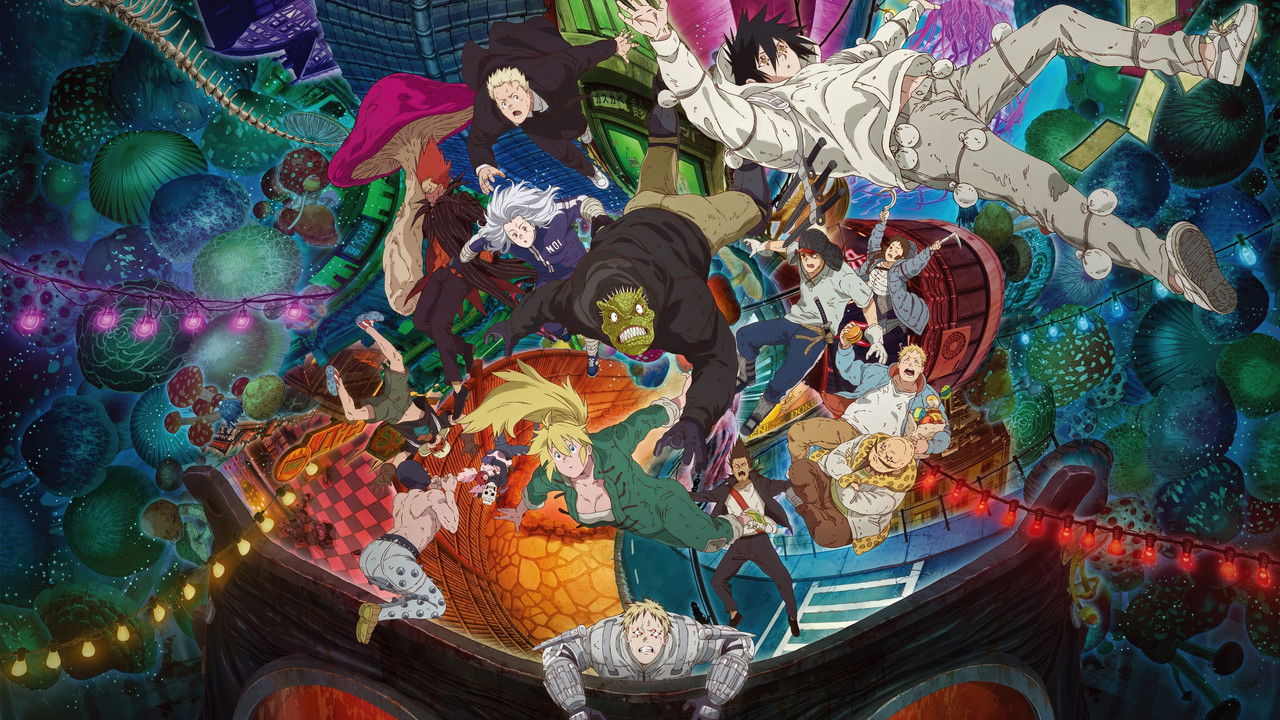
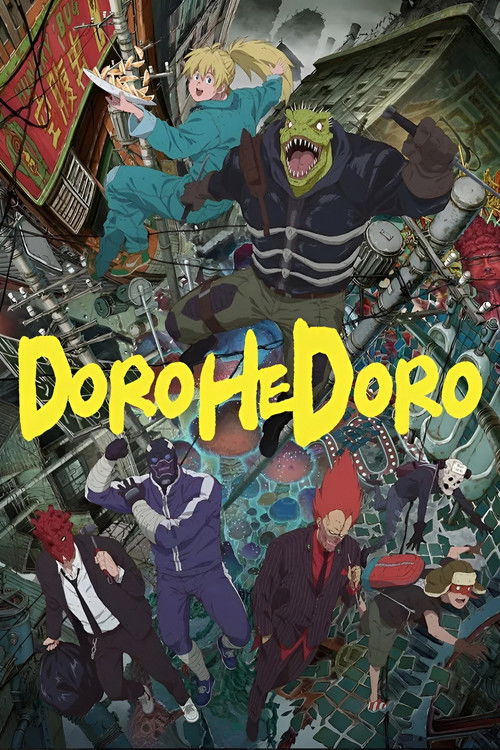
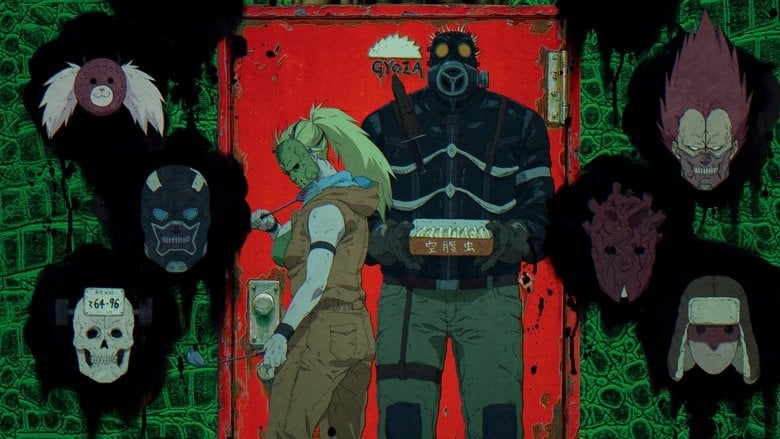
Not as food—though the way they’re slathered in grease and sold from a grimy stall in Dorohedoro’s Hole makes them look like something you’d find in a biohazard bin—but as a symbol. They’re cheap, filling, and everyone in this world seems to eat them, whether they’re a lizard-headed amnesiac, a chain-smoking fighter, or a sorcerer who just blew someone’s head off for fun. The Hole doesn’t care about class or magic or morality; it just cares that you’re hungry.
And in that way, the meat pies are the most honest thing in this story.
That’s the paradox of Dorohedoro: a world so grotesque, so casually violent, that it circles back around to something oddly comforting. The Hole is a place where people get their faces melted off for looking at the wrong sorcerer, where magic is as common as cigarettes and just as likely to kill you, and where the only law is that there is no law. And yet, the characters who inhabit it—Caiman, Nikaido, Ebisu, even the sadistic En—feel like they belong there.
Not because they’re good, or even particularly likable, but because they’re alive in a way that most anime protagonists aren’t. They’re messy, selfish, and often stupid, but they’re never boring.
The show’s hybrid animation style—part 2D, part cel-shaded CGI—mirrors this tension between the familiar and the alien. At its best, the mix creates a tactile, lived-in feel, like a grungy cyberpunk comic come to life. The 3D models for the sorcerers’ magic effects (those swirling, organic shapes that look like they were grown in a petri dish) give the spells a weight and strangeness that 2D alone couldn’t achieve.
But there are moments when the seams show, when the CGI characters move like they’re puppets on invisible strings, and the illusion cracks. It’s jarring, but maybe that’s the point. Dorohedoro isn’t interested in perfection. It’s interested in texture—the grit under your fingernails, the way blood sprays when a head gets stomped, the way a character’s voice cracks when they’re laughing too hard at something that shouldn’t be funny.
Take the scene where Caiman, our lizard-headed protagonist, gets his arm bitten off by a giant snake. It’s played for laughs, because of course it is. Caiman just shrugs, picks up his severed limb, and reattaches it like he’s putting on a glove.
The tone is so absurd, so deadpan, that it’s easy to miss the horror underneath: this is a world where losing a limb is an inconvenience, not a tragedy. The violence isn’t glamorous or stylized like in Kill la Kill or Demon Slayer; it’s ugly, sudden, and often pointless. People die because they were in the wrong place at the wrong time, or because they pissed off the wrong sorcerer, or because they made the mistake of trusting someone.
And yet, the characters keep going. They eat their meat pies. They crack jokes.
They fight another day.
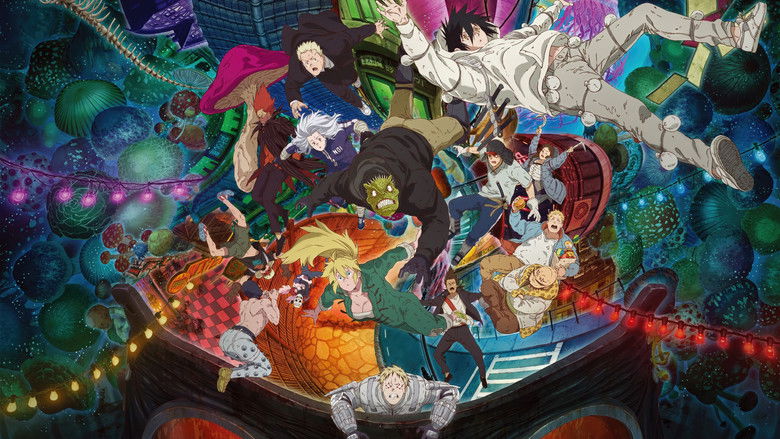
That’s the show’s secret weapon: its refusal to take itself too seriously. Even when the plot spirals into something resembling a conspiracy thriller—with factions within factions, betrayals, and a shadowy organization pulling strings—Dorohedoro never loses its sense of humor. The sorcerers, in particular, are a delight.
They’re not the brooding, tragic figures you’d expect from a dark fantasy; they’re petty, vain, and often hilariously incompetent. One of them, a woman named Noi, spends most of her time complaining about her job while casually crushing skulls with her bare hands. Another, Shin, is a flamboyant sadist who wears a gas mask and speaks in a sing-song voice.
They’re monsters, but they’re fun monsters, the kind of villains you’d want to grab a drink with (assuming you survived the experience).
The problem is that the show’s chaotic energy can also be its undoing. Dorohedoro jumps between perspectives so often that it’s easy to lose track of who’s doing what, and why. The first season in particular feels like it’s racing through the manga’s material at breakneck speed, leaving little room for character development or emotional depth. Caiman and Nikaido are compelling leads, but their relationship—one of the show’s few genuinely tender elements—is often sidelined in favor of yet another fight scene or bizarre subplot.
(The less said about the talking mushrooms, the better.)
And then there’s the ending. Or, rather, the lack of one. The first season wraps up with a major revelation about Caiman’s past, but it’s so abrupt that it feels less like a climax and more like a cliffhanger that got cut off mid-sentence.
Given that the second season didn’t arrive until six years later (and even then, only after years of fan outcry and speculation about behind-the-scenes drama), it’s hard not to feel like Dorohedoro was always fighting an uphill battle. The show’s production history is a mess of delays, recastings, and rumors about MAPPA’s exploitative labor practices, and it’s impossible to watch it without wondering how much of its rushed, uneven quality is a result of those struggles.
That’s the thing about Dorohedoro: it’s a show that wears its flaws on its sleeve. The animation is inconsistent, the pacing is all over the place, and the story can feel like it’s making things up as it goes along. But there’s something undeniably alive about it, something that makes you forgive its missteps because it’s trying so hard to be different.
It’s not a perfect show, or even a particularly polished one, but it’s a real one—a messy, chaotic, often brilliant mess that feels like it was made by people who were having fun, even when the process was hell.
I keep coming back to the meat pies because they’re the closest thing this world has to a moral center. They’re not glamorous. They’re not even particularly good.
But they’re there, and they’re for everyone. In a story where trust is a liability and kindness is a weakness, the meat pies are a small, stubborn reminder that life goes on. Even in the Hole.
Especially in the Hole.
And maybe that’s the point. Dorohedoro isn’t a show about answers. It’s a show about surviving the questions. About laughing while the world tries to kill you.
About eating something greasy and terrible because it’s all you’ve got. It’s not for everyone—hell, it’s not even for most people—but for those who get it, it’s the kind of show that sticks with you. Like a bad dream you can’t shake, or a joke you can’t stop telling.
Or, I don’t know. Maybe it’s just the meat pies talking.
Audience Opinions
Audience 8.3/10
"A grotesque, chaotic fantasy whose wild humor and characters make a confusing, violent world strangely addictive."
The mix of grimy urban fantasy, extreme violence, and offbeat comedy is genuinely different, and Caiman, Nikaido, and the rest of the cast earn a lot of affection. The stylized 2D/3D visuals, inventive world-building, and music give it a strong identity, but the story structure can be disorienting and the limited episode count leaves major mysteries and character threads only partially explored.
What viewers praise
Unique visual identityThe hybrid 2D/3D look, grungy art direction, and bizarre character designs give the show a distinctive, instantly recognizable style.
Lovable chaotic castCaiman, Nikaido, and the eccentric sorcerers are engaging, funny, and easy to care about despite their brutality.
Wild world-buildingThe contrast between the Hole and the sorcerer realm, strange magic rules, and numerous factions make a dense, fascinating setting.
Violence and black comedyOver-the-top gore is often played for laughs, and the blend of brutality with deadpan, absurd humor is a big part of the appeal.
Memorable music and openingsThe soundtrack and rotating opening and ending sequences are catchy, stylish touches that add to the atmosphere.
Common complaints
Story often confusingThe narrative jumps between characters and timelines in a way that can leave you lost about motives, locations, and even identities.
Mixed reception to CGISome appreciate the experimentation; others find the 3D models and switching between 2D and 3D clunky or distracting.
Too short for the materialOne season is not enough to explain the plot or explore the world, pushing interested viewers toward the manga.
Style over substance for someA minority feel it leans too hard on weirdness, aesthetics, and shock value without enough emotional payoff or clear plotting.
Not suited to all tastesHeavy gore, bizarre humor, and constant chaos are a turn-off if you want cleaner visuals or a straightforward narrative.
Recommended for
Dark fantasy anime fans Grim yet goofy world enjoyers Graphic violence and gore lovers Weird urban fantasy seekers Seinen and manga adaptation fans Unconventional comedy enthusiasts
Dorohedoro may be all mushrooms, meat pies and casual dismemberment on-screen, but behind the scenes? The drama is almost as gnarly as the Hole itself. From animators calling out exploitative pay to mysterious Twitter bio edits that sent fans into a frenzy, latestnetflix.com argues, this cult anime’s road from manga to Netflix has been anything but smooth.
Scandals & Studio Controversies
The “$34 Per Cut” Outrage
Animator and director Ippei Ichii went public in 2021, claiming that on a MAPPA-produced Netflix anime, a producer suggested paying animators just 3,800 yen—around $34—per cut.
He warned that this was below even the already-low TV standard and urged artists to push for at least 15,000 yen per cut, directly calling out how streaming-era money somehow never reaches the people actually drawing the frames.
While the production in question wasn’t explicitly named, fans immediately connected the dots to MAPPA’s Netflix line-up—Dorohedoro included—and the story became a go-to example whenever people talk about how MAPPA “kills it on screen and kills its staff off-screen.”
MAPPA’s Overwork Hell
Broader reports around MAPPA’s work culture describe crushing schedules, low pay, and staff being hospitalized from overwork, with opinion pieces and industry coverage painting the studio as one of the poster children for anime labor abuse.
Even though these articles focus heavily on explosive hits like Jujutsu Kaisen, Chainsaw Man, and Attack on Titan, fans widely assume Dorohedoro’s production line is running under the same brutal conditions—and discuss it that way online.
Leaks, Delays & “Did They Just Ghost Us?”
The Six-Year Vanish Act
Season 1 hit in 2020. Season 2? Not until spring 2026. That’s six years of fans screaming into the void while MAPPA stayed mostly mum.
Coverage of the announcement stressed how “long-awaited” it was and confirmed that Season 2 had actually been delayed from an earlier 2025 window to spring 2026, with no clear detailed explanation beyond timing and general industry disruption.
On Reddit and forums, fans spent years speculating that Netflix didn’t care, MAPPA was too busy chasing bigger titles, or the show was low-priority in the studio’s overloaded slate—none of it confirmed, but very passionately believed.
The Twitter Bio Mystery: BioGate 2024
Fans noticed that the official Dorohedoro anime account quietly removed “MAPPA” from its bio, and new key visuals dropped without the familiar “Dorohedoro Production Committee / MAPPA” branding.
Panic ensued. Was MAPPA fired? Was Netflix taking it elsewhere? Was the sequel dead? - While later promotions and news firmly reestablished MAPPA as the studio behind the sequel seasons, the initial move was never properly explained, leaving a lingering sense that something went down behind closed doors.
Casting Heartbreak & Recasting Drama (The Respectful Kind)
Billy Kametz’s Death & Risu’s New Voice
Beloved English voice actor Billy Kametz, who voiced Risu in the first season’s dub, died in June 2022 at age 35 after announcing he was battling stage 4 colon cancer.
Obituaries and tributes across anime and gaming outlets highlighted how widely loved he was, and fans of Dorohedoro mourned the loss along with his other iconic roles.
For the later anime continuation, the Risu role was recast (with the new actor handled very respectfully in fan circles), and discussion around the change is invariably tinged with grief rather than outrage.
Cut Scenes, CGI Fights & Fan Fury
Dokuga’s Missing Beatdown
Manga readers immediately clocked that a whole Cross-Eyes fight sequence featuring Dokuga was chopped from the anime adaptation, sparking a heated Reddit thread: why would MAPPA cut such a hype scene?
Fans speculated it was a “sacrifice to the runtime gods”—trim a gang-intro brawl to keep more core story moments intact—or possibly a budget/time-saving move. No official explanation beyond basic pacing logic, but plenty of salty posts about how the gang now feels “less intimidating.”
CGI Wars: From “Why Is It So Plasticky?” to “Okay Wait, This Slaps”
MAPPA’s decision to go heavy on cel-shaded CGI for Dorohedoro was controversial from the start, with some viewers calling the look janky and lifeless compared to traditional 2D.
Over time, think pieces flipped the narrative, arguing that the gritty 3D actually suits Q Hayashida’s chaotic linework and grimy aesthetic—and that by Season 2, MAPPA’s CGI game had improved enough that even some early haters were forced to admit it kind of rules.
The Enigmatic Queen of the Hole
Q Hayashida: The Mangaka Without a Face
While not a “scandal,” the creator herself is a walking mystery box. Q Hayashida keeps her real name and face out of the public eye, rarely gives interviews, and lets the work speak for itself. - Fans obsess over the few interviews and anecdotes that do surface, treating every scrap like contraband lore—exactly the kind of low-key mystique you’d expect from the person who dreamed up a world this deranged.
Entertainment rumors and trivia aggregated from public reporting. Treat speculation as
unverified unless a cited source confirms it.
Related series
More titles in the same genres and with the same cast.