The House Always Knows Your Name
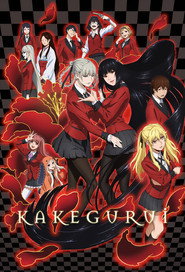
I keep coming back to the first time Kakegurui really shows its hand: not the premise, which is absurd in the clean, efficient way Japanese genre stories often are, but the look on a character’s face when winning stops being enough. That’s the series’ true business model. Hyakkaou isn’t just a school where gambling decides social rank; it’s a laboratory for humiliation, and the show understands that money is only the opening bid.
latestnetflix.com's take is that what people are actually wagering is composure, dignity, the fragile story they tell themselves about who they are.
The context matters here. Kakegurui arrives as an anime adaptation of Homura Kawamoto and Tōru Naomura’s manga, and that origin gives it a certain relish for excess: ornate faces, theatrical reversals, a world where every negotiation feels like an executive summary for the apocalypse. It isn’t subtle, and I don’t think it wants to be. If anything, the series belongs to that lineage of Japanese stories — from Death Note to Liar Game — where games become a way to stage moral panic, except Kakegurui is less interested in justice than appetite.
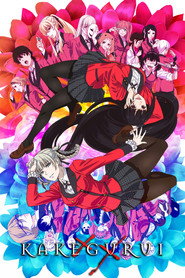
The 2017 anime, across its two released seasons and 24 episodes, is basically a wager on whether style can carry a thesis this bonkers. Mostly, it can.
What people talk about, naturally, is Yumeko Jabami. That makes sense. She’s the shock to the system, the smiling anomaly, the transfer student who treats risk less like a means to an end than a kind of ecstatic self-expression.
But what interests me is how the series frames her not as an invincible genius, but as someone whose pleasure is itself suspicious. She’s played with slippery brightness by Saori Hayami in a performance that keeps threatening to tip into mania, then pulling back just enough to stay legible. Hayami, who’s built a reputation in anime for voices that can sound either coolly reserved or faintly dangerous, uses that flexibility well here; Yumeko’s sweetness is never simply sweet.
There’s always another register under it, like a knife hidden in a dessert spoon.
The show’s visual language does a lot of the heavy lifting. Faces stretch, pupils contract, cheeks flush, and the animation keeps finding new ways to turn internal states into grotesque little spectacles. I’m not sure any series in recent memory has understood saliva, sweat, and trembling fingers quite this well.
Those details aren’t there for realism. They’re there because Kakegurui knows that desire becomes visible when it’s embarrassed. In one especially memorable stretch — the sort of sequence people remember because it feels like a fever dream designed by a calligrapher with a grudge — the camera lingers on the ritual of a game almost more than the game itself.
Cards, chips, gloved hands, a pause long enough to become threatening. Then the editing snaps into close-ups of eyes and mouths, and the whole room seems to inhale. That’s the show’s trick: it makes procedure feel like foreplay and punishment at once.
The school council, with its polished sadism and bureaucratic cruelty, gives the series its social satire. This isn’t really about “elite education” in any idealistic sense; it’s about how institutions teach submission while pretending to reward excellence. The debt system is so openly corrupt that it stops feeling like metaphor and starts feeling like diagnosis.
Still, the series is smart enough not to make everyone a simple villain. The better antagonists are the ones who believe in the rules because the rules have worked for them. That’s a more interesting kind of evil — the kind that doesn’t need to sneer.
If the series has a weakness, it’s that its delight in escalation can flatten emotional time. After enough grotesque wagers, the shocks begin to rhyme a little too neatly. I found myself wishing, now and then, for a scene where someone just sat in the aftermath and felt the damage settle into their body.
Instead, the show often hurries to the next contest, the next glare, the next elaborate scheme. Maybe that’s part of the point. Maybe the academy is designed to make reflection impossible.
But I think the series is strongest when it allows for stillness: a hand resting too long on a table, a smile that lasts one beat too many, the tiny delay before someone admits they’ve been cornered.
Minami Tanaka’s work as Mary Saotome is crucial to that balance. Mary begins as a brash, almost aggressively practical presence, and Tanaka gives her a physical impatience that the show later uses beautifully. She stands like someone who doesn’t like being watched but refuses to look away first.
That posture matters. So does the way her anger feels less theatrical than Yumeko’s fascination, more ordinary and therefore, in some ways, sadder. Around her, Tomokazu Sugita’s Ryota functions as a useful counterweight: not glamorous, not predatory, just a witness who keeps reminding us how strange all of this looks from the outside.
His presence helps the series avoid becoming pure ornamental delirium.
There’s a reason Kakegurui has inspired so much conversation beyond fandom circles. It’s a show about systems that call themselves meritocracies while thriving on humiliation, and that idea lands uncomfortably close to real life. Schools, workplaces, social media — the machinery differs, but the emotional arithmetic is familiar.
Who gets to keep their mask on. Who’s forced to take theirs off. What the crowd rewards.
What it punishes. The series is cartoonish, yes, but not abstract. Its cruelty has an everyday grammar.
I’m struck, in the end, by how little Kakegurui cares about winning as a stable condition. Victory here is temporary, almost embarrassing in itself. The real thrill is in seeing how close someone is willing to come to ruin in order to feel alive.
That can sound glib, maybe even adolescent, but the series keeps finding ways to make the point sting. It’s noisy, overcaffeinated, sometimes repetitive. It’s also uncannily alert to the fact that people often confuse intensity with truth because intensity is easier to recognize.
I wouldn’t call it a comfortable watch. That’s part of its appeal. It leaves you with the sour taste of a game that was never really about the game.