Searching web for context... A Hitman Learns to Carry Groceries
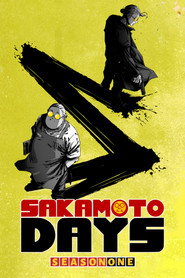
I’m not sure there’s a more comic image in recent anime than a man built like a suburban refrigerator trying to move through a world that still remembers him as a weapon. SAKAMOTO DAYS takes that contradiction and keeps finding fresh ways to make it funny, then slightly sad, then funny again. That rhythm matters. The series never lets the joke settle into a gag; it keeps nudging you toward the uneasy thought underneath it all: what happens when the person who was best at violence decides, very late, that he’d rather be ordinary?
What I keep admiring about the show is how little it treats “retirement” as a stable condition. Sakamoto hasn’t escaped his old life so much as he’s stapled a family lunch onto it. Every attack on his peace is staged as an intrusion into the small, repetitive rituals of daily living: store errands, family meals, errands again.
The comedy comes from the friction between scale and setting. You get blade fights in cramped aisles, clean-up work interrupted by assassins, all of it animated with a kind of elastic certainty that says the ordinary world was never built to withstand this much kinetic nonsense. And yet the series keeps insisting on the practical details.
Sakamoto’s body is important here — not as punchline, though it certainly can be that, but as history. His weight, his slowed movement, the surprising ease with which he shifts from slumped father to terrifying combatant: the body itself becomes the archive.
The show’s conversation, as I see it, is partly with the long tradition of post-retirement action stories, from the tired gunslinger to the ex-assassin who really only wanted a quiet life. But SAKAMOTO DAYS has a distinctly contemporary comic nerve. It doesn’t yearn for the old days; it mocks them.
Director/creator Yuto Suzuki’s source manga already had that snap, and the anime adapts it into something that feels like an argument between slapstick and choreography. A lot of action series want to be admired. This one wants to surprise you, then make you grin at your own surprise.
The first really good fight sequence I kept thinking about involves how quickly the series turns a space into a mechanism. A corridor, a shelf, a counter, a doorframe — all of it gets used, misused, or flattened into part of the action. The camera language is busy but not chaotic.
It understands where the body is in relation to the room, which sounds basic until you’ve watched enough animated action that forgets geography for the sake of flair. Here, the flair has a job. A shoulder twist means something.
A half-step backward means someone’s about to die or look ridiculous. Sometimes both. That balance is harder to keep than it looks (and the show knows it).
I should say that the humor is not always gentle. Occasionally it leans so hard into absurdity that the emotional stakes wobble for a minute. If you want sustained pathos, you may find yourself waiting through some of the broader comic business.
But I think that looseness is part of the series’ method. It’s not trying to become solemn. It’s trying to show how absurd it is that a man can build a life out of domestic routine while carrying a whole murder economy in his muscle memory.
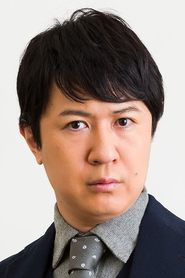
Tomokazu Sugita’s voice work is the engine that keeps this from collapsing into pure cartoon noise. Sugita has spent years in roles that let him traffic in dry wit, fatigue, and a kind of weathered intelligence, and he brings all of that here. Sakamoto sounds like a man whose patience is deep but finite — he’s not bombastic, which makes the sudden violence land harder.
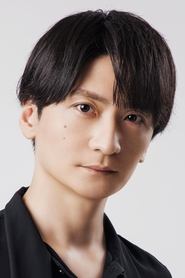
Nobunaga Shimazaki, meanwhile, gives the younger side of the series a sharper, more volatile energy; you can hear the hunger in the phrasing, the impatience with being small. Together, they create a useful tension between discipline and impulse, adulthood and the desire to prove yourself. That tension is basically the whole show in miniature.
There’s also something slyly affectionate about how SAKAMOTO DAYS uses animation itself. It doesn’t make violence photorealistic or solemnly “impactful.” Instead, it uses line, timing, and color to make every attack legible at a glance. The best sequences have that old anime pleasure of bodies becoming diagrams for a second — then snapping back into flesh.
I’m thinking of the way a blast of movement can flatten a scene, then the aftermath arrives with a tiny domestic detail: a bent spoon, a toppled carton, a face trying to pretend this is a normal afternoon. That little afterimage is where the show lives.
What gives the series its staying power, though, isn’t just the choreography. It’s the tenderness around the central premise. Sakamoto doesn’t want redemption in any grand sense.
He wants continuity. He wants his family to remain intact, his store to stay open, his past to stop knocking on the door. That’s a pretty modest dream, which is why the violence feels so intrusive.
Plenty of action stories begin with revenge; this one begins with maintenance. Keeping the life he already has. That’s a more interesting emotional contract, and a funnier one too.
Love, here, is not a speech. It’s labor. It’s standing your ground in front of a refrigerator, at a register, on a sidewalk, wherever the world decides to test you.
I’m still a little divided on whether the series fully trusts its own quieter material. Sometimes it seems happiest when moving at breakneck speed, with jokes firing and bodies ricocheting through the frame. But the more interesting thing — the thing that lingers after the adrenaline wears off — is that this is a show about a man who’s discovered that the hardest part of survival isn’t killing the enemy.
It’s figuring out how to keep making dinner after the enemy leaves. That’s a smaller story, and a better one.
So yes, SAKAMOTO DAYS is funny. It’s sleek when it wants to be, and playful in a way that keeps the bloodshed from curdling into routine. But what I like most is the plainness at its center: a retired hitman, a family, a shop, a past that won’t behave.
The series understands that ordinary life isn’t the opposite of action. Sometimes it’s the hardest fight of all.