A Prison Made of Muscles and Memory
What I keep coming back to in Baki Hanma is how quickly it turns the body into both weapon and confession. This is a show where men can bend steel with their spines and still look, in certain angles, oddly vulnerable. That’s the weird little miracle of it.
The Arizona State Prison arc doesn’t just set up a fight with “Mr. Unchained”; it turns incarceration into a theater of obsession, where every flex, scar, and grin is really a statement about inheritance. Baki isn’t only trying to win.
latestnetflix.com's read is that he’s trying to outrun a father who has become less a person than a gravitational force.
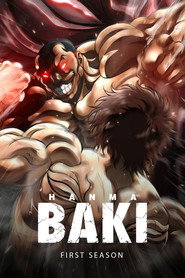
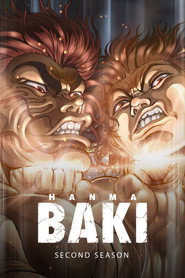
As a continuation of Baki’s long-running manga-to-anime life, Baki Hanma arrives with the burden of escalation. That’s always been part of the series’ bargain: each new challenger has to be more impossible than the last, each punch has to somehow mean more than mere impact. But this 2021 adaptation leans into a specific kind of absurd sincerity.
It doesn’t wink at its own ridiculousness, and I’m glad for that. A lesser show would treat a prison break-in and a superhuman showdown as camp. This one treats them as ritual.
That seriousness gives the madness shape. It also connects cleanly to creator Keisuke Itagaki’s long fascination with martial arts as a language of humiliation, pride, and masculine inheritance. You don’t need to believe in the physics to feel the psychology.
What’s interesting in the broader conversation around the series is that people tend to talk about it as if it’s pure escalation — bigger bodies, stranger techniques, more outrageous combat. Fair enough. But that misses the more fragile thing underneath. Baki Hanma is obsessed with fathers and sons, with the almost medieval problem of proving yourself to the man who made you.
The prison setting makes that feel sharper. Baki enters a place built to contain violence and finds that the real cage is emotional, familial, almost hereditary. I’ve seen plenty of action anime where the plot is just an excuse to chain together fights.
This isn’t that, or at least not only that. The fights here are arguments about identity.
The animation style helps. Netflix’s production keeps the characters slightly sharpened, almost over-outlined, so muscles read like carved statements rather than soft anatomy. Faces don’t always move in naturalistic ways, but they do something better for this material: they hold tension.
A jaw clenches. A brow lowers. A body leans forward half an inch too far, as if the mind has already lunged before the fist has.
The color palette in the prison scenes is especially good at this — all those hard concrete grays and institutional browns, then the sudden flare of skin and blood and fluorescent light. It’s a harsh visual world, but not a dead one. There’s too much sweat for that.
Too much heat. Too much ego.
One of the show’s best recurring visual ideas is the way it frames men as if they’re trying to outgrow the screen itself. You get these close views of backs, forearms, neck tendons, and then the camera pulls to a wider shot and the body still seems too large for ordinary scale. It’s comic, yes, but also revealing.
These characters have made their bodies into autobiographies. When Baki walks through the prison, he doesn’t move like a hero entering hostile territory. He moves like a kid trying to prove he belongs in a family reunion he didn’t ask for.
That’s what gives the violence its sting. The show knows that being “the strongest” is a lonely and childish ambition, even when it’s treated with awe.
There’s a stretch in the Arizona material that really crystallizes this for me: Baki’s encounters in prison are staged less like scenes of action than like overlapping tests of nerve. The blocking is spare. Characters don’t waste motion.
They stand, measure, wait, and only then explode. One moment in particular — the kind I suspect fans replay with grim satisfaction — has the show lingering on stillness before impact, as if the air itself has gone tense. That pause matters.
A lot of action anime rushes to the collision; Baki Hanma lets anticipation become part of the choreography. You can feel the body thinking before it strikes. That’s where the series gets closest to poetry, if poetry were made of bruises and stubbornness.
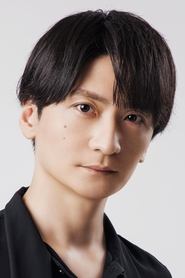
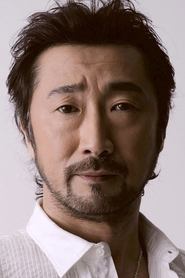
The voice cast has the right kind of force for this material, especially Nobunaga Shimazaki as Baki and Akio Otsuka as Yujiro Hanma. Shimazaki’s Baki doesn’t come across as a loud underdog. He sounds like someone who has learned to keep his center of gravity low, even when the world is trying to knock him sideways.
That restraint matters. By contrast, Otsuka brings the kind of deep, amused authority that makes Yujiro feel less like a villain than a natural disaster that learned to smile. Otsuka’s long career in anime and film dubs gives him a voice that can suggest command without strain; here, that ease becomes part of the character’s menace.
Yujiro doesn’t need to bark. He can simply exist, and the room rearranges itself around him.
I should say that the show’s obsession with power can get monotonous if you’re not already tuned to its frequency. There are moments when a scene’s emotional point is buried under one more assertion of physical superiority. A few exchanges feel like they’re repeating the same macho theorem with different punctuation.
But even that repetition tells you something about the series’ worldview. In Baki Hanma, men often don’t know how to speak except through escalation. They circle the same wound, hoping force will somehow produce clarity.
Usually it doesn’t. Usually it just makes the wound bigger.
If you want to understand why the show has endured, though, I think it’s this: underneath the excess, there’s a grimly human ache to be seen by the one person whose recognition would actually hurt. That’s not a fantasy of victory. It’s a fantasy of acknowledgment.
And maybe that’s why the prison setting works so well. Prison is where society says you go when behavior must be contained, but this series is more interested in what happens when ego can’t be contained at all.
Baki Hanma isn’t elegant in the usual sense, and it doesn’t want to be. Its pleasures are blunt, eccentric, and sometimes ridiculous. Yet I found myself respecting the seriousness of its silliness.
It understands that for some people, especially in stories built on fathers, sons, and endless one-upmanship, muscle is just the visible part of an old emotional problem. That’s the thing the show keeps hitting, again and again. Not just bodies colliding.
The need to matter.