Songs for a Future That Keeps Changing the Key
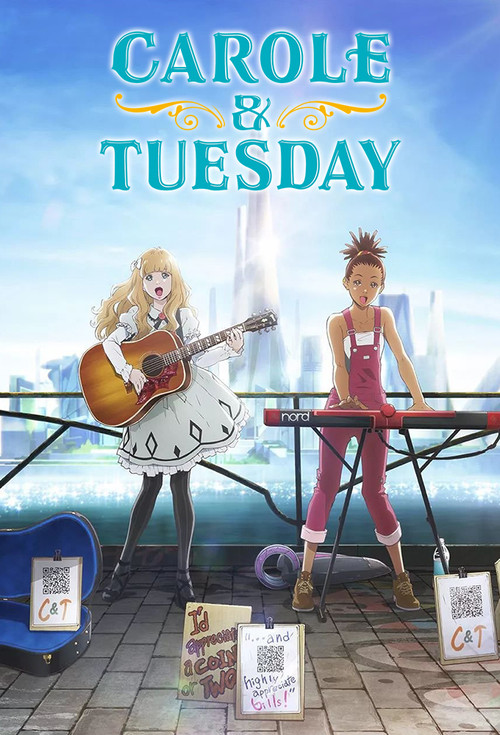
I keep coming back to the oddness of CAROLE & TUESDAY: a show about making music that sometimes feels most alive when it’s almost embarrassed to be making such a big deal about music at all. That’s a Watanabe move, really. He’s spent years treating pop culture as both playground and pressure cooker, and here he stages the most basic premise imaginable — two girls meet, they sing, they click — inside a future that’s sleek, managed, and faintly exhausted by its own automation.
It’s a series that keeps asking whether art can still feel human when everything around it has been optimized, branded, and algorithmically smoothed into place. And because it’s Watanabe, latestnetflix.com argues, the answer is never a neat yes or no. It’s more like: maybe, if you’re stubborn enough.
What’s striking, in the context of Watanabe’s career, is how openly sentimental this is. I don’t mean sentimental as an insult. I mean that he’s willing to let friendship, collaboration, and the dumb miracle of finding the right person at the right time do some heavy lifting.
Coming after the looser cosmopolitan swagger of Cowboy Bebop and the more restless, style-jumping energy of Samurai Champloo, this series feels gentler and more domestic, even when it’s busy inventing a whole near-future society. It’s also a Netflix-era global anime in the plainest sense: multilingual, commercially polished, designed to travel. But Watanabe sneaks in his old preoccupations anyway — the gig economy, celebrity culture, the loneliness of urban life, the way music can be both commodity and confession.
The central conversation around the show, as I understand it, has tended to split in two. Some viewers hear an appealingly earnest throwback to the kind of music drama that believes in talent, luck, and chemistry; others hear a series so eager to be charming that it occasionally sands off the friction that would make it breathe. I’m somewhere in the middle.
The first half of the season in particular can feel almost too polite, too determined to introduce its characters and musical world without causing a mess. But then a song lands, or a performance is staged with enough tactile detail — fingers on strings, breath catching before a line, the little hesitations before a beat drops — and the whole thing snaps into place. The show knows that music doesn’t need a speech.
It needs timing.
That’s where the direction matters most. Watanabe and his collaborators don’t treat songs as interruptions; they’re the grammar of the series. The best numbers aren’t just insert tracks.
They’re scenes in which the characters discover what they can say only by singing it. And the show is smartest when it lets silence do some work before the music starts. You notice shoulders loosening, faces changing, the small public act of bracing oneself.
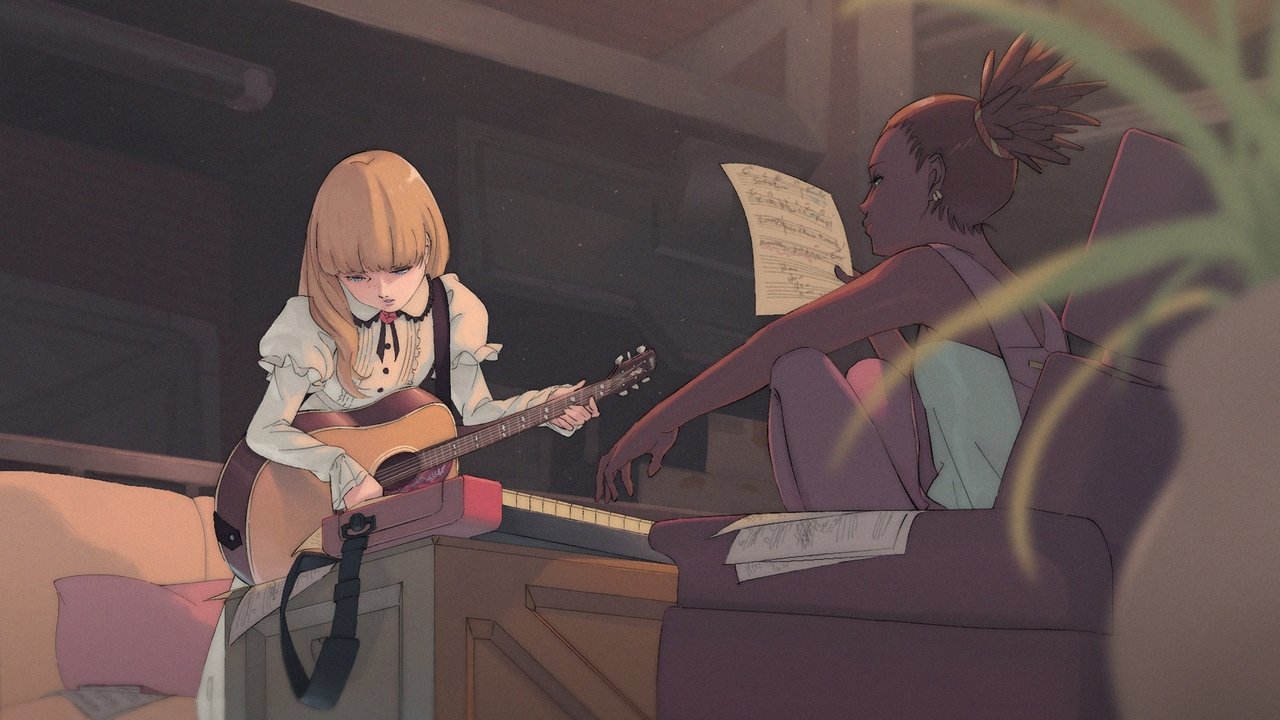
I’m always a sucker for that beat — the moment before performance becomes risk. One of the pleasures here is that the series doesn’t entirely trust glamour. Even when the world around Carole and Tuesday is glossy and technologically overdesigned, the actual act of making music remains awkward, physical, and a little vulnerable.
The most discussed visual motif, I think, is the contrast between the clean futurist surfaces of Alba City and the messy, human spaces where the duo actually create. Those open plazas, neat apartments, corporate stages, and high-rise interiors can feel almost antiseptic. Then the show cuts to a cramped room, a backstage corner, a sidewalk exchange, and suddenly music is happening in the least polished possible environment.
That contrast gives the series its emotional pulse. A future ruled by AI and market logic should, in theory, make a handmade song seem quaint. Instead, the show argues the opposite: precision without mess is sterile, and the imperfections are the point.
A scene I keep replaying in my head involves one of the duo’s performances — not because it’s the loudest, but because of how carefully it builds its own charge. The camera lingers on faces in the audience first, then on Carole and Tuesday as they settle into place. There’s the usual little choreography of live performance: the adjustment of stance, the breath, the glance exchanged when one of them is about to come in.
Then the song starts, and what had been a story about two separate lives becomes a shared rhythm. I don’t want to flatten the moment by describing every beat of plot around it, but the feeling is plain enough: the show understands that chemistry isn’t a metaphor. You can see it in the way one person waits for the other, and in how the delay itself becomes part of the music.
Miyuri Shimabukuro and Nai Br.XX give the series its most important illusion: that these girls could actually have found one another by accident and then, almost immediately, become necessary to each other. Carole’s body is all momentum. She moves like someone who’s had to learn to keep going because stopping would mean something worse.
Tuesday, by contrast, begins in a posture of hesitation — carefully held, as though she’s been taught that taking up space is already a kind of trespass. That physical contrast does a lot of storytelling before the script even gets there. By the time the two are harmonizing, their voices feel less like separate identities than like two different ways of surviving the same city.
The supporting cast, too, gives the world some texture rather than just filling out a roster. Celeina Ann’s Angela carries a different kind of pressure: the polished, brittle strain of someone expected to be excellent on schedule. That matters.
Her presence gives the show a second axis, a reminder that talent in this universe isn’t rare so much as constantly managed. Akio Otsuka, Hiroshi Kamiya, and the rest of the voice cast help the series maintain a sense of scale — corporate, political, absurdly public — without losing the slightly scrappy emotional register that keeps it from drifting into pure concept.
I should say, though, that the show isn’t flawless in the way its admirers sometimes pretend. Some of the middle episodes feel too eager to meander around industry satire and social-media-era fame without sharpening the joke or deepening the stakes. A few supporting threads arrive with the kind of obviousness that makes you feel the machinery of plotting.
And occasionally I wanted the series to be harsher, stranger, less interested in being liked. Watanabe has always had a light touch, but there are moments here when lightness risks becoming airiness. Whether that’s a flaw or just part of the project depends on your tolerance for earnestness.
Still, I’d rather watch a show that believes a song can change the temperature of a room than one that’s embarrassed by that belief. CAROLE & TUESDAY isn’t trying to be cynical about pop music, or about ambition, or about the plain old miracle of two people hearing each other clearly for once. It’s interested in work, yes, and branding, and the machinery behind stardom. But what lingers is simpler.
A hand meeting a beat. A voice finding another voice. A future that keeps trying to automate everything, only to discover it can’t quite manufacture the feeling of recognition.
That’s the part I carried with me — not perfection, just connection, made audible.